


Marketing automation for job boards
A job board has two audiences to win every week: people looking for work and employers who need to hire. Maggie, your AI CMO, writes career advice, salary guides and hiring tips for your blog and LinkedIn, and you approve every one.
Free to start · No credit card · 30 free posts
Used by 600+ users and trusted by teams at
aeglesriphal.com
moonlakespa.com
shop.theteagroup.com
clo100.com
logtrics.io
mymorez.com
nextidal.com
otisapp.com
storaitelling.com
theheatpumps.co.uk
web-translations.com
exposeai.tech
orielipo.com
whitelabelcrowd.fund
elliptic.co
med.moonlakespa.com
netdex.co.il
orawellness.uk
reenest.com
syngage.ai
thepenthouseliving.com
zengolf.studio
imaintain.uk
rebuildingsociety.com
aurasocial.world
goaimex.com
moneyparents.com
newgenrenewables.uk
osmosisai.co
saunders.ac
teeza.app
thursdayclub.com
Why job boards struggle to keep their marketing going
Your team spends the week on listings, employer accounts and support. Content for the people who actually use the board slips to next month.
Two audiences, one small team
Job seekers want CV help, interview tips and salary guides. Employers want advice on writing a job ad and finding people faster. Writing for both, every week, is a job in itself.
The big boards own the search
Large job sites and aggregators fill the first page for broad searches. A niche board wins on specific questions, such as what a role pays in your sector, but only if it has pages that answer them.
Listings come and go
Job ads expire in weeks, so the pages that bring people in disappear too. Without lasting articles, every month starts from zero.
Employers need a reason to post
Hiring managers choose where to advertise based on who they trust to reach the right people. A quiet LinkedIn page and an old blog don't show that your board knows the sector.

January hiring starts next week, and your guides are already queued.
It's mid-December. You run a job board for hospitality and events roles, and you know January is when people start looking for a new job and employers plan their spring hiring. Your last blog post went out in September.
You paste your website into cmo.so. Maggie reads it and writes your brand profile: the roles you list, from chefs and front-of-house managers to event coordinators, the employers who post with you, the people who use your board, what sets you apart from the big general sites, and your friendly, practical voice. You add that you also run a free CV review each month.
By Tuesday the drafts are waiting, each with a picture in your board's look: a blog post on how to write a CV for a head chef role, a salary guide for event coordinators written in general terms, a LinkedIn post for restaurant owners on getting a job ad read by the right people, and a short post for job seekers about your CV review day. You approve three and soften a line in the fourth.
The posts go out through January at the times you set for each channel, and each comes back with its link. Maggie is already planning posts for the summer season hiring rush, and Search Console in cmo.so shows which career guides people are finding.
A marketing assistant for both sides of your board
Each of those problems has an answer, and you still decide what goes out under your board's name.
Career advice that lasts
CV guides, interview questions, career-change stories and what different roles involve, written for Google and for AI answers. Pages that keep bringing job seekers long after a listing expires. Published to your WordPress, Webflow, Wix or Shopify site, or any site through the cmo.so API.
Blog on autopilotHiring guides for employers
Posts on writing a better job ad, what candidates look for and how to run a fair interview, so hiring managers see that your board understands their sector.
Employer contentLinkedIn, week after week
LinkedIn is where both job seekers and hiring managers spend time. One idea becomes a company page post for employers and a practical tip for candidates, each in its own style.
LinkedInPlanned around hiring seasons
New Year job hunting, graduate season, summer and Christmas temporary work, the end of the financial year. Posts are queued ahead so they land when people start looking.
Seasonal scheduleYour sector, not a general board
Enter your website and Maggie builds your brand profile: the roles you cover, who uses your board, what sets you apart, competitors and voice. Every post and picture starts from it.
Brand profileSeen in AI answers
AI visibility shows how Google's AI answers describe your board when people ask where to find jobs in your sector, and Search Console shows which guides bring people to your site.
AI visibilityYour marketing team, in your pocket
Real screens from the cmo.so app on iPhone.
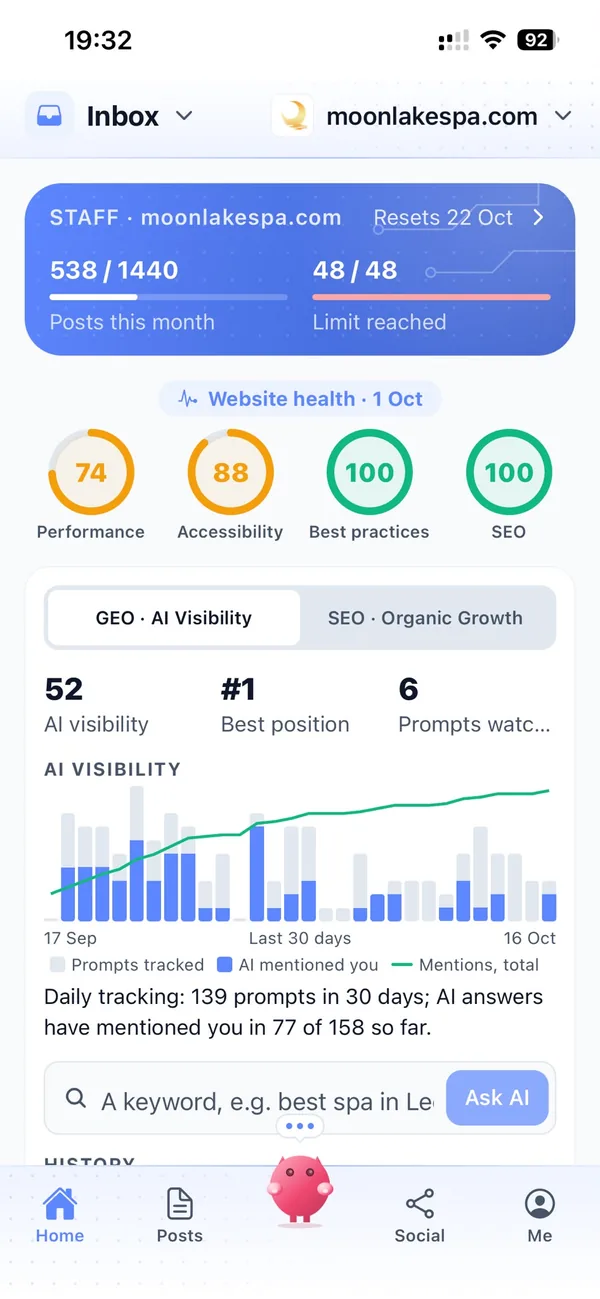
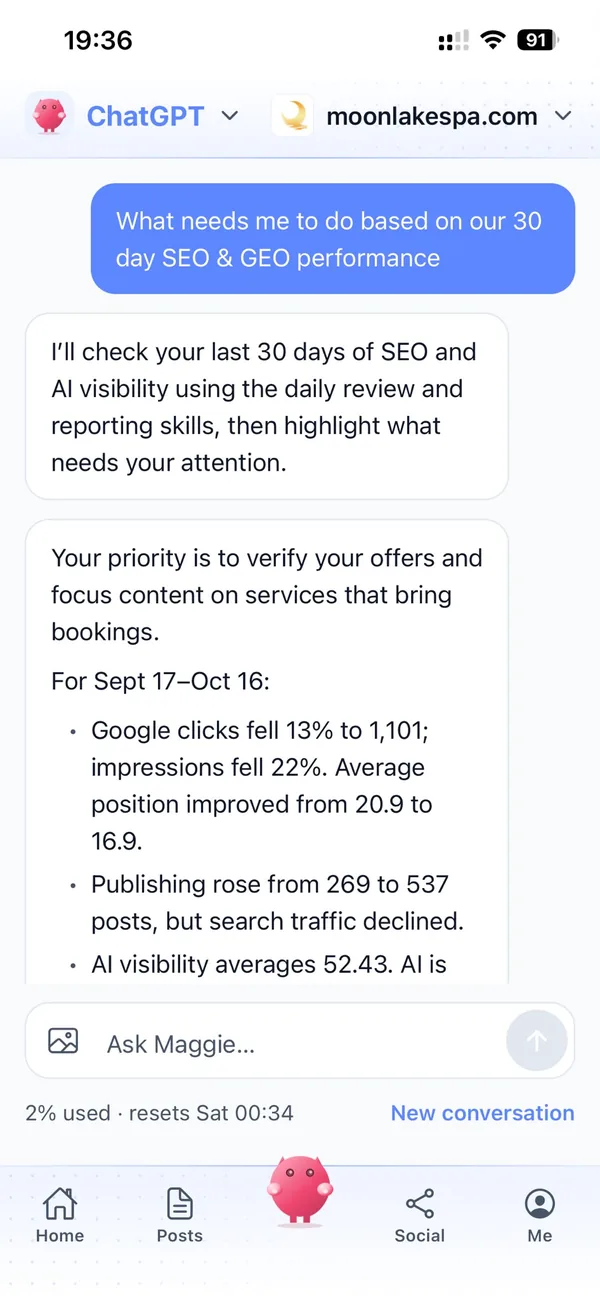
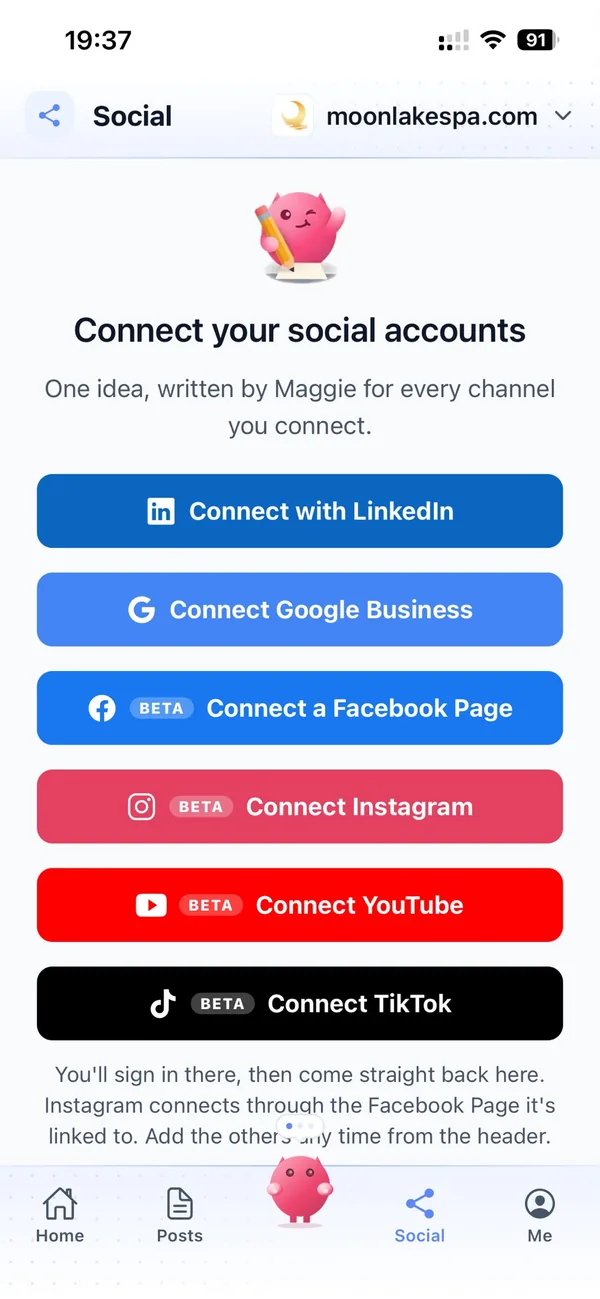
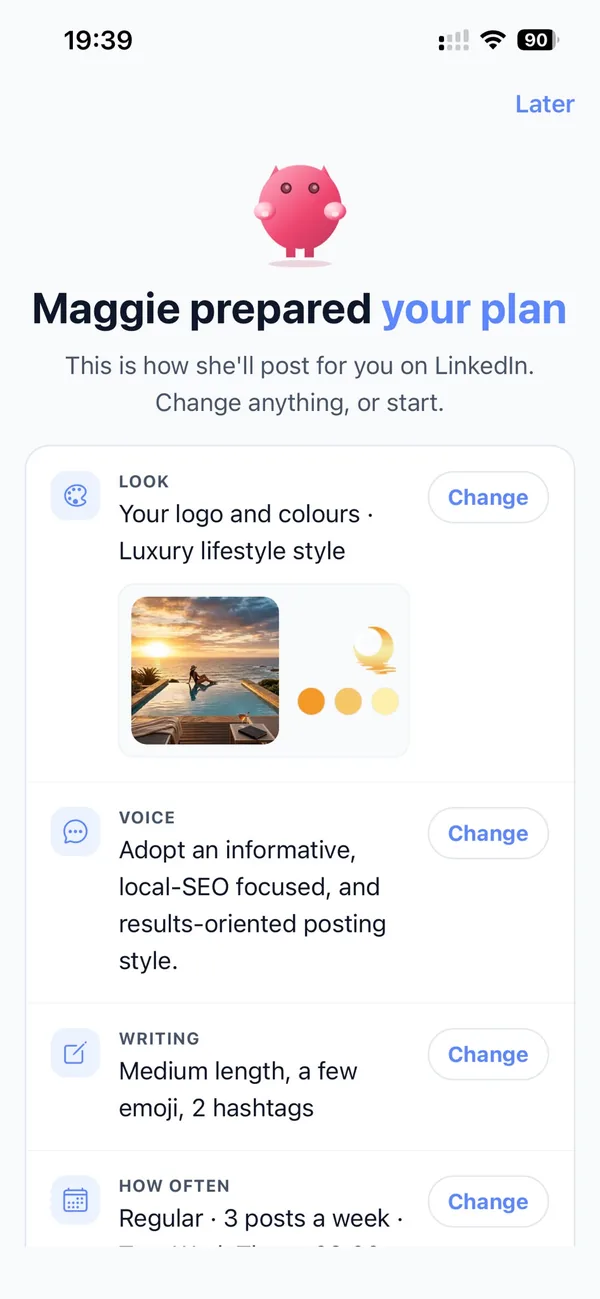
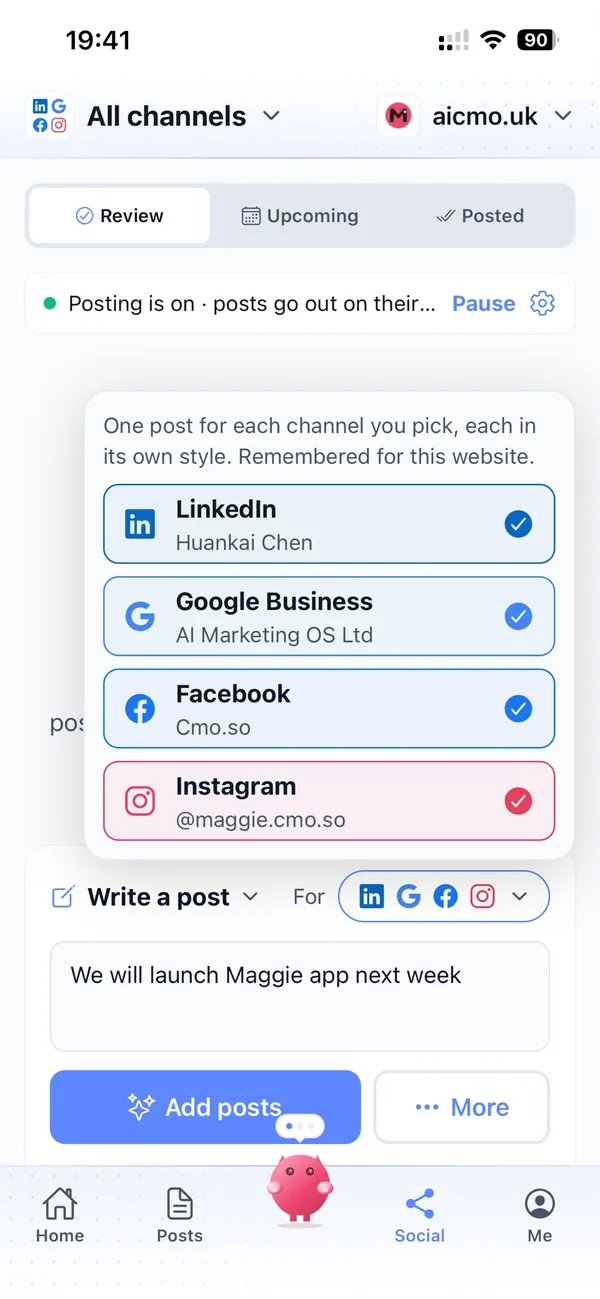
From your job board to a steady stream of guides in four steps
Enter your website
Maggie reads it and drafts your brand profile in minutes.
Check your profile
Add the roles and sectors you cover, who you write for and the channels you want.
Review the drafts
Your first week of posts for job seekers and employers arrives with pictures. Approve, edit or skip each one.
Let them go out
Approved posts go out at each channel's times and every one comes back with its link.
Why not just…
The usual ways job boards try to grow both sides, and where each one runs out.
…pay for job ads on aggregators?
Paid placements bring clicks for as long as you keep paying, and they stop the day you do. Career guides on your own site keep bringing people in for months.
…let the listings do the work?
Listings expire, and a page of jobs rarely answers the questions people search for. Lasting guides give both job seekers and employers a reason to come back.
…hire a content agency?
SEO and content agencies often cost around £1,000 a month, and you still brief them on your sector. Maggie writes and publishes every week from £15 a month.
…write it with ChatGPT?
You still brief it, check it, make the picture and post it yourself, and it doesn't know your sector or your audience. Maggie remembers your board and puts posts out on schedule.
Cut the £5,900/mo marketing bill to £15/mo
Everything a marketing team does, done by Maggie.
| What needs doing | Without cmo.so | With cmo.so |
|---|---|---|
| Full-time marketing hire | £3,000/mo | Included |
| SEO and AI search (GEO) agency | £1,000/mo | Included |
| Content writer, AI-assisted | £500/mo | Included |
| Social media manager, freelance | £800/mo | Included |
| Designed pictures for every post | £300/mo | Included |
| SEO and GEO softwareRank tracking, site audits, AI visibility | £250/mo | Included |
| AI writing and image tools | £50/mo | Included |
| Working hours | Office hours | 24/7 |
| Total per month | £5,900+ | From £15/mo |
Typical UK costs for a small business in 2026, with AI already cutting freelance rates. Estimates only; your own quotes will vary.
- 5 social posts, 30 once verified
- 15 Maggie messages a day
- Upgrade any time
- 12 posts a day
- 150 Maggie messages a day
- All channels
- 96 posts a day
- 1,000 Maggie messages a day
- All channels
Per website, billed monthly. Blog and social posts share one allowance; your best plan sets how much you can talk to Maggie across all your websites.
Marketing automation for job boards: your questions
Still unsure?
What is marketing automation for job boards?
It's software that does the repeating work of marketing a job board: planning topics for job seekers and employers, writing blog and social posts, making pictures and publishing them on schedule.
With cmo.so, Maggie does all of it from your website, and nothing goes out until you approve it.
How do job boards get more users online?
Job boards get more users online by answering the questions both sides search for: how to write a CV for a particular role, what a job usually involves, how to write a job ad that works, and what changes in hiring each season.
Maggie writes those guides every week for your blog and LinkedIn, and Search Console shows which ones bring people to your site.
How much does marketing automation cost for a job board?
There's a free plan with no card needed. Paid plans are per website and billed monthly: Air at £15 a month covers two posts a day, and Pro at £45 a month suits a growing board writing for both job seekers and employers on several channels.
Founding members get lower prices for good on every plan until 1 January 2027. You can cancel any time.
Which channels should job boards start with?
Most job boards start with their own blog for career and hiring guides, plus LinkedIn, where both job seekers and hiring managers already are.
Facebook, Instagram and TikTok are in beta and can suit boards for younger job seekers or shift work. Each channel has its own posting times and queue.
Can it write for job seekers and employers at the same time?
Yes. Your brand profile describes both audiences, and you can ask for a mix of posts each week, such as interview tips for candidates and job ad advice for employers.
Each channel can have its own voice, so a LinkedIn post for hiring managers reads differently from a blog post for school leavers.
Does cmo.so post our job listings?
No, cmo.so writes articles and social posts, not listings, and it doesn't connect to your job database or applicant records. Your listings stay in your own system.
Posts can link to your search pages or to a sector's jobs, so a career guide sends readers straight to roles they can apply for.
Can it write salary guides?
It can write salary guides in general terms from what your website and brand profile say. It doesn't invent figures or surveys.
If you have your own salary data, add it to the post when you review it, and Maggie learns from your edits for the next one.
We run a niche job board. Will it understand our sector?
Yes, because it starts from your website. Maggie reads the roles you list and the employers you work with, and writes about the questions people in that sector actually ask.
You can correct the brand profile at any time, and she learns from every edit you make.
Is it safe to let AI post for our job board?
Yes, because nothing goes out until you approve it. Approvals are on by default, and you can keep them on for every channel or let a channel you trust run on autopilot.
Social channels connect through each platform's official sign-in, so cmo.so never sees your passwords, and cmo.so never sells or rents your data.
Can it help employers find our board in AI answers?
It helps by writing clear, quotable answers about hiring in your sector, which is what AI answers tend to draw on. It can't promise that an AI will mention you.
AI visibility in cmo.so shows how Google's AI answers describe your board, so you can see what changes over time.
We run several job boards. Can cmo.so handle all of them?
Yes. Add each board's website to one account and each gets its own brand profile, channels, schedule and approvals.
The Elite plan is made for many brands, and your team can work across all of them.
Can my team approve posts too?
Yes. In Me → Team you can add people and choose what each can see or change, using presets such as editor or manager.
So the person who looks after employers can approve hiring posts while someone else checks the career advice.
Give job seekers and employers a reason to come back
Enter your website. Your brand profile and first week of posts are ready in minutes, and nothing goes out until you approve it.
- Free plan, no card needed
- You approve every post
- Cancel any time