


Marketing automation for online marketplaces
A marketplace has two audiences to win every week: the buyers who come to shop and the sellers who give them something to buy. Maggie, your AI CMO, writes for both, from category buying guides to seller success tips, and you approve every post.
Free to start · No credit card · 30 free posts
Used by 600+ users and trusted by teams at
aeglesriphal.com
moonlakespa.com
shop.theteagroup.com
clo100.com
logtrics.io
mymorez.com
nextidal.com
otisapp.com
storaitelling.com
theheatpumps.co.uk
web-translations.com
exposeai.tech
orielipo.com
whitelabelcrowd.fund
elliptic.co
med.moonlakespa.com
netdex.co.il
orawellness.uk
reenest.com
syngage.ai
thepenthouseliving.com
zengolf.studio
imaintain.uk
rebuildingsociety.com
aurasocial.world
goaimex.com
moneyparents.com
newgenrenewables.uk
osmosisai.co
saunders.ac
teeza.app
thursdayclub.com
Why online marketplaces struggle to keep their marketing going
Your team is busy onboarding sellers, fixing listings and answering support tickets. Content for growth keeps slipping.
Two sides, one small team
Buyers need reasons to visit and sellers need reasons to list. Most small marketplace teams manage content for one side at best, and the other side quietly stalls.
Category pages with nothing to say
Shoppers search for how to choose a used camera, what a fair price for a vintage chair is or which handmade gifts ship fast. Listing grids alone rarely answer those questions, so the search traffic goes elsewhere.
Big platforms set the expectations
Sellers compare you with the largest marketplaces and wonder why they should list with you too. Without regular stories on what makes your marketplace different, the answer is hard to find.
Paid traffic costs more every quarter
Buying clicks for every category and every seller campaign adds up fast. Content that keeps bringing people in from search is the part of growth you actually own.

New sellers on Monday, a full content week for both sides by Wednesday.
It's Monday. Your marketplace for pre-loved outdoor gear has twenty new sellers joining this week, autumn hiking season is starting, and your blog's last post was a launch announcement.
You paste your marketplace's website into cmo.so. Maggie reads it and writes your brand profile: second-hand outdoor gear checked before it ships, the hikers and climbers who buy, the small shops and individuals who sell, your buyer protection, competitors and your friendly, practical voice. You correct one thing: you no longer accept bikes.
By Tuesday the drafts are waiting, each with a picture in your marketplace's look: a buying guide on choosing a second-hand waterproof jacket, a blog post for sellers on photographing gear so it sells faster, a LinkedIn post for outdoor shops about selling their returns and ex-demo kit with you, and an Instagram post about autumn walking boots. You approve three and add a category link to the fourth.
The posts go out at the times you set for each channel and each comes back with its link. While your team onboards the new sellers, Maggie is already planning winter kit guides, and Search Console in cmo.so shows which categories people find through your guides.
A marketing assistant for both sides of your marketplace
Each of those problems has an answer, and you still decide what goes out under your marketplace's name.
Buying guides that send people to categories
Guides on how to choose, what to check and what things are worth, linked to the categories where buyers can find them, written for Google and for AI answers. Published to your WordPress or WooCommerce, Shopify, Wix or Webflow site, or any site through the cmo.so API.
Blog on autopilotContent that brings in sellers
Posts on how to list well, price fairly and ship safely, plus LinkedIn posts for shops and brands that could sell with you. Sellers see why your marketplace is worth their time.
Seller growthPlanned around buying seasons
Back to school, summer holidays, Black Friday, Christmas gifting or the start of a sport's season. Topics are planned weeks ahead and queued, so content arrives before buyers start searching.
Content calendarYour marketplace, not a generic shop
Enter your website and Maggie builds your brand profile: what's sold, who buys and sells, what sets your marketplace apart, competitors and voice. Every post and picture starts from it.
Brand profileOne idea, every channel
One idea becomes a post for each channel in its own style: Instagram, Facebook and TikTok for shoppers (in beta), LinkedIn for professional sellers and partners, YouTube for how-to videos (in beta).
Every channelSee what search brings in
Search Console in cmo.so shows which guides bring visitors, and AI visibility shows how Google's AI answers describe your marketplace when people ask where to buy or sell.
AI visibility and Search ConsoleYour marketing team, in your pocket
Real screens from the cmo.so app on iPhone.
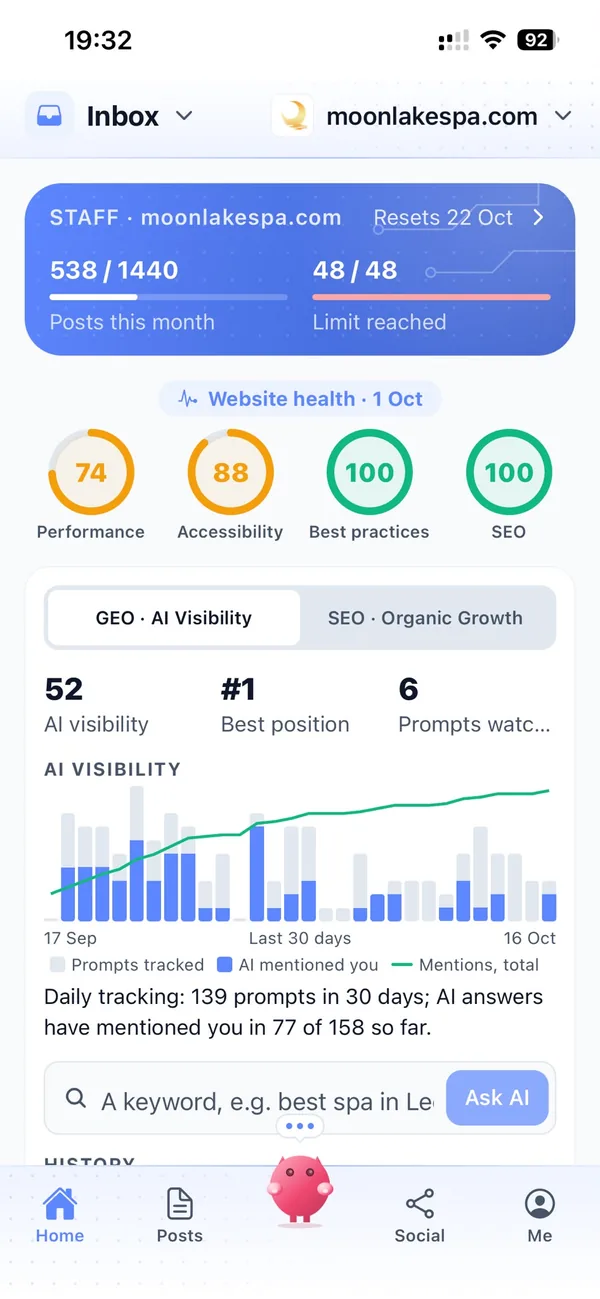
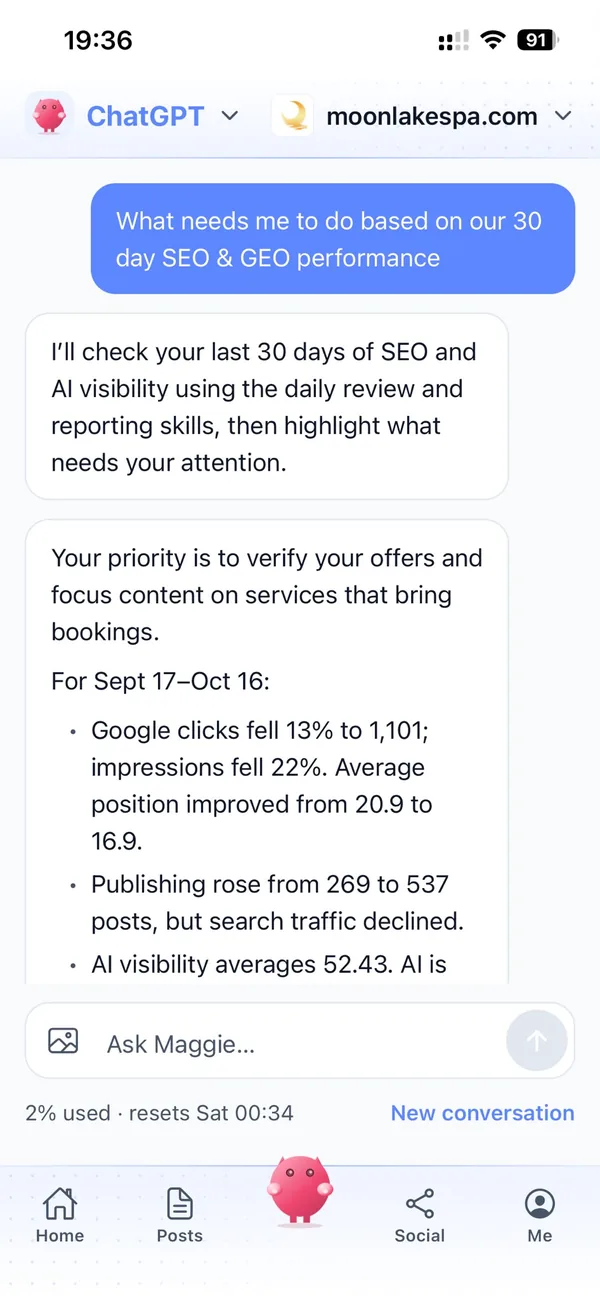
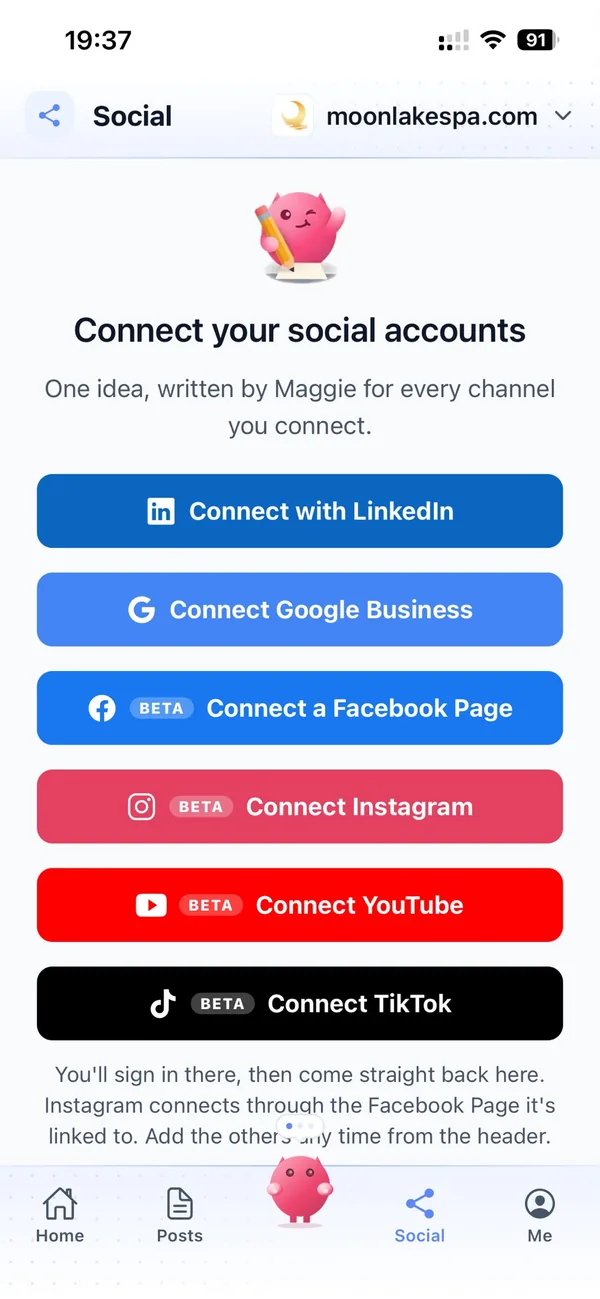
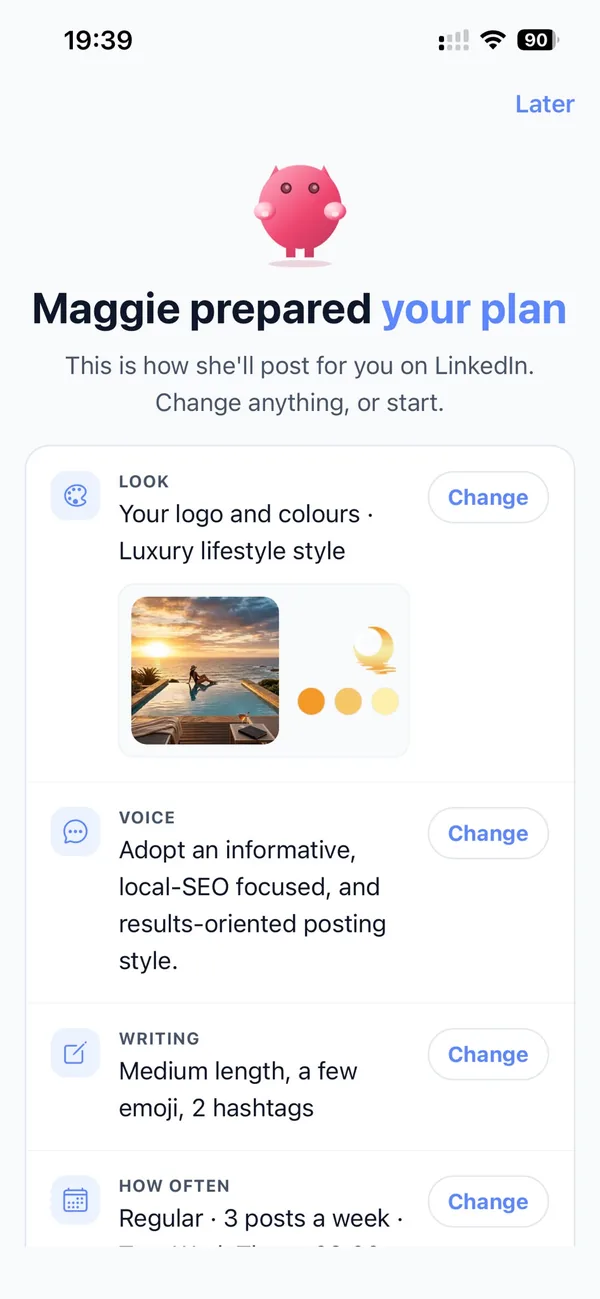
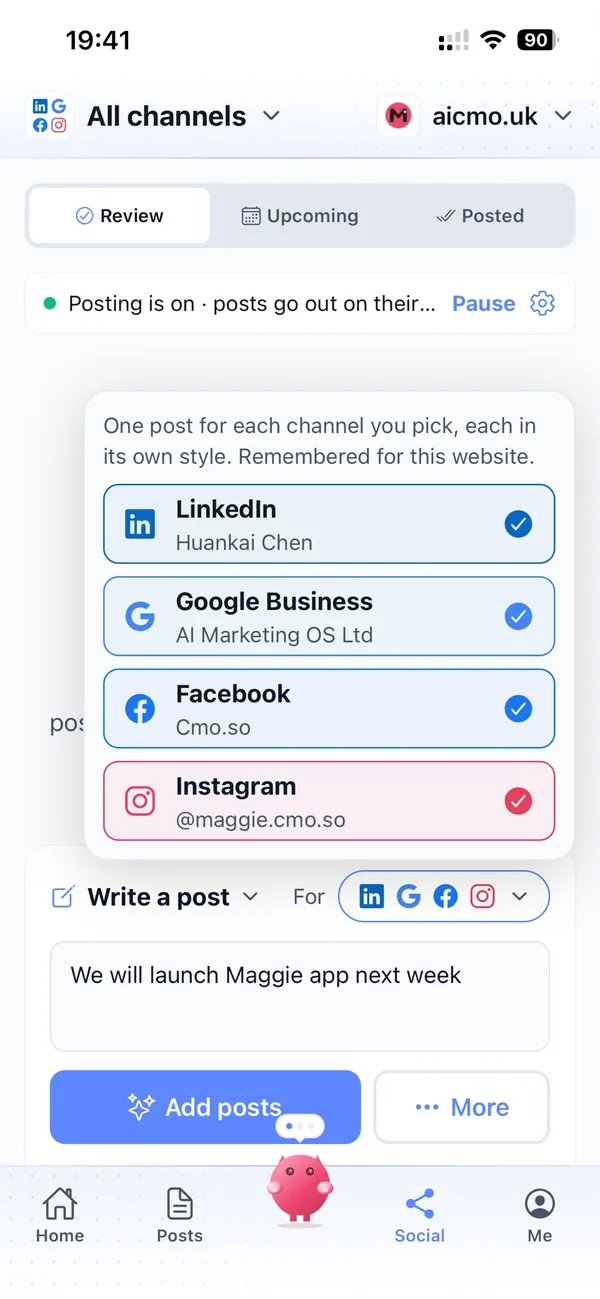
From your marketplace's website to content for buyers and sellers in four steps
Enter your website
Maggie reads it and drafts your marketplace's brand profile in minutes.
Check your profile
Correct your categories and who sells with you, add the seasons that matter and choose your channels.
Review the drafts
Your first week of posts arrives with pictures. Approve, edit or skip each one.
Let them go out
Approved posts go out at each channel's times and every one comes back with its link.
Why not just…
The usual ways marketplaces try to grow, and where each one runs out.
…keep buying ads for every category?
Ads bring traffic only while you pay for it, and costs rise with competition. Guides on your own website keep bringing buyers in from search long after they are published.
…let sellers do the marketing?
Some sellers promote their listings, but they promote their own shop, not your marketplace. Regular content from you gives buyers a reason to come back to the whole marketplace.
…hire a content agency?
SEO and content agencies often cost around £1,000 a month, and two-sided content can mean twice the brief. Maggie writes and publishes every week from £15 a month.
…write it with ChatGPT?
You still brief it, check it, make the picture and post it yourself, and it doesn't know your categories or your sellers. Maggie remembers your marketplace and puts posts out on schedule.
Cut the £5,900/mo marketing bill to £15/mo
Everything a marketing team does, done by Maggie.
| What needs doing | Without cmo.so | With cmo.so |
|---|---|---|
| Full-time marketing hire | £3,000/mo | Included |
| SEO and AI search (GEO) agency | £1,000/mo | Included |
| Content writer, AI-assisted | £500/mo | Included |
| Social media manager, freelance | £800/mo | Included |
| Designed pictures for every post | £300/mo | Included |
| SEO and GEO softwareRank tracking, site audits, AI visibility | £250/mo | Included |
| AI writing and image tools | £50/mo | Included |
| Working hours | Office hours | 24/7 |
| Total per month | £5,900+ | From £15/mo |
Typical UK costs for a small business in 2026, with AI already cutting freelance rates. Estimates only; your own quotes will vary.
- 5 social posts, 30 once verified
- 15 Maggie messages a day
- Upgrade any time
- 12 posts a day
- 150 Maggie messages a day
- All channels
- 96 posts a day
- 1,000 Maggie messages a day
- All channels
Per website, billed monthly. Blog and social posts share one allowance; your best plan sets how much you can talk to Maggie across all your websites.
Marketing automation for online marketplaces: your questions
Still unsure?
What is marketing automation for online marketplaces?
It's software that does the repeating work of marketing a marketplace: planning topics for buyers and sellers, writing guides and social posts, making pictures and publishing them on schedule.
With cmo.so, Maggie does all of it from your marketplace's website, and nothing goes out until you approve it.
How do online marketplaces get more customers online?
Online marketplaces get more customers online by answering what buyers search for before they buy and by showing sellers why listing is worth it, week after week.
Maggie writes buying guides, seller tips and social posts every week, and Search Console shows which ones bring people to your website.
How much does marketing automation cost for an online marketplace?
There's a free plan with no card needed. Paid plans are per website and billed monthly: Air at £15 a month covers two posts a day, and Pro at £45 a month suits a marketplace posting for buyers and sellers on several channels.
Max at £75 a month gives more room as you grow. Founding members get lower prices for good on every plan until 1 January 2027, and you can cancel any time.
Which channels should online marketplaces start with?
Most marketplaces start with their own blog for buying guides, because that's what brings shoppers in from search, plus LinkedIn to reach professional sellers and partners.
Instagram, Facebook and TikTok are in beta and suit shoppers browsing for ideas. Each channel has its own posting times and queue.
Can cmo.so write for buyers and sellers separately?
It can, and each side gets its own topics. Maggie plans buying guides and seasonal posts for shoppers, and how-to-sell posts and success tips for sellers, from the same brand profile.
You choose which channels carry which side, for example sellers on LinkedIn and buyers on Instagram.
Will posts link to our category pages?
Posts can link to the categories and pages on your website, so a buying guide sends readers to the listings they were reading about.
You can change or add links before approving any post.
Will cmo.so change our listings or prices?
No, cmo.so never changes products, listings, prices or stock. Maggie writes and publishes posts about your marketplace and links to it.
Your sellers and your team stay in charge of everything on the marketplace itself.
What kind of posts will Maggie write for a marketplace?
She writes category buying guides, what-to-check lists, seasonal gift ideas, seller how-tos on photos, pricing and shipping, and stories about what makes your marketplace different.
She doesn't invent seller names, sales figures or results; she writes from your website and the brand profile you check.
Does it help us show up in AI answers?
It helps by writing clear, quotable guides that AI assistants can use when someone asks where to buy or sell something in your category.
AI visibility in cmo.so shows how Google's AI answers describe and mention your marketplace.
Is it safe to let AI post for our marketplace?
Yes, because nothing goes out until you approve it. Approvals are on by default, and you can keep them on for every channel or let a channel you trust run on autopilot.
Social channels connect through each platform's official sign-in, so cmo.so never sees your passwords, and cmo.so never sells or rents your data.
We run marketplaces in two countries. Can cmo.so handle both?
Yes. If each marketplace has its own website, add both to one account and each gets its own brand profile, channels, schedule and approvals.
Each plan is per website, so you pay for the sites you add.
Can our team approve posts too?
Yes. In Me → Team you can add people and choose what each can see or change, using presets such as editor or manager.
So your seller success lead can approve seller posts while marketing looks after buyer content.
Give buyers and sellers a reason to come back every week
Enter your website. Your brand profile and first week of posts are ready in minutes, and nothing goes out until you approve it.
- Free plan, no card needed
- You approve every post
- Cancel any time