


Marketing automation for HR consultancies
Employers look for HR help when something has already gone wrong: a grievance, a difficult dismissal, a rule change they half heard about. Maggie, your AI CMO, writes the guides and LinkedIn posts that make you the consultancy they call, and you approve every one.
Free to start · No credit card · 30 free posts
Used by 600+ users and trusted by teams at
aeglesriphal.com
moonlakespa.com
shop.theteagroup.com
clo100.com
logtrics.io
mymorez.com
nextidal.com
otisapp.com
storaitelling.com
theheatpumps.co.uk
web-translations.com
exposeai.tech
orielipo.com
whitelabelcrowd.fund
elliptic.co
med.moonlakespa.com
netdex.co.il
orawellness.uk
reenest.com
syngage.ai
thepenthouseliving.com
zengolf.studio
imaintain.uk
rebuildingsociety.com
aurasocial.world
goaimex.com
moneyparents.com
newgenrenewables.uk
osmosisai.co
saunders.ac
teeza.app
thursdayclub.com
Why HR consultancies struggle to keep their marketing going
Client work always comes first. A tribunal claim, a restructure or a stack of contracts to redraft will push a blog post off the list every time.
Your best answers live in client emails
Every week you explain holiday pay, probation reviews or flexible working requests to the one client who asked. None of it reaches your website, where the next employer is searching for exactly that answer.
The rules change, your blog doesn't
Each change to employment rules sends small employers looking for help. By the time you've found an afternoon to write about it, the searches have peaked and another firm's guide is the one they read.
Referrals come and go
Most new clients arrive through accountants, solicitors, past clients and networking breakfasts. When those go quiet, there's no steady flow of business owners finding you on their own.
LinkedIn goes quiet when work is busy
Managing directors and finance directors check LinkedIn before they trust someone with their people problems. A profile that posts twice a year looks like a consultancy with no time for new clients.

Three clients asked the same question on Monday. By Thursday the answer is on your website.
It's Monday, and three clients have emailed about the same change to employment rules coming in next spring. You've answered each of them separately. There's nothing about it on your website.
You enter your consultancy's website into cmo.so. Maggie reads it and writes your brand profile: your retained HR support and project work, the sectors you know best, such as care homes and hospitality, the region your clients are in, and the plain, reassuring way you talk to business owners. You correct one thing: you stopped offering payroll last year.
By Wednesday the drafts are waiting, each with a picture in your consultancy's look: a blog post explaining what the change means for a small employer and what to do before it starts, three LinkedIn posts drawn from it for managing directors, and a Google Business update for your local office. You add a line from your own experience and approve the rest from your phone between client calls.
The posts go out at the times you set for each channel, and each comes back with its link. A few weeks later, Search Console in cmo.so shows which guides employers are finding, and Maggie plans the next ones around them: absence management, settlement agreements, handbook updates.
A marketing assistant who understands what employers ask
Each of those problems has an answer, and you still sign off everything that goes out under your consultancy's name.
Employer guides on your blog
Clear posts on the questions small employers search for: handling a grievance, running a probation review, answering a flexible working request, updating the staff handbook. Written for Google and for AI answers, and published to WordPress, Shopify, Wix, Webflow or any site through the cmo.so API.
Blog on autopilotTopical while it's still topical
When employment rules change, or a busy HR season arrives such as year-end appraisals or summer holiday requests, tell Maggie in a sentence and she plans that week's posts around it.
Timely topicsLinkedIn for the people who hire you
Posts for managing directors, finance directors and operations managers who need HR support but have no HR team, in your voice and on the days you choose. One guide becomes several posts.
LinkedInYour practice, not a generic HR firm
Enter your website and Maggie builds your brand profile: services, retainers and project work, sectors, unique selling points, competitors and voice. Every post and picture starts from it.
Brand profileA careful second look
Content Policy Guard can check posts against legal rules or your own house rules, such as never commenting on a specific case, and hold a risky post as a draft with a suggested rewrite. These are AI suggestions, not legal or compliance advice, and a qualified person should still review.
Content Policy GuardApprove between client calls
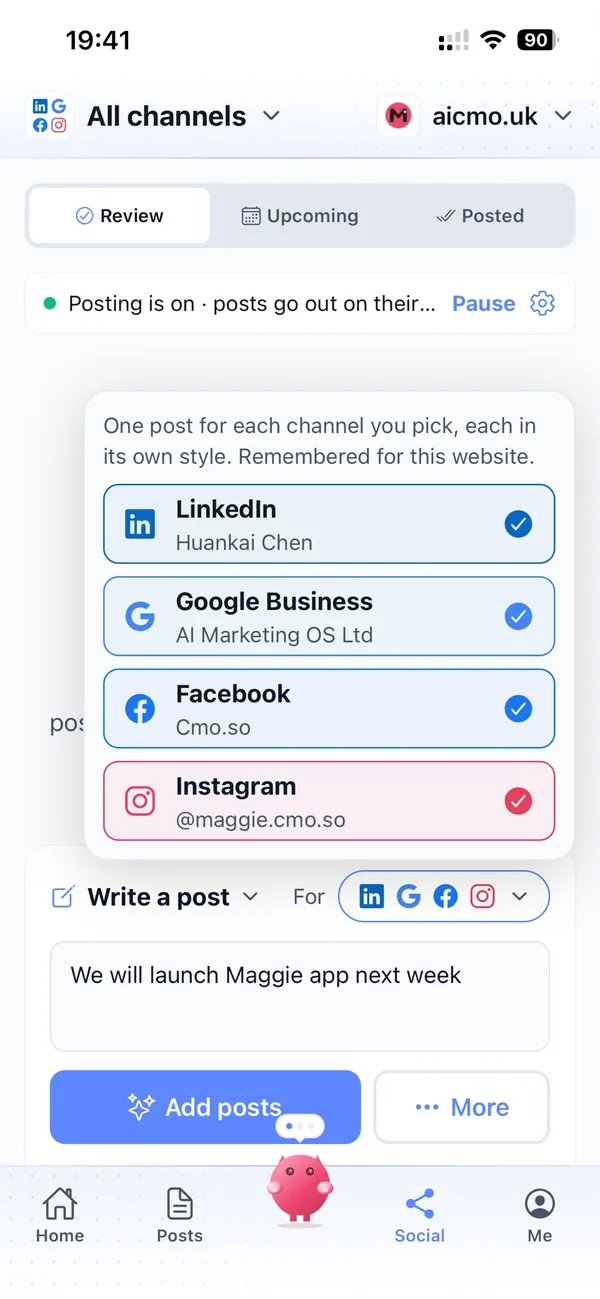
By default nothing goes out until you approve it. Review drafts in the iPhone app or at app.cmo.so, edit a line, skip a post or pause a channel while you're in the middle of a restructure.
ApprovalsYour marketing team, in your pocket
Real screens from the cmo.so app on iPhone.
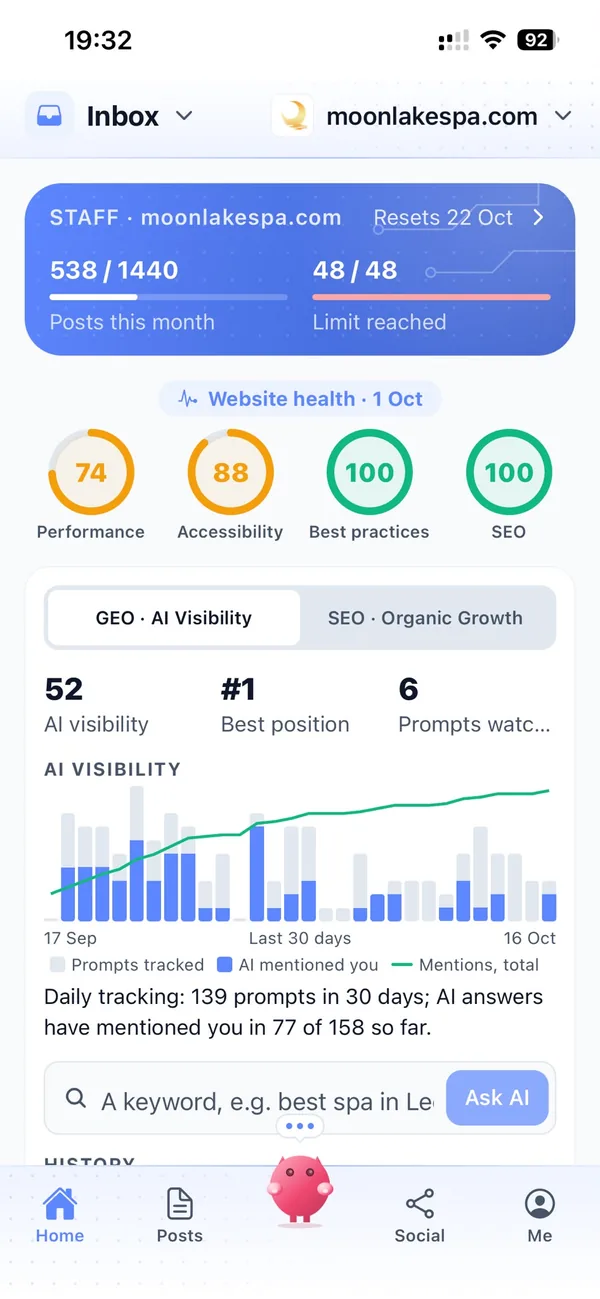
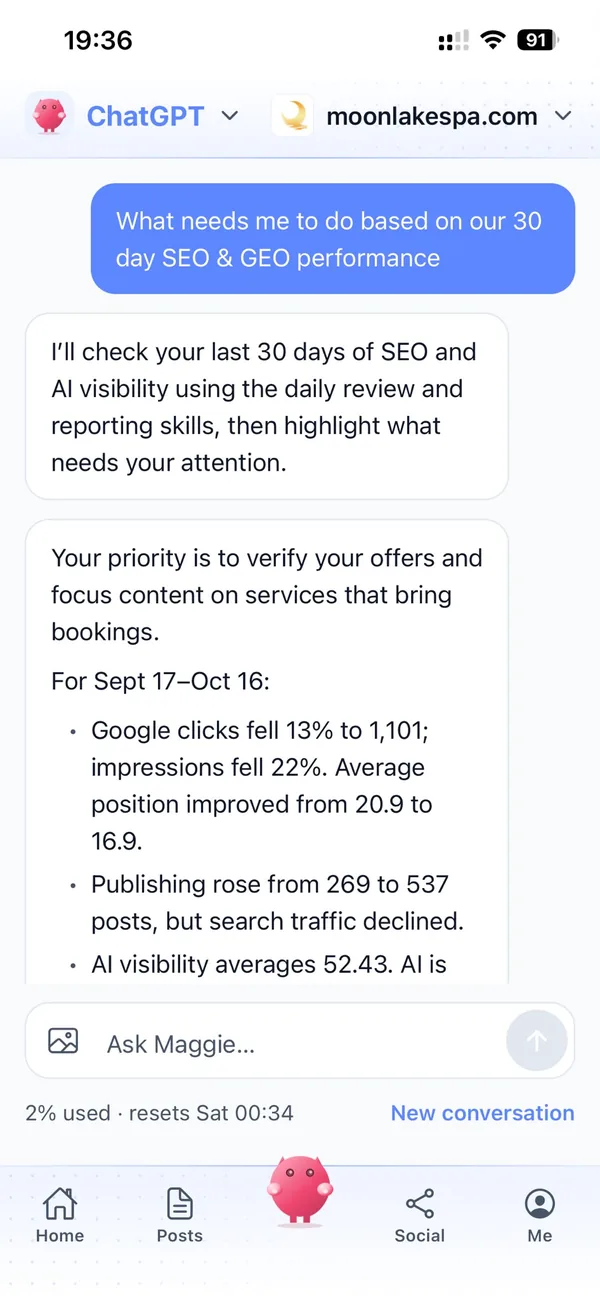
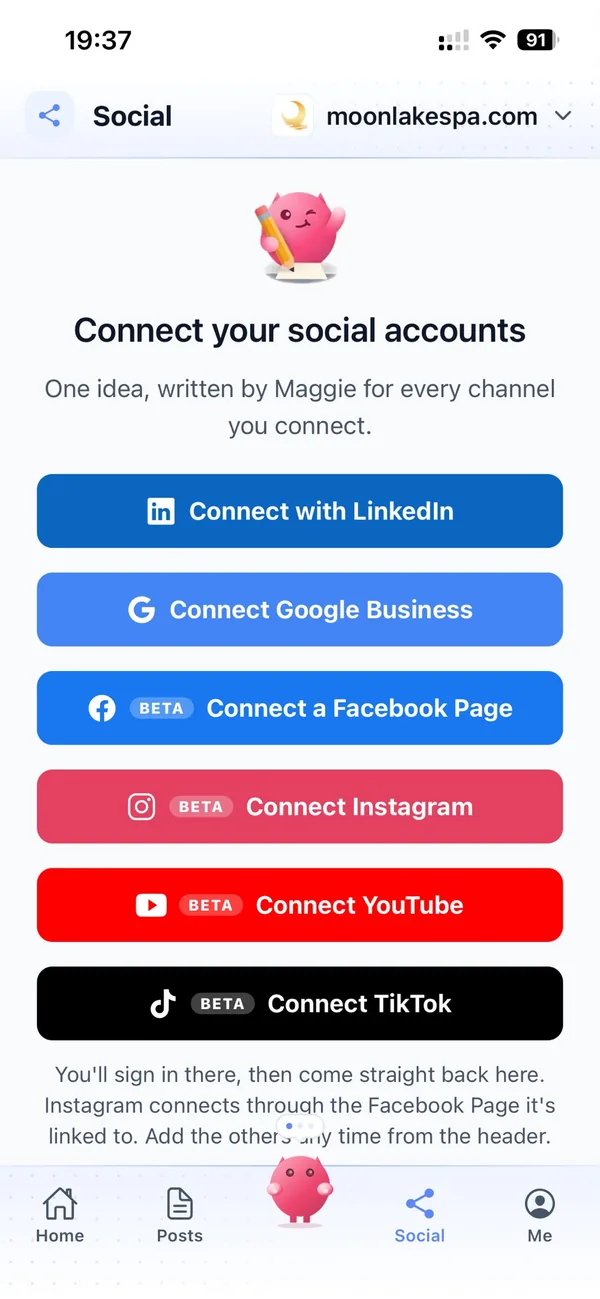
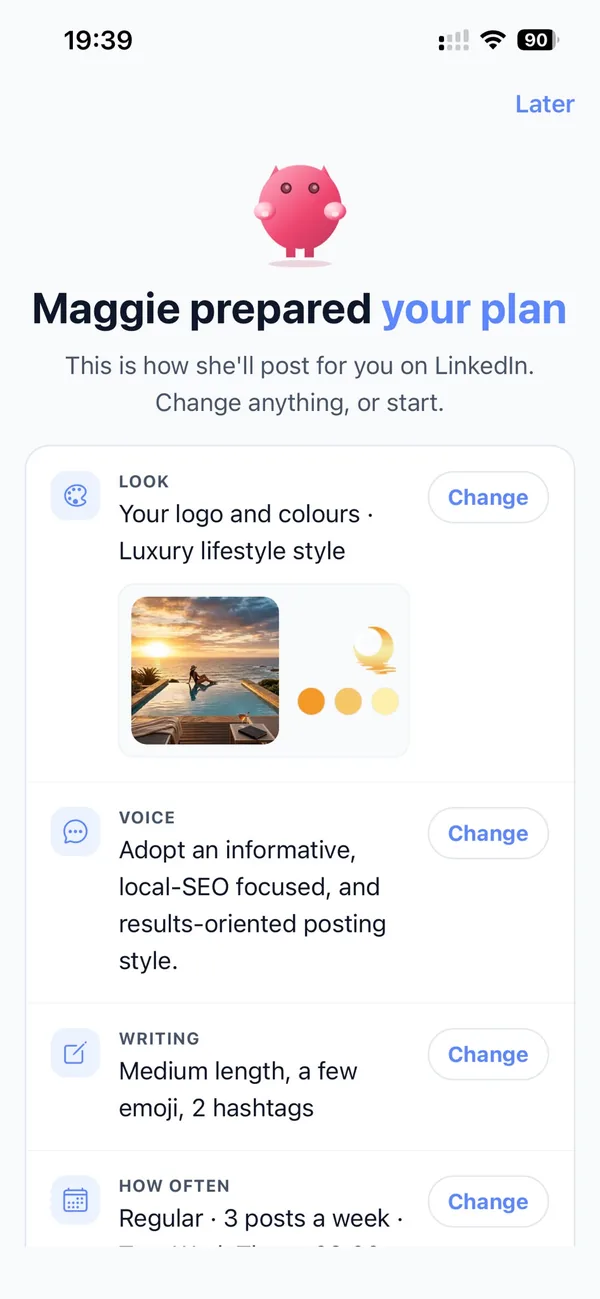
From your consultancy's website to a month of posts in four steps
Enter your website
Maggie reads it and drafts your consultancy's brand profile in minutes.
Check your profile and rules
Correct your services and sectors, add house rules such as never commenting on live cases, and choose your channels.
Review the drafts
Your first week of guides and LinkedIn posts arrives with pictures. Approve, edit or skip each one.
Let them go out
Approved posts go out at each channel's times and every one comes back with its link.
Why not just…
The usual ways HR consultancies try to win new clients, and where each one runs out.
…rely on referrals from accountants and past clients?
Referrals are valuable, but you can't turn them up when you need work. Regular guides and LinkedIn posts let employers who have never met you find you and see how you think.
…hire a marketing assistant?
A full-time marketing hire in the UK costs around £3,000 a month before tools, and they'd still need you to explain every HR topic. Your AI CMO, Maggie, starts from your website from £15 a month.
…pay a content agency?
SEO and content agencies often cost around £1,000 a month, and a generalist writer may not know a grievance from a disciplinary. You'd end up correcting every draft anyway.
…write it with ChatGPT?
You still brief it each time, check it, make the picture and post it yourself, and it doesn't know your services, sectors or tone. Maggie remembers your consultancy and puts posts out on schedule.
Cut the £5,900/mo marketing bill to £15/mo
Everything a marketing team does, done by Maggie.
| What needs doing | Without cmo.so | With cmo.so |
|---|---|---|
| Full-time marketing hire | £3,000/mo | Included |
| SEO and AI search (GEO) agency | £1,000/mo | Included |
| Content writer, AI-assisted | £500/mo | Included |
| Social media manager, freelance | £800/mo | Included |
| Designed pictures for every post | £300/mo | Included |
| SEO and GEO softwareRank tracking, site audits, AI visibility | £250/mo | Included |
| AI writing and image tools | £50/mo | Included |
| Working hours | Office hours | 24/7 |
| Total per month | £5,900+ | From £15/mo |
Typical UK costs for a small business in 2026, with AI already cutting freelance rates. Estimates only; your own quotes will vary.
- 5 social posts, 30 once verified
- 15 Maggie messages a day
- Upgrade any time
- 12 posts a day
- 150 Maggie messages a day
- All channels
- 96 posts a day
- 1,000 Maggie messages a day
- All channels
Per website, billed monthly. Blog and social posts share one allowance; your best plan sets how much you can talk to Maggie across all your websites.
Marketing automation for HR consultancies: your questions
Still unsure?
What is marketing automation for HR consultancies?
It's software that does the repeating work of marketing an HR consultancy: planning the topics employers search for, writing blog and LinkedIn posts, making pictures and publishing them on schedule.
With cmo.so, Maggie does all of it from your consultancy's website, and nothing goes out until you approve it.
How do HR consultancies get more clients online?
HR consultancies get more clients online by answering the questions employers search for before they pick up the phone, and by staying visible on LinkedIn, where business owners check who they'd trust with their people problems.
Maggie, your AI CMO, writes those guides and posts every week, and Search Console in cmo.so shows which ones bring employers to your site.
How much does marketing automation cost for an HR consultancy?
There's a free plan with no card needed. Paid plans are per website and billed monthly: Air at £15 a month covers two posts a day, which suits most independent consultants, and Pro at £45 a month suits a growing consultancy posting on several channels.
Founding members get lower prices for good on every plan until 1 January 2027. You can cancel any time.
Which channels should HR consultancies start with?
Most HR consultancies start with their own blog, for the guides employers search for, and LinkedIn, where managing directors and finance directors spend their time.
Google Business helps if you serve employers in a particular town or region. Facebook, Instagram, YouTube and TikTok are in beta, and each channel has its own posting times and queue.
Is it safe to let AI write about employment matters?
It's safe when someone who knows HR reviews what goes out, and by default every post waits for your approval. You or a colleague can edit any draft, so nothing is published that you haven't checked.
Content Policy Guard can also flag posts that may break legal rules or your own house rules and suggest a rewrite. These are AI suggestions, not legal or compliance advice: a qualified person should still review, and your consultancy stays responsible for what it publishes.
Will posts read like advice on someone's individual case?
They don't have to: posts are written as general guidance for employers, and you can add a house rule to always suggest readers take advice on their own situation.
You review every post before it's published, and Maggie learns from your edits, so the tone and the caveats get closer to yours each time.
Can cmo.so write for the sectors we serve, such as care or hospitality?
Yes, it can. Your brand profile lists the sectors you work in, so Maggie can write for care home managers, restaurant owners or charity trustees, with the HR questions each of them faces.
You can correct or add sectors at any time, and new posts follow the change.
Does it connect to our HR software or client case files?
No, cmo.so is a marketing tool, not an HR one. Maggie writes and publishes marketing posts; she doesn't connect to HR systems, client records or case files, and she doesn't answer enquiries.
Posts can link to your services and contact page, so interested employers come straight to you.
Can it promote our webinars and manager training workshops?
Yes, it can promote them. Tell Maggie about a webinar, a breakfast briefing or a training day for line managers, and she writes posts to announce it on LinkedIn and your blog.
Google Business posts can carry events and buttons, so local employers see the date and can go straight to your sign-up page.
Can it help us show up in AI answers?
Yes, cmo.so can help with that. Maggie writes articles with clear, quotable answers to the questions employers ask, which is what AI tools draw on.
AI visibility in cmo.so shows how Google's AI answers describe your consultancy, so you can follow the change over time.
Which websites does it publish to?
cmo.so publishes to WordPress (including WooCommerce), Shopify, Wix and Webflow, and to any other website through the cmo.so API.
Each post is reported back with its link once it is live.
Can my colleagues approve posts too?
Yes. In Me → Team you can add people and choose what each can see or change, using presets such as editor or manager.
So a senior consultant can check every post on employment rules while you look after LinkedIn.
Be the HR consultancy employers find first
Enter your website. Your brand profile and first week of guides and LinkedIn posts are ready in minutes, and nothing goes out until you approve it.
- Free plan, no card needed
- You approve every post
- Cancel any time