


Marketing automation for compliance and risk consultancies
Every rule change sends your future clients searching for someone who can explain it. Maggie, your AI CMO, writes clear explainers and LinkedIn posts while the change is still news, and a consultant approves every one.
Free to start · No credit card · 30 free posts
Used by 600+ users and trusted by teams at
aeglesriphal.com
moonlakespa.com
shop.theteagroup.com
clo100.com
logtrics.io
mymorez.com
nextidal.com
otisapp.com
storaitelling.com
theheatpumps.co.uk
web-translations.com
exposeai.tech
orielipo.com
whitelabelcrowd.fund
elliptic.co
med.moonlakespa.com
netdex.co.il
orawellness.uk
reenest.com
syngage.ai
thepenthouseliving.com
zengolf.studio
imaintain.uk
rebuildingsociety.com
aurasocial.world
goaimex.com
moneyparents.com
newgenrenewables.uk
osmosisai.co
saunders.ac
teeza.app
thursdayclub.com
Why compliance consultancies struggle to market themselves
You spend your days making sure other people's words are accurate. Writing your own posts carefully takes time you bill for.
The news moves faster than you write
A regulator publishes new guidance, a consultation closes or a big fine makes the headlines. The firms that explain it within days get the enquiries; your considered article comes out a month later, if at all.
Expertise hidden in client reports
Your gap analyses, risk registers and audit findings show exactly how good you are. They're confidential, so the people who might hire you never see anything of that thinking.
Getting it wrong isn't an option
A post that oversimplifies a requirement or sounds like a guarantee of passing an audit could undermine the very trust you sell. So drafts sit waiting for a partner to find a free hour.
Buyers search before they call
Compliance officers, finance directors and founders of growing firms search “what does this mean for us” and “how to prepare for an audit”. If your website doesn't answer, a larger firm's or a software vendor's does.

New guidance landed on Friday, and your explainer is ready to review on Tuesday.
It's Monday. A regulator published new guidance on Friday, three clients have already emailed asking what it means for them, and your website's latest article is from the spring.
You paste your consultancy's website into cmo.so. Maggie reads it and writes your brand profile: your work on data protection, information security and financial services compliance, the growing firms and regulated businesses you advise, what sets you apart from the big consultancies, and your calm, precise voice. You turn on Content Policy Guard for financial and legal rules and add a house rule: no post may promise a client will pass an audit or avoid a fine.
By Tuesday the drafts are waiting, each with a picture in your consultancy's look: a blog post explaining what the new guidance asks of smaller firms, a checklist-style post on preparing for an ISO 27001 audit, and a LinkedIn post from your lead consultant on the three questions boards should be asking. Content Policy Guard has held one line that read like a guarantee, with a suggested rewrite. You check each against the source, approve two and tighten the wording of the third.
The posts go out at the times you set, and each comes back with its link. While you're on site for a client audit, Maggie is already planning next month's explainers, and Search Console in cmo.so shows which guides compliance leads are reading.
A marketing assistant who takes accuracy as seriously as you do
Each of those problems has an answer, and your consultants still decide what goes out under your name.
Explainers for the questions buyers ask
What a rule change means for a firm like theirs, how to prepare for an audit, what good risk management looks like, written for Google and for AI answers. Published to your WordPress, Webflow, Wix or Shopify site, or any site through the cmo.so API.
Blog on autopilotChecked against the rules
Turn on Content Policy Guard and posts are checked against financial, legal or other rules, or your consultancy's own. A risky post is held as a draft with a suggested rewrite. These are AI suggestions, not legal or compliance advice.
Content Policy GuardLinkedIn where risk leads read
Regular posts from your company page on regulatory changes, common gaps you see and practical steps. LinkedIn is where compliance officers, finance directors and boards look for advisers.
LinkedInYour specialisms, not generic advice
Enter your website and Maggie builds your brand profile: your areas of compliance, the sectors and sizes of firm you advise, what sets you apart, competitors and voice. Every post and picture starts from it.
Brand profileKnow what AI says about you
Buyers increasingly ask AI tools who can help them get ready for an audit. AI visibility shows how Google's AI answers describe and mention your consultancy.
AI visibilityReviewed by the right person
By default nothing goes out until it's approved. Add consultants in Me → Team with presets such as editor or manager, and review from the iPhone app or app.cmo.so between client visits.
ApprovalsYour marketing team, in your pocket
Real screens from the cmo.so app on iPhone.
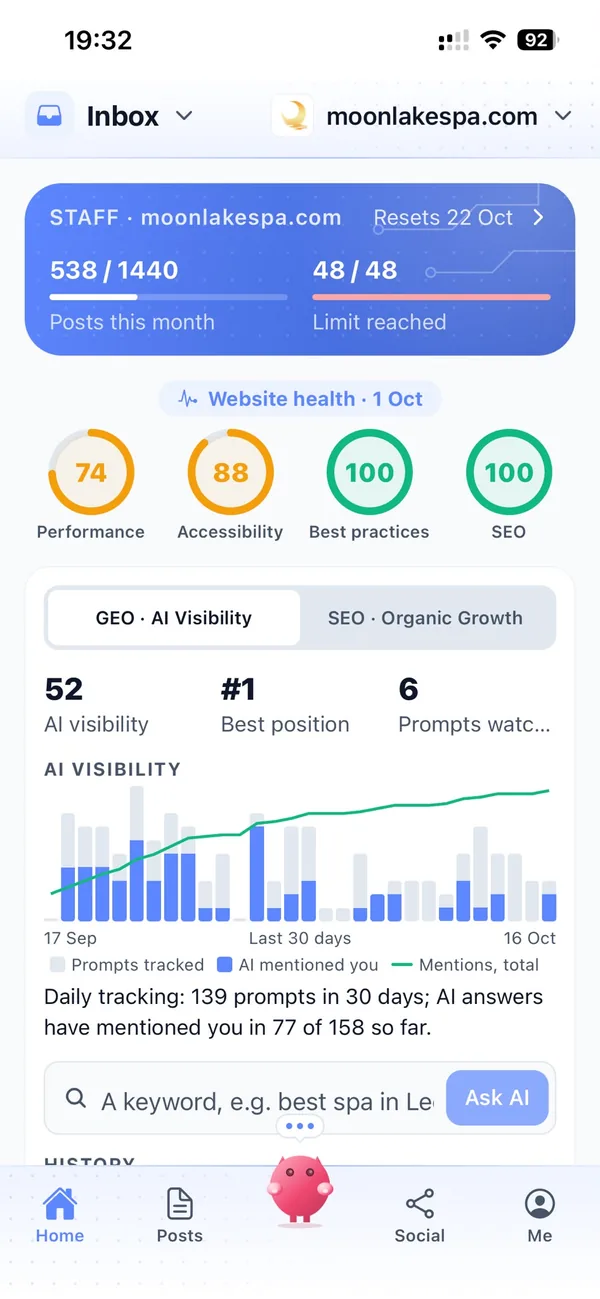
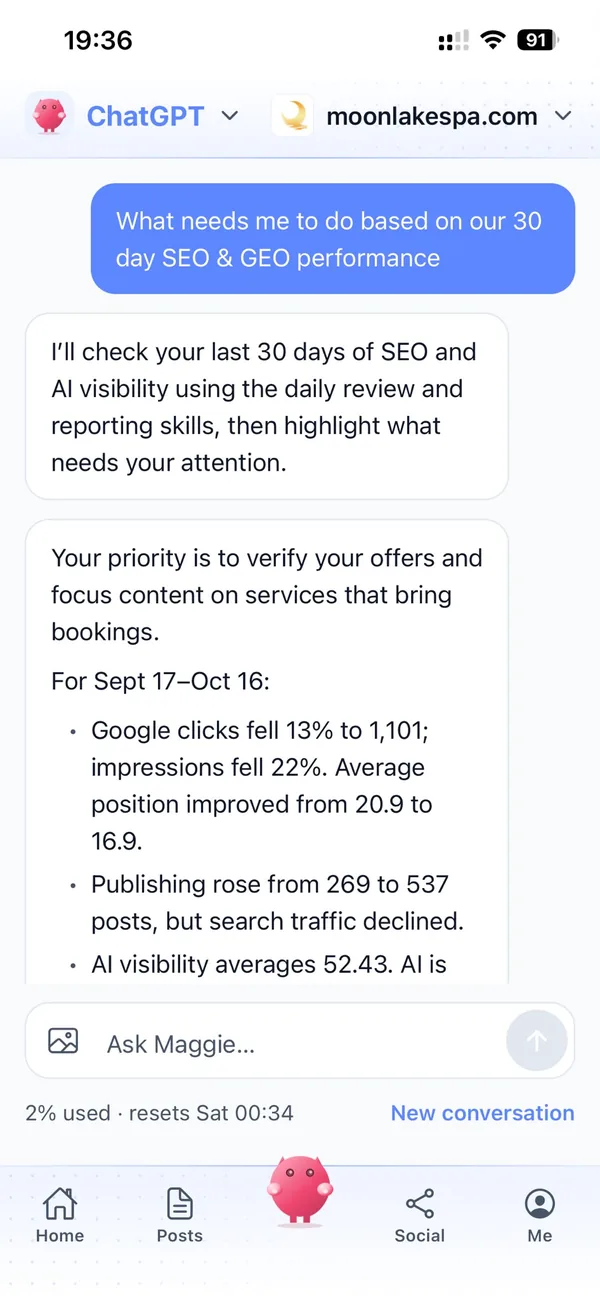
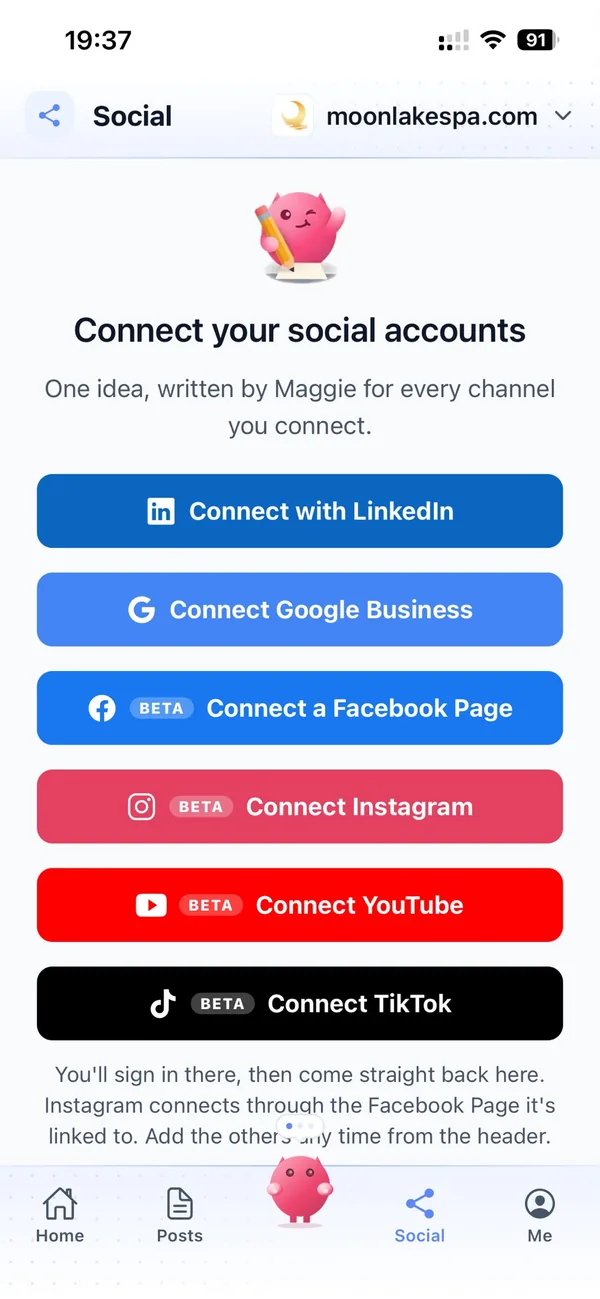
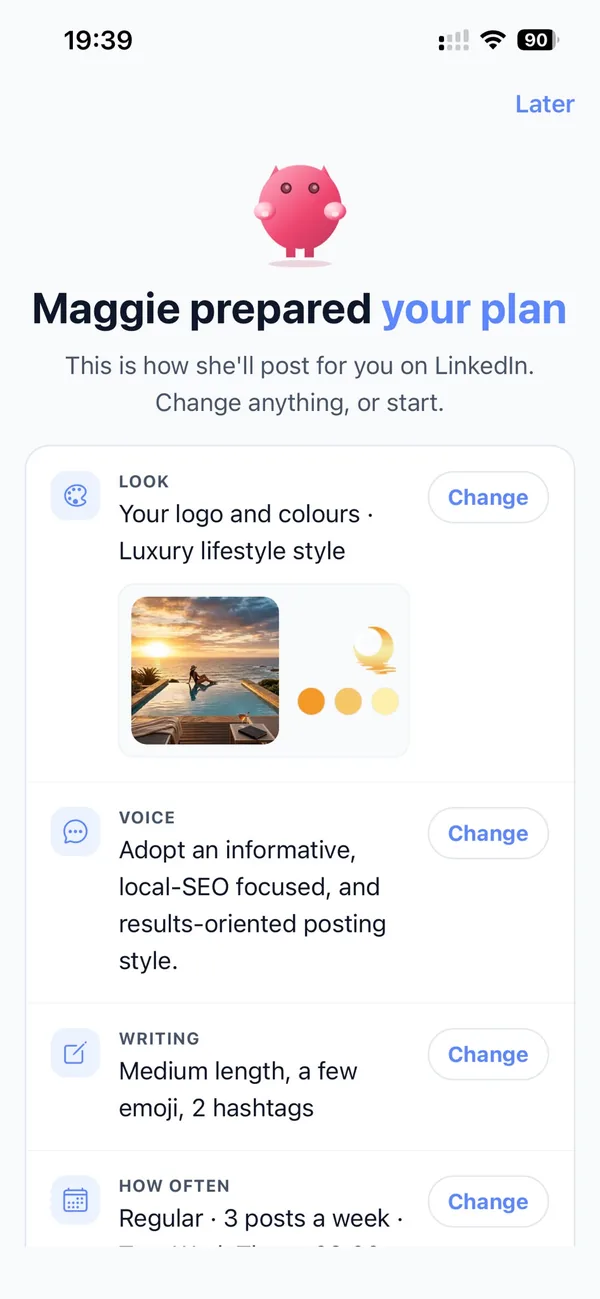
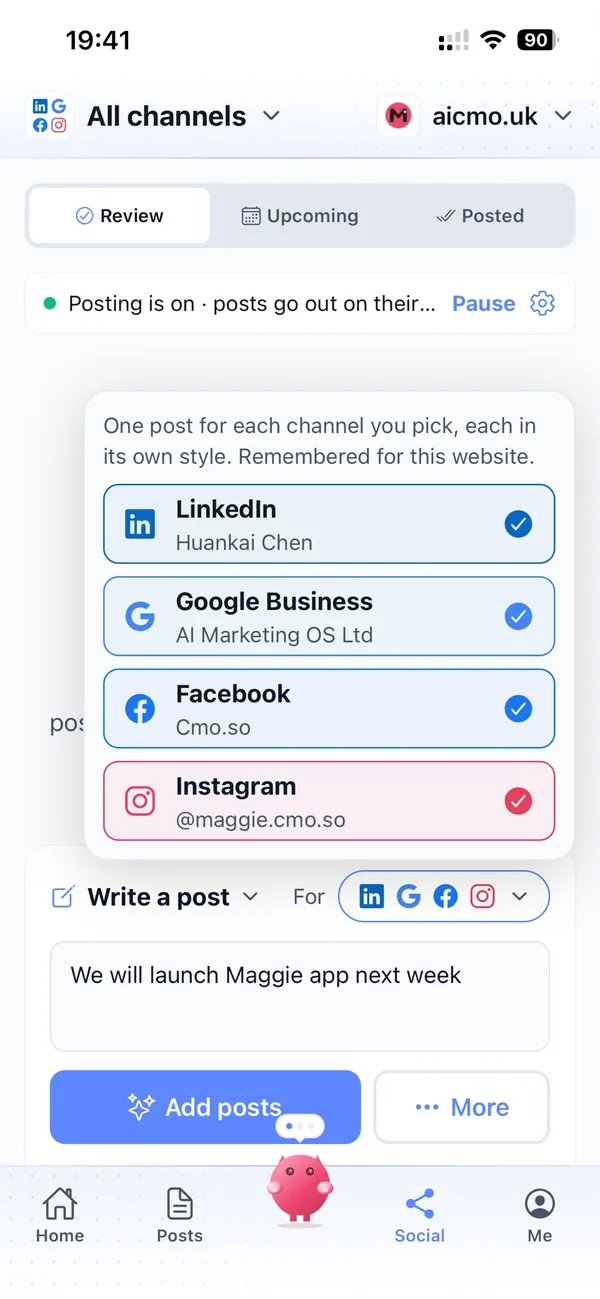
From your consultancy's website to reviewed explainers in four steps
Enter your website
Maggie reads it and drafts your consultancy's brand profile in minutes.
Set your rules
Correct your specialisms, turn on Content Policy Guard and add your own rules, such as never promising an audit result.
Review the drafts
Your first week of posts arrives with pictures. A consultant approves, edits or skips each one.
Let them go out
Approved posts go out at each channel's times and every one comes back with its link.
Why not just…
The usual ways compliance consultancies try to win work, and where each one runs out.
…ask consultants to write when they're on the bench?
They know the subject best, but bench time disappears the moment a client needs help, and that's usually just after a rule changes. Maggie drafts from your brand profile and consultants simply review.
…rely on referrals from accountants and lawyers?
Referrals are valuable and unpredictable. Explainers on your own site bring in firms searching for help right now, including the ones your referrers have never met.
…hire a marketing executive?
A full-time marketing hire in the UK costs around £3,000 a month before tools, and they'd still need your consultants to check every technical point. Maggie writes and publishes every week from £15 a month.
…write it with ChatGPT?
You still brief it, check it, make the picture and post it yourself, and it doesn't know your specialisms or your house rules. Maggie remembers your consultancy, holds risky posts as drafts and puts approved posts out on schedule.
Cut the £5,900/mo marketing bill to £15/mo
Everything a marketing team does, done by Maggie.
| What needs doing | Without cmo.so | With cmo.so |
|---|---|---|
| Full-time marketing hire | £3,000/mo | Included |
| SEO and AI search (GEO) agency | £1,000/mo | Included |
| Content writer, AI-assisted | £500/mo | Included |
| Social media manager, freelance | £800/mo | Included |
| Designed pictures for every post | £300/mo | Included |
| SEO and GEO softwareRank tracking, site audits, AI visibility | £250/mo | Included |
| AI writing and image tools | £50/mo | Included |
| Working hours | Office hours | 24/7 |
| Total per month | £5,900+ | From £15/mo |
Typical UK costs for a small business in 2026, with AI already cutting freelance rates. Estimates only; your own quotes will vary.
- 5 social posts, 30 once verified
- 15 Maggie messages a day
- Upgrade any time
- 12 posts a day
- 150 Maggie messages a day
- All channels
- 96 posts a day
- 1,000 Maggie messages a day
- All channels
Per website, billed monthly. Blog and social posts share one allowance; your best plan sets how much you can talk to Maggie across all your websites.
Marketing automation for compliance and risk consultancies: your questions
Still unsure?
What is marketing automation for compliance and risk consultancies?
It's software that does the repeating work of marketing a compliance practice: planning topics around rule changes and audit seasons, writing explainers and LinkedIn posts, making pictures and publishing them on schedule.
With cmo.so, Maggie does all of it from your consultancy's website, and nothing goes out until a consultant approves it.
How do compliance and risk consultancies get more clients online?
Compliance and risk consultancies get more clients online by answering the questions buyers search when something changes: what a new requirement means, how to prepare for an audit and where firms usually fall short. Clear explainers on their own website and regular LinkedIn posts do most of the work.
Maggie writes those posts every week, and Search Console in cmo.so shows which explainers bring people to your site.
How much does marketing automation cost for a compliance consultancy?
There's a free plan with no card needed. Paid plans are per website and billed monthly: Air at £15 a month covers two posts a day, and Pro at £45 a month suits a growing consultancy posting on several channels.
Founding members get lower prices for good on every plan until 1 January 2027. You can cancel any time.
Which channels should compliance consultancies start with?
Most start with LinkedIn, where compliance officers, finance directors and boards look for advisers, plus explainers on their own website.
Google Business helps if clients search for a local consultant, and YouTube (in beta) can suit short recorded briefings. Each channel has its own posting times and queue.
Is it safe to use AI to write about regulation?
It is safe when a qualified person reviews every post before it's published. cmo.so keeps approvals on by default, and Content Policy Guard can hold a post that may break financial, legal or your own rules as a draft with a suggested rewrite.
Content Policy Guard gives AI suggestions, not legal or compliance advice. It doesn't make a post accurate or compliant on its own, and your consultancy stays responsible for what it publishes.
How quickly can it write about a new rule or guidance?
As quickly as you add it to your plan. Give Maggie, your AI CMO, the topic, and drafts arrive for review the same way as your regular posts.
A consultant should always check the detail against the source before approving, because only a person can confirm what a rule actually requires.
Will posts read like advice to a specific firm?
They shouldn't, and you can make sure of it. Add a house rule to Content Policy Guard such as “no post may read like advice to a particular firm”, and a post that may break it is held as a draft with a suggested rewrite.
You can also edit any post before approving it, and Maggie learns from your edits.
Will it mention our clients or their findings?
No, not unless you put it there. Maggie works from your website and brand profile, not from client files, and doesn't connect to client record systems.
She doesn't invent clients, case studies or results, so confidential work stays confidential.
Can it write for different sectors we advise?
Yes. Your brand profile lists the sectors you work in, and Maggie plans topics for each, such as financial services, healthcare or growing technology firms.
If a sector has its own rules, turn on the matching Content Policy Guard checks and add your own.
We also sell compliance software. Can cmo.so handle both?
Yes. If the consultancy and the software each have their own website, add both to one account and each gets its own brand profile, channels, schedule and approvals.
If they share one website, Maggie can write for both kinds of buyer from the same brand profile.
Can several consultants approve posts?
Yes. In Me → Team you can add people and choose what each can see or change, using presets such as editor or manager.
So the specialist in each area can check posts on their subject before they go out.
Which websites does it work with?
cmo.so publishes to WordPress, Shopify, Wix and Webflow, and to any other website through the cmo.so API.
Each post is reported back with its link once it is live.
Be the firm that explains the next rule change first
Enter your website. Your brand profile and first posts are ready in minutes, and nothing goes out until a consultant approves it.
- Free plan, no card needed
- You approve every post
- Cancel any time