

Marketing automation for textile manufacturers
Brand sourcing teams and designers look for a mill they can trust long before they send a tech pack. Maggie, your AI CMO, writes the fabric guides, mill stories and LinkedIn posts that help them find you, and nothing goes out until you approve it.
Free to start · No credit card · 30 free posts
Used by 600+ users and trusted by teams at
aeglesriphal.com
moonlakespa.com
shop.theteagroup.com
clo100.com
logtrics.io
mymorez.com
nextidal.com
otisapp.com
storaitelling.com
theheatpumps.co.uk
web-translations.com
exposeai.tech
orielipo.com
whitelabelcrowd.fund
elliptic.co
med.moonlakespa.com
netdex.co.il
orawellness.uk
reenest.com
syngage.ai
thepenthouseliving.com
zengolf.studio
imaintain.uk
rebuildingsociety.com
aurasocial.world
goaimex.com
moneyparents.com
newgenrenewables.uk
osmosisai.co
saunders.ac
teeza.app
thursdayclub.com
Why textile manufacturers struggle to get found
Your fabrics speak for themselves once they're in someone's hands. Getting them there means being found online first, and the mill floor leaves little time for that.
Buyers search before they sample
A designer looking for a heavier organic twill or a brushed jersey searches, compares mills and reads about minimums before they ask for swatches. A website with a contact form and nothing else rarely makes the list.
Everyone asks the same questions
Minimum order quantities, lead times, certificates, custom dyeing. Your sales team answers them in email after email, while the answers could be working for you on your website.
The mill is always busy
Production runs, sampling deadlines and shipping take every hour. Posting on LinkedIn, writing about a new weave or showing the dye house all wait for a quiet season.
Agents and fairs do the talking
Trade fairs come twice a year and agents represent many mills at once. Between them, brands hear more from the mills that post steadily than from the ones with the best cloth.

Sampling season starts next month, and the posts are already queued.
It's Monday. Brands start sampling for next season in a month, you've just launched a recycled cotton denim, and your LinkedIn page last posted a photo from the spring fair.
You paste your mill's website into cmo.so. Maggie reads it and writes your brand profile: your wovens and knits, the yarns and finishes you offer, the fashion, workwear and interiors brands you supply, what sets your mill apart, and the plain, proud way you talk about how cloth is made. You correct one thing: your minimum order on stock fabrics has come down, and you want posts to say so.
By Tuesday the drafts are waiting, each with a picture in your mill's look: a blog post explaining how to choose a denim weight for jeans, jackets and workwear, a LinkedIn post introducing the new recycled denim, an Instagram post showing yarn going through the dye house and a guide to what to include when you ask a mill for samples. You approve three and add your sampling lead time to the fourth.
They go out at the times you set for each channel, and each comes back with its link. Next week Maggie plans a post on your finishing options, and Search Console in cmo.so shows which fabric guides buyers are finding.
Content that brings sourcing teams to your mill
Each of those problems has an answer, and your team still decides what goes out under your mill's name.
Fabric guides buyers search for
Posts on weights, weaves, fibres, finishes and how to choose cloth for a product, written for Google and for AI answers. Published to your WordPress, Wix, Webflow or Shopify site, or any site through the cmo.so API.
Blog on autopilotAnswers to the questions in your inbox
Minimums, lead times, sampling, custom colours and certificates explained clearly on your website, so buyers arrive knowing how you work and your sales team spends less time repeating itself.
Buyer questionsYour mill, in your voice
Enter your website and Maggie builds your brand profile: fabrics, yarns, finishes, customers, what makes you different, competitors and voice. Every post starts from it, so your craft and history come through.
Brand profileLinkedIn for sourcing and design teams
Regular LinkedIn posts on new qualities, mill news and how your cloth is made, so sourcing managers and designers keep seeing your name between fairs.
LinkedInThe mill floor, on every channel
One idea becomes a post for each channel in its own style: an article for your blog, a LinkedIn update, and pictures or videos of looms and dye houses for Instagram and YouTube (in beta).
Every channelApprove between production runs
By default nothing goes out until you approve it. Read drafts in the iPhone app or at app.cmo.so, edit a line, skip a post, or pause a channel when the order book is full.
ApprovalsYour marketing team, in your pocket
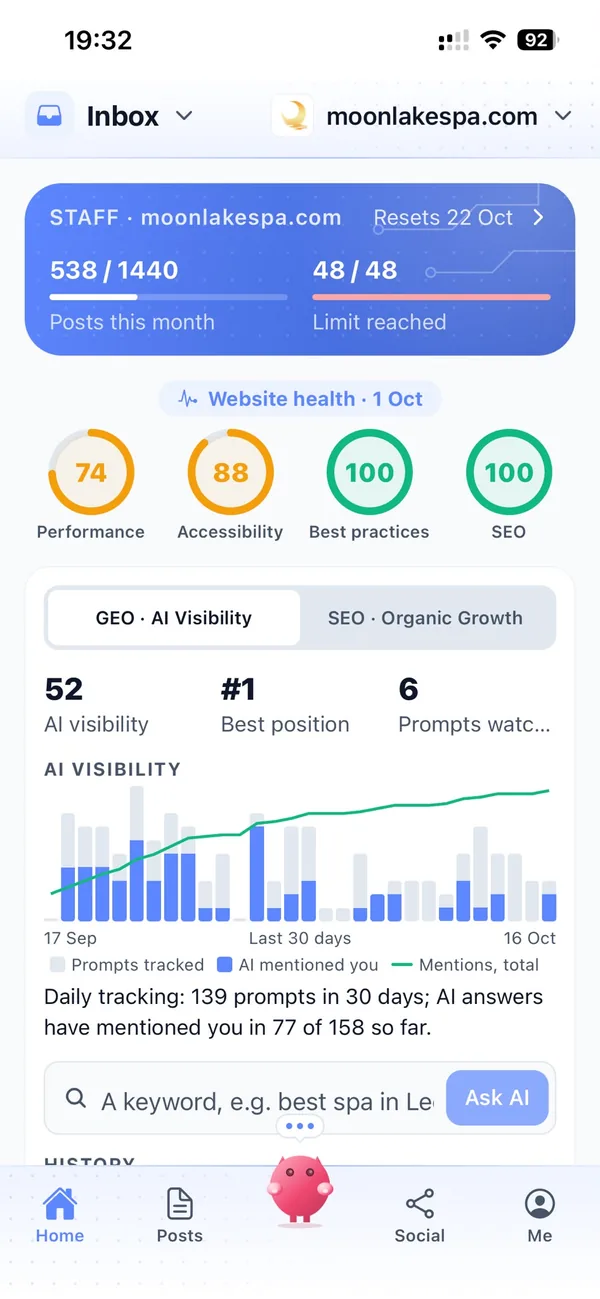
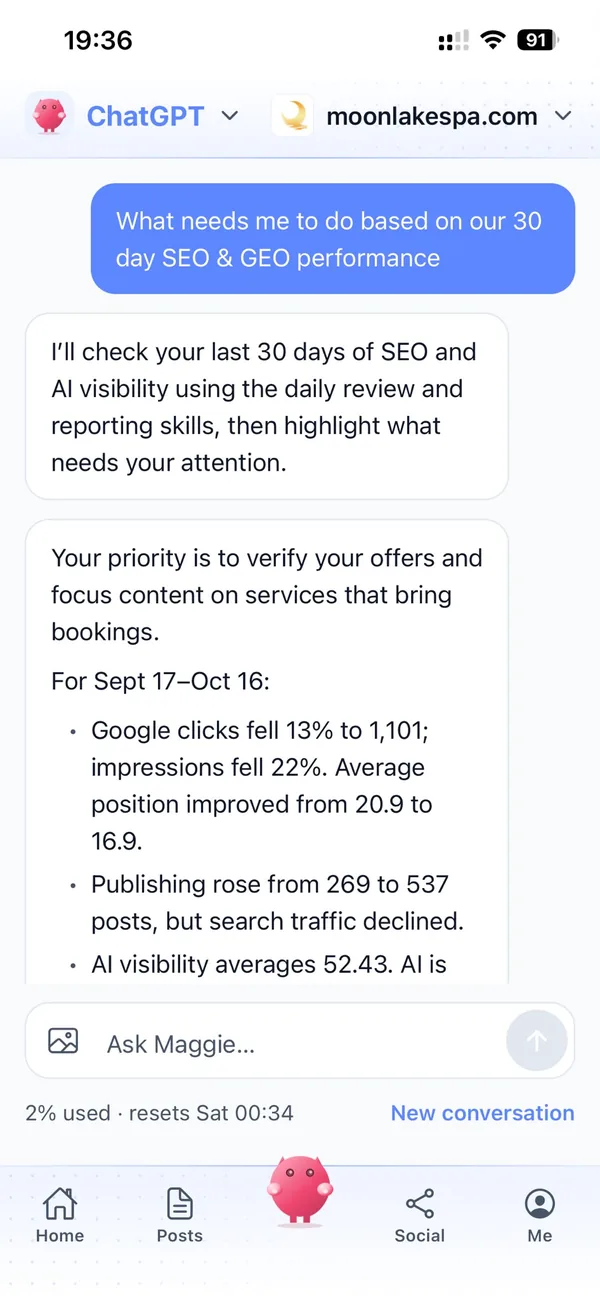
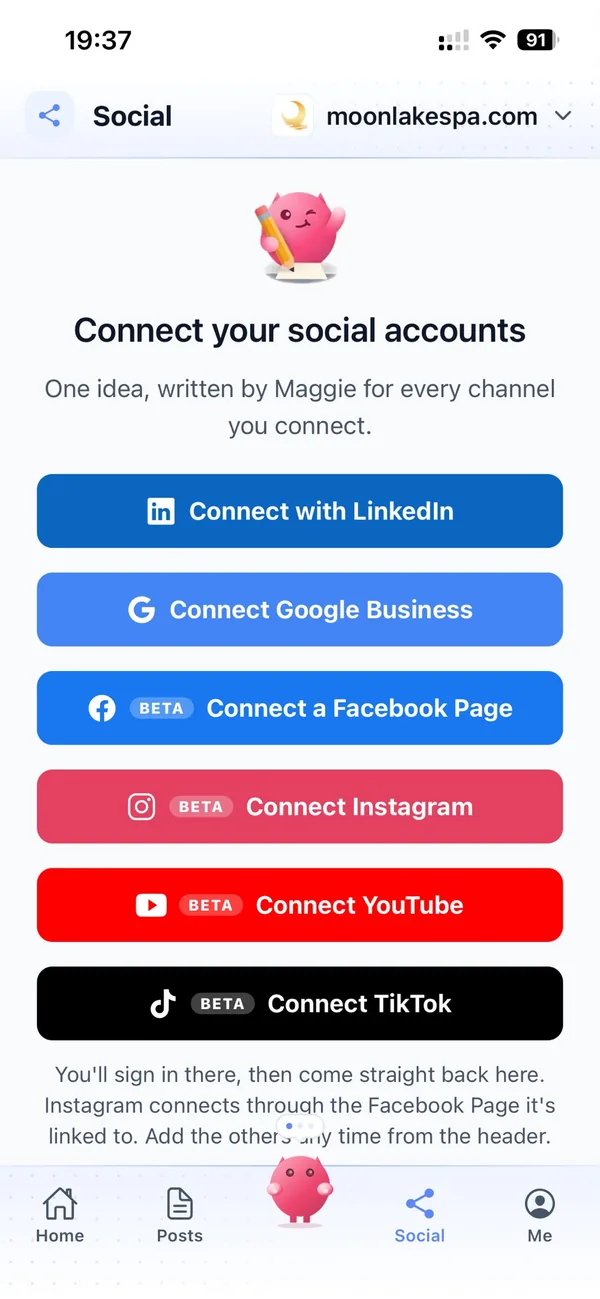
Real screens from the cmo.so app on iPhone.
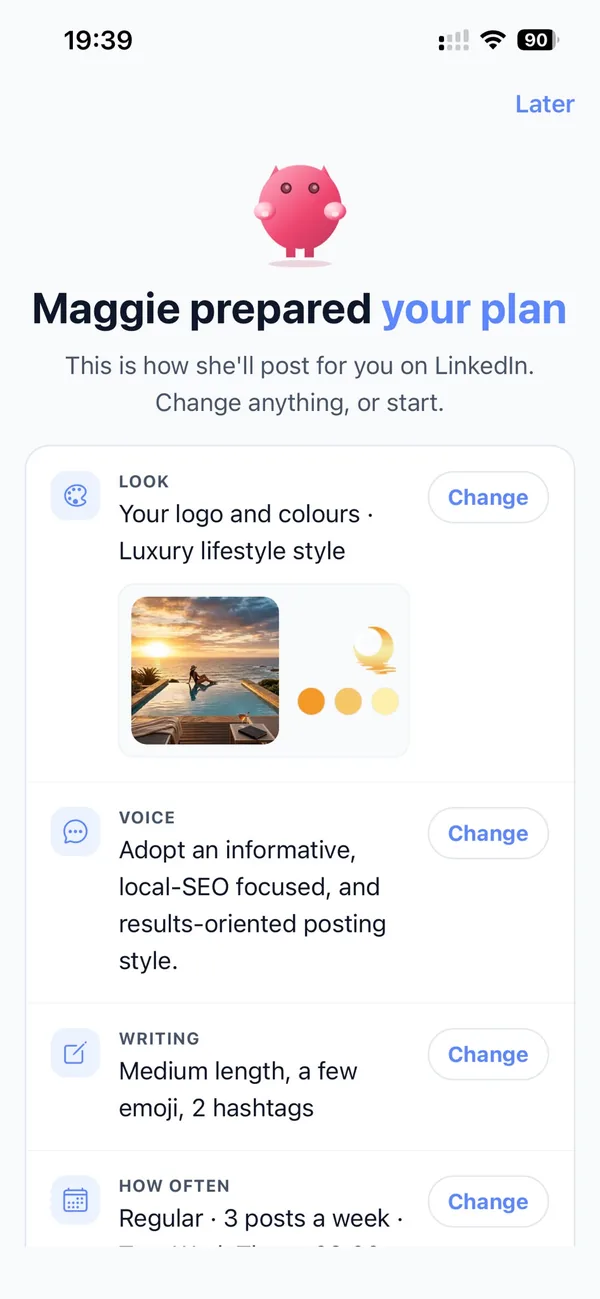
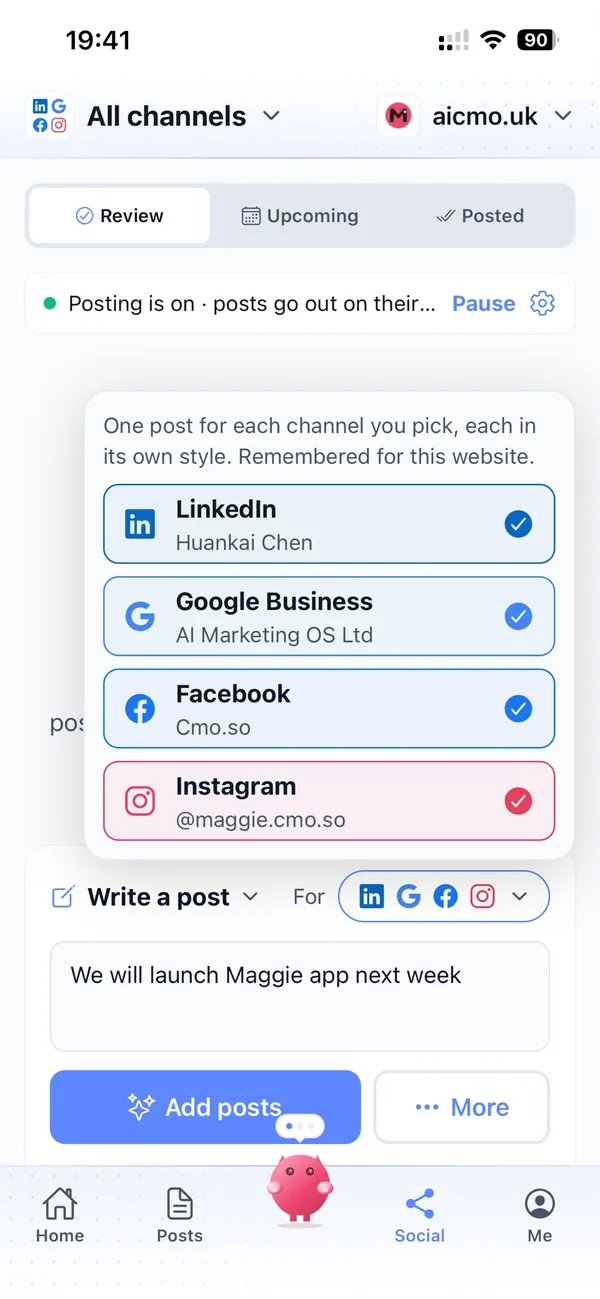
From your mill's website to a steady flow of posts in four steps
Enter your website
Maggie reads it and drafts your mill's brand profile in minutes.
Check your profile
Correct your qualities, minimums and certificates, and choose the channels you want.
Review the drafts
Your first week of posts arrives with pictures. Approve, edit or skip each one.
Let them go out
Approved posts go out at each channel's times and every one comes back with its link.
Why not just…
The usual ways textile manufacturers try to reach brands, and where each one runs out.
…rely on agents?
Agents open doors, but they carry many mills and take a commission on each order. Your own website and LinkedIn give brands a reason to come to you directly.
…exhibit at textile fairs?
Fairs put swatches in buyers' hands, but they come round twice a year and cost a great deal to attend. Regular posts keep the conversation going between seasons.
…list on B2B sourcing platforms?
Platforms put you in a grid next to hundreds of other suppliers, often compared on price alone. Guides and mill stories on your own site show what makes your cloth worth choosing.
…write it with ChatGPT?
You still brief it, check it, make the picture and post it yourself, and it doesn't know your qualities, minimums or customers. Maggie remembers your mill and posts on schedule.
Cut the £5,900/mo marketing bill to £15/mo
Everything a marketing team does, done by Maggie.
| What needs doing | Without cmo.so | With cmo.so |
|---|---|---|
| Full-time marketing hire | £3,000/mo | Included |
| SEO and AI search (GEO) agency | £1,000/mo | Included |
| Content writer, AI-assisted | £500/mo | Included |
| Social media manager, freelance | £800/mo | Included |
| Designed pictures for every post | £300/mo | Included |
| SEO and GEO softwareRank tracking, site audits, AI visibility | £250/mo | Included |
| AI writing and image tools | £50/mo | Included |
| Working hours | Office hours | 24/7 |
| Total per month | £5,900+ | From £15/mo |
Typical UK costs for a small business in 2026, with AI already cutting freelance rates. Estimates only; your own quotes will vary.
- 5 social posts, 30 once verified
- 15 Maggie messages a day
- Upgrade any time
- 12 posts a day
- 150 Maggie messages a day
- All channels
- 96 posts a day
- 1,000 Maggie messages a day
- All channels
Per website, billed monthly. Blog and social posts share one allowance; your best plan sets how much you can talk to Maggie across all your websites.
Marketing automation for textile manufacturers: your questions
Still unsure?
What is marketing automation for textile manufacturers?
It's software that does the repeating work of marketing a mill: planning topics, writing fabric guides, mill stories and LinkedIn posts, making pictures and publishing them on schedule.
With cmo.so, Maggie does all of it from your mill's website, and nothing goes out until you approve it.
How do textile manufacturers get more customers online?
Textile manufacturers get more customers online by being easy to find when brands search for a fabric or a mill: clear fabric guides and answers on minimums and lead times on their own website, plus steady LinkedIn posts.
Maggie writes those posts every week from your brand profile, and Search Console in cmo.so shows which guides bring buyers to your site.
How much does marketing automation cost for a textile manufacturer?
There's a free plan with no card needed. Paid plans are per website and billed monthly: Air at £15 a month covers two posts a day, and Pro at £45 a month suits a mill posting on several channels.
Founding members get lower prices for good on every plan until 1 January 2027. You can cancel any time.
Which channels should textile manufacturers start with?
Most mills start with LinkedIn, because that's where sourcing managers and designers follow suppliers, plus their own blog for the fabric guides buyers search for.
Instagram and YouTube are in beta and suit mills that can show looms, yarns and dye houses. Each channel has its own posting times and queue.
Should we publish our minimum order quantities?
Many buyers look for minimums before they get in touch, so a clear page and the occasional post on how you work can save both sides time.
You decide what goes in your brand profile. If minimums depend on the quality, Maggie can explain how they work in general and invite buyers to ask.
Can cmo.so write about our sustainability certificates?
It writes from the facts in your brand profile, such as which certificates you hold and which qualities they cover, so posts describe them as you do.
You review every post before it goes out, so no sustainability claim is published that your team hasn't checked.
We supply brands under confidentiality. Is that a problem?
It isn't, because you decide who can be named. Tell Maggie in your brand profile never to name customers, and she writes about the fabric, the product type and the work instead.
You approve every post, so nothing confidential goes out without your say.
Can posts reach buyers in other countries?
Yes, your brand profile can list the markets you sell to, and Maggie writes for the buyers there, on your blog and LinkedIn.
If you run a separate website for another market, add it to the same account with its own brand profile, channels, schedule and approvals.
Is it safe to let AI post for our mill?
It's safe because nothing goes out until it's approved. Approvals are on by default, and you can keep them on for every channel or let a channel you trust run on autopilot.
Social channels connect through each platform's official sign-in, so cmo.so never sees your passwords, and cmo.so never sells or rents your data.
Which websites does it work with?
cmo.so publishes to WordPress (including WooCommerce), Shopify, Wix and Webflow, and to any other website through the cmo.so API.
Each post is reported back with its link once it is live.
Can our sales team approve posts too?
Yes. In Me → Team you can add people and choose what each can see or change, using presets such as editor or manager.
So your sales lead can approve LinkedIn posts while your technical manager checks the fabric guides.
Be the mill they find before they send the tech pack
Enter your website. Your brand profile and first week of posts are ready in minutes, and nothing goes out until you approve it.
- Free plan, no card needed
- You approve every post
- Cancel any time