


Marketing automation for supply chain companies
Operations directors don't buy from a cold call. They buy from the firm whose posts helped them through the last disruption. Maggie, your AI CMO, writes useful LinkedIn posts and guides for your website every week, and you approve every one.
Free to start · No credit card · 30 free posts
Used by 600+ users and trusted by teams at
aeglesriphal.com
moonlakespa.com
shop.theteagroup.com
clo100.com
logtrics.io
mymorez.com
nextidal.com
otisapp.com
storaitelling.com
theheatpumps.co.uk
web-translations.com
exposeai.tech
orielipo.com
whitelabelcrowd.fund
elliptic.co
med.moonlakespa.com
netdex.co.il
orawellness.uk
reenest.com
syngage.ai
thepenthouseliving.com
zengolf.studio
imaintain.uk
rebuildingsociety.com
aurasocial.world
goaimex.com
moneyparents.com
newgenrenewables.uk
osmosisai.co
saunders.ac
teeza.app
thursdayclub.com
Why supply chain companies struggle to keep their marketing going
Your team knows more about lead times, inventory and supplier risk than almost anyone, but that knowledge lives in client calls and slide decks, not on your website.
Your experts are always firefighting
When a port backs up or a supplier fails, your people are on calls with clients, which is exactly when buyers are searching for answers. The post that would have won the next client never gets written.
Long sales cycles go quiet
A procurement or operations team can take a year to choose a partner. If your LinkedIn page and blog go silent for months, you're forgotten by the time they draw up the shortlist.
Hard to explain what you actually do
Visibility, planning, sourcing, warehousing, software or consulting: buyers struggle to tell providers apart. Generic posts about “end-to-end solutions” make it worse.
Big names win the search
Large logistics groups and software vendors publish constantly and fill the results for every supply chain question. A specialist firm needs clear, practical answers that get found and quoted in AI answers.

Peak season planning starts now, and your posts are already scheduled.
It's late August. Your retail clients are starting to plan for the Christmas peak, your consultants are booked solid, and the last thing on your company's LinkedIn page is a photo from a trade show in spring.
You enter your website into cmo.so. Maggie reads it and writes your brand profile: demand planning and supplier risk services for mid-sized retailers and manufacturers, the operations and procurement directors who hire you, the specialist software vendors and big consultancies you compete with, and your plain, practical voice. You correct one thing: you've stopped offering warehouse audits on their own.
On Tuesday the drafts are waiting, each with a picture in your company's look: a blog guide to building a peak season plan, a LinkedIn post on the questions to ask suppliers about capacity, a post for finance directors about the cost of holding too much stock, and a short series explaining how your onboarding works. You approve three and add a real example to the fourth.
The posts go out on LinkedIn on weekday mornings, the guide goes to your website, and each one comes back with its link. Search Console in cmo.so shows which guides buyers are reading, and AI visibility shows how Google's AI answers describe what you do.
Steady, expert marketing for a business buyers trust slowly
Each of those problems has an answer, and you still decide what goes out under your company's name.
LinkedIn every week, not every trade show
Practical posts for operations, procurement and finance leaders: lead times, supplier risk, stock levels, peak planning. They keep your name in front of buyers through a long sales cycle.
LinkedInGuides that answer buyers' questions
How to build a supplier scorecard, what good visibility looks like, how to plan for peak, written for Google and for AI answers. Published to your WordPress, Webflow or Wix site, or any site through the cmo.so API.
Blog on autopilotClear about what you do
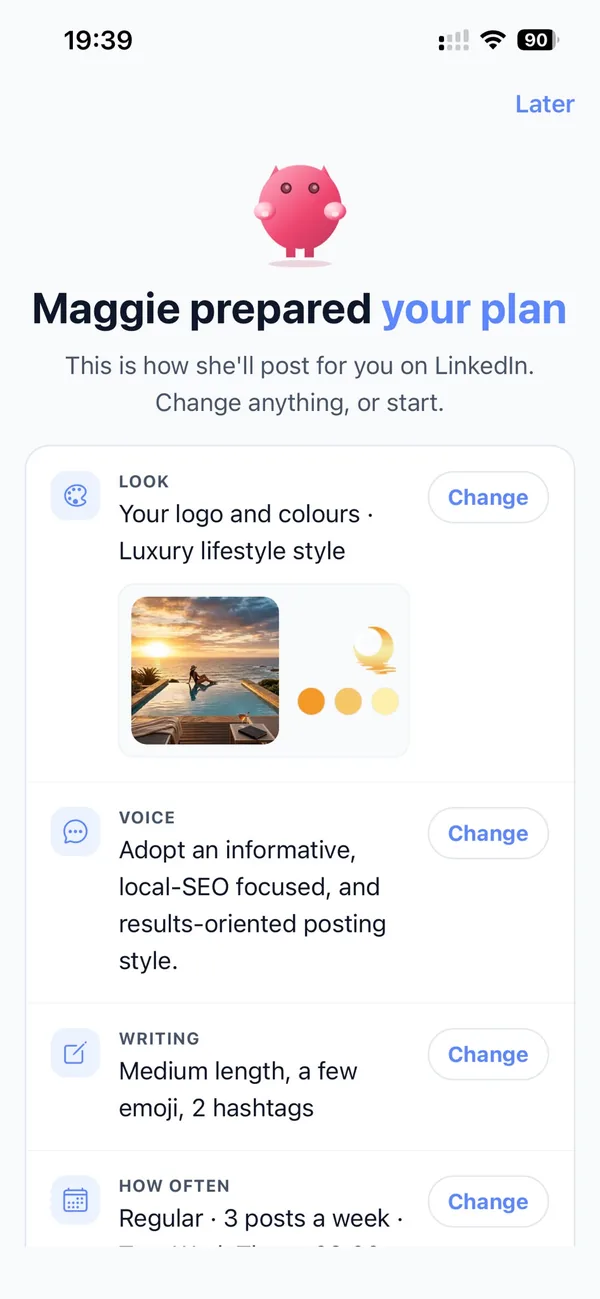
Enter your website and Maggie builds your brand profile: services, clients, sectors, what sets you apart from the big groups, competitors and voice. Posts explain your work in your buyers' language.
Brand profileTimely without the scramble
Peak season, year-end stock counts, annual supplier reviews and budget planning. Topics are planned ahead, and when something happens in the news you can ask for a timely post and approve it the same day.
Seasonal scheduleSee what buyers are finding
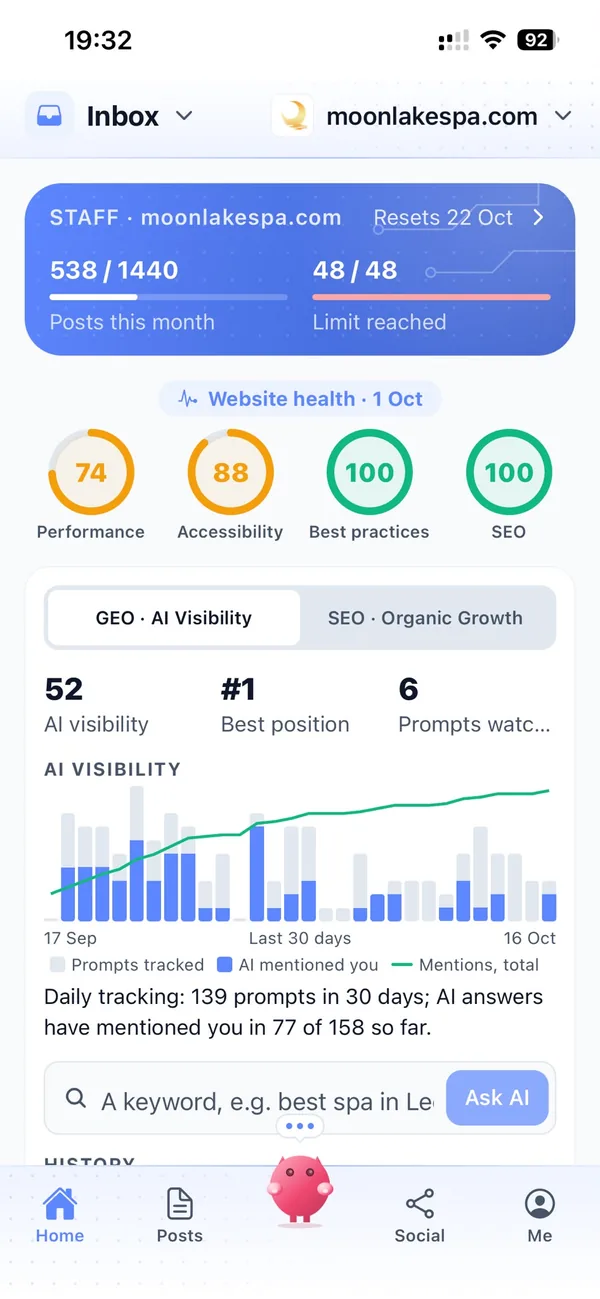
Search Console in cmo.so shows which posts bring visitors, and AI visibility shows how Google's AI answers describe your company. Maggie uses both to plan what to write next.
Search Console and AI visibilityExpert sign-off, quickly
By default nothing goes out until it's approved. Add your consultants or product leads in Me → Team so they can check the detail, and approve from the iPhone app or app.cmo.so.
ApprovalsYour marketing team, in your pocket
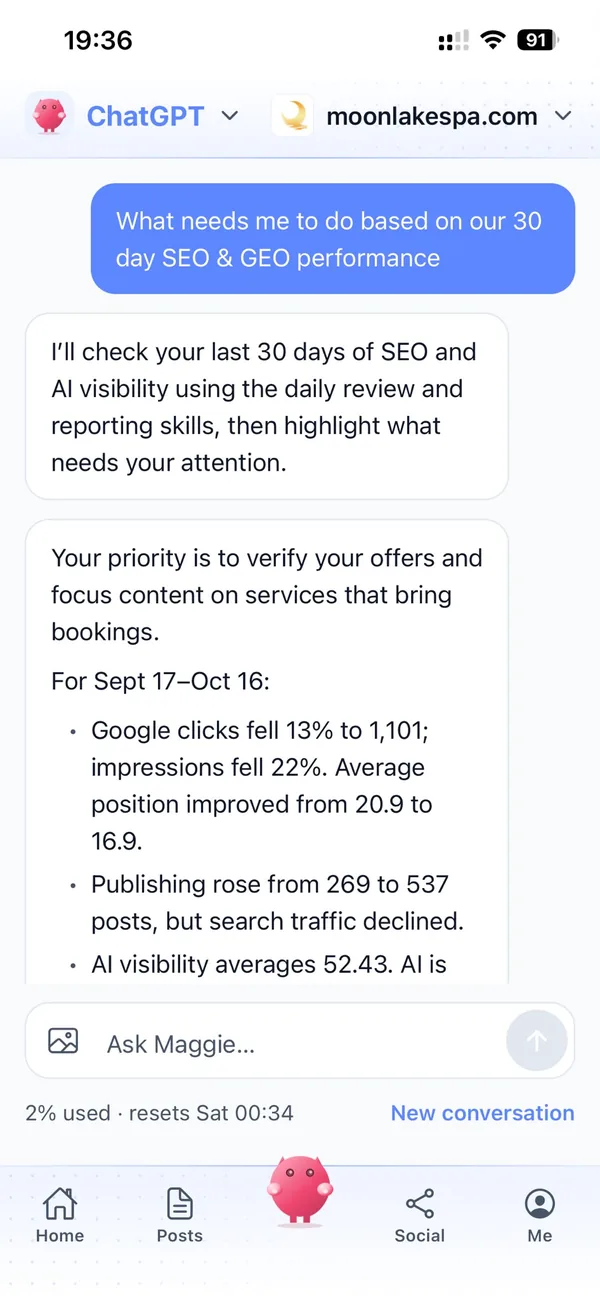
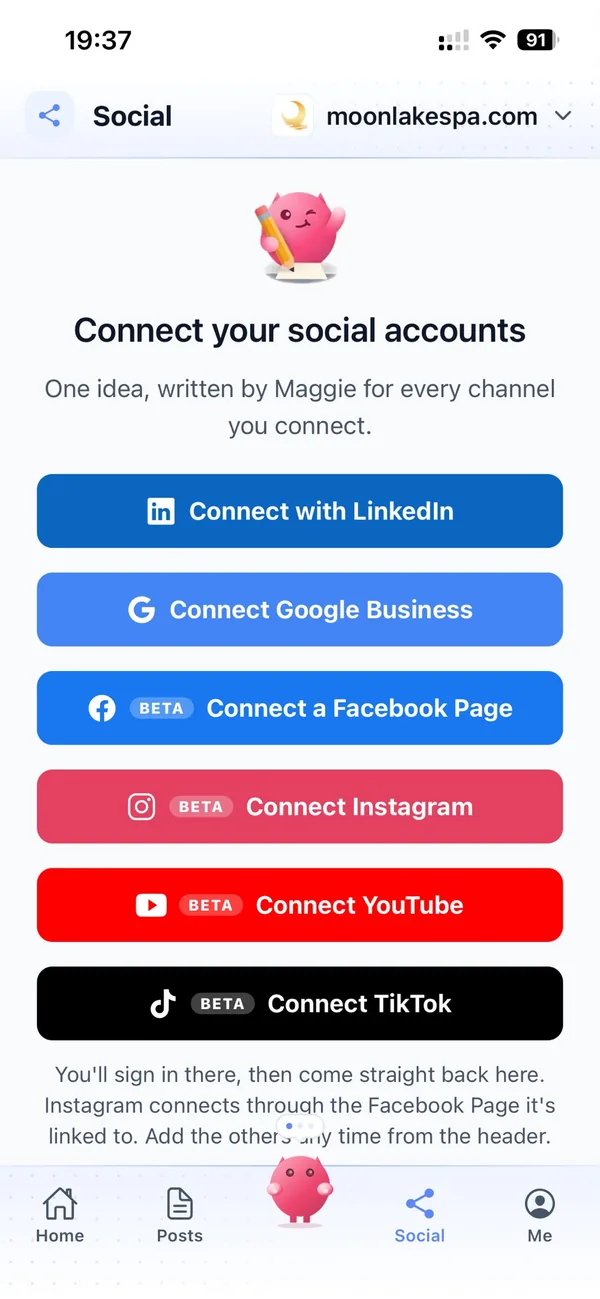
Real screens from the cmo.so app on iPhone.
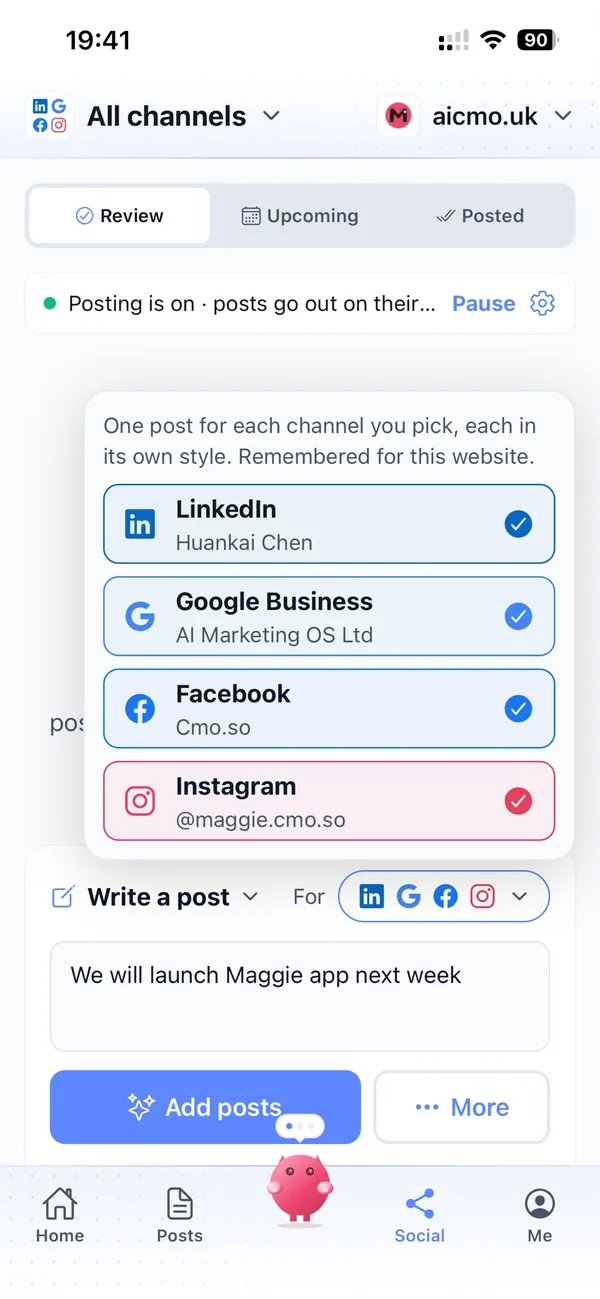
From your website to a steady pipeline of posts in four steps
Enter your website
Maggie reads it and drafts your company's brand profile in minutes.
Check your profile
Correct your services, sectors and competitors, and choose your channels.
Review the drafts
Your first week of posts arrives with pictures. Approve, edit or skip each one.
Let them go out
Approved posts go out at each channel's times and every one comes back with its link.
Why not just…
The usual ways supply chain firms find new clients, and where each one runs out.
…rely on trade shows and referrals?
They bring good conversations a few times a year, then nothing in between. Weekly posts keep buyers who met you at a show thinking of you until they're ready.
…let the sales team post on LinkedIn?
Salespeople are good at conversations and busy chasing deals. Their posts come in bursts and stop at quarter end. Maggie keeps your company page going every week.
…hire a B2B marketing agency?
Agencies often cost around £1,000 a month, and a full-time marketing hire costs around £3,000 a month before tools. Maggie writes and publishes every week from £15 a month.
…write it with ChatGPT?
It writes about “end-to-end solutions” and “resilience” without knowing your services, and you still have to post it. Maggie remembers your company and your clients' sectors and publishes on schedule.
Cut the £5,900/mo marketing bill to £15/mo
Everything a marketing team does, done by Maggie.
| What needs doing | Without cmo.so | With cmo.so |
|---|---|---|
| Full-time marketing hire | £3,000/mo | Included |
| SEO and AI search (GEO) agency | £1,000/mo | Included |
| Content writer, AI-assisted | £500/mo | Included |
| Social media manager, freelance | £800/mo | Included |
| Designed pictures for every post | £300/mo | Included |
| SEO and GEO softwareRank tracking, site audits, AI visibility | £250/mo | Included |
| AI writing and image tools | £50/mo | Included |
| Working hours | Office hours | 24/7 |
| Total per month | £5,900+ | From £15/mo |
Typical UK costs for a small business in 2026, with AI already cutting freelance rates. Estimates only; your own quotes will vary.
- 5 social posts, 30 once verified
- 15 Maggie messages a day
- Upgrade any time
- 12 posts a day
- 150 Maggie messages a day
- All channels
- 96 posts a day
- 1,000 Maggie messages a day
- All channels
Per website, billed monthly. Blog and social posts share one allowance; your best plan sets how much you can talk to Maggie across all your websites.
Marketing automation for supply chain companies: your questions
Still unsure?
What is marketing automation for supply chain companies?
It's software that does the repeating work of marketing a supply chain business: planning topics, writing LinkedIn posts and website guides, making pictures and publishing them on schedule.
With cmo.so, Maggie does all of it from your website, and nothing goes out until you approve it.
How do supply chain companies get more clients online?
Supply chain companies get more clients online by being useful to buyers before they're ready to buy: practical guides on the website, regular LinkedIn posts and clear explanations of what the firm does.
Maggie writes those every week, keeps your name visible through long sales cycles, and Search Console in cmo.so shows which posts bring buyers to your site.
How much does marketing automation cost for a supply chain company?
There's a free plan with no card needed. Paid plans are per website and billed monthly: Air at £15 a month covers two posts a day, and Pro at £45 a month suits a firm posting on LinkedIn, its blog and other channels.
Founding members get lower prices for good on every plan until 1 January 2027. You can cancel any time.
Which channels should supply chain companies start with?
Most start with LinkedIn, because that's where operations, procurement and finance leaders read, plus a blog for longer guides that people find through search and AI answers.
Google Business helps if you run warehouses or offices that clients visit. Each channel has its own posting times and queue.
Is it safe to let AI write about our services?
It is, because nothing goes out until you approve it. Approvals are on by default, and your experts can check every figure and claim before a post is published.
Social channels connect through each platform's official sign-in, so cmo.so never sees your passwords, and cmo.so never sells or rents your data.
Does cmo.so connect to our ERP or warehouse systems?
No, cmo.so doesn't connect to ERP, warehouse or client systems. Maggie works from your public website and the brand profile you check.
If you want a post to use a real example or figure, you add it yourself in the draft, and it's never shared beyond the post you approve.
Can it write about disruptions as they happen?
It can, as long as you approve the detail. Ask for a post on a current issue, such as a port delay or a supplier shortage, and Maggie drafts one from your expertise for you to check.
Planned topics keep going out in the meantime, so a busy month doesn't leave your page empty.
We sell software, not services. Does it still work?
It works just as well for software companies. Maggie writes about the problems your software solves, how it fits with the systems buyers already use and how onboarding works, for LinkedIn and your blog.
Release notes can become announcement posts for each channel, written in each one's style.
Can different experts approve their own topics?
They can. In Me → Team you can add colleagues with presets such as editor or manager, so your procurement expert checks sourcing posts and your planning lead checks forecasting posts.
Maggie learns from their edits, so the detail gets closer to your firm's way of working each time.
Does it help us appear in AI answers?
Posts are written to be clear and quotable, which helps Google's AI answers and assistants such as ChatGPT describe your firm accurately when buyers ask who can help.
AI visibility in cmo.so shows how Google's AI answers mention your company, so you can see what to write about next.
We work in several countries. Can cmo.so handle that?
It can. If each country has its own website, add each one to your account with its own brand profile, channels, schedule and approvals.
If you have one website, Maggie can write for buyers in different regions from the same brand profile.
Be the firm buyers already know when the next disruption hits
Enter your website. Your brand profile and first week of posts are ready in minutes, and nothing goes out until you approve it.
- Free plan, no card needed
- You approve every post
- Cancel any time