


Marketing automation for game development studios
Players, press and publishers need to hear about your game long before launch day, and every hour spent writing about it is an hour not spent making it. Maggie, your AI CMO, turns your progress into devlogs and posts for your website, LinkedIn and video channels, and you approve every one.
Free to start · No credit card · 30 free posts
Used by 600+ users and trusted by teams at
aeglesriphal.com
moonlakespa.com
shop.theteagroup.com
clo100.com
logtrics.io
mymorez.com
nextidal.com
otisapp.com
storaitelling.com
theheatpumps.co.uk
web-translations.com
exposeai.tech
orielipo.com
whitelabelcrowd.fund
elliptic.co
med.moonlakespa.com
netdex.co.il
orawellness.uk
reenest.com
syngage.ai
thepenthouseliving.com
zengolf.studio
imaintain.uk
rebuildingsociety.com
aurasocial.world
goaimex.com
moneyparents.com
newgenrenewables.uk
osmosisai.co
saunders.ac
teeza.app
thursdayclub.com
Why game development studios struggle to keep their marketing going
Your team is fixing bugs, balancing levels and hitting milestones. Talking about the game always feels like something to do after the next build.
Marketing starts too late
Many small studios begin posting a few weeks before release. By then there's no audience waiting, and a launch that took years to build lands to silence.
Progress happens, nobody sees it
A new boss fight, a lighting pass, a level that finally feels right. It all lives in your task tracker and team chat, and your website still shows the trailer from last year.
Too many audiences to talk to
Players want gameplay, press want a story, publishers and investors want proof of a team that ships, and future hires want to know what it's like to work with you. Each needs different posts.
The storefront is crowded
New releases arrive on the big storefronts every day. A studio that posts only at big moments is easy to miss among everyone else's announcements.
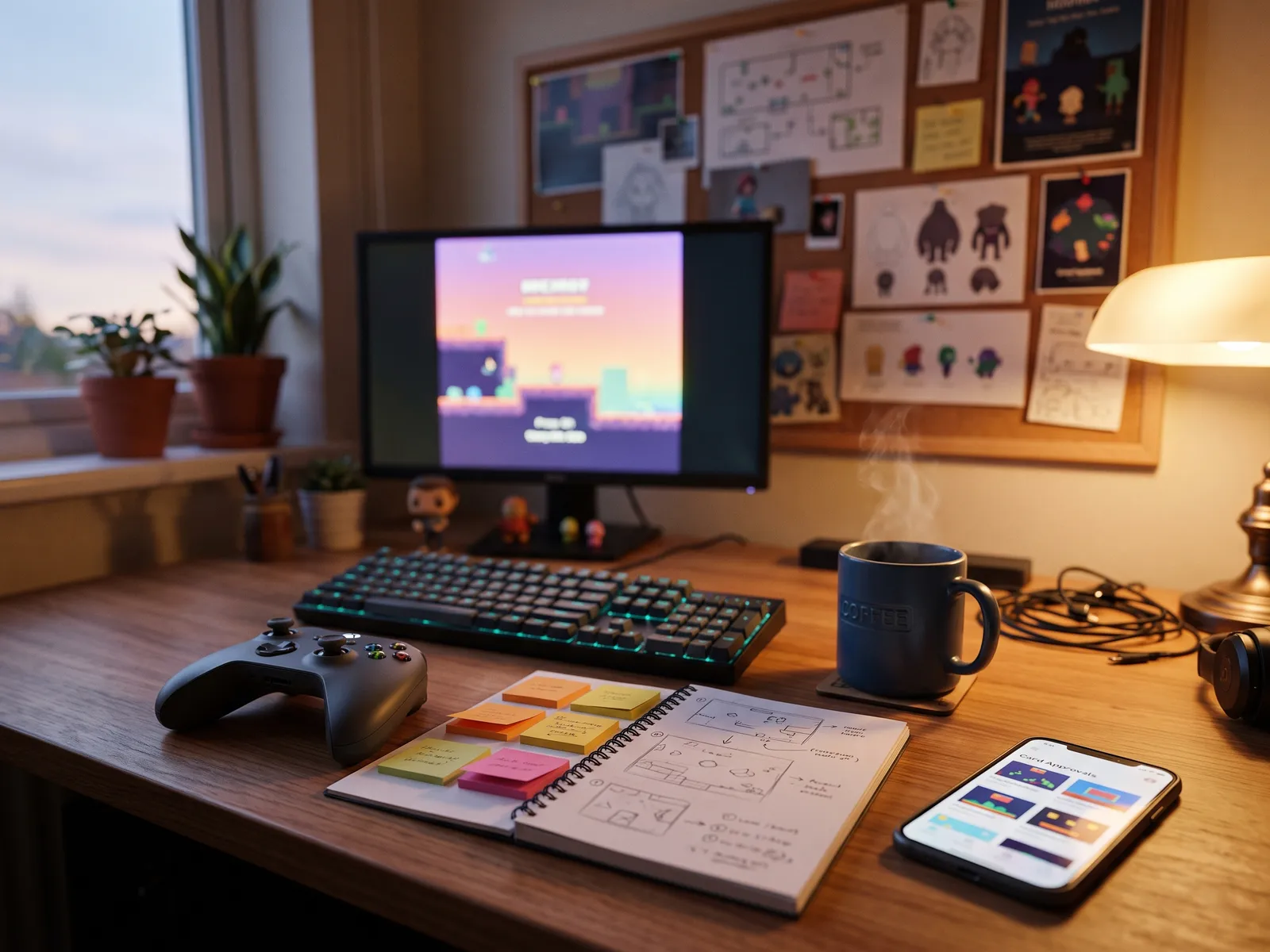
Your demo goes live next month, and the devlogs are already written.
It's crunch on the demo build. You know you should be posting, but the last devlog on your website went up four months ago, and your LinkedIn page mostly announces job openings.
You paste your studio's website into cmo.so. Maggie reads it and writes your brand profile: your cosy puzzle adventure, the hand-painted art style, the team of six, your earlier mobile game, the platforms you're aiming for, and the warm, slightly nerdy way you talk to players. You correct one thing: the console version is planned for after the PC launch, not alongside it.
By Tuesday the drafts are waiting, each with a picture in your look: a devlog on how you designed the first puzzle, a LinkedIn post about what a small studio learns building a demo, a YouTube post for a short clip of the new level (in beta) and a blog post answering the questions players ask most about the game. You approve three and add a line about the demo date to the fourth.
The posts go out at the times you set for each channel over the weeks before the demo, and each comes back with its link. Search Console in cmo.so shows which devlogs people are finding, while you get back to fixing the save system.
A marketing assistant who keeps people following the game
Each of those problems has an answer, and your studio still decides what goes out under its name.
Devlogs on your own website
Regular posts on design choices, art, music and the making of the game, written for Google and for AI answers, so players who search for your game find your own site. Published to WordPress, Webflow, Wix or Shopify, or any site through the cmo.so API.
Devlog on autopilotPlanned around your milestones
Announcement, demo, early access, launch and every update. Posts are written and queued ahead of each date, so you keep talking about the game while the team is heads down.
Release scheduleClips for video channels
Upload a gameplay clip and Maggie writes the post around it for YouTube or TikTok (both in beta). Uploaded videos are only used to post them and deleted within 7 days.
Video postsYour game's voice, not a press release
Enter your website and Maggie builds your brand profile: your games, genre, art style, team, what sets you apart, similar games and voice. Every post and picture starts from it.
Brand profileA studio publishers can see
LinkedIn posts about how your team works, what you've shipped and what you're learning reach publishers, investors, partners and future hires, written in a different style from your player posts.
LinkedInApprove between builds
By default nothing goes out until you approve it. Read drafts at app.cmo.so or in the iPhone app, edit a line, or pause a channel while you hold back news for a big reveal.
ApprovalsYour marketing team, in your pocket
Real screens from the cmo.so app on iPhone.
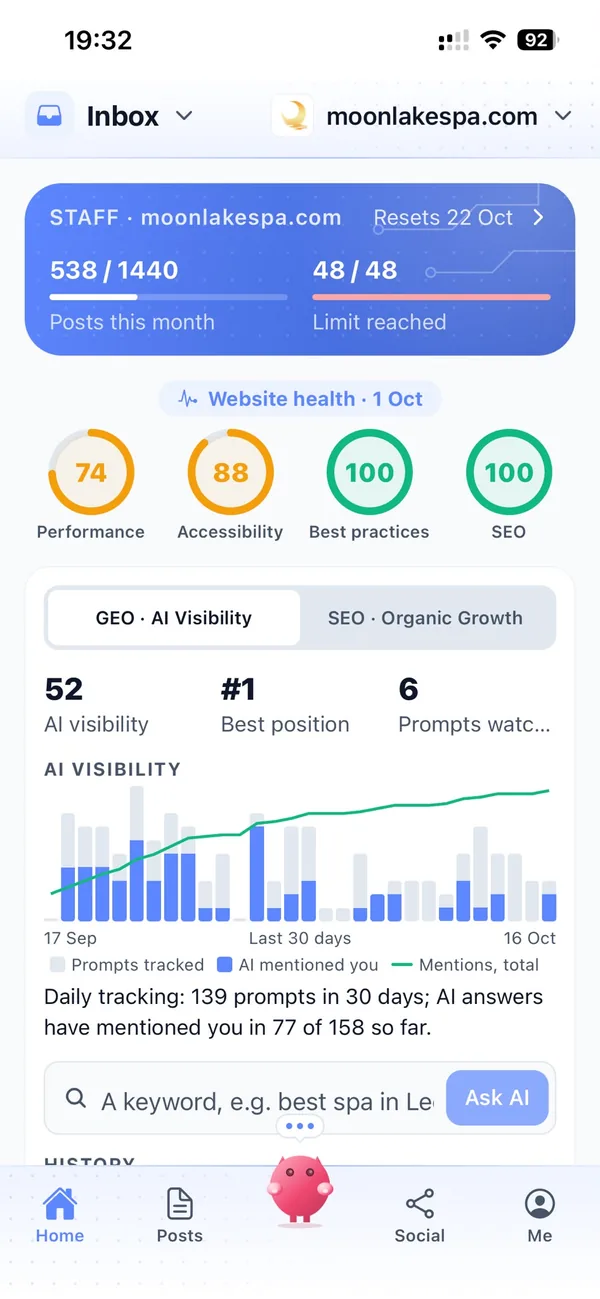
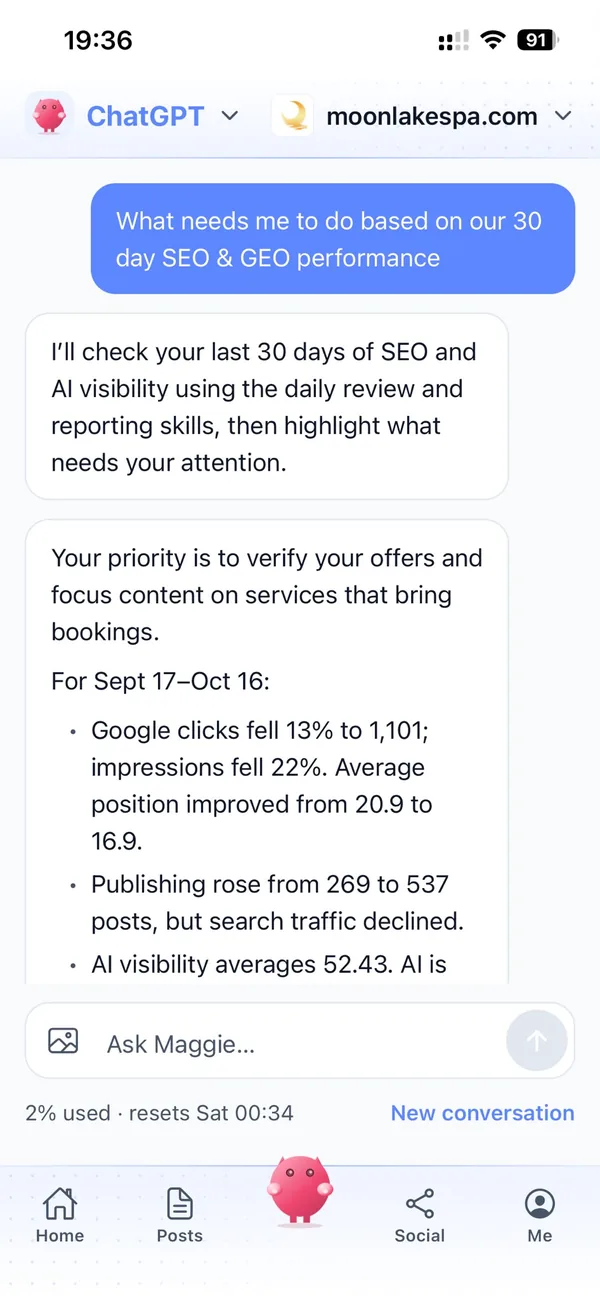
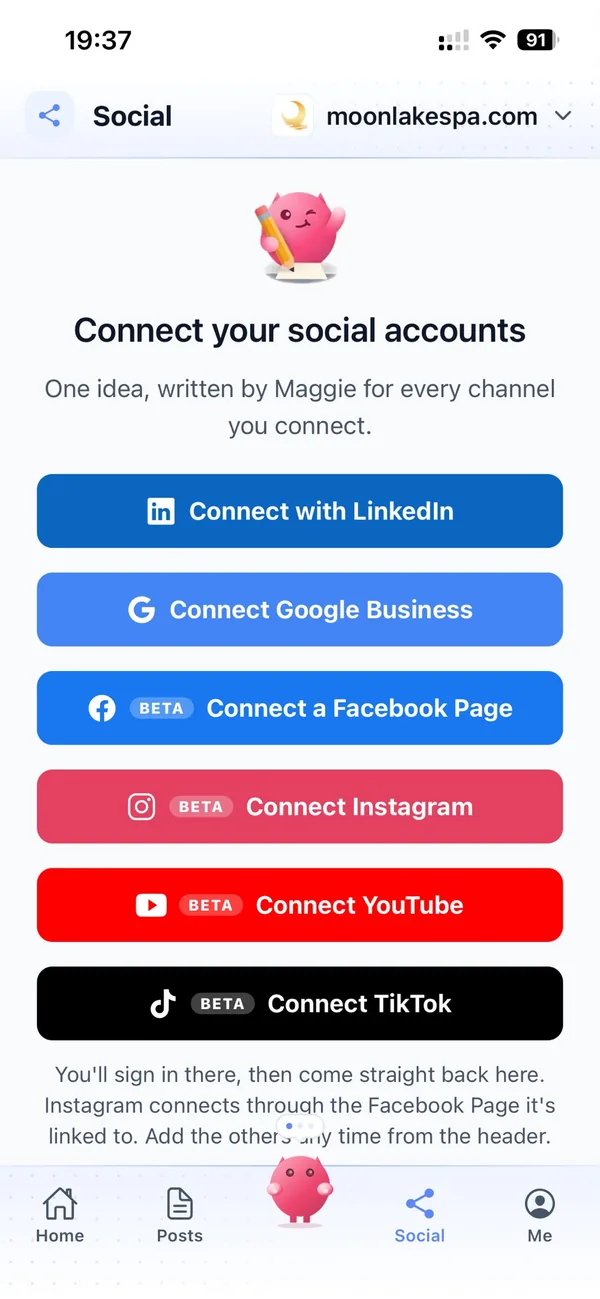
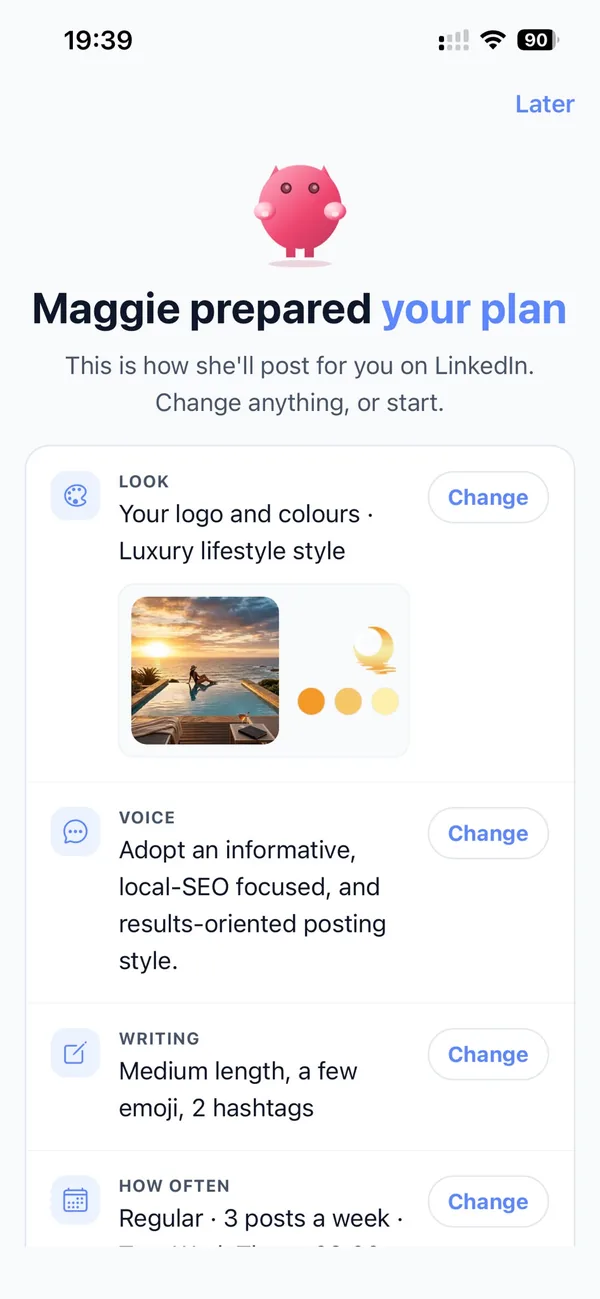
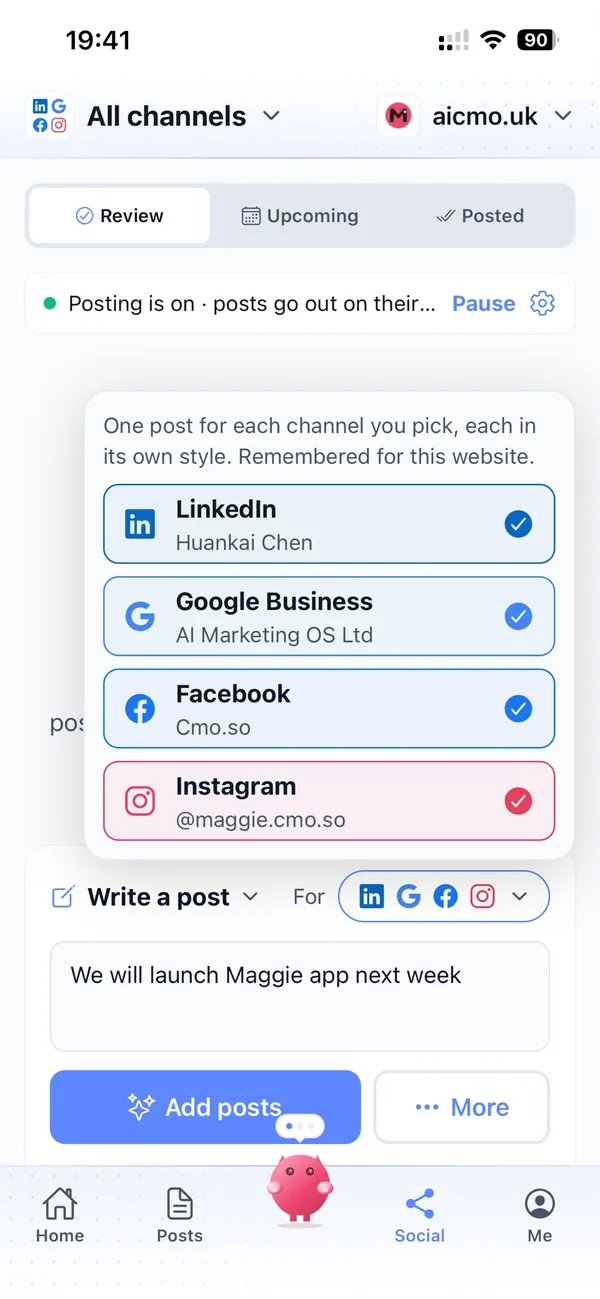
From your studio's website to a steady devlog in four steps
Enter your website
Maggie reads it and drafts your studio's brand profile in minutes.
Check your profile
Add your games, platforms and upcoming milestones, and choose the channels you want.
Review the drafts
Your first week of posts arrives with pictures. Approve, edit or skip each one.
Let them go out
Approved posts go out at each channel's times and every one comes back with its link.
Why not just…
The usual ways small studios try to build an audience, and where each one runs out.
…hire a community manager?
A full-time marketing hire in the UK costs around £3,000 a month before tools, which is a developer's salary for many small studios. Maggie writes and publishes every week from £15 a month.
…wait for a publisher to handle marketing?
Publishers look for games that already have people following them. Regular devlogs and LinkedIn posts show there's interest and a team that keeps its promises.
…pay a games PR agency for launch?
A launch campaign can help, but it's a burst at the end. Posts that run all through development mean there are people waiting when the campaign starts.
…write it with ChatGPT?
You still brief it, check it, make the picture and post it yourself, and it doesn't know your game, your roadmap or your voice. Maggie remembers your studio and posts on schedule.
Cut the £5,900/mo marketing bill to £15/mo
Everything a marketing team does, done by Maggie.
| What needs doing | Without cmo.so | With cmo.so |
|---|---|---|
| Full-time marketing hire | £3,000/mo | Included |
| SEO and AI search (GEO) agency | £1,000/mo | Included |
| Content writer, AI-assisted | £500/mo | Included |
| Social media manager, freelance | £800/mo | Included |
| Designed pictures for every post | £300/mo | Included |
| SEO and GEO softwareRank tracking, site audits, AI visibility | £250/mo | Included |
| AI writing and image tools | £50/mo | Included |
| Working hours | Office hours | 24/7 |
| Total per month | £5,900+ | From £15/mo |
Typical UK costs for a small business in 2026, with AI already cutting freelance rates. Estimates only; your own quotes will vary.
- 5 social posts, 30 once verified
- 15 Maggie messages a day
- Upgrade any time
- 12 posts a day
- 150 Maggie messages a day
- All channels
- 96 posts a day
- 1,000 Maggie messages a day
- All channels
Per website, billed monthly. Blog and social posts share one allowance; your best plan sets how much you can talk to Maggie across all your websites.
Marketing automation for game development studios: your questions
Still unsure?
What is marketing automation for game development studios?
It's software that does the repeating work of marketing a game: planning posts around your milestones, writing devlogs and social posts, making pictures and publishing them on schedule.
With cmo.so, Maggie does all of it from your studio's website, and nothing goes out until you approve it.
How do game development studios get more players online?
Game studios get more players online by talking about the game early and often: devlogs on their own website, short clips on video channels and regular updates, so people can follow it from announcement to launch.
Maggie writes those posts every week and queues them around your milestones, and Search Console shows which ones bring people to your site.
How much does marketing automation cost for a game studio?
There's a free plan with no card needed. Paid plans are per website and billed monthly: Air at £15 a month covers two posts a day, which suits most indie studios, and Pro at £45 a month suits a studio posting on several channels.
Founding members get lower prices for good on every plan until 1 January 2027. You can cancel any time.
Which channels should game development studios start with?
Most start with a devlog on their own website, so search and AI answers point to the studio, plus LinkedIn for publishers, investors and hiring.
YouTube, TikTok and Instagram are in beta and suit gameplay clips and art. Each channel has its own posting times and queue.
Is it safe to let AI post about our game?
It is, because nothing goes out until you approve it. Approvals are on by default, and you can keep them on for every channel or let a channel you trust run on autopilot.
Social channels connect through each platform's official sign-in, so cmo.so never sees your passwords, and cmo.so never sells or rents your data.
Will it leak features we haven't announced?
It only knows what is on your website and in the brand profile you check, so anything you keep out of both stays private. You review every post before it goes out.
You can also pause a channel before a big reveal, then switch it back on when the news is public.
Does it post to Discord, Reddit or Steam?
It doesn't; cmo.so publishes to your website, LinkedIn and Google Business, with Facebook, Instagram, YouTube and TikTok in beta.
Many studios share the link to each new devlog in their own community spaces, so one piece of writing reaches everyone.
Can it write patch notes and update posts?
It can turn the changes you give it into a clear update post for players, with the reasons behind them.
Add the details to the draft or your brand profile, check the post, and approve it when the update is live.
What kind of posts will Maggie write for a game studio?
Posts come from your game and your players' questions: how a mechanic was designed, how the art style came together, what changed after playtests, what's in the demo, and which platforms the game is coming to.
She also writes studio posts for LinkedIn, such as lessons from shipping your last game or what it's like to join the team.
Can it promise a release date or wishlist numbers?
It shouldn't, and you stay in control of both. Posts use the dates you give, and cmo.so does not promise rankings, sales or wishlists.
If a date slips, edit or skip the queued posts that mention it before they go out.
We're working on two games. Can cmo.so handle both?
It can. If each game has its own website, add both to one account and each gets its own brand profile, channels, schedule and approvals.
If both live on your studio's website, Maggie can plan posts for each game from the same brand profile.
Can my team approve posts too?
Your team can. In Me → Team you can add people and choose what each can see or change, using presets such as editor or manager.
So your lead artist can approve art posts while a producer looks after LinkedIn.
Have people following the game before launch day
Enter your website. Your brand profile and first week of posts are ready in minutes, and nothing goes out until you approve it.
- Free plan, no card needed
- You approve every post
- Cancel any time