


Marketing automation for software development companies
You build excellent software for clients, then go straight into the next sprint, and the pipeline depends on whoever happens to refer you. Maggie, your AI CMO, turns your projects and know-how into case studies, cost guides and LinkedIn posts, and you approve every one.
Free to start · No credit card · 30 free posts
Used by 600+ users and trusted by teams at
aeglesriphal.com
moonlakespa.com
shop.theteagroup.com
clo100.com
logtrics.io
mymorez.com
nextidal.com
otisapp.com
storaitelling.com
theheatpumps.co.uk
web-translations.com
exposeai.tech
orielipo.com
whitelabelcrowd.fund
elliptic.co
med.moonlakespa.com
netdex.co.il
orawellness.uk
reenest.com
syngage.ai
thepenthouseliving.com
zengolf.studio
imaintain.uk
rebuildingsociety.com
aurasocial.world
goaimex.com
moneyparents.com
newgenrenewables.uk
osmosisai.co
saunders.ac
teeza.app
thursdayclub.com
Why software development companies stay quiet online
Every billable hour goes to client work, so your own marketing is the project that never gets a sprint.
Feast, then famine
When the team is fully booked nobody markets, and when a big project ends there's nothing in the pipeline. By the time you start posting again, you needed the leads a month ago.
Great projects, never written up
The logistics platform, the booking app, the legacy system you rescued. They ship, the client is happy, and the case study stays on the to-do list forever.
Buyers ask “how much?” first
Founders and operations directors search what an app or a custom system costs and how long it takes. If your site doesn't answer, they shortlist the studio whose guide they read.
Compared on price alone
On directories and freelance marketplaces you sit next to hundreds of others, and the cheapest quote wins. Without your own content, buyers can't see why your process is worth more.

The project went live on Friday. By the next week it was bringing in enquiries.
You have just shipped a field-service app for a regional maintenance company. The client is delighted, the team has moved on to the next build, and your website still shows the same three case studies from two years ago.
You paste your company's website into cmo.so. Maggie reads it and writes your brand profile: your custom web and mobile development, the mid-sized firms in logistics and property you build for, how your fixed-scope discovery phase sets you apart from cheaper freelancers and offshore teams, and your straightforward voice. You correct one thing: you stopped taking on WordPress maintenance work last year.
By Tuesday the drafts are waiting, each with a picture in your brand's look: a case study of the field-service app with the client's name left out until they agree, a guide to what affects the cost of a custom business app, a LinkedIn post from your lead developer on why you replaced paper job sheets, and a Google Business update for businesses searching for a software company nearby. You add one detail about offline mode and approve all four.
The posts go out at the times you set for each channel and each one comes back with its link. A month later, Search Console in cmo.so shows the cost guide climbing, and Maggie is already planning the next one on rescuing legacy systems.
A marketing pipeline that runs while you ship
Each of those problems has an answer, and you still decide what goes out under your company's name.
Case studies from every project
Tell her what you built, for which kind of client and what changed, and Maggie writes the case study, with or without the client's name. Published to WordPress, Webflow, Wix, Shopify or any site through the cmo.so API.
Case studiesGuides buyers search for
What a custom app costs, build or buy, how long an MVP takes, how to choose a development partner. Written for Google and for AI answers, so your answer is the one buyers read.
Blog on autopilotMarketing that doesn't stop at full capacity
Posts are written and queued weeks ahead, so your blog and LinkedIn keep going while the whole team is on a deadline, and the next enquiry is already on its way.
Steady pipelineYour process, not a template
Enter your website and Maggie builds your brand profile: services, clients, unique selling points, SWOT, competitors and voice. Every post explains why your way of working is worth it.
Brand profileLinkedIn from the people who build
One idea becomes a LinkedIn post in your founder's or lead developer's voice, a blog post and a Google Business update, each written in that channel's style.
Every channelWorks with your tools
Approve at app.cmo.so or in the iPhone app, ask Maggie from ChatGPT or Claude through the cmo.so connector, or use the MCP server and CLI from your own terminal.
Developer friendlyYour marketing team, in your pocket
Real screens from the cmo.so app on iPhone.
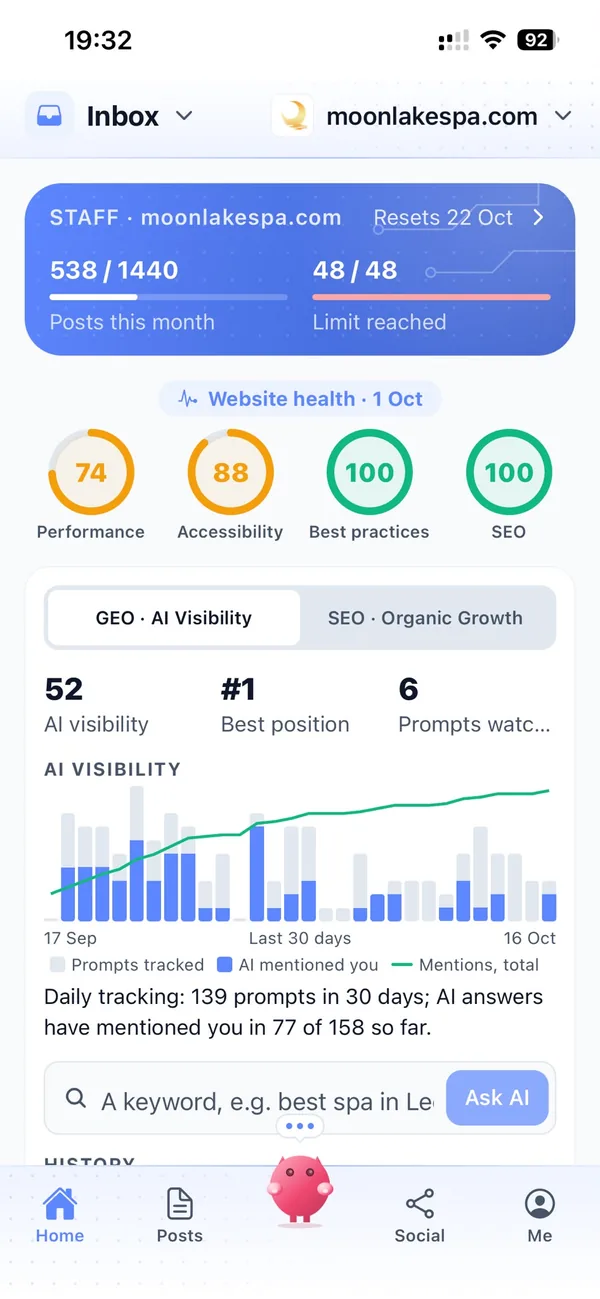
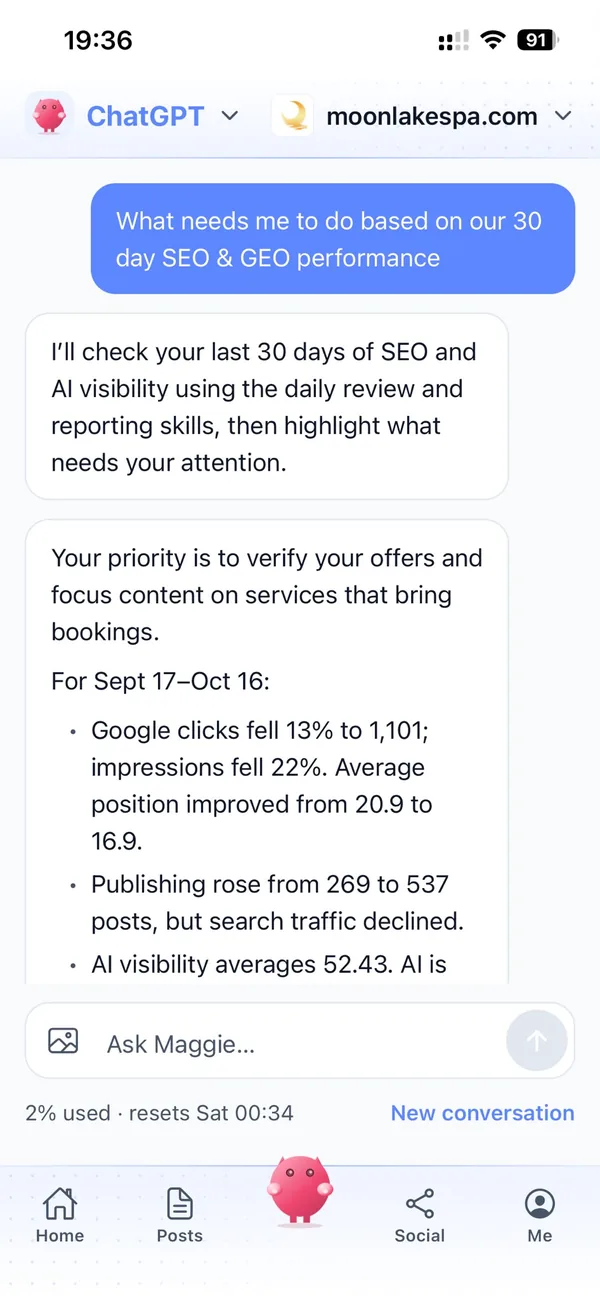
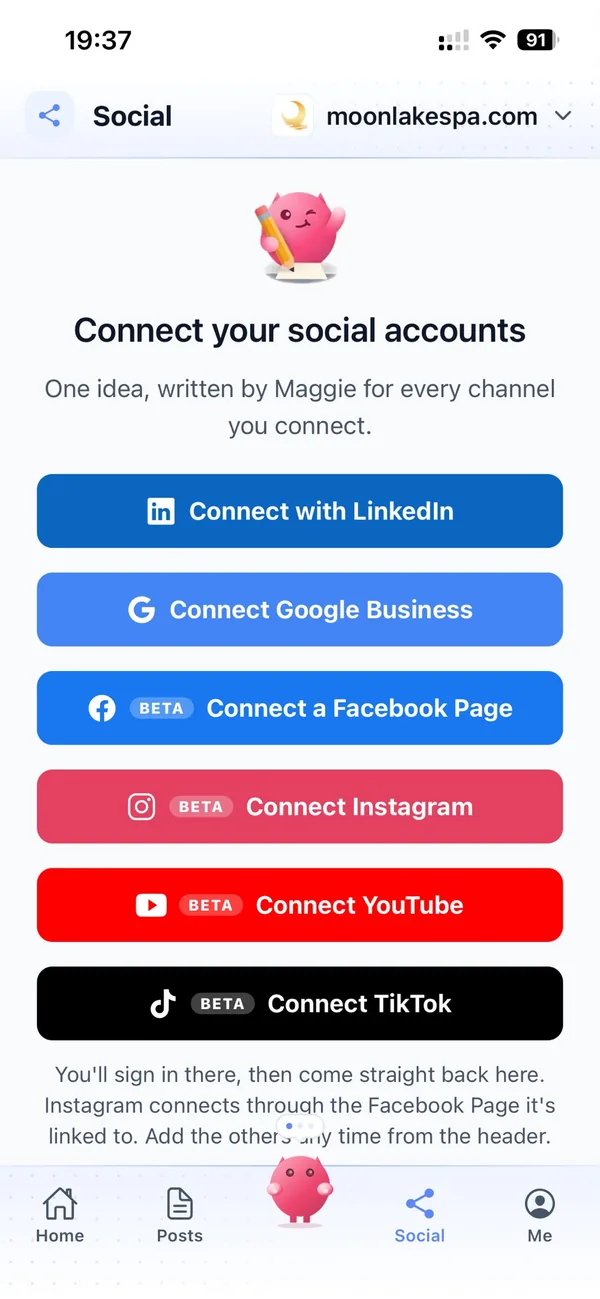
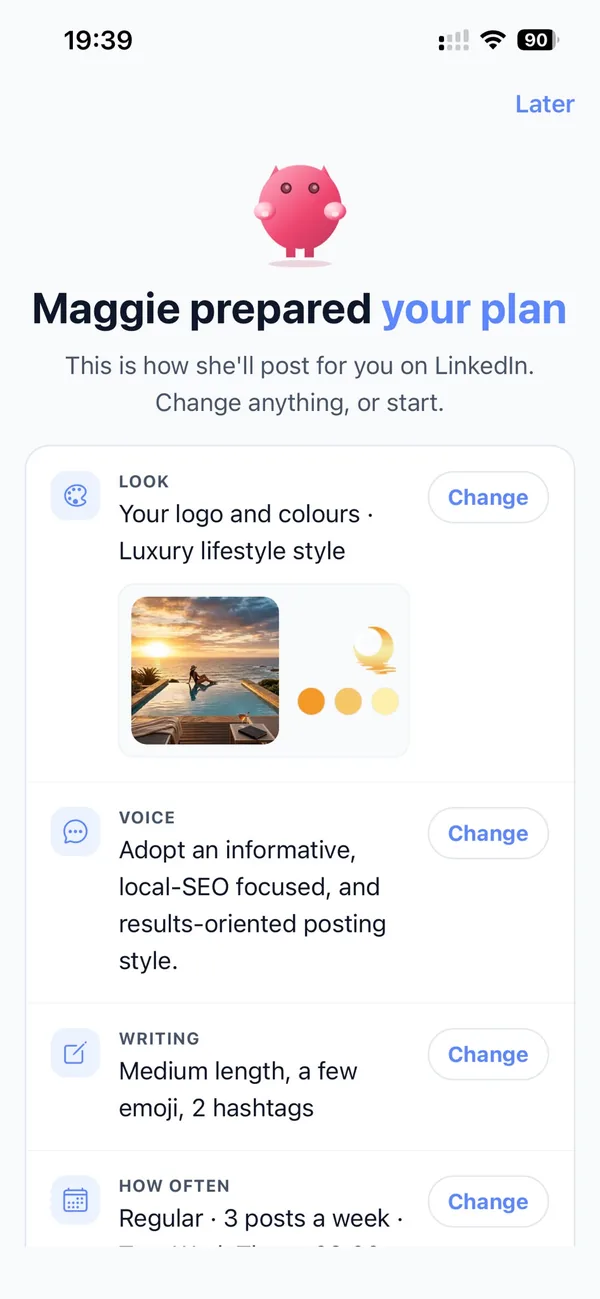
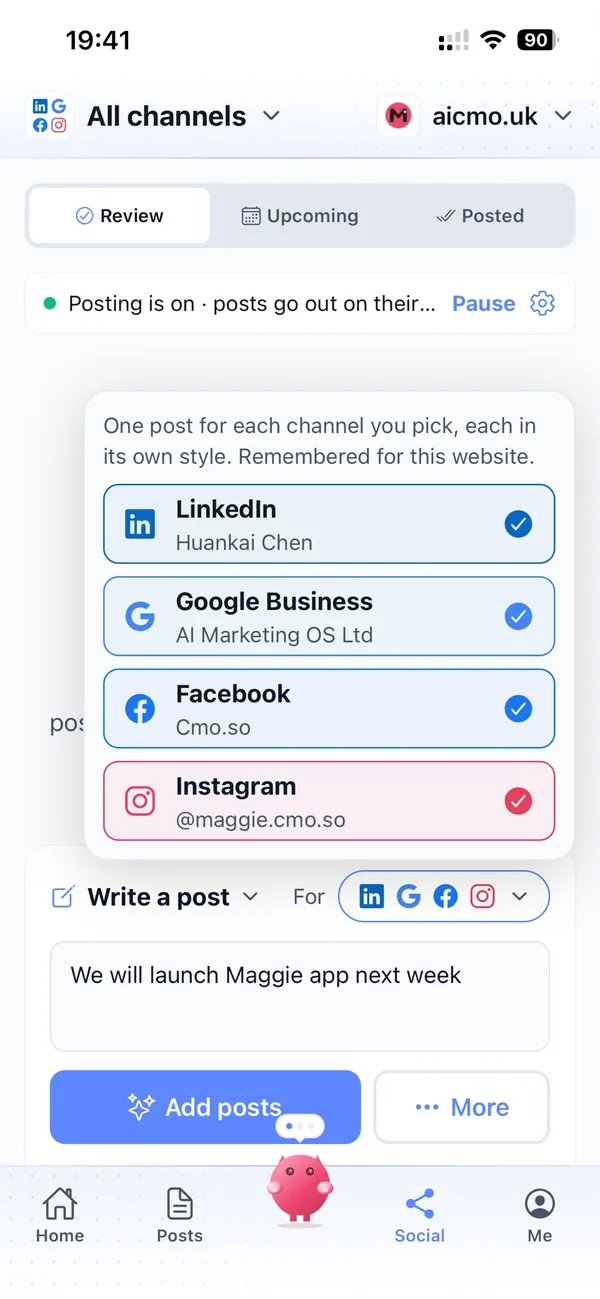
From your company's website to a full pipeline of posts in four steps
Enter your website
Maggie reads it and drafts your company's brand profile in minutes.
Check your profile
Correct your services, clients and competitors, add the projects you can talk about, and choose your channels.
Review the drafts
Your first week of case studies and posts arrives with pictures. Approve, edit or skip each one.
Let them go out
Approved posts go out at each channel's times and every one comes back with its link.
Why not just…
The usual ways software development companies try to keep work coming in, and where each one runs out.
…wait for referrals?
Referrals are your best clients, but you can't plan a team around them, and they dry up exactly when a big project ends. Your own posts keep new buyers arriving between referrals.
…rely on directories and marketplaces?
They bring enquiries, but you are listed next to hundreds of others and compared on day rate. Case studies and guides on your own site show buyers why you are worth more.
…ask a developer to write the blog?
They know the subject best, but every hour writing is an hour not billed, and the post loses to the client deadline every time. Maggie drafts it and they check the technical detail.
…hire a marketing manager?
A full-time marketing hire in the UK costs around £3,000 a month before tools, a big commitment for a small studio with lumpy income. Maggie starts from your website today, from £15 a month.
Cut the £5,900/mo marketing bill to £15/mo
Everything a marketing team does, done by Maggie.
| What needs doing | Without cmo.so | With cmo.so |
|---|---|---|
| Full-time marketing hire | £3,000/mo | Included |
| SEO and AI search (GEO) agency | £1,000/mo | Included |
| Content writer, AI-assisted | £500/mo | Included |
| Social media manager, freelance | £800/mo | Included |
| Designed pictures for every post | £300/mo | Included |
| SEO and GEO softwareRank tracking, site audits, AI visibility | £250/mo | Included |
| AI writing and image tools | £50/mo | Included |
| Working hours | Office hours | 24/7 |
| Total per month | £5,900+ | From £15/mo |
Typical UK costs for a small business in 2026, with AI already cutting freelance rates. Estimates only; your own quotes will vary.
- 5 social posts, 30 once verified
- 15 Maggie messages a day
- Upgrade any time
- 12 posts a day
- 150 Maggie messages a day
- All channels
- 96 posts a day
- 1,000 Maggie messages a day
- All channels
Per website, billed monthly. Blog and social posts share one allowance; your best plan sets how much you can talk to Maggie across all your websites.
Marketing automation for software development companies: your questions
Still unsure?
What is marketing automation for software development companies?
It's software that does the repeating work of marketing a development studio: planning topics, writing case studies, guides and LinkedIn posts, making pictures and publishing them on schedule.
With cmo.so, Maggie does all of it from your company's website, and nothing goes out until you approve it.
How do software development companies get more clients online?
Software development companies get more clients online by showing real work and answering buyers' first questions: case studies of what they built, honest guides on cost and timelines, and regular LinkedIn posts from the people who do the work.
Maggie, your AI CMO, writes those posts every week and keeps them going while your team is busy, and Search Console in cmo.so shows which guides bring buyers to your site.
How much does marketing automation cost for a software development company?
There's a free plan with no card needed. Paid plans are per website and billed monthly: Air at £15 a month covers two posts a day, which suits a small studio, and Pro at £45 a month suits a growing company posting on several channels.
Founding members get lower prices for good on every plan until 1 January 2027. You can cancel any time.
Which channels should software development companies start with?
Most start with their own blog for case studies and guides, and LinkedIn, where founders and operations leads who commission software spend their working day.
Google Business helps buyers searching for a software company nearby, and YouTube is in beta for project demos. Each channel has its own posting times and queue.
Is it safe to let AI write for our company?
Yes, because nothing goes out until you approve it. Approvals are on by default and you can keep them on for every channel, or let one you trust run on autopilot.
Social channels connect through each platform's official sign-in, so cmo.so never sees your passwords, and cmo.so never sells or rents your data.
What about projects under NDA?
Only share what you are allowed to. You can describe a project without naming the client, such as “a field-service app for a regional maintenance firm”, and Maggie writes the case study that way.
You approve every post, so nothing about a client goes out unless you have checked it.
Can it write about technical topics accurately?
Yes, when it has the facts. Maggie writes from your website and brand profile and from the details you add, so tell her the stack, the problem and the result.
For anything detailed, ask the developer who built it to check the draft before you approve it. That takes minutes rather than an afternoon.
Should we publish prices?
You don't have to, but buyers do search for what software costs. A guide to what affects the price, such as scope, integrations and support, answers that question without committing you to a quote.
You decide what goes in, and you approve every guide before it is published.
Can cmo.so help us appear in AI answers?
It helps by writing clear, quotable answers to the questions buyers ask, which is what AI answers draw on. No one can promise a mention.
AI visibility in cmo.so shows how Google's AI answers describe and mention your company, so you can see what changes over time.
Can we use it from our own tools?
Yes. There's an MCP server and a CLI for developers, and you can ask Maggie from ChatGPT or Claude through the cmo.so connector.
If your site is custom-built, posts can go to it through the cmo.so API, as well as to WordPress, Webflow, Wix or Shopify.
We also build products of our own. Can cmo.so market those too?
Yes. Add each product's website to the same account and each gets its own brand profile, channels, schedule and approvals.
So your services site talks to buyers of custom work, and each product talks to its own users.
Can our team approve posts too?
Yes. In Me → Team you can add people and choose what each can see or change, using presets such as editor or manager.
So your lead developer can check technical posts while the founder approves LinkedIn.
Keep the pipeline full while the team ships
Enter your company's website. Your brand profile and first week of case studies and LinkedIn posts are ready in minutes, and nothing goes out until you approve it.
- Free plan, no card needed
- You approve every post
- Cancel any time