


Marketing automation for food manufacturers
Retail buyers, foodservice operators and brands looking for a co-manufacturer check you out online long before they ask for samples. Maggie, your AI CMO, writes your capability posts, new product news and LinkedIn updates every week, and you approve each one.
Free to start · No credit card · 30 free posts
Used by 600+ users and trusted by teams at
aeglesriphal.com
moonlakespa.com
shop.theteagroup.com
clo100.com
logtrics.io
mymorez.com
nextidal.com
otisapp.com
storaitelling.com
theheatpumps.co.uk
web-translations.com
exposeai.tech
orielipo.com
whitelabelcrowd.fund
elliptic.co
med.moonlakespa.com
netdex.co.il
orawellness.uk
reenest.com
syngage.ai
thepenthouseliving.com
zengolf.studio
imaintain.uk
rebuildingsociety.com
aurasocial.world
goaimex.com
moneyparents.com
newgenrenewables.uk
osmosisai.co
saunders.ac
teeza.app
thursdayclub.com
Why food manufacturers find it hard to keep their marketing going
Your team is running lines, passing audits and launching new products for customers. Telling anyone outside about it comes last.
Buyers search before they call
A category buyer or a start-up brand looking for a co-packer will search for what you make, check your website and LinkedIn, and shortlist the manufacturers who look active and capable. A site last updated three years ago doesn't make the list.
Everything happens at trade shows
You spend months preparing a stand, meet buyers for three days, then go quiet until the next show. The conversations started there fade without anything to keep your name in front of them.
Your capabilities are hard to see
Your lines, certifications, pack formats, minimum runs and new product development team are what buyers care about, but they're buried in a brochure PDF or a sales deck nobody outside the company has seen.
Claims need careful wording
Free from, high protein, natural, sustainably sourced. Every claim about a food product needs to be accurate, and one careless post can cause trouble with a retailer or a regulator.

The trade show is next month, and buyers are already reading about your new range.
It's Monday and the food trade show is five weeks away. You're launching a new plant-based range, and your website still shows last year's products and a photo of a line you've since replaced.
You enter your company's website into cmo.so. Maggie reads it and writes your brand profile: a family-owned bakery manufacturer making cakes and traybakes for retailers, foodservice and private label, your own brand sold in independent shops, a nut-free site, the in-house development kitchen, and the friendly, practical tone you use with buyers. You correct one thing: you now offer smaller minimum runs for start-up brands.
By Tuesday the drafts are waiting, each with a picture in your company's look: a LinkedIn post announcing the plant-based range with an invitation to visit your stand, a blog post on how your development kitchen takes a new product from brief to first production run, a post for start-up brands on what to prepare before approaching a co-manufacturer, and an Instagram post for your own brand's shoppers. You approve three from your phone and ask your technical manager to check the wording on the fourth.
The posts go out at the times you set for each channel over the weeks before the show and come back with their links. While your team is packing the stand, Maggie is planning the follow-up posts for after the show, and Search Console in cmo.so shows which capability pages buyers are finding.
Marketing that shows buyers what your factory can do
Each problem has an answer, and nothing goes out under your company's name until you have approved it.
Capability and process posts
Posts on your production lines, pack formats, certifications, new product development and how you work with customers, written for Google and for AI answers. Published to WordPress, Shopify, Wix, Webflow or any site through the cmo.so API.
Blog on autopilotLinkedIn that keeps going after the show
Posts for retail buyers, foodservice operators, distributors and brand owners, queued weeks ahead, so your name stays in front of the people you met long after the stand comes down.
LinkedInCareful with food claims
Content Policy Guard can check posts against your own house rules on health, nutrition, allergen and sustainability claims, and hold a risky one as a draft with a suggested rewrite. These are AI suggestions, not legal or compliance advice; your technical team should still review, and you stay responsible for what you publish.
Content Policy GuardA brand profile built from your site
Maggie reads your website and writes your products, customers, certifications, what sets you apart from other manufacturers, your competitors and your voice. Every post and picture starts from it.
Brand profilePlanned around launches and seasons
Trade shows, new ranges, Christmas and summer lines, and range reviews are planned and queued ahead, so posts appear when buyers are making decisions.
Seasonal scheduleTrade and consumer posts from one idea
A new product becomes a LinkedIn post for buyers, a blog post on how it was made and an Instagram or Facebook post for shoppers (in beta), each written in the style of its channel.
Every channelYour marketing team, in your pocket
Real screens from the cmo.so app on iPhone.
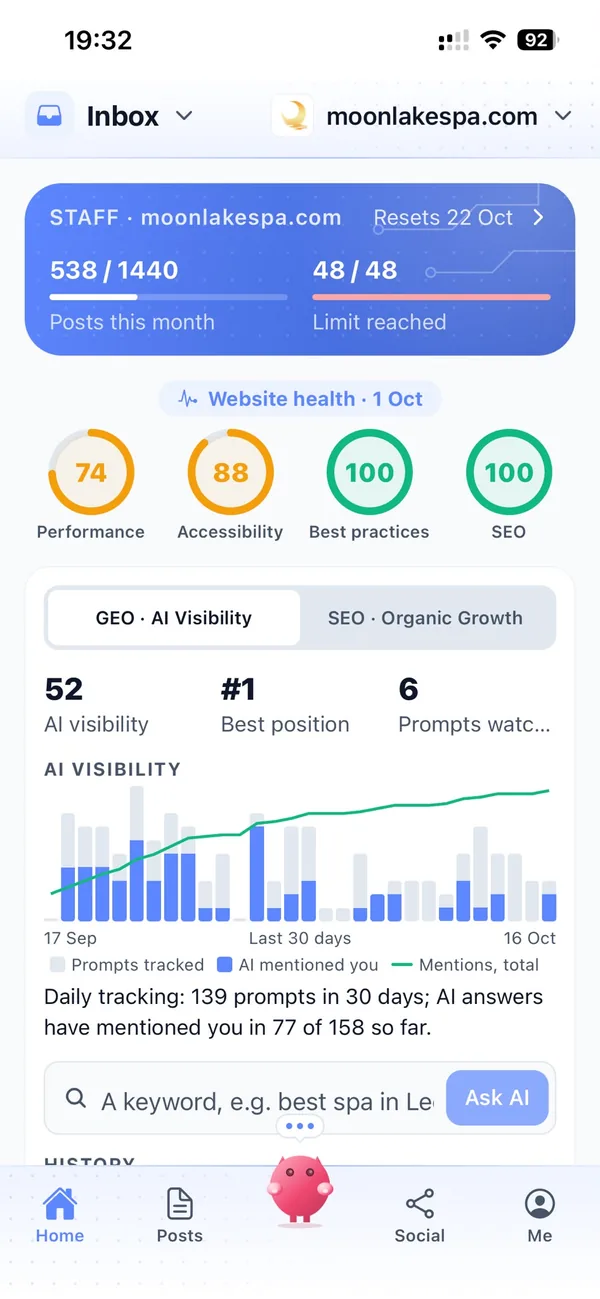
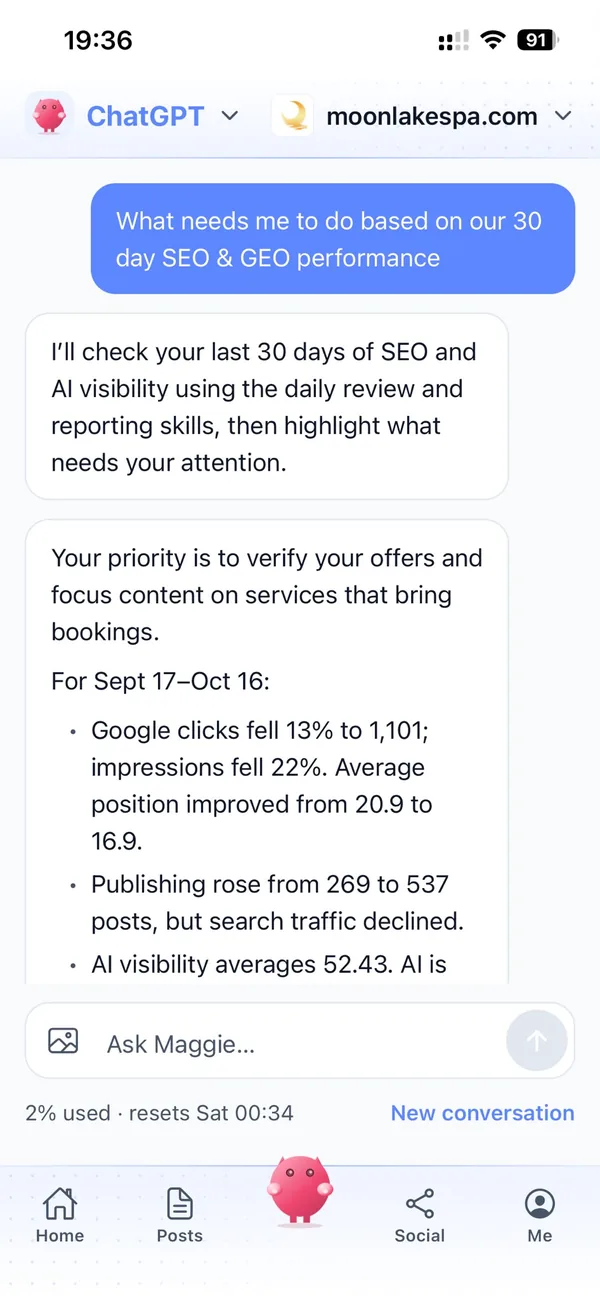
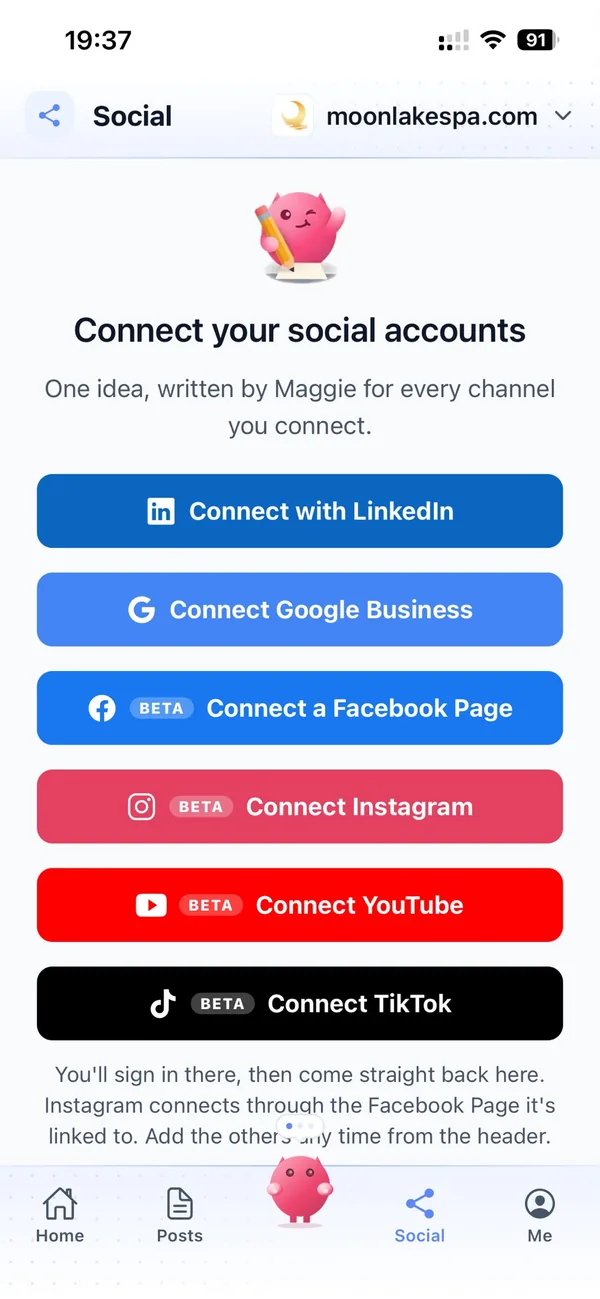
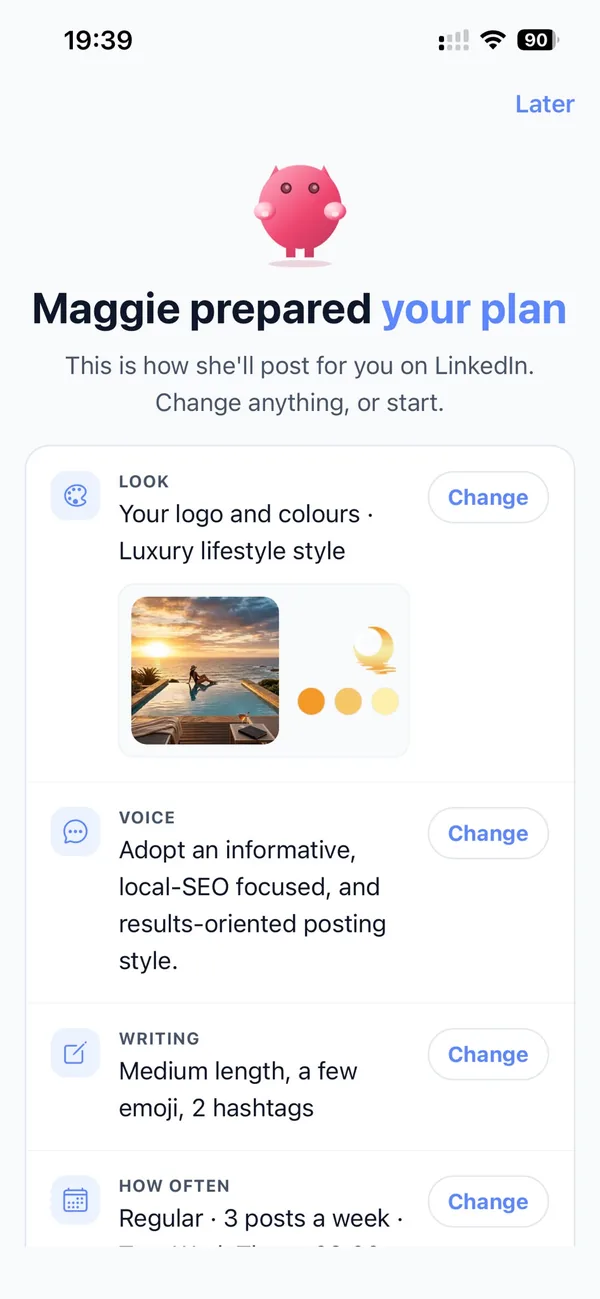
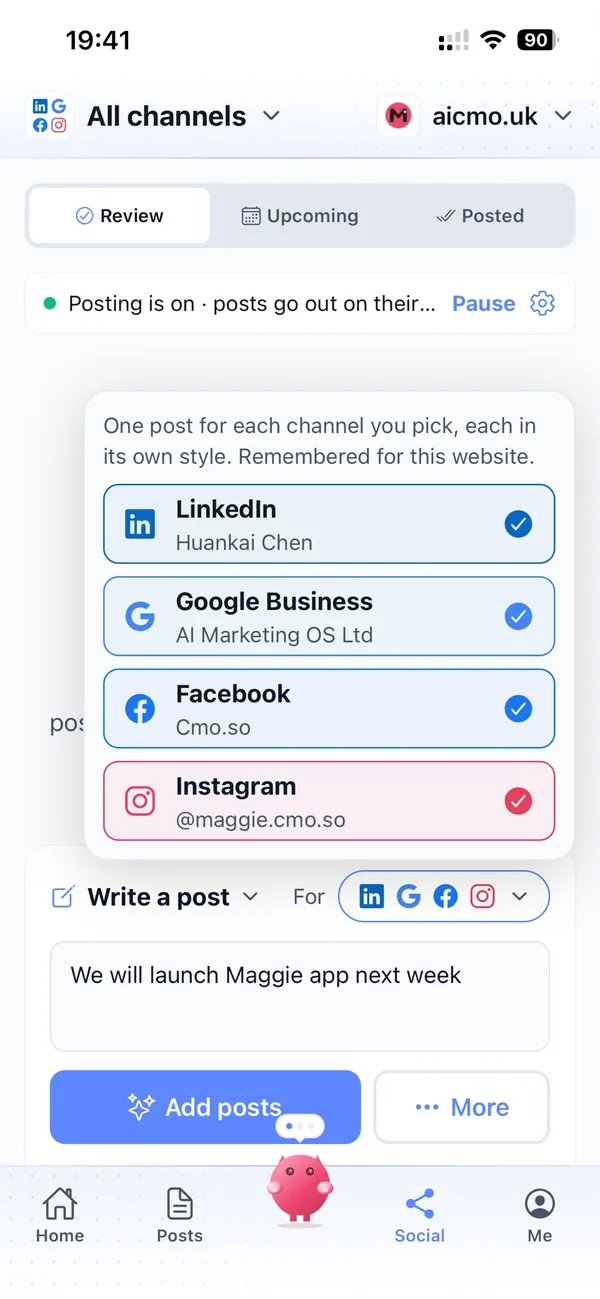
From your company website to a steady flow of posts in four steps
Enter your website
Maggie reads it and drafts your company's brand profile in minutes.
Check your profile
Correct your products and certifications, add your house rules on claims and choose the channels you want.
Review the drafts
Your first week of posts arrives with pictures. Approve, edit or skip each one.
Let them go out
Approved posts go out at each channel's times and every one comes back with its link.
Why not just…
The usual ways food manufacturers try to win new customers, and where each one runs out.
…rely on trade shows?
Shows are good for meeting buyers, but they cost a great deal and happen a few times a year. Regular posts keep those conversations warm in between and reach buyers who weren't there.
…leave it to brokers and distributors?
They open doors, but they represent many manufacturers and rarely tell your story in detail. Posts on your own website and LinkedIn show buyers exactly what you can do.
…ask the sales team to post on LinkedIn?
Some will, most won't keep it up between customer visits. Maggie drafts the posts so each salesperson only has to approve and share them.
…pay a food marketing agency?
SEO and content agencies often cost around £1,000 a month and still need your technical team's time to get the details right. Maggie learns from your website and edits, from £15 a month.
Cut the £5,900/mo marketing bill to £15/mo
Everything a marketing team does, done by Maggie.
| What needs doing | Without cmo.so | With cmo.so |
|---|---|---|
| Full-time marketing hire | £3,000/mo | Included |
| SEO and AI search (GEO) agency | £1,000/mo | Included |
| Content writer, AI-assisted | £500/mo | Included |
| Social media manager, freelance | £800/mo | Included |
| Designed pictures for every post | £300/mo | Included |
| SEO and GEO softwareRank tracking, site audits, AI visibility | £250/mo | Included |
| AI writing and image tools | £50/mo | Included |
| Working hours | Office hours | 24/7 |
| Total per month | £5,900+ | From £15/mo |
Typical UK costs for a small business in 2026, with AI already cutting freelance rates. Estimates only; your own quotes will vary.
- 5 social posts, 30 once verified
- 15 Maggie messages a day
- Upgrade any time
- 12 posts a day
- 150 Maggie messages a day
- All channels
- 96 posts a day
- 1,000 Maggie messages a day
- All channels
Per website, billed monthly. Blog and social posts share one allowance; your best plan sets how much you can talk to Maggie across all your websites.
Marketing automation for food manufacturers: your questions
Still unsure?
What is marketing automation for food manufacturers?
It's software that handles the repeating work of marketing a food producer: planning topics, writing blog, LinkedIn and social posts, making pictures and publishing them on schedule.
With cmo.so, Maggie does this from your company's website and brand profile, and nothing goes out until you approve it.
How do food manufacturers get more customers online?
Food manufacturers get more customers online by making their capabilities easy to find and check: clear pages on what they make and how, an active LinkedIn presence and regular news about new products and certifications.
Maggie writes those posts every week and keeps them going between trade shows, and Search Console in cmo.so shows which topics bring buyers to your site.
How much does marketing automation cost for a food manufacturer?
There's a free plan with no card needed. Paid plans are per website and billed monthly: Air at £15 a month covers two posts a day, and Pro at £45 a month suits a manufacturer posting to buyers and shoppers on several channels.
Founding members get lower prices for good on every plan until 1 January 2027, and you can cancel any time.
Which channels should food manufacturers start with?
Most food manufacturers start with LinkedIn and their own blog, because that's where retail buyers, foodservice operators and brand owners check suppliers.
If you also sell your own brand, Instagram and Facebook are in beta and suit shoppers, and YouTube, also in beta, suits short factory or kitchen videos. Each channel has its own posting times and queue.
Is it safe to let AI write about our food products?
It's safe when your technical team checks it, and nothing goes out until you approve it. Approvals are on by default for every channel.
Content Policy Guard can also check posts against your house rules on food claims. These are AI suggestions, not legal or compliance advice; a qualified person should still review, and you stay responsible for what you publish.
How does it handle allergen and nutrition claims?
It writes only from what your brand profile and website say, and you can add house rules such as never making health claims or always pointing to the label for allergens.
Content Policy Guard can hold a post that breaks those rules as a draft with a suggested rewrite, and your technical manager should still approve anything that makes a claim.
How do we keep customer and private label work confidential?
You set that in your brand profile. Write which customers and products are confidential, and Maggie writes about your capabilities and processes without naming them.
Every draft comes to you for approval, so you can check it before it goes out.
Can it help us before and after trade shows?
Yes. Tell cmo.so the show dates and Maggie plans posts before the show inviting buyers to your stand, and follow-up posts afterwards on the products you showed.
These are usually LinkedIn and blog posts, with a Google Business event if you run an open day or factory visit.
We sell our own brand and make for others. Can cmo.so cover both?
Yes. If each has its own website, add both to one account and each gets its own brand profile, channels, schedule and approvals.
If they share one website, each channel can have its own voice, so LinkedIn speaks to buyers while Instagram speaks to shoppers.
Can it help with recruiting production staff?
It can help people see what it's like to work for you. Maggie writes posts introducing your teams, apprenticeships and the products they make, for LinkedIn and Facebook, which is in beta.
Applications still go through your own careers page or job boards.
Which websites does it publish to?
cmo.so publishes to WordPress (including WooCommerce), Shopify, Wix and Webflow, and to any other website through the cmo.so API.
Each post is reported back with its link once it is live.
Can our technical and sales teams approve posts too?
Yes. In Me → Team you can add people and choose what each can see or change, using presets such as editor or manager.
So your technical manager can check product claims while the sales director looks after LinkedIn.
Let buyers see what your factory can do
Enter your website. Your brand profile and first week of posts are ready in minutes, and nothing goes out until you approve it.
- Free plan, no card needed
- You approve every post
- Cancel any time