

Marketing automation for food tech companies
You're building something new for the way people grow, cook, sell or eat food, and most of your future customers haven't heard of it yet. Maggie, your AI CMO, writes the explainers, LinkedIn posts and launch news that make it make sense, and you approve every one.
Free to start · No credit card · 30 free posts
Used by 600+ users and trusted by teams at
aeglesriphal.com
moonlakespa.com
shop.theteagroup.com
clo100.com
logtrics.io
mymorez.com
nextidal.com
otisapp.com
storaitelling.com
theheatpumps.co.uk
web-translations.com
exposeai.tech
orielipo.com
whitelabelcrowd.fund
elliptic.co
med.moonlakespa.com
netdex.co.il
orawellness.uk
reenest.com
syngage.ai
thepenthouseliving.com
zengolf.studio
imaintain.uk
rebuildingsociety.com
aurasocial.world
goaimex.com
moneyparents.com
newgenrenewables.uk
osmosisai.co
saunders.ac
teeza.app
thursdayclub.com
Why food tech companies struggle to keep their marketing going
You sit between two worlds. The kitchen wants to know if it works on a Friday night service, and the investor wants to know if it scales, and nobody has time to write for either.
The product needs explaining
A kitchen display system, a food waste tracker, a fermentation-based protein or a vertical farm is not something people already search for by name. Until someone explains the problem it solves, buyers don't know to look.
Two very different audiences
Head chefs, grocery buyers and restaurant group operators want practical answers. Investors, partners and the press want the bigger story. One post rarely works for both, so usually neither gets written.
The team is busy shipping
Founders are pitching, food scientists are in trials and the ops team is onboarding the next restaurant. The blog post about last month's pilot never gets past a note in someone's phone.
Launches land in silence
A new integration with a till system, a supermarket listing or a new city goes live with one LinkedIn post from the founder. A month later there is nothing on the website to show it happened.
Your pilot with a restaurant group wrapped up on Friday. By Wednesday the whole industry can read about it.
It's Monday. Your waste-tracking app has just finished a trial in a group of restaurant kitchens, the team is already onboarding the next customer, and the only record of what you learned is a slide deck.
You paste your company's website into cmo.so. Maggie reads it and writes your brand profile: the problem you solve for kitchens, the operators and chefs you sell to, the investors you talk to, the competitors buyers compare you with and the plain, practical voice your team uses. You correct one thing: you integrate with two till systems now, not one.
By Tuesday the drafts are waiting, each with a picture in your look: a blog post on how professional kitchens can measure food waste without slowing service, a LinkedIn post from the founder on what the trial taught the team, a short explainer for grocers on the same idea, and an Instagram post (in beta) showing the tablet on a busy pass. Your head of partnerships approves two from her phone and adds a line to the third.
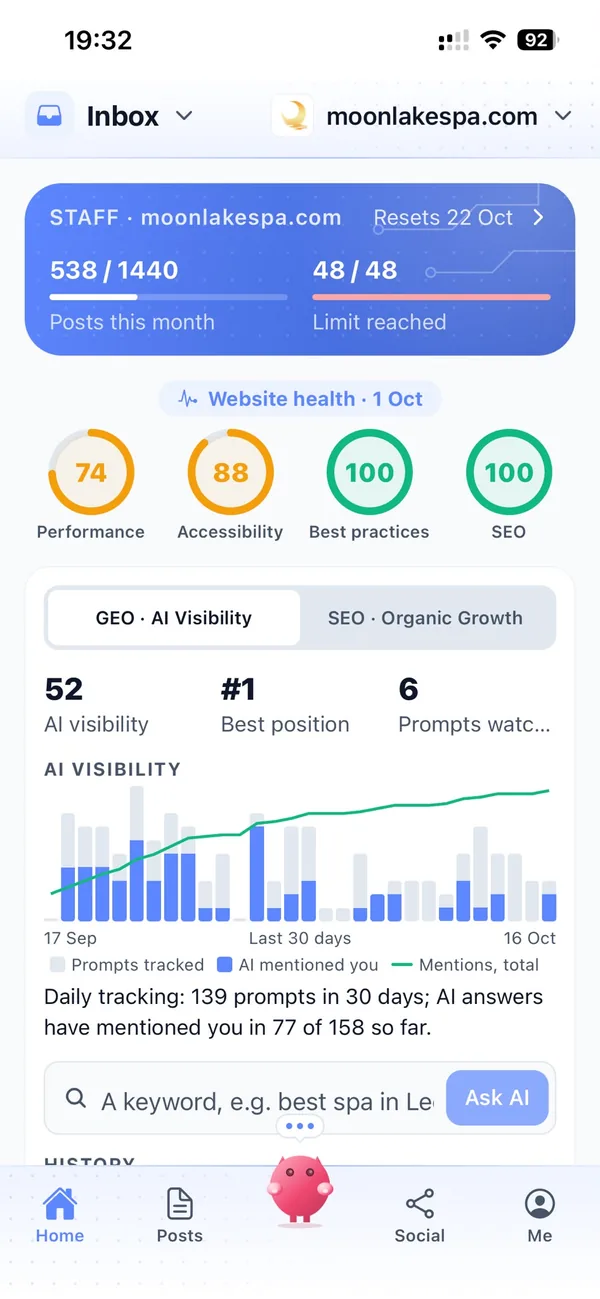
The posts go out at the times you set for each channel, and each comes back with its link. Search Console in cmo.so shows which explainers people find, and AI visibility shows how Google's AI answers describe what you do.
A content team that understands both the kitchen and the pitch deck
Each of those problems has an answer, and your team still decides what goes out under your name.
Explainers people actually search for
Posts on the problems you solve, such as cutting kitchen waste, shortening prep time or keeping a cold chain honest, written for Google and for AI answers. Published to your WordPress, Shopify, Wix or Webflow site, or any site through the cmo.so API.
Blog on autopilotWritten for each buyer
One idea becomes a practical post for operators and chefs, a bigger-picture LinkedIn post for investors and partners, and a lighter Instagram or Facebook post (in beta) for the people who eat the food.
Every channelLaunches that leave a trail
New integrations, new cities, a retail listing or a pilot result each become a blog post and a run of social posts, so your website shows how far you've come.
Product newsYour product, described correctly
Enter your website and Maggie builds your brand profile: what you make, who buys it, how you differ from the alternatives, competitors and voice. You correct it once, and every post starts from it.
Brand profileSee what AI says about you
AI visibility shows how Google's AI answers describe your company and category, and Search Console shows which posts bring visitors to your site.
AI visibilityApprove between trials
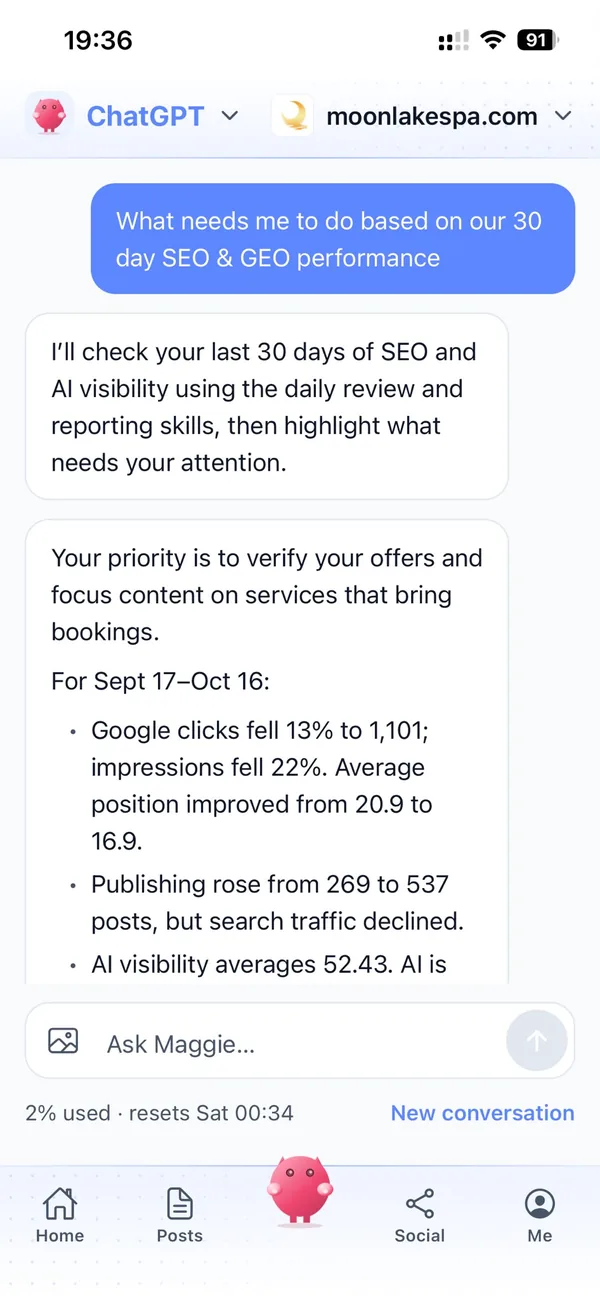
By default nothing goes out until someone approves it. Founders, marketing and the science team can each review in the iPhone app, at app.cmo.so, or from ChatGPT or Claude.
ApprovalsYour marketing team, in your pocket
Real screens from the cmo.so app on iPhone.
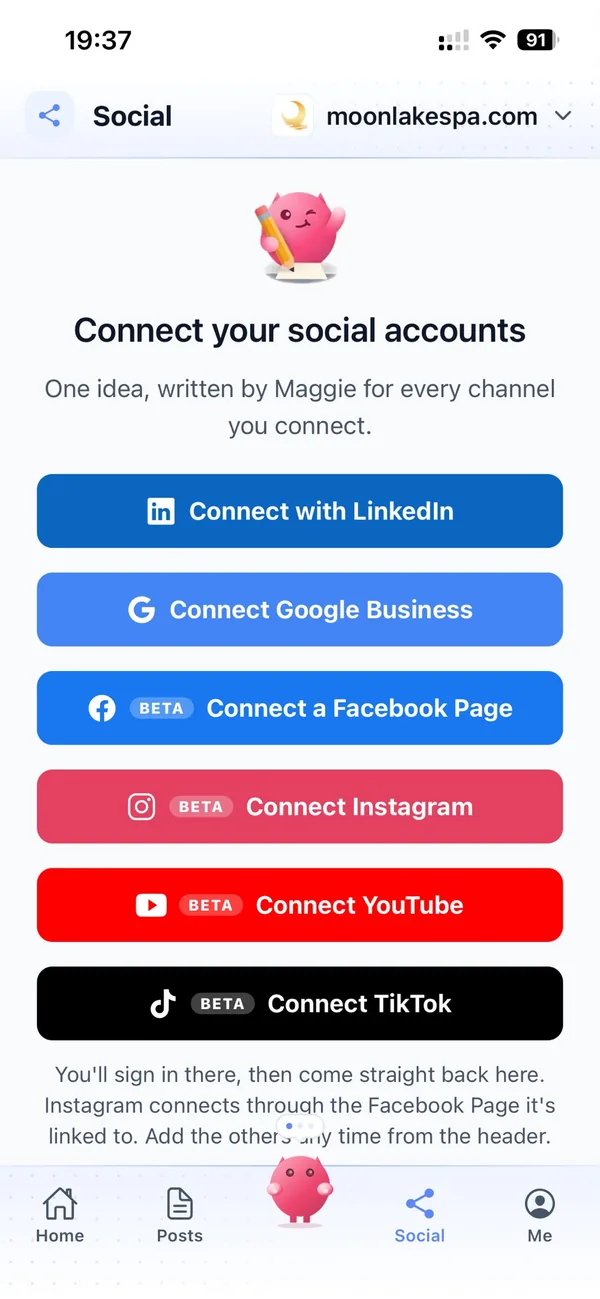
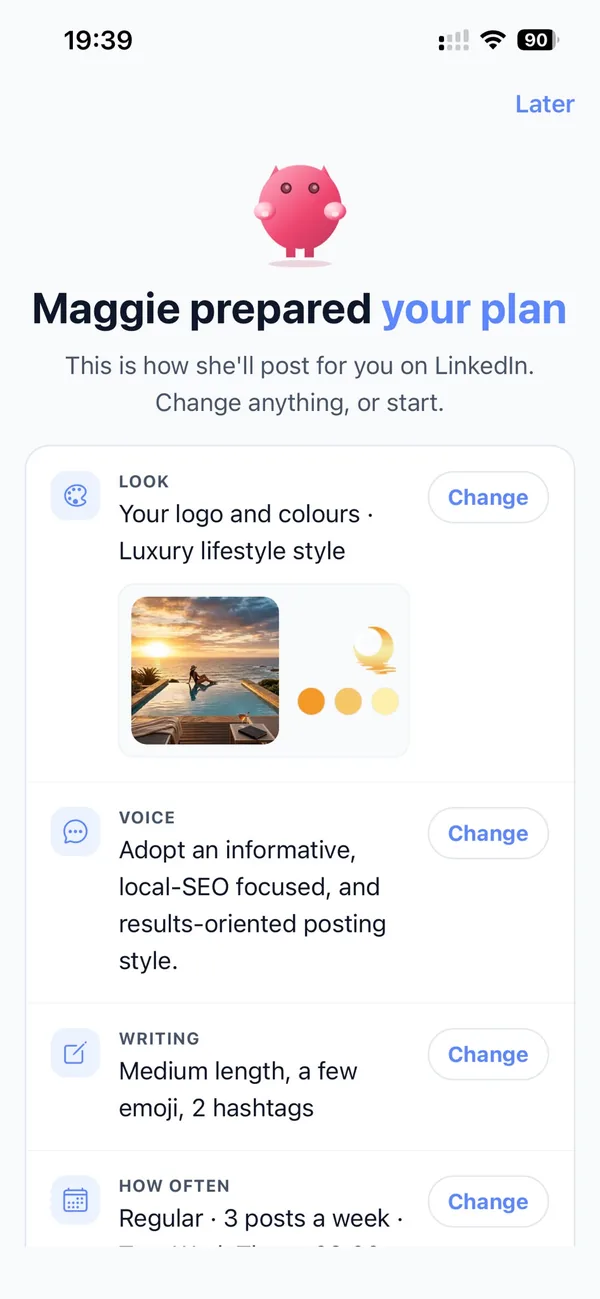
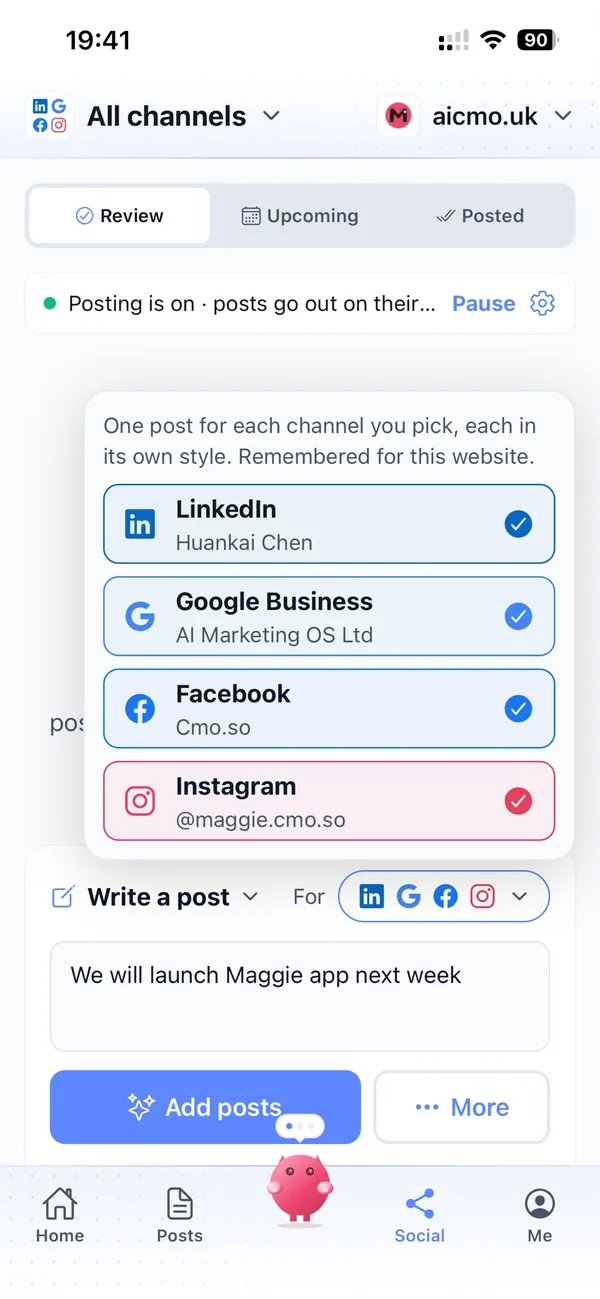
From your company's website to a steady flow of explainers in four steps
Enter your website
Maggie reads it and drafts your company's brand profile in minutes.
Check your profile
Correct the product details, add the buyers you sell to and choose the channels you want.
Review the drafts
Your first week of posts arrives with pictures. Approve, edit or skip each one.
Let them go out
Approved posts go out at each channel's times and every one comes back with its link.
Why not just…
The usual ways food tech teams try to get their story out, and where each one runs out.
…hire a head of content?
A full-time marketing hire in the UK costs around £3,000 a month before tools, which is a big line in a seed-stage budget. Maggie writes and publishes every week from £15 a month.
…rely on trade press and food shows?
A feature or a stand at a trade show brings a burst of attention, then it fades. Posts on your own website and LinkedIn keep working when buyers search months later.
…let the founder post on LinkedIn?
Founder posts work, but they stop the week a funding round or a big customer launch takes over. Maggie drafts them in the founder's voice so they only need a quick read.
…write it with ChatGPT?
You still brief it, check it, make the picture and post it yourself, and it doesn't know your product or your buyers. Maggie remembers your company and puts posts out on schedule.
Cut the £5,900/mo marketing bill to £15/mo
Everything a marketing team does, done by Maggie.
| What needs doing | Without cmo.so | With cmo.so |
|---|---|---|
| Full-time marketing hire | £3,000/mo | Included |
| SEO and AI search (GEO) agency | £1,000/mo | Included |
| Content writer, AI-assisted | £500/mo | Included |
| Social media manager, freelance | £800/mo | Included |
| Designed pictures for every post | £300/mo | Included |
| SEO and GEO softwareRank tracking, site audits, AI visibility | £250/mo | Included |
| AI writing and image tools | £50/mo | Included |
| Working hours | Office hours | 24/7 |
| Total per month | £5,900+ | From £15/mo |
Typical UK costs for a small business in 2026, with AI already cutting freelance rates. Estimates only; your own quotes will vary.
- 5 social posts, 30 once verified
- 15 Maggie messages a day
- Upgrade any time
- 12 posts a day
- 150 Maggie messages a day
- All channels
- 96 posts a day
- 1,000 Maggie messages a day
- All channels
Per website, billed monthly. Blog and social posts share one allowance; your best plan sets how much you can talk to Maggie across all your websites.
Marketing automation for food tech companies: your questions
Still unsure?
What is marketing automation for food tech companies?
It's software that does the repeating content work of a food tech business: planning topics, writing explainers and social posts for operators, buyers and investors, making pictures and publishing them on schedule.
With cmo.so, Maggie does all of it from your company's website, and nothing goes out until you approve it.
How do food tech companies get more customers online?
Food tech companies get more customers online by explaining the problem they solve in the words buyers already use: guides on kitchen waste, ordering, food safety records or new ingredients, plus regular LinkedIn posts where operators and partners spend time.
Maggie writes those every week from your brand profile, and Search Console shows which posts bring people to your website.
How much does marketing automation cost for a food tech company?
There's a free plan with no card needed. Paid plans are per website and billed monthly: Air at £15 a month covers two posts a day, and Pro at £45 a month suits a growing company posting on several channels.
Founding members get lower prices for good on every plan until 1 January 2027. You can cancel any time.
Which channels should food tech companies start with?
Most start with their own blog for explainers and LinkedIn for operators, investors and partners, because that's where business buyers in food look for new suppliers.
If you sell to consumers too, Instagram, Facebook and TikTok are in beta, and Google Business suits a company with a site people visit, such as a farm or a test kitchen. Each channel has its own posting times and queue.
We sell to restaurants and to investors. Can one account handle both?
One account can handle both audiences. The brand profile knows who each post is for, so the same idea can become a practical post for operators and a bigger-picture post for investors.
You choose which channels carry which kind of post, and each channel has its own approvals.
Can cmo.so write about our pilots and customer results?
It can turn what you tell it into posts. Maggie writes from your website and brand profile, and you can add details about a pilot or a launch when you review a draft.
She never invents customers or results, and you approve every post, so you only publish what your customer has agreed you can share.
Is it safe to let AI write about food and nutrition?
It is safe when a person checks every post before it goes out, and approvals are on by default. If you make claims about health or nutrition, have someone who knows the rules for your market read those posts.
You can add your own house rules, such as never naming a customer without permission, and Maggie learns from your edits. Social channels connect through each platform's official sign-in, so cmo.so never sees your passwords.
Will the posts be technical enough for chefs and operators?
The posts are as practical as your brand profile and your edits make them. Maggie writes about the problems kitchens and stores actually face, such as prep, waste, ordering and staffing, rather than generic tech talk.
When your team corrects a detail, she remembers it for the next post.
Can it help when we launch in a new city or country?
A launch is a natural run of posts. Maggie can write a launch article, LinkedIn posts for the new market and local Google Business posts if you have a place there.
If the new market has its own website, add it to the same account and it gets its own brand profile, channels and schedule.
Does cmo.so run our ads or email newsletters?
No, cmo.so doesn't run ads or send email newsletters. Maggie plans, writes and publishes posts for your website and social channels.
Many teams link those posts from their newsletter or use the best ones as a starting point for ads they run themselves.
Which websites does it work with?
cmo.so publishes to WordPress (including WooCommerce), Shopify, Wix and Webflow, and to any other website, including a custom-built product site, through the cmo.so API.
Each post is reported back with its link once it is live.
Can our team approve posts too?
Your whole team can take part. In Me → Team you can add people and choose what each can see or change, using presets such as editor or manager.
So your food scientist can check the technical posts while marketing looks after LinkedIn.
Let your product's story keep up with your product
Enter your website. Your brand profile and first week of explainers and LinkedIn posts are ready in minutes, and nothing goes out until you approve it.
- Free plan, no card needed
- You approve every post
- Cancel any time