

Marketing automation for electric vehicle companies
People thinking about going electric have dozens of questions about range, charging and running costs, and they ask them online long before they visit you. Maggie, your AI CMO, answers them in posts for your website, Google Business, LinkedIn and more, and you approve every one.
Free to start · No credit card · 30 free posts
Used by 600+ users and trusted by teams at
aeglesriphal.com
moonlakespa.com
shop.theteagroup.com
clo100.com
logtrics.io
mymorez.com
nextidal.com
otisapp.com
storaitelling.com
theheatpumps.co.uk
web-translations.com
exposeai.tech
orielipo.com
whitelabelcrowd.fund
elliptic.co
med.moonlakespa.com
netdex.co.il
orawellness.uk
reenest.com
syngage.ai
thepenthouseliving.com
zengolf.studio
imaintain.uk
rebuildingsociety.com
aurasocial.world
goaimex.com
moneyparents.com
newgenrenewables.uk
osmosisai.co
saunders.ac
teeza.app
thursdayclub.com
Why EV businesses find it hard to keep their marketing going
Whether you sell electric cars and vans, install chargers or electrify fleets, the day fills up with handovers, site surveys and customer calls before anyone writes a post.
Drivers arrive full of doubts
Will it get through winter? Where do I charge if I don't have a driveway? What about the battery on a used one? If your website doesn't answer, someone else's does, and they get the enquiry.
Big brands and marketplaces own the searches
Search for a used electric car, a home charger installer or an electric van and you see manufacturers, comparison sites and big dealer groups first. An independent specialist is hard to find.
Fleet buyers need a different story
A fleet manager weighing up electric vans cares about duty cycles, depot charging and downtime, not the same things a family driver does. Writing for both, every week, rarely happens.
The busy months come and go
New registration plates in March and September, company car decisions, lease renewals. If your posts stop when the showroom or the installer diary gets busy, the next wave goes elsewhere.
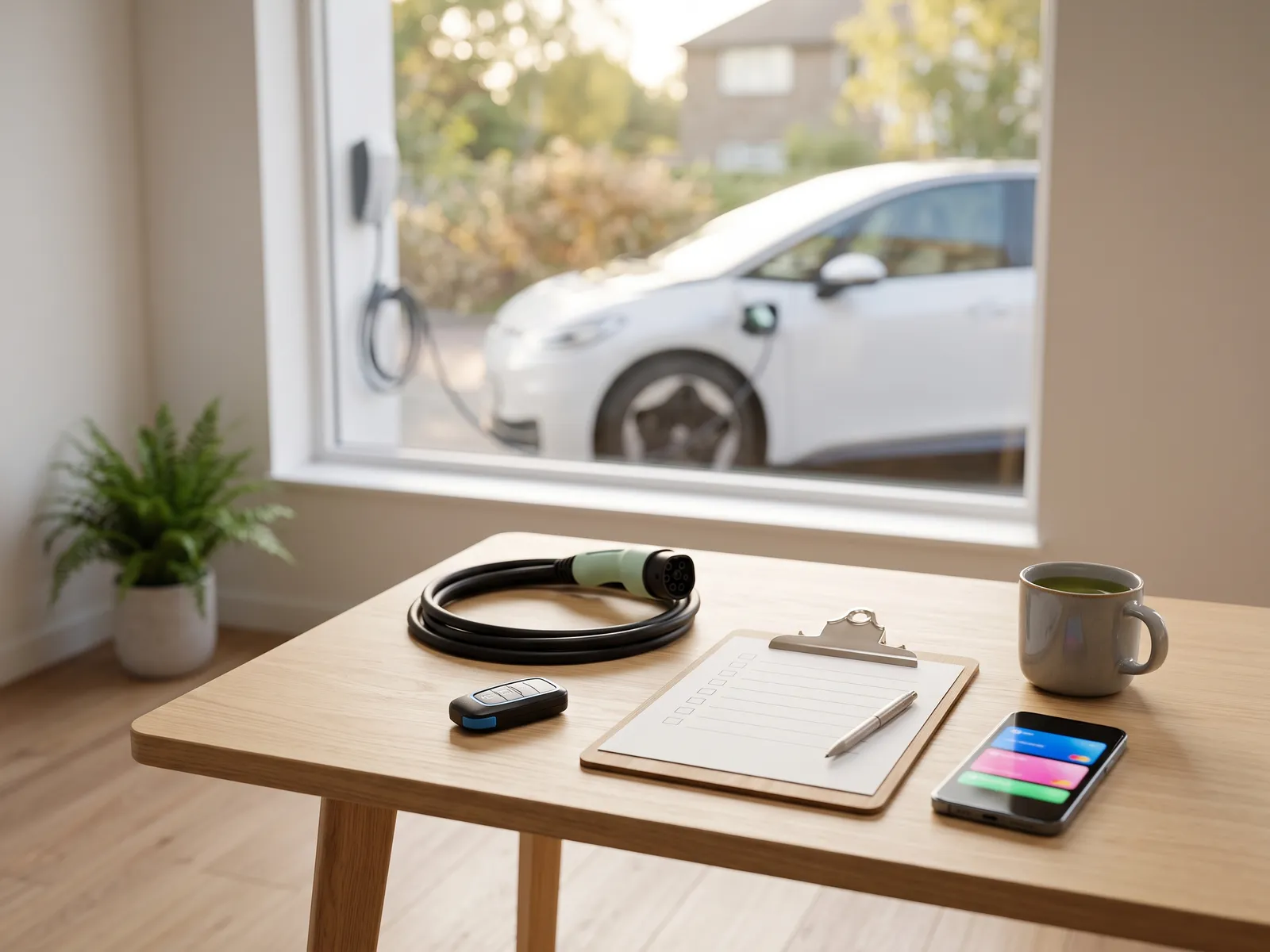
The September plate change is coming, and your posts are already answering drivers' questions.
It's mid August. You run an independent electric car specialist with a small charger installation team. Three handovers are booked this week, two used cars need battery health checks, and your website still has last year's blog post on top.
You paste your website into cmo.so. Maggie reads it and writes your brand profile: your used and nearly new electric cars, battery health reports, home charger installation, the business drivers and families you sell to, the towns you cover and your calm, no-pressure way of explaining things. You correct one thing: you now install chargers for small businesses as well as homes.
By Tuesday the drafts are waiting, each with a picture in your look: a blog post on what a battery health report on a used electric car tells you, a Google Business post about your September stock with a button to book a test drive, a LinkedIn post for small business owners about charging at work, and a short guide to charging without a driveway. You approve three and add a line about your evening viewings to the fourth.
The posts go out at the times you set for each channel and each comes back with its link. While you're handing over the first car of the week, Maggie is already planning winter range and charging posts, and Search Console in cmo.so shows which guides drivers are reading.
A marketing assistant who answers the questions before they're asked
Each of those problems has an answer, and you still approve everything that goes out under your name.
Plain-English guides on your blog
Posts on range in cold weather, home and public charging, battery health, choosing an electric van and what to check on a used car, written for Google and for AI answers. Published to WordPress, Shopify, Wix or Webflow, or any site through the cmo.so API.
Blog on autopilotFound by local drivers
Regular Google Business posts keep your showroom or installation business visible in local search, with offers, events such as an open day or test drive weekend, and buttons such as Book.
Google BusinessLinkedIn for fleets and businesses
Posts for fleet managers, business owners and facilities teams on electric vans, workplace charging and planning a switch, so the people who buy in bulk see you as the specialist.
LinkedInYour business, described properly
Enter your website and Maggie builds your brand profile: the vehicles or chargers you offer, who buys them, your area, what sets you apart, competitors and voice. Every post starts from it.
Brand profilePlanned around the buying year
Plate change months, the run-up to winter, company car decisions and lease renewals. Topics are planned and queued ahead, so posts are out when drivers start looking.
Content calendarCareful with finance wording
If your posts mention finance or leasing, Content Policy Guard can check them against financial rules or your house rules and hold a risky one with a suggested rewrite. These are AI suggestions, not legal or compliance advice.
Content Policy GuardYour marketing team, in your pocket
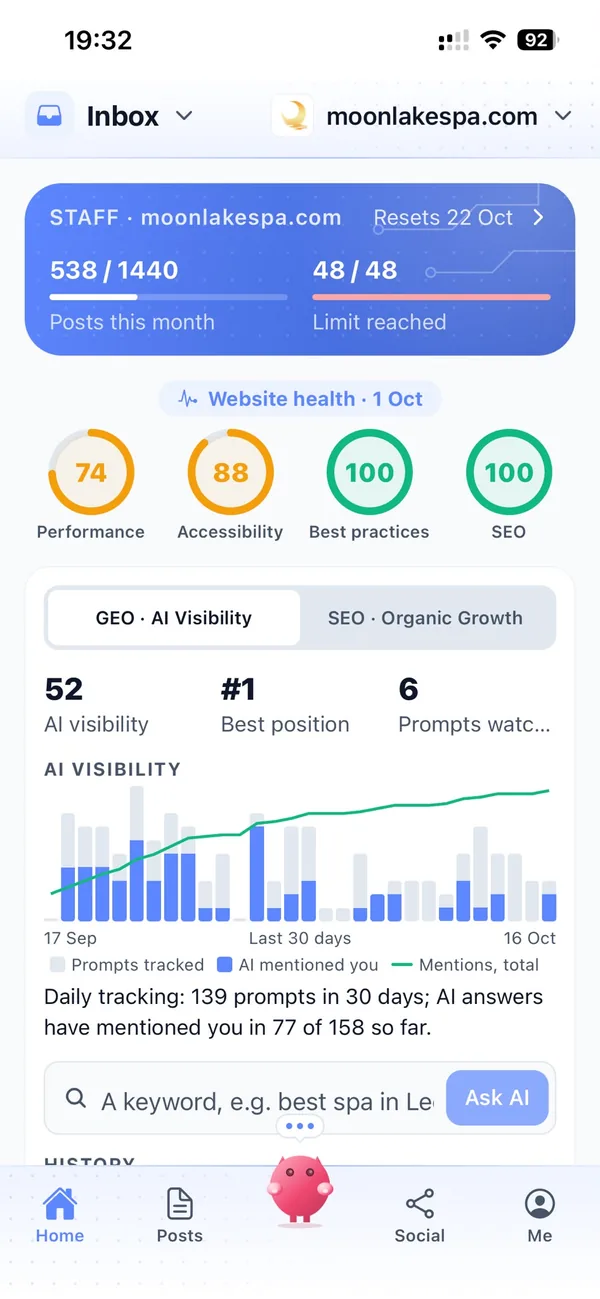
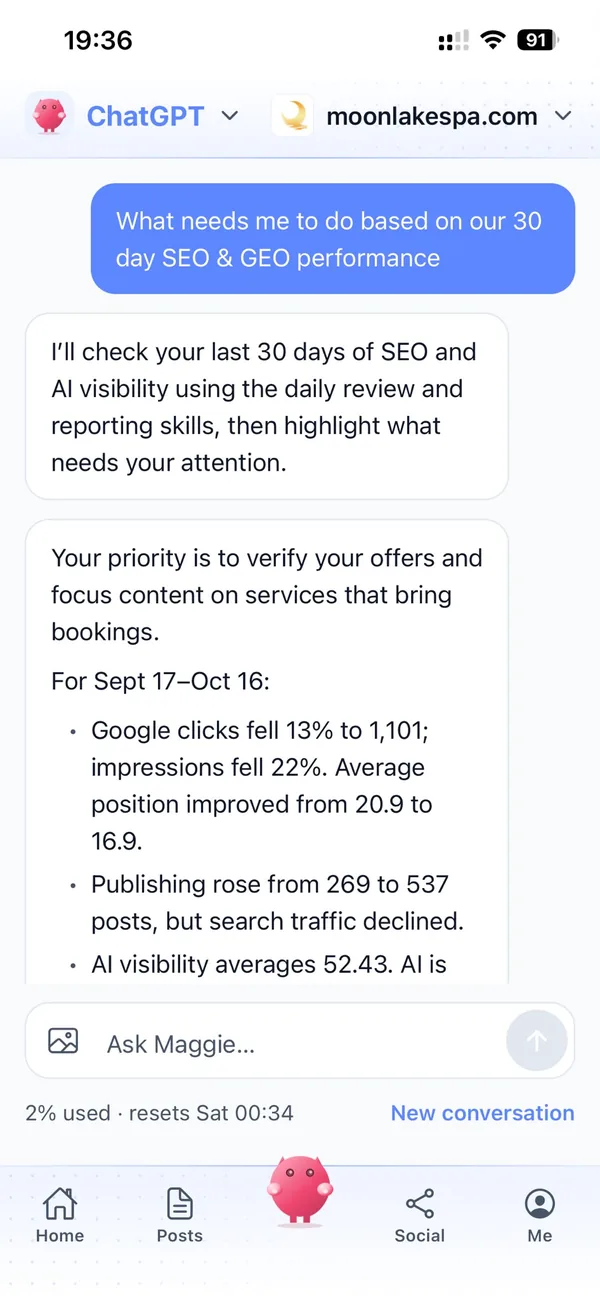
Real screens from the cmo.so app on iPhone.
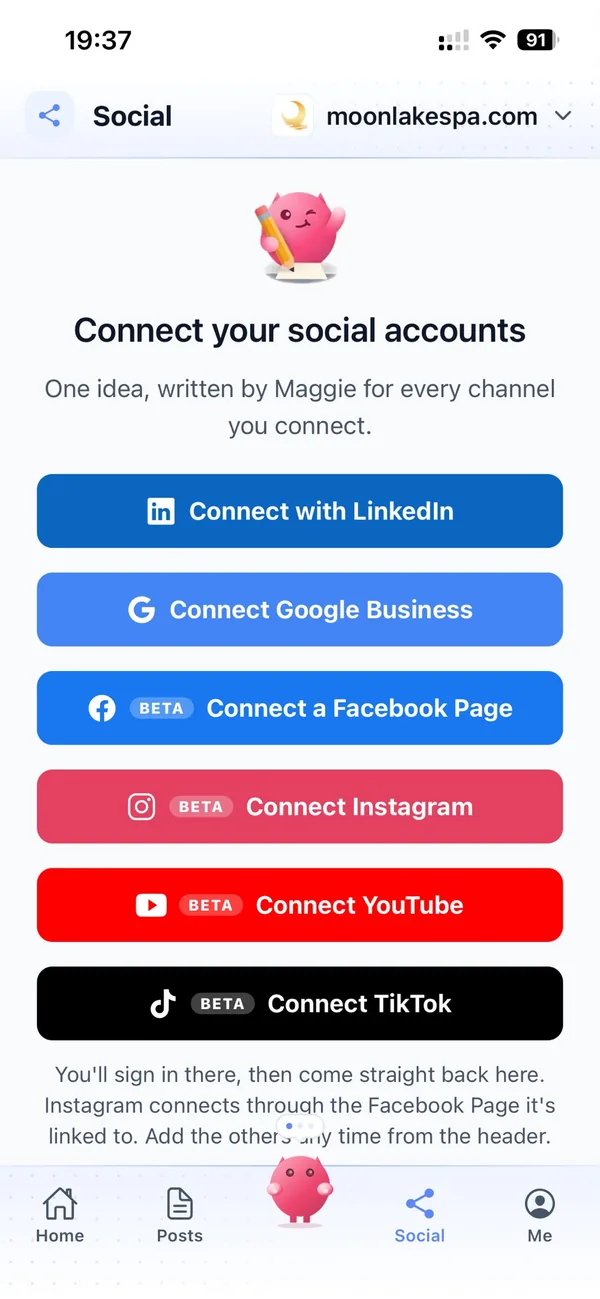
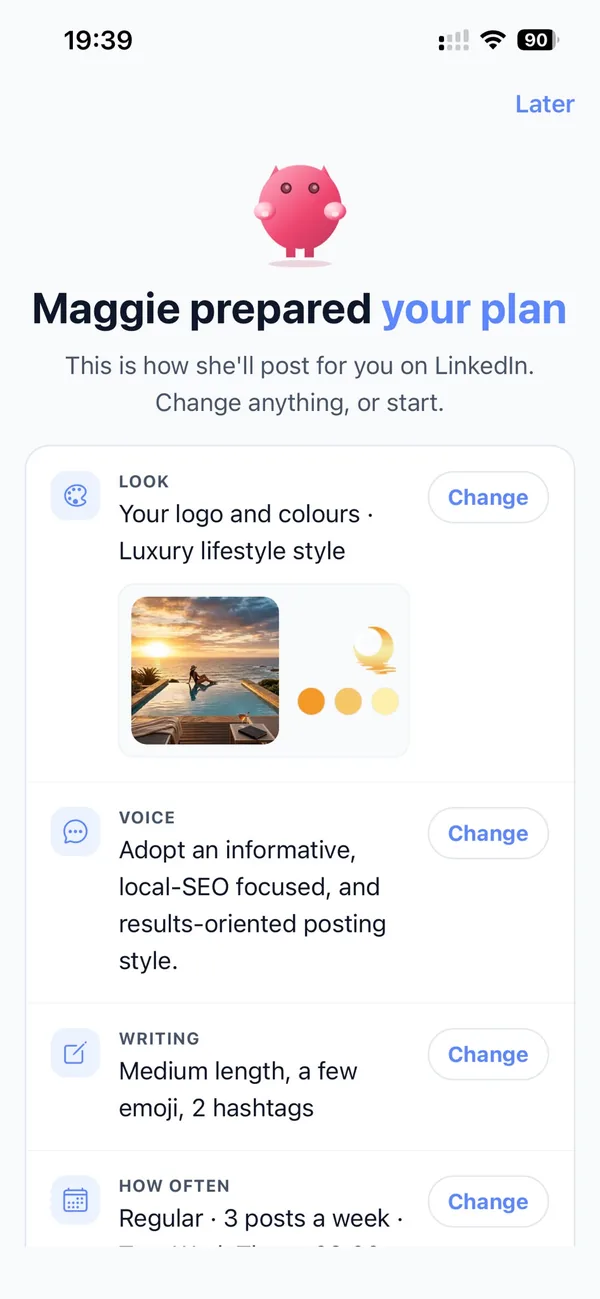
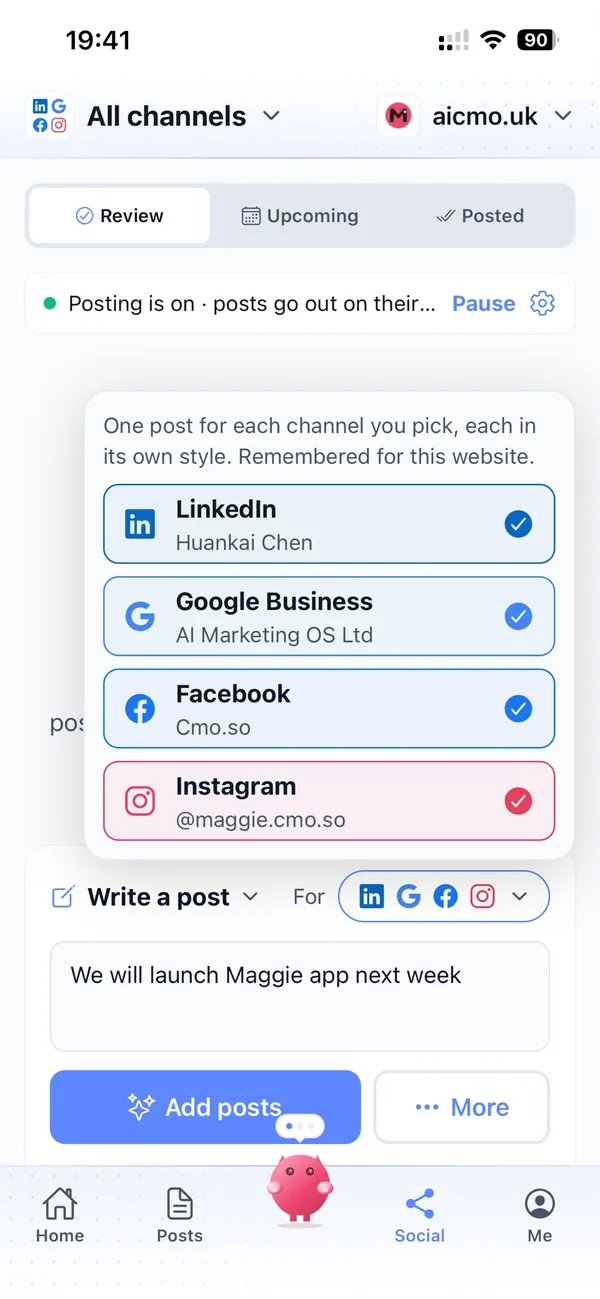
From your website to a steady flow of EV posts in four steps
Enter your website
Maggie reads it and drafts your brand profile in minutes.
Check your profile
Correct your vehicles, services and area, add the customers you want more of and choose your channels.
Review the drafts
Your first week of posts arrives with pictures. Approve, edit or skip each one.
Let them go out
Approved posts go out at each channel's times and every one comes back with its link.
Why not just…
The usual ways EV businesses try to reach drivers, and where each one runs out.
…rely on listing sites and marketplaces?
They show your stock, but next to every competitor's, and buyers compare on price. Guides on your own website show why a driver should buy from you, and keep working after the car is sold.
…lean on the manufacturer's marketing?
It sells the brand, not your business. Drivers still need a local specialist they trust for advice, charging and servicing, and your own posts are how they find you.
…pay a marketing agency?
SEO and content agencies often cost around £1,000 a month. Maggie writes and publishes every week from £15 a month, with every post checked by you.
…write it with ChatGPT?
You still brief it, check it, make the picture and post it yourself, and it doesn't know your stock, your area or your installers. Maggie remembers your business and puts posts out on schedule.
Cut the £5,900/mo marketing bill to £15/mo
Everything a marketing team does, done by Maggie.
| What needs doing | Without cmo.so | With cmo.so |
|---|---|---|
| Full-time marketing hire | £3,000/mo | Included |
| SEO and AI search (GEO) agency | £1,000/mo | Included |
| Content writer, AI-assisted | £500/mo | Included |
| Social media manager, freelance | £800/mo | Included |
| Designed pictures for every post | £300/mo | Included |
| SEO and GEO softwareRank tracking, site audits, AI visibility | £250/mo | Included |
| AI writing and image tools | £50/mo | Included |
| Working hours | Office hours | 24/7 |
| Total per month | £5,900+ | From £15/mo |
Typical UK costs for a small business in 2026, with AI already cutting freelance rates. Estimates only; your own quotes will vary.
- 5 social posts, 30 once verified
- 15 Maggie messages a day
- Upgrade any time
- 12 posts a day
- 150 Maggie messages a day
- All channels
- 96 posts a day
- 1,000 Maggie messages a day
- All channels
Per website, billed monthly. Blog and social posts share one allowance; your best plan sets how much you can talk to Maggie across all your websites.
Marketing automation for electric vehicle companies: your questions
Still unsure?
What is marketing automation for electric vehicle companies?
It's software that does the repeating work of marketing an EV business: planning topics, writing blog and social posts that answer drivers' questions, making pictures and publishing them on schedule.
With cmo.so, Maggie does all of it from your website, and nothing goes out until you approve it.
How do electric vehicle companies get more customers online?
Electric vehicle companies get more customers online by answering the questions drivers ask before they switch: range, charging at home and on the road, battery health and what an electric car costs to run. Clear guides on your own website, an active Google Business profile and regular posts do that.
Maggie writes those posts every week from your brand profile, and Search Console in cmo.so shows which guides bring drivers to your site.
How much does marketing automation cost for an EV business?
There's a free plan with no card needed. Paid plans are per website and billed monthly: Air at £15 a month covers two posts a day, and Pro at £45 a month suits a growing business posting on several channels.
Founding members get lower prices for good on every plan until 1 January 2027. You can cancel any time.
Which channels should electric vehicle companies start with?
Dealers and charger installers usually start with Google Business, where local drivers decide, plus their own blog for charging and buying guides. Fleet and business suppliers usually start with LinkedIn.
YouTube, Instagram, Facebook and TikTok are in beta and suit walkarounds and short explainers. Each channel has its own posting times and queue.
What kind of posts will Maggie write for an EV business?
She writes practical posts that help drivers decide: range in winter, charging without a driveway, what to check on a used electric car, how home charger installation works and how electric vans suit different jobs.
She also writes about your own business, such as new stock, open days and customer handovers, when you tell her about them.
Can it write for fleet managers as well as private drivers?
It can, and each audience gets posts written for it. Maggie writes LinkedIn posts and guides for fleet and facilities managers on vans, depot and workplace charging and planning a switch, alongside posts for private drivers.
You choose which channels carry which kind of post, and each has its own posting times.
Will the posts get grants, prices and range figures right?
The posts start from your website and what you tell her, and you check every draft before it goes out. Schemes, prices and range figures change, so it's worth checking any number before you approve it.
cmo.so never changes your prices or stock; Maggie only writes and publishes posts.
Does it help with finance and leasing offers?
It can write posts about your offers, and Content Policy Guard can check them against financial rules or your own house rules, holding a risky post as a draft with a suggested rewrite.
These are AI suggestions, not legal or compliance advice; a qualified person should still review, and your business stays responsible for what it publishes.
Is it safe to let AI post for our business?
Yes, because nothing goes out until you approve it. Approvals are on by default, and you can keep them on for every channel or let one you trust run on autopilot.
Social channels connect through each platform's official sign-in, so cmo.so never sees your passwords, and cmo.so never sells or rents your data.
Which websites does it work with?
cmo.so publishes to WordPress (including WooCommerce), Shopify, Wix and Webflow, and to any other website through the cmo.so API.
Each post is reported back with its link once it is live.
We sell cars and install chargers. Can cmo.so handle both?
Yes. If both are on one website, Maggie plans posts for car buyers and charger customers from the same brand profile.
If each has its own website, add both to one account and each gets its own brand profile, channels, schedule and approvals.
Can our sales team approve posts too?
Yes. In Me → Team you can add people and choose what each can see or change, using presets such as editor or manager.
So a salesperson can check stock posts while your installation lead checks the charging guides.
Answer the next driver's questions before they ask
Enter your website. Your brand profile and first week of posts are ready in minutes, and nothing goes out until you approve it.
- Free plan, no card needed
- You approve every post
- Cancel any time