


Marketing automation for clinical research organisations
Sponsors choose a CRO on expertise and trust, and they check what you publish long before the first call. Maggie, your AI CMO, writes careful LinkedIn posts, therapeutic area guides and company news for your website, and your team approves every one.
Free to start · No credit card · 30 free posts
Used by 600+ users and trusted by teams at
aeglesriphal.com
moonlakespa.com
shop.theteagroup.com
clo100.com
logtrics.io
mymorez.com
nextidal.com
otisapp.com
storaitelling.com
theheatpumps.co.uk
web-translations.com
exposeai.tech
orielipo.com
whitelabelcrowd.fund
elliptic.co
med.moonlakespa.com
netdex.co.il
orawellness.uk
reenest.com
syngage.ai
thepenthouseliving.com
zengolf.studio
imaintain.uk
rebuildingsociety.com
aurasocial.world
goaimex.com
moneyparents.com
newgenrenewables.uk
osmosisai.co
saunders.ac
teeza.app
thursdayclub.com
Why clinical research organisations struggle to keep their marketing going
Your people are running studies, writing protocols and meeting sponsors. Every public word needs care, so posts wait for someone senior to find an hour.
Expertise hidden behind confidentiality
Your team has delivered studies in difficult indications and tight timelines, but sponsors and molecules can't be named. Without careful ways to describe that experience, your website reads like every other CRO's.
Every post needs a careful eye
A loose phrase about a treatment, a result or a patient group can cause real problems. So drafts sit in someone's inbox for weeks and LinkedIn goes quiet.
Sponsors shortlist before they call
Biotech founders, clinical operations leads and procurement teams look at your therapeutic areas, site network and recent news while building a shortlist. A stale news page tells them little.
Conferences come and go
You prepare for a big industry meeting, hand out cards, and then the follow-up posts never happen. The conversations cool before anyone has seen what you do between events.

Your new oncology feasibility service is ready, and sponsors can read about it by Friday.
Your mid-sized CRO has built a feasibility service for early-phase oncology studies and opened a new site partnership. An industry conference is six weeks away, and the news page on your website was last updated in spring.
You enter your website into cmo.so. Maggie reads it and writes your brand profile: your therapeutic areas, the phases you run, your site network, the biotech and medtech sponsors you work with, competitors and the precise, measured voice you use in proposals. You correct one thing and add a rule: no sponsor, molecule or study result is ever named or implied.
You turn on Content Policy Guard with medical rules and your own house rules. By Tuesday the drafts are waiting: a blog guide on what sponsors should ask in an oncology feasibility assessment, a LinkedIn post from your head of clinical operations about patient recruitment planning, a post about the new site partnership and a plain explainer on what taking part in a clinical trial involves. Content Policy Guard has held one sentence that read like a claim about a treatment's benefit, with a suggested rewrite. Your medical writer approves three and edits the fourth.
The posts go out at the times you set for each channel, spread through the weeks before the conference, and each comes back with its link. Search Console in cmo.so shows which guides sponsors are finding, and AI visibility shows how Google's AI answers describe your company.
A marketing assistant who writes with the care your work demands
Each of those problems has an answer, and your team still decides what goes out under your organisation's name.
Guides sponsors search for
Posts on feasibility, site selection, recruitment planning and working with a CRO in your therapeutic areas, written for Google and for AI answers. Published to your WordPress, Webflow, Wix or Shopify site, or any site through the cmo.so API.
Expert blogContent Policy Guard for medical rules
Turn it on and posts are checked against medical rules or your own house rules. A risky post is held as a draft with a suggested rewrite. These are AI suggestions, not legal or compliance advice.
Content Policy GuardLinkedIn that sounds like your experts
Posts from the point of view of your clinical operations, medical and quality leads, for biotech founders, clinical teams and procurement, posted at the times you choose.
LinkedInExperience without names
Your brand profile records what must never be named, so drafts describe indications, phases and challenges without sponsors, molecules or results.
Brand profileReady before every conference
Posts on where to find you and what you'll discuss, queued ahead, then follow-ups afterwards. Your news page keeps moving between events too.
Planned aheadYour reviewers approve every post
By default nothing goes out until it's approved. Add your medical writer, quality lead or marketing manager in Me → Team with presets such as editor or manager.
Team approvalsYour marketing team, in your pocket
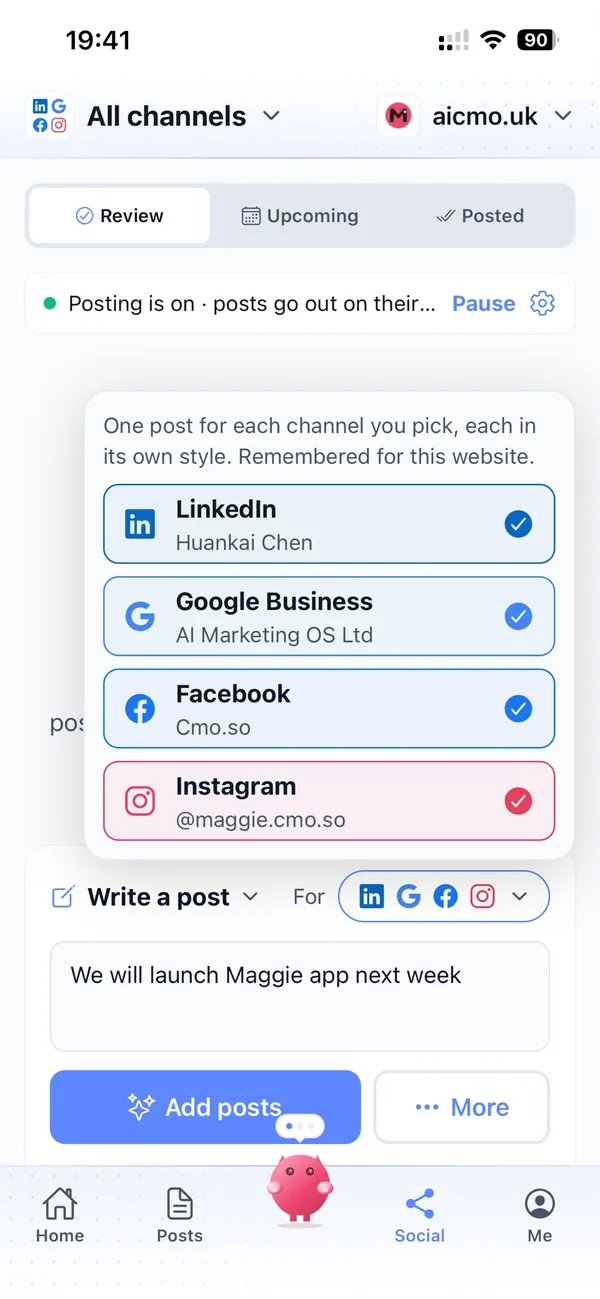
Real screens from the cmo.so app on iPhone.
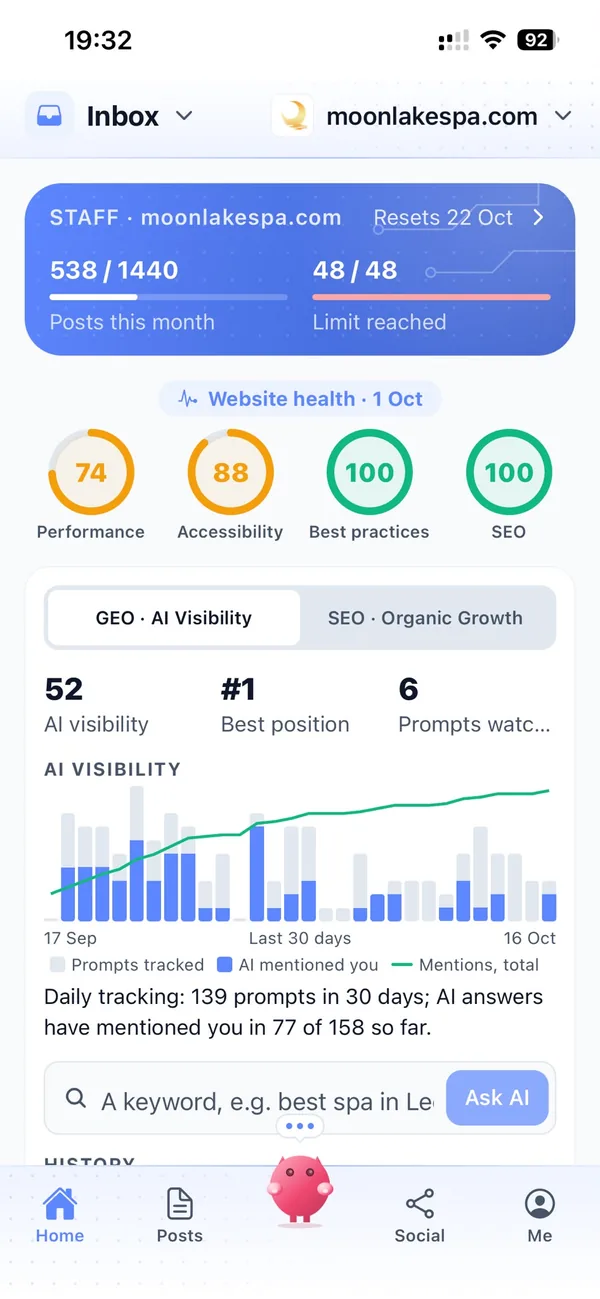
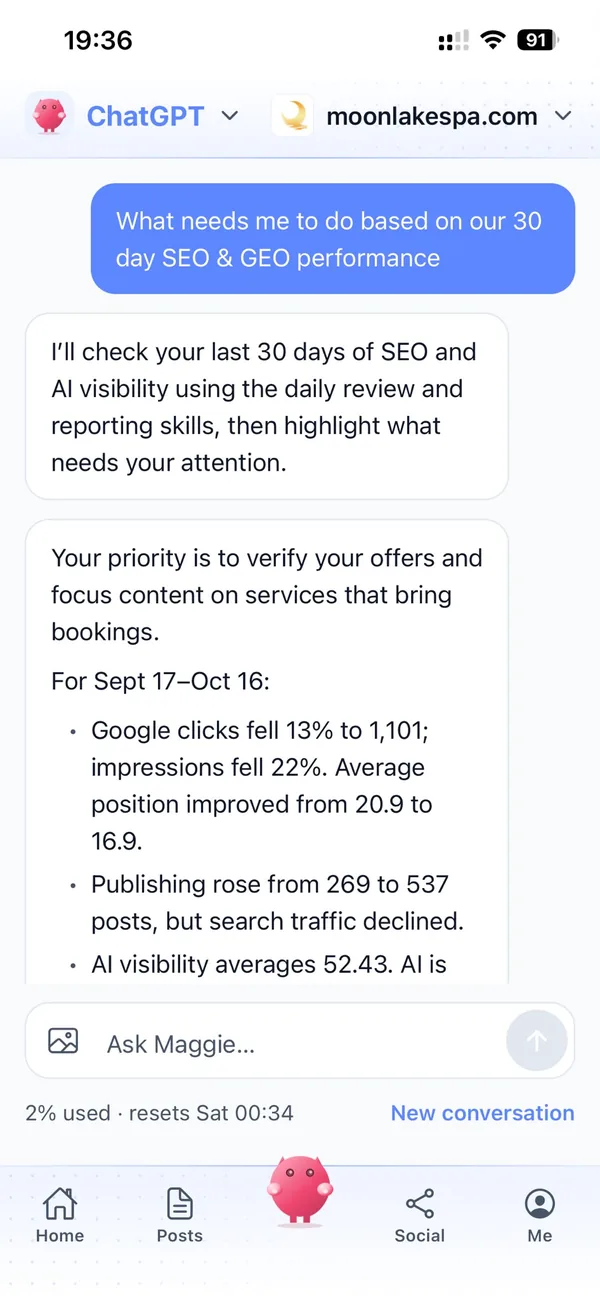
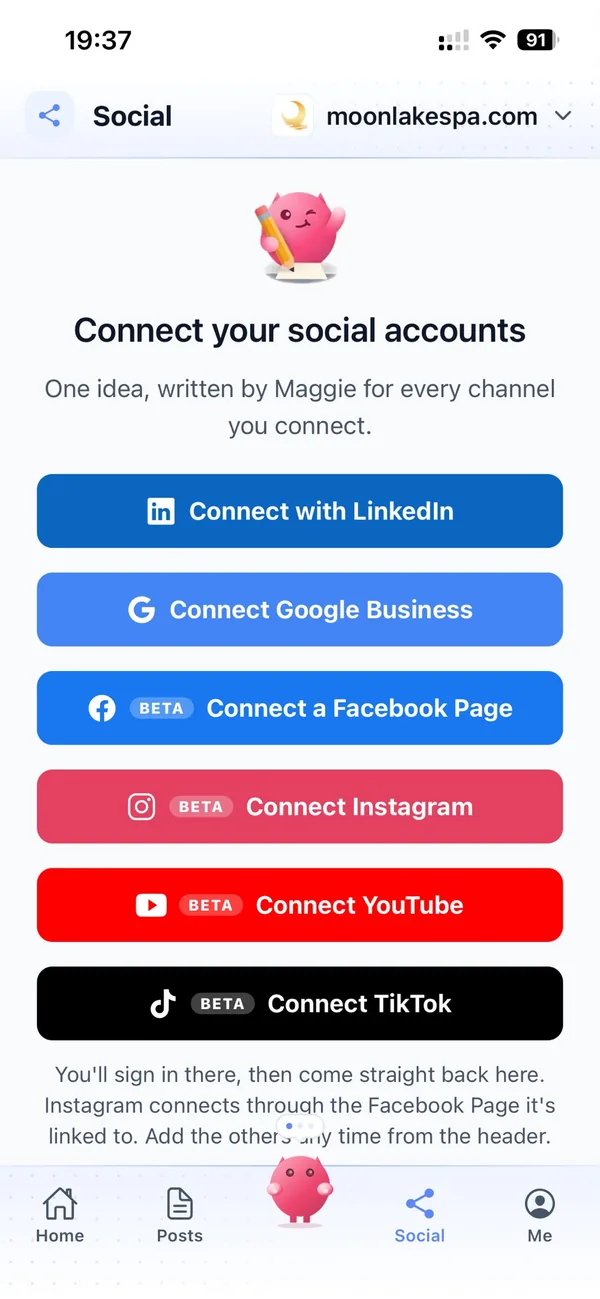
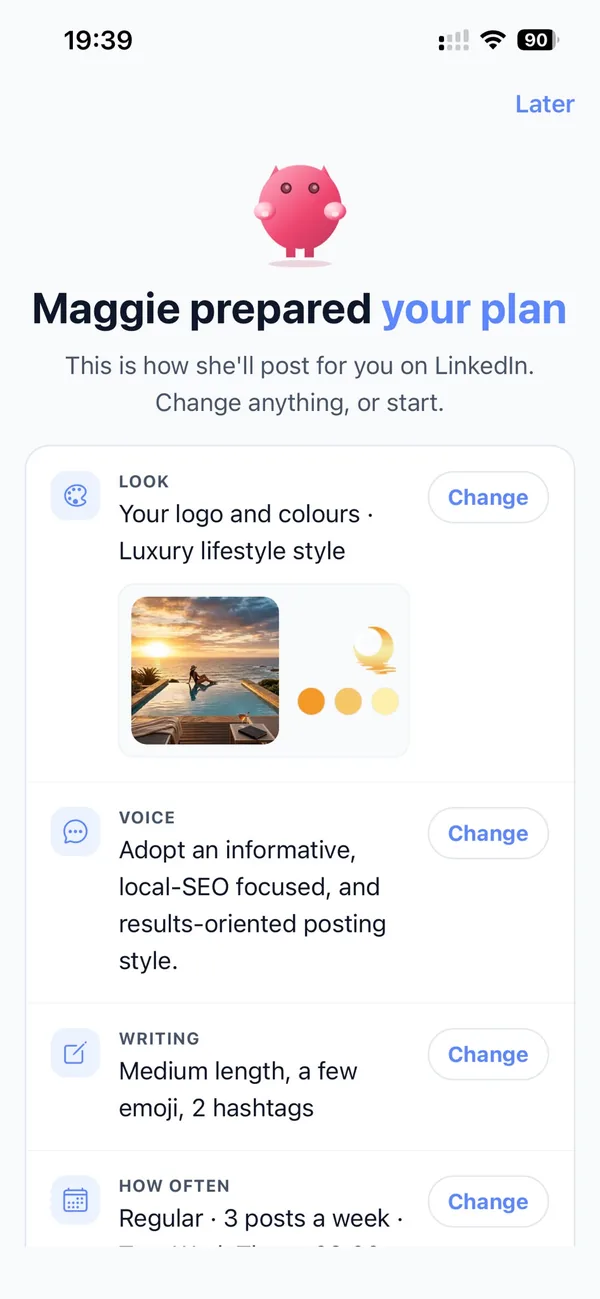
From your website to a steady flow of careful posts in four steps
Enter your website
Maggie reads it and drafts your organisation's brand profile in minutes.
Check your profile
Correct your therapeutic areas, phases and sites, and record what must never be named.
Review the drafts
Your first week of posts arrives with pictures. Your reviewers approve, edit or skip each one.
Let them go out
Approved posts go out at each channel's times and every one comes back with its link.
Why not just…
The usual ways clinical research organisations try to stay visible to sponsors, and where each one runs out.
…rely on business development and conferences?
Your BD team opens doors, but sponsors check your website and LinkedIn before and after every meeting. Steady posts make sure what they find matches what your team says.
…pay a healthcare marketing agency?
Specialist agencies often cost well over £1,000 a month and still need your experts to brief and review everything. Maggie starts from your own website and costs from £15 a month, with your reviewers approving each post.
…ask our scientists to write in their spare time?
They know the subject best and have the least time. Maggie drafts from your brand profile, so your experts edit and approve instead of starting from a blank page.
…write it with ChatGPT?
You still brief it, check it, find a picture and post it yourself, and it doesn't remember what must never be named. Maggie keeps your brand profile, and Content Policy Guard can check each draft.
Cut the £5,900/mo marketing bill to £15/mo
Everything a marketing team does, done by Maggie.
| What needs doing | Without cmo.so | With cmo.so |
|---|---|---|
| Full-time marketing hire | £3,000/mo | Included |
| SEO and AI search (GEO) agency | £1,000/mo | Included |
| Content writer, AI-assisted | £500/mo | Included |
| Social media manager, freelance | £800/mo | Included |
| Designed pictures for every post | £300/mo | Included |
| SEO and GEO softwareRank tracking, site audits, AI visibility | £250/mo | Included |
| AI writing and image tools | £50/mo | Included |
| Working hours | Office hours | 24/7 |
| Total per month | £5,900+ | From £15/mo |
Typical UK costs for a small business in 2026, with AI already cutting freelance rates. Estimates only; your own quotes will vary.
- 5 social posts, 30 once verified
- 15 Maggie messages a day
- Upgrade any time
- 12 posts a day
- 150 Maggie messages a day
- All channels
- 96 posts a day
- 1,000 Maggie messages a day
- All channels
Per website, billed monthly. Blog and social posts share one allowance; your best plan sets how much you can talk to Maggie across all your websites.
Marketing automation for clinical research organisations: your questions
Still unsure?
What is marketing automation for clinical research organisations?
It's software that does the repeating content work of a CRO: writing guides for sponsors, posting expert views on LinkedIn, sharing company and conference news and publishing on schedule.
With cmo.so, Maggie does this from your website and brand profile, and nothing goes out until your team approves it.
How do clinical research organisations get more sponsors online?
Clinical research organisations get more sponsors online by showing clear expertise where sponsors look: guides on the questions they ask in each therapeutic area, steady LinkedIn posts from named experts and fresh news on capabilities and sites.
Maggie writes those posts every week, and Search Console in cmo.so shows which ones bring people to your site.
How much does cmo.so cost for a CRO?
There's a free plan with no card needed. Paid plans are per website and billed monthly: Air at £15 a month covers two posts a day, and Pro at £45 a month suits an organisation posting on several channels.
Founding members get lower prices for good on every plan until 1 January 2027. You can cancel any time.
Which channels should clinical research organisations start with?
Most CROs start with LinkedIn, where clinical operations, medical and procurement people from sponsors spend time, plus their own blog for therapeutic area guides.
Google Business suits clinical units and sites that visitors need to find. Each channel has its own posting times and queue.
Is it safe to let AI write about clinical research?
It's safe when a qualified person reviews every post before it's published. cmo.so keeps approvals on by default, and Content Policy Guard can hold a post that may break medical rules or your own house rules as a draft with a suggested rewrite.
Content Policy Guard gives AI suggestions, not legal or compliance advice. It doesn't make a post compliant on its own, and your organisation stays responsible for what it publishes.
How does cmo.so keep sponsor and study details confidential?
Your brand profile records what must never be named, such as sponsors, molecules and unpublished results, and every draft starts from it.
cmo.so doesn't connect to your trial systems or patient records, so it only knows what's on your website and what you tell it, and your reviewers approve every post.
Can cmo.so write trial recruitment adverts?
It can write general explainers about what taking part in research involves, but recruitment material for a specific study usually needs approval from your ethics committee and study team.
Keep approvals on for those posts and check each one against your approved wording before it goes out. cmo.so doesn't run ads.
Can posts sound like our medical and operations leads?
They can. You choose a voice and post template per channel, so LinkedIn posts can be written from the point of view of the person who will approve them.
Maggie learns from their edits, so drafts get closer to how each expert writes.
Can cmo.so help around industry conferences?
It can plan posts around the meetings you attend: what you'll present, where to find you and follow-ups afterwards, queued well ahead.
LinkedIn posts can go out on schedule during the event while your team is on the stand.
Does it help with AI search?
It writes clear, quotable answers to the questions sponsors ask, which is what AI assistants look for when they build an answer.
AI visibility in cmo.so shows how Google's AI answers describe and mention your organisation, so you can see whether that changes.
Is our data safe?
cmo.so never sells or rents your data. Search Console data is only used to show your own results and plan your content, never for advertising or to train AI models.
Social channels connect through each platform's official sign-in, so cmo.so never sees your passwords.
We have several divisions or regional sites. Can cmo.so handle them?
It can. If each has its own website, add them all to one account and each gets its own brand profile, channels, schedule and approvals.
Elite at £195 a month is made for many brands and allows 96 posts a day, and Pro or Max suit a single organisation posting on several channels.
Show sponsors your expertise, carefully and steadily
Enter your website. Your brand profile and first week of posts are ready in minutes, and nothing goes out until your team approves it.
- Free plan, no card needed
- You approve every post
- Cancel any time