


Marketing automation for wellness and fitness tech companies
People download a fitness or wellness app in January and decide by February whether it's worth keeping. Maggie, your AI CMO, writes the habit guides, feature explainers and seasonal posts that bring them in and help them stay, and you approve every one.
Free to start · No credit card · 30 free posts
Used by 600+ users and trusted by teams at
aeglesriphal.com
moonlakespa.com
shop.theteagroup.com
clo100.com
logtrics.io
mymorez.com
nextidal.com
otisapp.com
storaitelling.com
theheatpumps.co.uk
web-translations.com
exposeai.tech
orielipo.com
whitelabelcrowd.fund
elliptic.co
med.moonlakespa.com
netdex.co.il
orawellness.uk
reenest.com
syngage.ai
thepenthouseliving.com
zengolf.studio
imaintain.uk
rebuildingsociety.com
aurasocial.world
goaimex.com
moneyparents.com
newgenrenewables.uk
osmosisai.co
saunders.ac
teeza.app
thursdayclub.com
Why wellness and fitness tech companies struggle to keep their marketing going
Your team ships features, answers app reviews and keeps the servers up. The content that brings people in and keeps them going rarely gets the same attention.
Everyone shouts in January
New Year, the start of summer and September all bring a wave of people looking to get fitter, sleep better or stress less. Without posts planned months ahead, you're quiet when the searches peak.
Downloads don't mean habits
Plenty of people install your app and stop after a fortnight. Regular, practical guides on building a routine give them reasons to come back, but nobody has time to write them.
One wrong health claim is costly
Promising better sleep, weight loss or less anxiety in a post can mislead people and break advertising or platform rules. Writing carefully about health takes time and a second pair of eyes.
The app store is crowded
There are many apps and wearables for every goal. A smaller company needs useful content on Google, in AI answers and on social channels to be found outside the store.

January is ten weeks away, and your New Year posts are already queued.
It's Monday in late October, your team has just launched guided strength plans in your app, and you know January is when most of your new users arrive. Nothing for the New Year is planned yet.
You paste your website into cmo.so. Maggie reads it and writes your brand profile: your home workout and habit-tracking app, the busy adults and beginners you build for, the employers who offer it as a benefit, the competitors people compare you with and the encouraging, never preachy voice you use. You correct one thing: the app now works offline.
By Tuesday the drafts are waiting, each with a picture in your brand's look: a blog guide to starting strength training at home with no equipment, an explainer on how to set a goal you can keep past January, an Instagram post with a ten-minute routine for dark mornings, and a LinkedIn post for HR teams about adding your app to their wellbeing benefits. The Content Policy Guard holds one draft that says the plan will help people lose weight fast and suggests a gentler rewrite; you accept it and approve the rest.
The posts are queued from November into the New Year at the times you set for each channel, and each comes back with its link. While your team works on the next release, Maggie is already planning posts for February, when people need a reason to keep going.
Content that brings people in and keeps them going
Each of those problems has an answer, and you still decide what goes out under your brand.
Habit guides and explainers
Posts on building routines, getting started, sleep, movement and recovery, and how to use your features, written for Google and for AI answers. Published to your WordPress, Shopify, Wix or Webflow site, or any site through the cmo.so API.
Blog on autopilotPlanned around the wellness year
New Year, Dry January, spring and summer goals, September restarts, darker evenings and the gifting season for wearables. Posts are queued months ahead of each peak.
Seasonal scheduleHealth claims checked first
The optional Content Policy Guard checks posts against medical rules or your own house rules and holds a risky post as a draft with a suggested rewrite. These are AI suggestions, not legal or compliance advice; a qualified person should still review.
Content Policy GuardYour app, your voice
Enter your website and Maggie builds your brand profile: your product, users, goals, what sets you apart from the biggest apps, competitors and voice. Every post and picture starts from it.
Brand profileOne idea, every channel
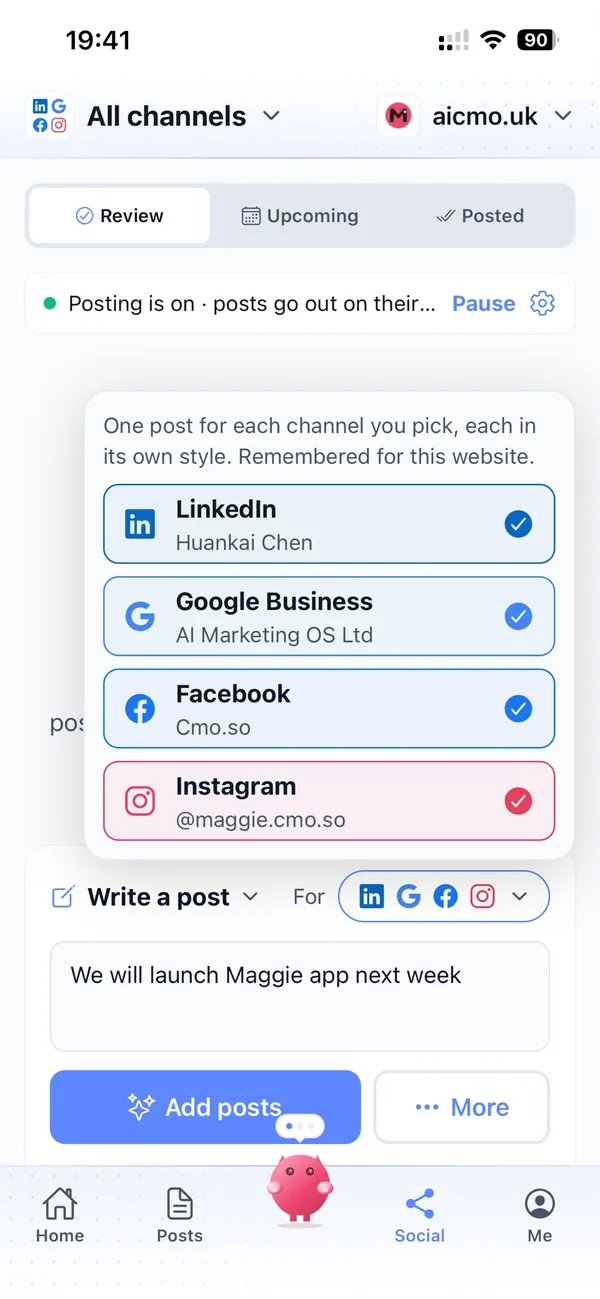
One idea becomes a post for each channel in its own style: Instagram, TikTok, YouTube and Facebook for users (in beta), LinkedIn for employers, gyms, clinics and partners.
Every channelSeen in AI answers
Clear, quotable answers to the questions people ask about fitness and wellbeing, and AI visibility in cmo.so shows how Google's AI answers describe and mention your brand.
AI visibilityYour marketing team, in your pocket
Real screens from the cmo.so app on iPhone.
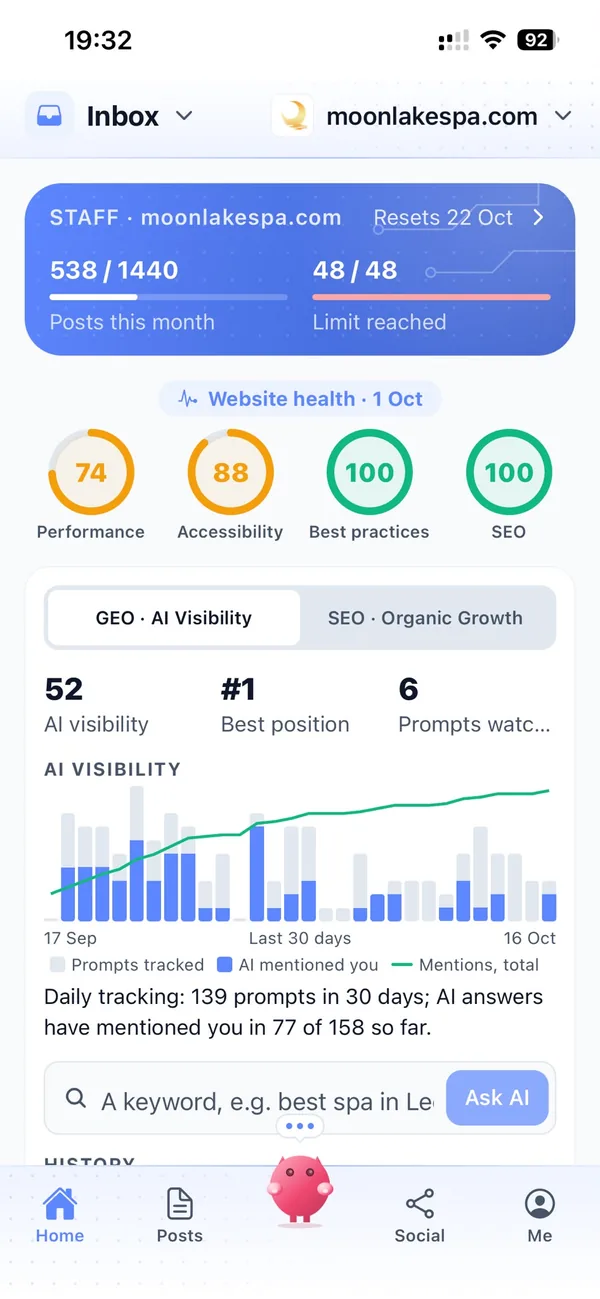
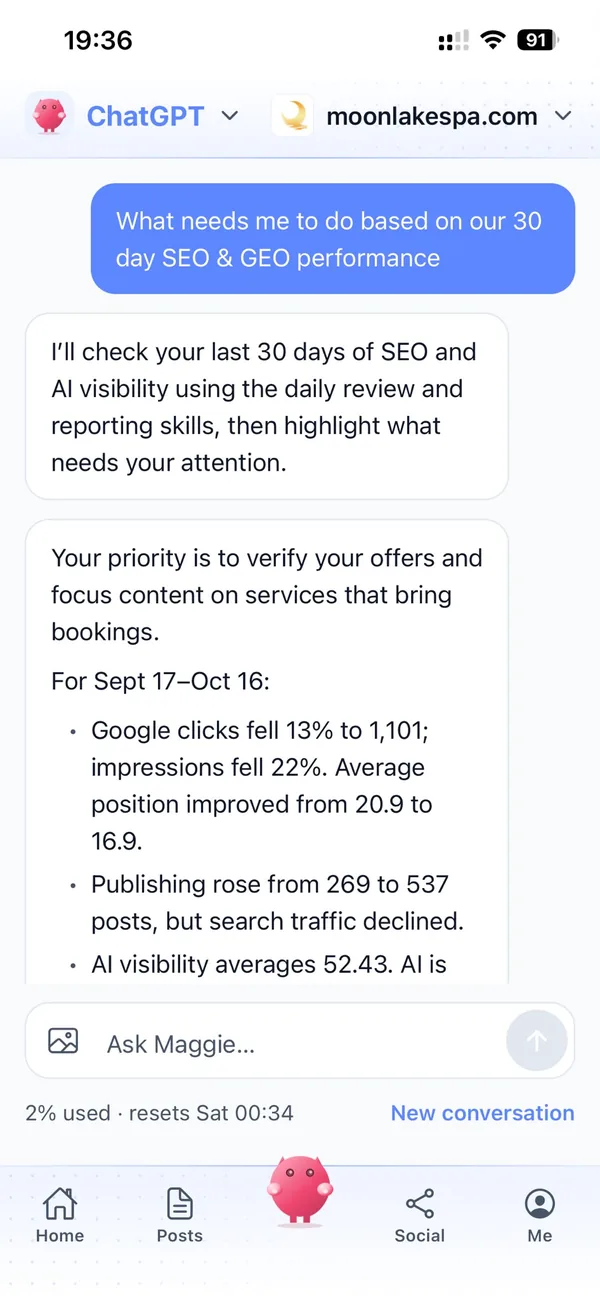
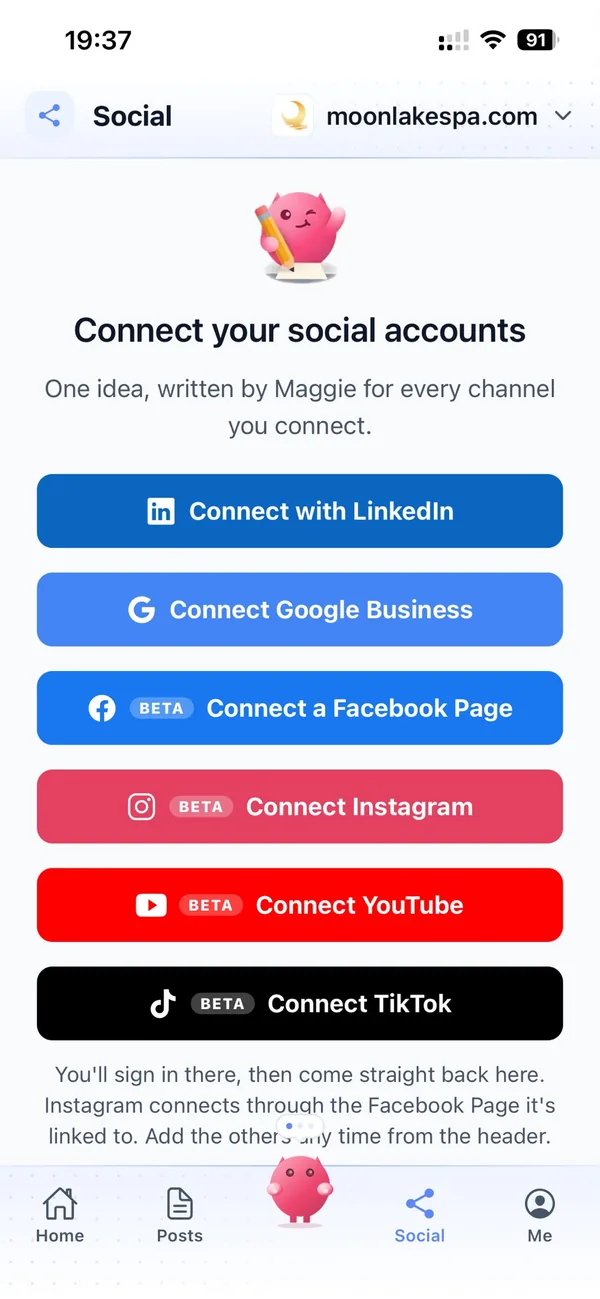
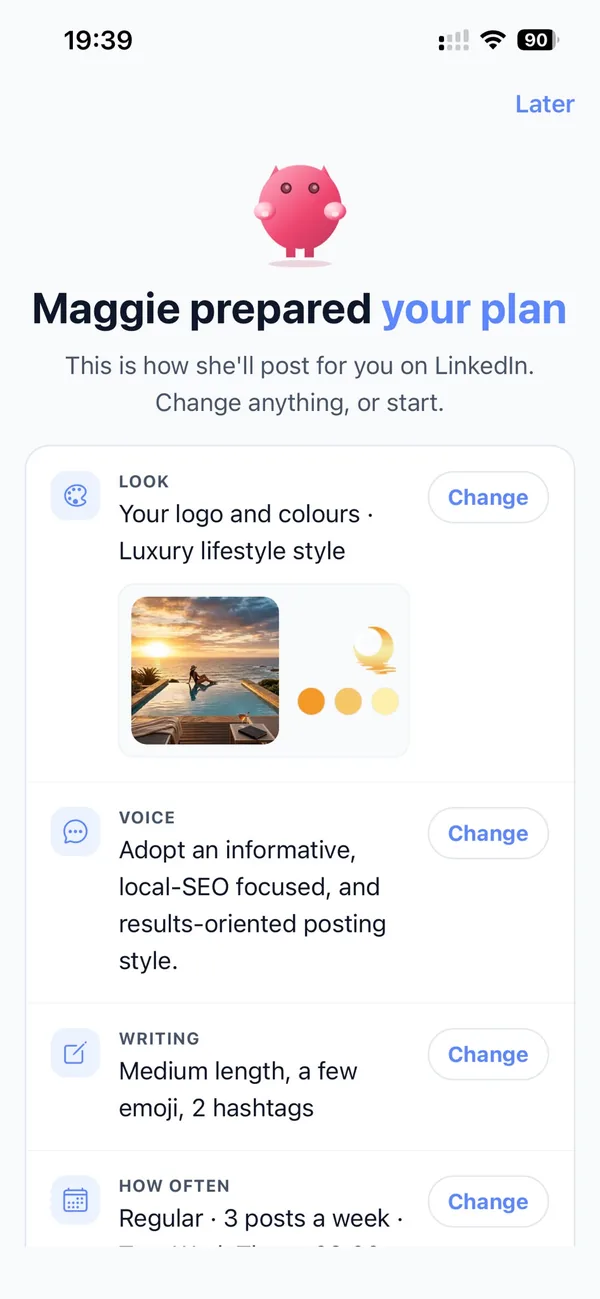
From your app's website to a year of posts in four steps
Enter your website
Maggie reads it and drafts your brand profile in minutes.
Check your profile
Correct your features and users, add the words you never use about health and choose your channels.
Review the drafts
Your first week of posts arrives with pictures. Approve, edit or skip each one.
Let them go out
Approved posts go out at each channel's times and every one comes back with its link.
Why not just…
The usual ways wellness and fitness tech companies try to grow, and where each one runs out.
…pay influencers and run ads?
They can bring a burst of downloads, but the spend stops and so do the installs. Guides on your own site keep bringing people in from search and AI answers long after they're published.
…rely on app store listings?
The store is where people decide, but it's not where most of them start. Helpful content on Google and social channels reaches people while they're still working out what they need.
…hire a content marketer?
A full-time marketing hire in the UK costs around £3,000 a month before tools. Maggie starts from your website today and writes every week from £15 a month.
…write it with ChatGPT?
You still brief it, check it, make the pictures and post by hand, and it won't remember which health claims you never make. Maggie keeps your rules in your brand profile and puts posts out on schedule.
Cut the £5,900/mo marketing bill to £15/mo
Everything a marketing team does, done by Maggie.
| What needs doing | Without cmo.so | With cmo.so |
|---|---|---|
| Full-time marketing hire | £3,000/mo | Included |
| SEO and AI search (GEO) agency | £1,000/mo | Included |
| Content writer, AI-assisted | £500/mo | Included |
| Social media manager, freelance | £800/mo | Included |
| Designed pictures for every post | £300/mo | Included |
| SEO and GEO softwareRank tracking, site audits, AI visibility | £250/mo | Included |
| AI writing and image tools | £50/mo | Included |
| Working hours | Office hours | 24/7 |
| Total per month | £5,900+ | From £15/mo |
Typical UK costs for a small business in 2026, with AI already cutting freelance rates. Estimates only; your own quotes will vary.
- 5 social posts, 30 once verified
- 15 Maggie messages a day
- Upgrade any time
- 12 posts a day
- 150 Maggie messages a day
- All channels
- 96 posts a day
- 1,000 Maggie messages a day
- All channels
Per website, billed monthly. Blog and social posts share one allowance; your best plan sets how much you can talk to Maggie across all your websites.
Marketing automation for wellness and fitness tech companies: your questions
Still unsure?
What is marketing automation for wellness and fitness tech companies?
It's software that does the repeating content work of a wellness or fitness technology brand: planning posts around the wellness year, writing guides and social posts, making pictures and publishing them on schedule.
With cmo.so, Maggie does this from your website and brand profile, and nothing goes out until you approve it.
How do wellness and fitness tech companies get more customers online?
Wellness and fitness tech companies get more customers online by being useful before anyone downloads: practical guides people search for, posts timed to New Year and other fresh starts, and steady social posts that show the product in everyday life.
Maggie writes those every week, and Search Console in cmo.so shows which ones bring people to your site.
How much does marketing automation cost for a wellness or fitness tech company?
There's a free plan with no card needed. Paid plans are per website and billed monthly: Air at £15 a month covers two posts a day, and Pro at £45 a month suits a growing brand posting on several channels.
Founding members get lower prices for good on every plan until 1 January 2027. You can cancel any time.
Which channels should wellness and fitness tech companies start with?
Most start with habit guides and explainers on their own website, because that's where people search for help before choosing an app or wearable.
Instagram, TikTok, YouTube and Facebook are in beta and suit short routines and tips, and LinkedIn reaches employers, gyms and clinics that might offer your product. Each channel has its own posting times and queue.
How does cmo.so handle health and fitness claims?
It keeps to what your website and brand profile say, and you approve every post. You can list claims you never make, and the optional Content Policy Guard checks posts against medical rules or your own house rules.
A risky post is held as a draft with a suggested rewrite. These are AI suggestions, not legal or compliance advice; a qualified person should still review, and you stay responsible for what you publish.
Can it help keep users engaged after they sign up?
It can give them reasons to come back. Maggie writes regular guides on building a routine, using features they might have missed and getting past the first few weeks, for your blog and social channels.
cmo.so doesn't send in-app messages or email newsletters, so you keep your own tools for those.
Does it connect to our app or users' health data?
No, cmo.so never connects to your app, users' health data or customer records. Maggie works from your website, your brand profile and what you tell her.
Search Console data is only used to show your own site's results and plan its content, never for advertising or to train AI models.
Can it market to employers as well as consumers?
It can, because your brand profile describes each audience. Maggie writes friendly posts for users on social channels and practical LinkedIn posts for HR teams and wellbeing leads.
One idea can become a post for every channel, each written in that channel's style.
Can it post our workout videos?
It can post the videos you upload to YouTube and TikTok, which are in beta, and Maggie writes the words that go with each one.
Uploaded videos are only used to post them and are deleted within 7 days.
Is it safe to let AI post for a wellness brand?
It is safe because nothing goes out until you approve it. Approvals are on by default, and you can keep them on for every channel, which suits a brand that talks about health.
Social channels connect through each platform's official sign-in, so cmo.so never sees your passwords, and cmo.so never sells or rents your data.
Which websites does it publish to?
cmo.so publishes to WordPress, Shopify, Wix and Webflow, and to any other website through the cmo.so API.
Each post is reported back with its link once it's live.
We sell a wearable and an app. Can cmo.so market both?
It can, from one brand profile if they share a website. If they have separate websites, add both to one account and each gets its own brand profile, channels, schedule and approvals.
If you sell the wearable through Shopify or WooCommerce, posts can link straight to the product page; cmo.so never changes your prices or stock.
Have January planned before December starts
Enter your website. Your brand profile and first week of posts are ready in minutes, and nothing goes out until you approve it.
- Free plan, no card needed
- You approve every post
- Cancel any time