


Marketing automation for property developers
Every development needs a steady story, from the planning stage to the last plot sold, and your team is busy on site. Maggie, your AI CMO, writes your development updates, area guides and launch posts for your website, Google Business and LinkedIn, and you approve every one.
Free to start · No credit card · 30 free posts
Used by 600+ users and trusted by teams at
aeglesriphal.com
moonlakespa.com
shop.theteagroup.com
clo100.com
logtrics.io
mymorez.com
nextidal.com
otisapp.com
storaitelling.com
theheatpumps.co.uk
web-translations.com
exposeai.tech
orielipo.com
whitelabelcrowd.fund
elliptic.co
med.moonlakespa.com
netdex.co.il
orawellness.uk
reenest.com
syngage.ai
thepenthouseliving.com
zengolf.studio
imaintain.uk
rebuildingsociety.com
aurasocial.world
goaimex.com
moneyparents.com
newgenrenewables.uk
osmosisai.co
saunders.ac
teeza.app
thursdayclub.com
Why property developers struggle to keep their marketing going
A development has a long life and a few loud moments. Between the launch and the last sale, the marketing tends to go quiet.
Loud at launch, silent after
The brochure, the hoarding and the launch weekend get all the attention. Then months of build pass with nothing new online, while buyers who missed the launch are still deciding.
Buyers are buying the area too
People buying a new home want to know about the schools, the station, the walks and the high street. Your website shows floor plans and a specification, but says little about life in the place.
Portals own the conversation
Property portals and agents bring viewings, but the buyer sees your homes next to every other listing. Someone who finds your own development pages already knows why yours is different.
Partners never hear from you
Landowners, investors, local councils and future partners judge your track record on LinkedIn and Google. Completed schemes and community work rarely get written up once the team moves on.

The show home opens in three weeks, and the posts are already queued.
It's Monday, phase two of your development of 40 homes has just been released and the show home opens in three weeks. The site team is flat out, and your website still talks about phase one.
You paste your company's website into cmo.so. Maggie reads it and writes your brand profile: your small, design-led developments, the market towns you build in, the energy-efficient specification, the first-time buyers and downsizers you sell to, the landowners you partner with and the calm, straightforward way you write. You correct one thing: the sales office is now open on Sundays.
By Tuesday the drafts are waiting, each with a picture in your brand's look: a blog guide to living in the town, from its primary schools to its walks and its station, a Google Business event for the show home opening with a Book button for viewings, an Instagram post about the kitchens in the new house types and a LinkedIn post for landowners about how your last scheme worked with the parish council. You approve three and adjust a sentence about completion dates in the fourth.
The posts go out at the times you set for each channel and each comes back with its link. While the team gets the show home ready, Maggie is already planning build progress posts for the coming months, and Search Console in cmo.so shows which area guides buyers are finding.
A marketing team for every development, from planning to the last sale
Each of those problems has an answer, and you still decide what goes out under your company's name.
Area guides and buying guides
Posts on life in each town or neighbourhood, what to look for in a new-build home and how reserving a plot works, written for Google and for AI answers. Published to your WordPress, Wix or Webflow site, or any site through the cmo.so API.
Blog on autopilotA steady story through the build
Phase releases, build progress, new house types, show home openings and the last few plots. Posts are planned across the life of the development, not just the launch.
Development scheduleFound by buyers searching nearby
Regular Google Business posts for each sales office keep you visible in local search, with events such as a show home open day, offers you choose to run and a Book button for viewings.
Google BusinessYour track record on LinkedIn
Posts about completed schemes, design choices, community work and partnerships, written for landowners, investors, councils and the trades you work with.
LinkedInYour homes, your voice
Enter your website and Maggie builds your brand profile: your developments, buyers, specification, what sets you apart from the volume builders, competitors and voice. Every post and picture starts from it.
Brand profileSales and site teams approve
By default nothing goes out until it's approved. Add your sales and marketing people in Me → Team, set approvals per channel and pause a channel when a phase sells out.
ApprovalsYour marketing team, in your pocket
Real screens from the cmo.so app on iPhone.
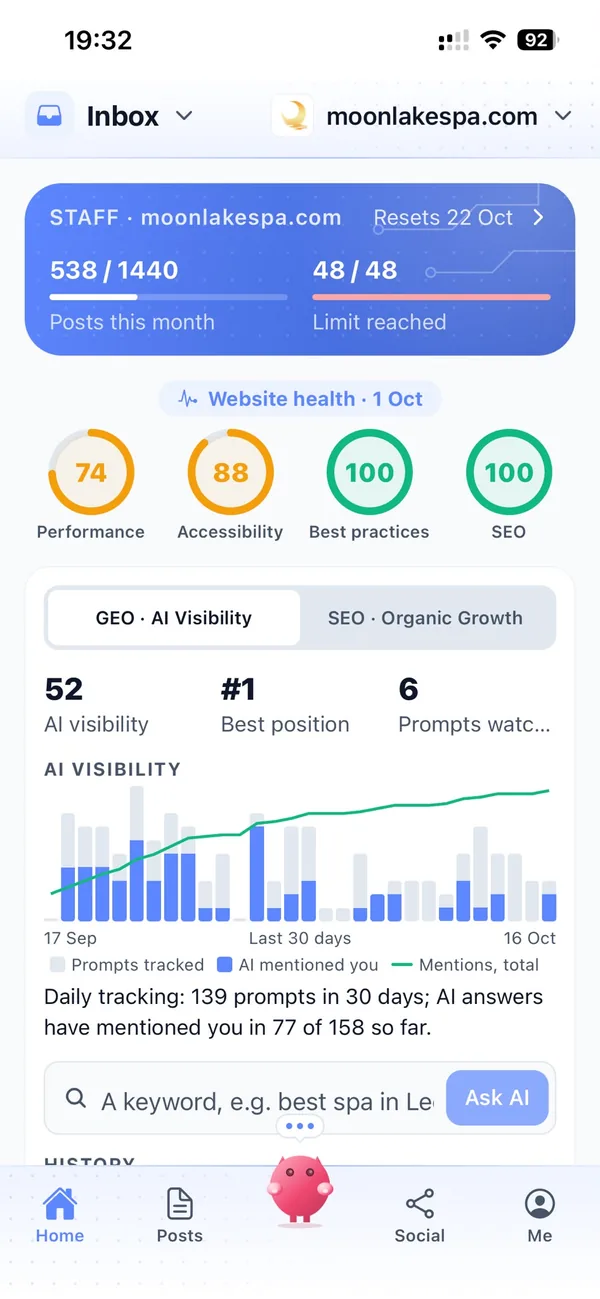
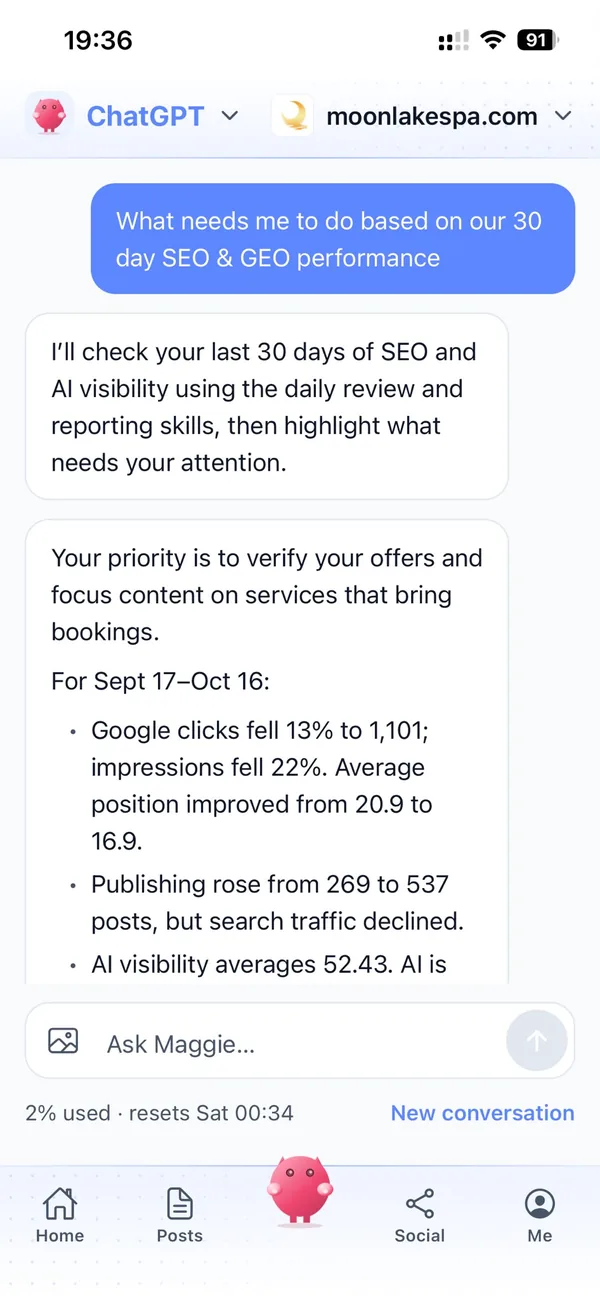
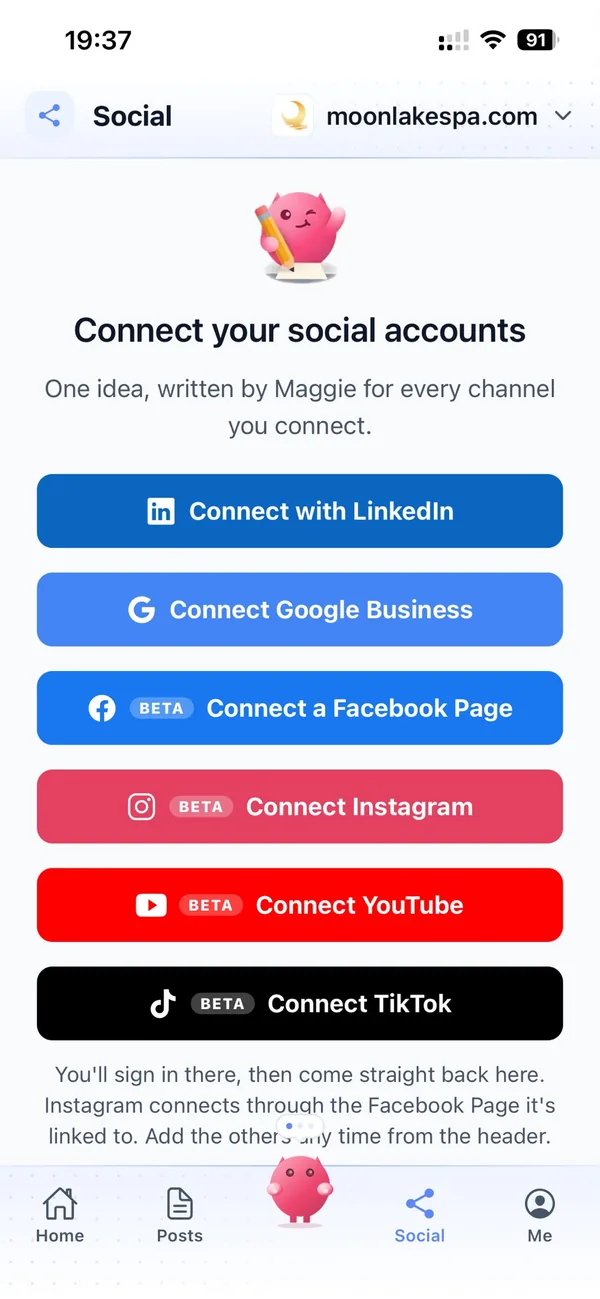
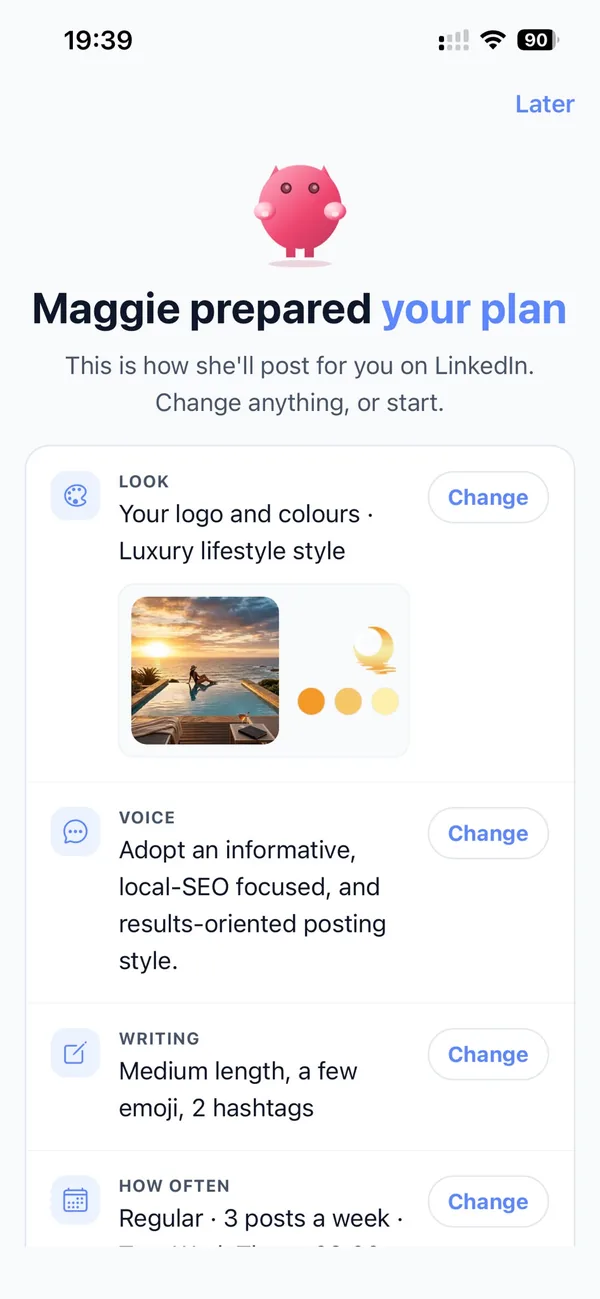
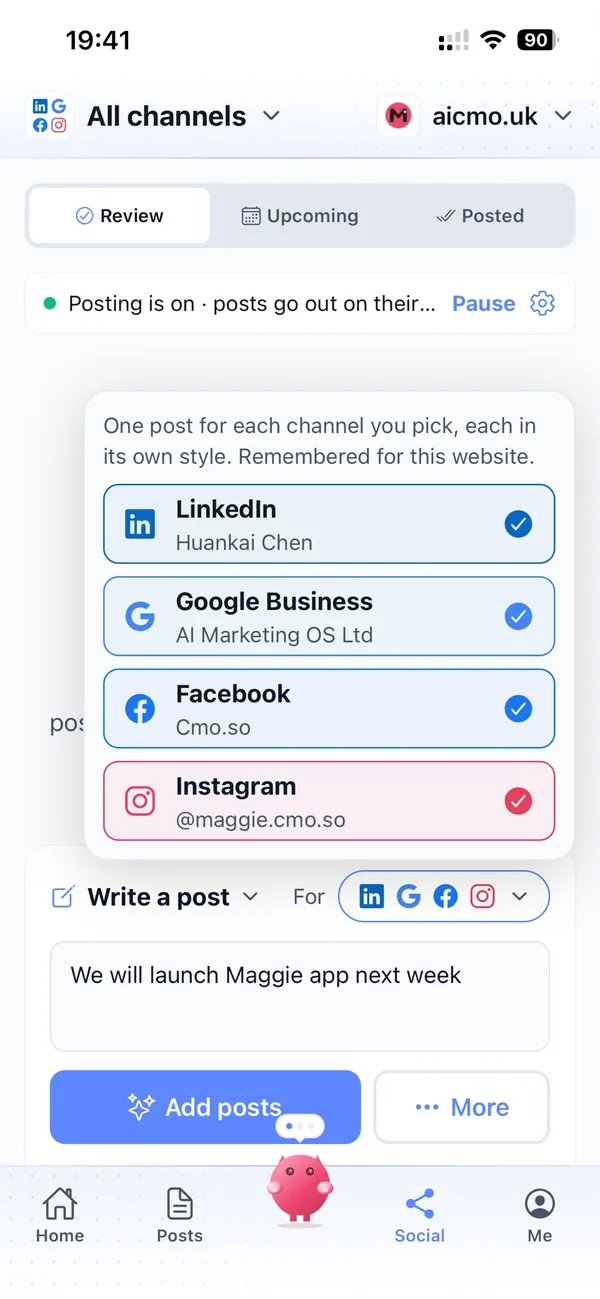
From your company website to a development's worth of posts in four steps
Enter your website
Maggie reads it and drafts your brand profile in minutes.
Check your profile
Correct your developments, sales offices and buyers, and choose the channels you want.
Review the drafts
Your first week of posts arrives with pictures. Approve, edit or skip each one.
Let them go out
Approved posts go out at each channel's times and every one comes back with its link.
Why not just…
The usual ways developers market a scheme, and where each one runs out.
…leave it to the selling agent?
A good agent markets the listings, but their posts are about their agency, and they move on once the plots are sold. Posts on your own website and LinkedIn build your company's name for the next scheme.
…rely on the property portals?
Portals show your homes next to everything else in the postcode. They don't tell the story of the place or your build quality the way your own area guides and updates can.
…brief a marketing agency for each launch?
Launch campaigns can cost a great deal, and agencies often stop once the launch is over. SEO and content agencies often cost around £1,000 a month; Maggie keeps writing every week from £15 a month.
…write it with ChatGPT?
You still brief it, check it, make the pictures and post by hand, and it doesn't know your developments or your specification. Maggie remembers your company and puts posts out on schedule.
Cut the £5,900/mo marketing bill to £15/mo
Everything a marketing team does, done by Maggie.
| What needs doing | Without cmo.so | With cmo.so |
|---|---|---|
| Full-time marketing hire | £3,000/mo | Included |
| SEO and AI search (GEO) agency | £1,000/mo | Included |
| Content writer, AI-assisted | £500/mo | Included |
| Social media manager, freelance | £800/mo | Included |
| Designed pictures for every post | £300/mo | Included |
| SEO and GEO softwareRank tracking, site audits, AI visibility | £250/mo | Included |
| AI writing and image tools | £50/mo | Included |
| Working hours | Office hours | 24/7 |
| Total per month | £5,900+ | From £15/mo |
Typical UK costs for a small business in 2026, with AI already cutting freelance rates. Estimates only; your own quotes will vary.
- 5 social posts, 30 once verified
- 15 Maggie messages a day
- Upgrade any time
- 12 posts a day
- 150 Maggie messages a day
- All channels
- 96 posts a day
- 1,000 Maggie messages a day
- All channels
Per website, billed monthly. Blog and social posts share one allowance; your best plan sets how much you can talk to Maggie across all your websites.
Marketing automation for property developers: your questions
Still unsure?
What is marketing automation for property developers?
It's software that does the repeating work of marketing a development: planning posts across the build, writing blog and social posts, making pictures and publishing them on schedule.
With cmo.so, Maggie does this from your company website, and nothing goes out until you approve it.
How do property developers get more buyers online?
Property developers get more buyers online by helping people picture life in the place: area guides on their own website, regular updates as the homes take shape, and an active Google Business profile for each sales office.
Maggie writes those posts every week across the life of each development, and Search Console in cmo.so shows which ones bring buyers to your site.
How much does marketing automation cost for a property developer?
There's a free plan with no card needed. Paid plans are per website and billed monthly: Air at £15 a month covers two posts a day, and Pro at £45 a month suits a developer posting on several channels.
Founding members get lower prices for good on every plan until 1 January 2027. You can cancel any time.
Which channels should property developers start with?
Most developers start with area guides and development updates on their own website, plus Google Business for each sales office or show home.
LinkedIn reaches landowners, investors, councils and partners, and Instagram and Facebook are in beta for reaching buyers. Each channel has its own posting times and queue.
Can cmo.so market several developments at once?
It can, in two ways. If each development has its own website, add each one to your account with its own brand profile, channels, schedule and approvals.
If all your developments sit on one company website, Maggie plans posts for each scheme from the same brand profile, so every development gets its share of attention.
Can it write about planning applications and consultations?
It can write posts that explain a proposal and point people to your consultation events or pages. Maggie keeps to what you've told her and what's on your website.
Planning is sensitive locally, so every post waits for your approval, and your planning team can check the wording before anything goes out.
Will it make claims about prices, returns or completion dates?
It shouldn't make any claim you haven't given it, and you check every draft before it's approved. Prices, availability and completion dates change, so it's best to link to your own pages for the latest figures.
If you market homes to investors, the optional Content Policy Guard can check posts against financial rules or your own house rules and hold a risky post as a draft with a suggested rewrite. These are AI suggestions, not legal or compliance advice; a qualified person should still review, and you stay responsible for what you publish.
Does it connect to our sales or reservation system?
No, cmo.so doesn't connect to sales, reservation or CRM systems. Maggie writes and publishes posts, and they link to your development pages, viewing forms or sales office.
Enquiries still come to your sales team in the way they do today.
Can it help us win land and partners, not just buyers?
It can, through LinkedIn and your blog. Maggie writes about completed schemes, your approach to design and community, and the kind of sites you look for, in a voice that suits landowners, agents and investors.
Your track record then stays visible long after each scheme is finished.
Is it safe to let AI post for a development company?
It is safe because nothing goes out until you approve it. Approvals are on by default and set per channel, so you can keep every post under review or let a channel you trust run on autopilot.
Social channels connect through each platform's official sign-in, so cmo.so never sees your passwords, and cmo.so never sells or rents your data.
Which websites does it work with?
cmo.so publishes to WordPress, Shopify, Wix and Webflow, and to any other website, including a custom development microsite, through the cmo.so API.
Each post is reported back with its link once it's live.
Do area guides help us show up in AI answers?
Clear, factual area guides give AI answers something useful to quote when people ask about living somewhere. Maggie writes them with direct answers near the top.
AI visibility in cmo.so shows how Google's AI answers describe and mention your company, so you can watch how that changes. No one can promise a particular result.
Keep every development in the news, from launch to the last plot
Enter your website. Your brand profile and first week of posts are ready in minutes, and nothing goes out until you approve it.
- Free plan, no card needed
- You approve every post
- Cancel any time