

Marketing automation for interior designers
Your best rooms are finished, photographed and then forgotten in a folder while you chase the next install. Maggie, your AI CMO, turns them into project stories, design guides and posts for your website, Instagram and Google Business, and you approve every one.
Free to start · No credit card · 30 free posts
Used by 600+ users and trusted by teams at
aeglesriphal.com
moonlakespa.com
shop.theteagroup.com
clo100.com
logtrics.io
mymorez.com
nextidal.com
otisapp.com
storaitelling.com
theheatpumps.co.uk
web-translations.com
exposeai.tech
orielipo.com
whitelabelcrowd.fund
elliptic.co
med.moonlakespa.com
netdex.co.il
orawellness.uk
reenest.com
syngage.ai
thepenthouseliving.com
zengolf.studio
imaintain.uk
rebuildingsociety.com
aurasocial.world
goaimex.com
moneyparents.com
newgenrenewables.uk
osmosisai.co
saunders.ac
teeza.app
thursdayclub.com
Why interior designers struggle to keep their marketing going
Design work is slow, detailed and personal. Marketing it is the job that always slides to next week.
Months of work, one photo shoot
A kitchen extension or a full house scheme takes months to deliver. By the time the photographer has been, you're deep in the next project and the reveal never gets written up properly.
Enquiries arrive in bursts
New-year resolutions, spring renovations and people who have just got the keys to a new home all land at once. Then it goes quiet, and the quiet months are when posting would have filled the diary.
Pretty pictures, no explanation
Instagram shows the finished room, but clients want to know how you work, what a design fee covers and how long a project takes. Without pages that answer those questions, they ring someone else.
Directories and platforms own the lead
Design directories and marketplace profiles send enquiries, but the client compares you side by side with ten other studios. Someone who finds your own website already likes your style.
The Georgian townhouse photos arrived on Friday, and the project story is out by Wednesday.
It's Monday. The photographer has sent forty beautiful shots of the townhouse you finished last month, and you've also got two site visits, a supplier delay on the curtains and a client presentation on Thursday.
You paste your studio's website into cmo.so. Maggie reads it and writes your brand profile: full-house schemes and kitchen design, the period homes you love working in, your layered, colour-confident style, the areas you cover and the calm way you explain a design process to nervous first-time clients. You correct one thing: you no longer take on single-room styling jobs.
By Tuesday the drafts are waiting, each with a picture in your studio's look: a blog post telling the townhouse story from brief to reveal, an Instagram carousel of the drawing room before and after, a Google Business post for people searching for an interior designer nearby, and a LinkedIn post for the boutique hotel owners you'd like to work with. You approve three from your phone between site visits and swap one photo in the fourth.
The posts go out at the times you set for each channel and each comes back with its link. While you're choosing tiles for the next bathroom, Maggie is already planning a guide to what an interior design fee covers, and Search Console in cmo.so shows which project stories people are reading.
A marketing assistant who understands design projects
Each of those problems has an answer, and you still decide what goes out under your studio's name.
Project stories and design guides on your blog
Room reveals told from brief to finish, plus guides on choosing paint colours, planning a kitchen layout or what happens at a first consultation, written for Google and for AI answers. Published to your WordPress, Wix, Webflow or Shopify site, or any site through the cmo.so API.
Blog on autopilotSteady posting between installs
Topics are planned weeks ahead and queued, so your channels keep going during a big install or a fortnight of site visits, and you're visible before the spring and new-home enquiries arrive.
Content calendarFound by people renovating nearby
Regular Google Business posts keep your studio visible when homeowners search for an interior designer in your area, with buttons that take them to your enquiry page and events such as a showroom open day.
Google BusinessYour style, not a mood board cliché
Enter your website and Maggie builds your brand profile: the work you do, the clients you do it for, what makes your schemes different, competitors and voice. Every post and picture starts from it.
Brand profileOne project, every channel
One finished room becomes a post for each channel in its own style: Instagram and Facebook for homeowners (in beta), LinkedIn for developers, hotels and offices, YouTube for walk-through videos (in beta).
Every channelApprove from site
By default nothing goes out until you approve it. Swipe through drafts in the iPhone app or at app.cmo.so, change a photo, edit a line, or pause a channel while you deliver a big project.
ApprovalsYour marketing team, in your pocket
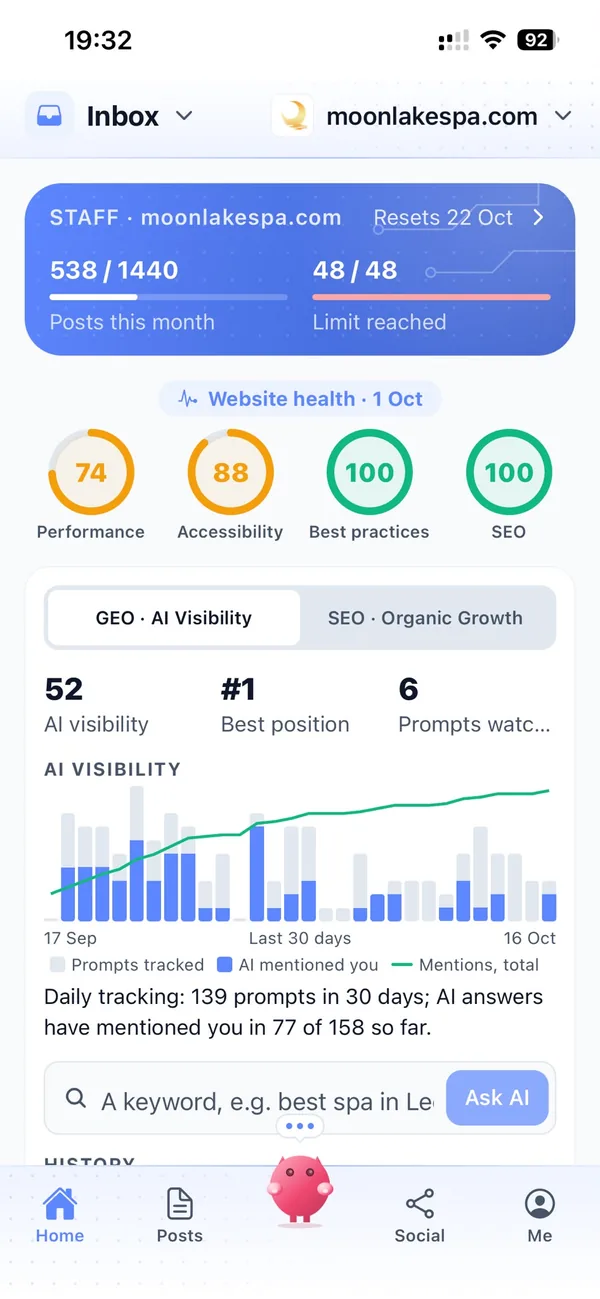
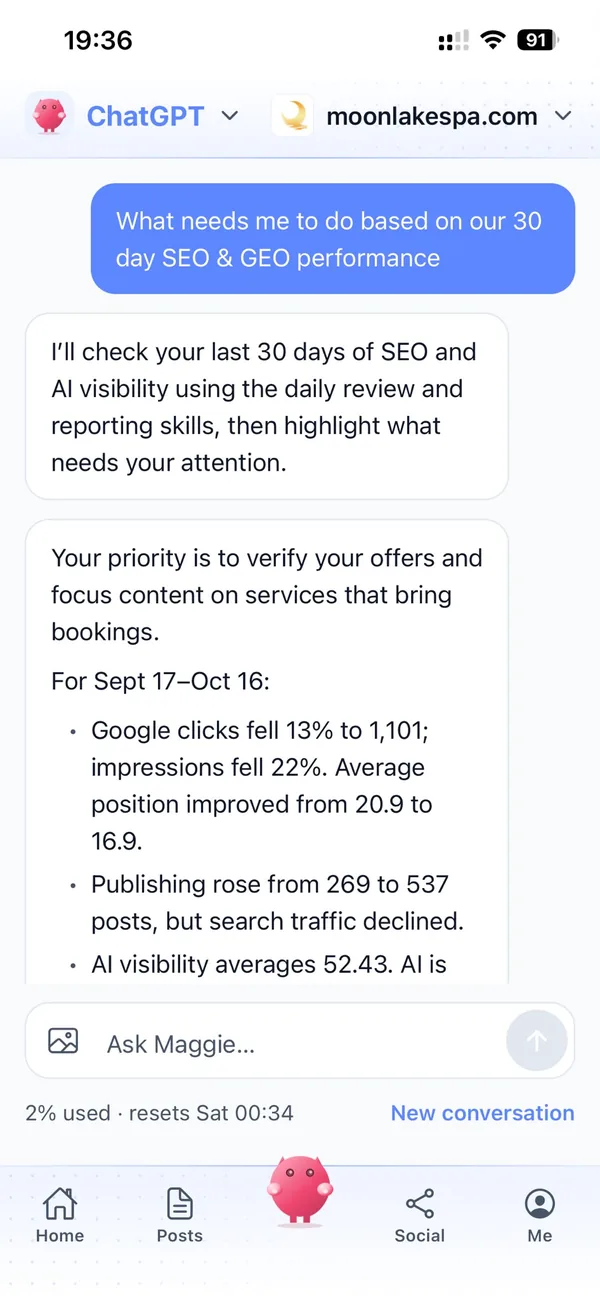
Real screens from the cmo.so app on iPhone.
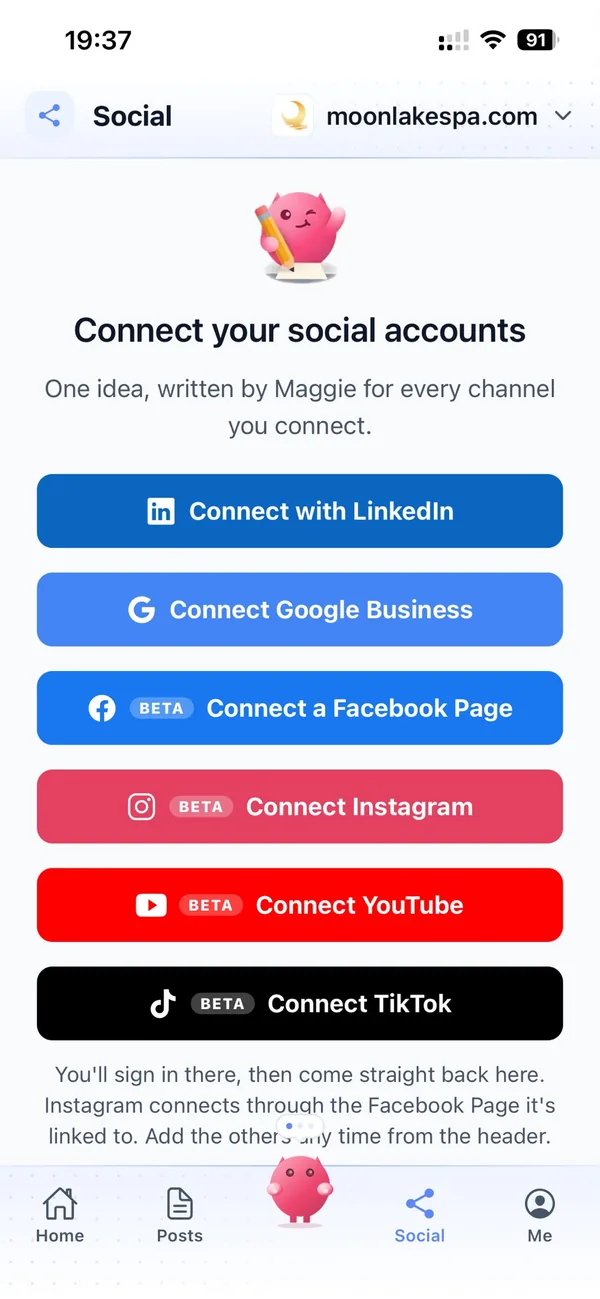
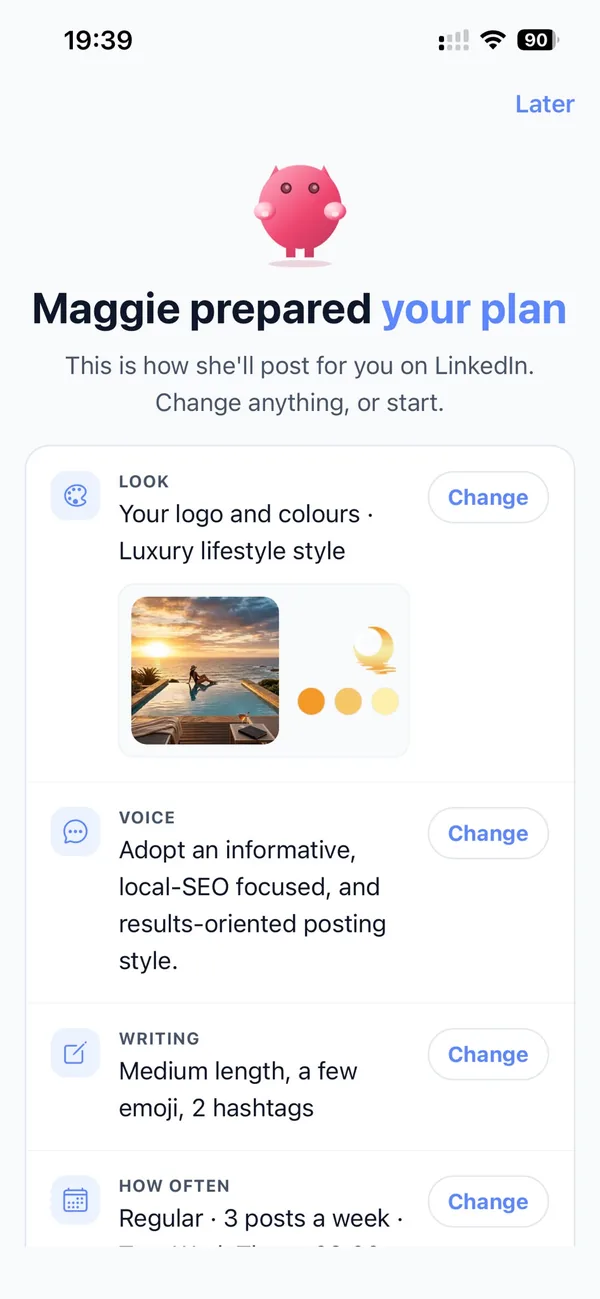
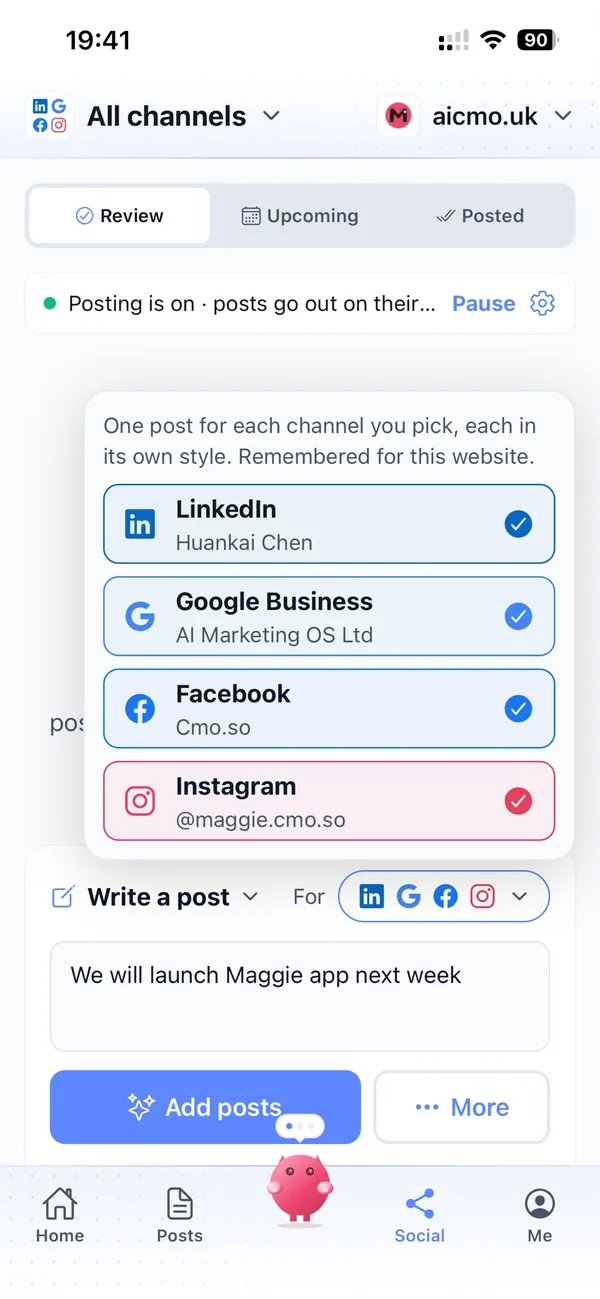
From your studio's website to a steady flow of project posts in four steps
Enter your website
Maggie reads it and drafts your studio's brand profile in minutes.
Check your profile
Correct the services you offer and the areas you cover, add the projects you want more of and choose your channels.
Review the drafts
Your first week of posts arrives with pictures. Approve, edit or skip each one.
Let them go out
Approved posts go out at each channel's times and every one comes back with its link.
Why not just…
The usual ways interior designers try to win clients online, and where each one runs out.
…rely on design directories and Houzz?
They can bring enquiries, but your profile sits in a list of competitors and the platform sets the rules. Project stories on your own website and Google Business profile bring people who already like your work.
…post on Instagram when a project finishes?
Projects finish a few times a year, so your feed goes quiet for months. Maggie spreads each project across weeks of posts and fills the gaps with guides and ideas.
…hire a marketing agency or a PR?
SEO and content agencies often cost around £1,000 a month, and a design PR can cost more. Maggie writes and publishes every week from £15 a month.
…write it with ChatGPT?
You still brief it, check it, choose the photos and post everything yourself, and it doesn't know your style or the homes you work in. Maggie remembers your studio and puts posts out on schedule.
Cut the £5,900/mo marketing bill to £15/mo
Everything a marketing team does, done by Maggie.
| What needs doing | Without cmo.so | With cmo.so |
|---|---|---|
| Full-time marketing hire | £3,000/mo | Included |
| SEO and AI search (GEO) agency | £1,000/mo | Included |
| Content writer, AI-assisted | £500/mo | Included |
| Social media manager, freelance | £800/mo | Included |
| Designed pictures for every post | £300/mo | Included |
| SEO and GEO softwareRank tracking, site audits, AI visibility | £250/mo | Included |
| AI writing and image tools | £50/mo | Included |
| Working hours | Office hours | 24/7 |
| Total per month | £5,900+ | From £15/mo |
Typical UK costs for a small business in 2026, with AI already cutting freelance rates. Estimates only; your own quotes will vary.
- 5 social posts, 30 once verified
- 15 Maggie messages a day
- Upgrade any time
- 12 posts a day
- 150 Maggie messages a day
- All channels
- 96 posts a day
- 1,000 Maggie messages a day
- All channels
Per website, billed monthly. Blog and social posts share one allowance; your best plan sets how much you can talk to Maggie across all your websites.
Marketing automation for interior designers: your questions
Still unsure?
What is marketing automation for interior designers?
It's software that does the repeating work of marketing a design studio: planning topics, writing project stories, blog and social posts, making pictures and publishing them on schedule.
With cmo.so, Maggie does all of it from your studio's website, and nothing goes out until you approve it.
How do interior designers get more clients online?
Interior designers get more clients online by showing finished work with the story behind it, answering the questions homeowners ask before they hire, and being easy to find in local search.
Maggie writes project stories, design guides and Google Business posts every week, and Search Console shows which ones bring people to your website.
How much does marketing automation cost for an interior designer?
There's a free plan with no card needed. Paid plans are per website and billed monthly: Air at £15 a month covers two posts a day, which suits most solo designers, and Pro at £45 a month suits a studio posting on several channels.
Founding members get lower prices for good on every plan until 1 January 2027. You can cancel any time.
Which channels should interior designers start with?
Most interior designers start with their own blog for project stories and guides, plus Google Business, because that's where people searching for a designer nearby compare studios.
Instagram and Facebook are in beta and suit homeowners collecting ideas, LinkedIn reaches developers, hotels and businesses planning a fit-out, and YouTube (in beta) suits walk-through videos. Each channel has its own posting times and queue.
What kind of posts will Maggie write for an interior designer?
She writes project stories from brief to reveal, guides such as choosing a colour scheme or planning an open-plan kitchen, seasonal ideas, and posts about how you work with clients.
Every post starts from your brand profile, so it talks about your style, your services and the homes you work in, with a picture in your studio's look that you can change before approving.
How does one project become several posts?
One finished project can become a blog story, a before-and-after post, a detail post on a material or piece of furniture and a Google Business update.
Maggie spreads them across weeks, so a single shoot keeps your channels active long after the install.
Can cmo.so help us win commercial and hospitality work?
It can help the right people find you and understand how you work. Maggie writes LinkedIn posts and blog articles for developers, hotel owners and businesses planning a fit-out, alongside your residential posts.
She doesn't answer enquiries or manage proposals, so clients still come to you through your website, phone or email.
Will posts give away my clients' addresses or private details?
Posts only say what you choose to share. You can tell Maggie never to name clients, streets or exact locations, and she writes about the room and the design instead.
You review every post before it goes out, so you can remove anything a client wouldn't want published.
Can she write about design fees and budgets?
She can explain how you charge and what a project involves, using the information on your website and in your brand profile.
She won't invent prices. If you'd rather not publish figures, Maggie explains your process and invites people to get in touch instead.
Which websites does it work with?
cmo.so publishes to WordPress, Wix, Webflow and Shopify, and to any other website through the cmo.so API.
Each post is reported back with its link once it is live.
Is it safe to let AI post for my design studio?
Yes, because nothing goes out until you approve it. Approvals are on by default, and you can keep them on for every channel or let a channel you trust run on autopilot.
Social channels connect through each platform's official sign-in, so cmo.so never sees your passwords, and cmo.so never sells or rents your data.
Can my team approve posts too?
Yes. In Me → Team you can add people and choose what each can see or change, using presets such as editor or manager.
So a junior designer can prepare project posts while you approve what goes out.
Let your finished rooms keep working for you
Enter your website. Your brand profile and first week of posts are ready in minutes, and nothing goes out until you approve it.
- Free plan, no card needed
- You approve every post
- Cancel any time