


Marketing automation for architects
Your best marketing is the buildings you've finished, and they rarely make it onto your website. Maggie, your AI CMO, turns your projects and know-how into posts for your website, LinkedIn, Google Business and social channels, and you approve every one.
Free to start · No credit card · 30 free posts
Used by 600+ users and trusted by teams at
aeglesriphal.com
moonlakespa.com
shop.theteagroup.com
clo100.com
logtrics.io
mymorez.com
nextidal.com
otisapp.com
storaitelling.com
theheatpumps.co.uk
web-translations.com
exposeai.tech
orielipo.com
whitelabelcrowd.fund
elliptic.co
med.moonlakespa.com
netdex.co.il
orawellness.uk
reenest.com
syngage.ai
thepenthouseliving.com
zengolf.studio
imaintain.uk
rebuildingsociety.com
aurasocial.world
goaimex.com
moneyparents.com
newgenrenewables.uk
osmosisai.co
saunders.ac
teeza.app
thursdayclub.com
Why architects struggle to keep their marketing going
Drawings, planning deadlines and site visits fill the week. Writing about the work always comes after doing it, so it rarely happens.
Finished projects never get written up
The photographer delivers beautiful images of a completed extension or new house, and they sit in a folder because nobody has time to write the story of the brief, the site and the decisions behind it.
Homeowners ask the same questions
Do I need planning permission? What does an architect actually do? How long until we're on site? You answer them on every first call, but your website doesn't, so people searching never reach you.
Enquiries arrive in waves
A run of projects keeps the studio busy for months, marketing stops, and when the drawings are done the pipeline is empty. Work comes from word of mouth, which you can't switch on.
Directories set the terms
Listing sites and home improvement platforms put you in a grid next to every other practice, and the people they send often want the cheapest quote, not your kind of design.
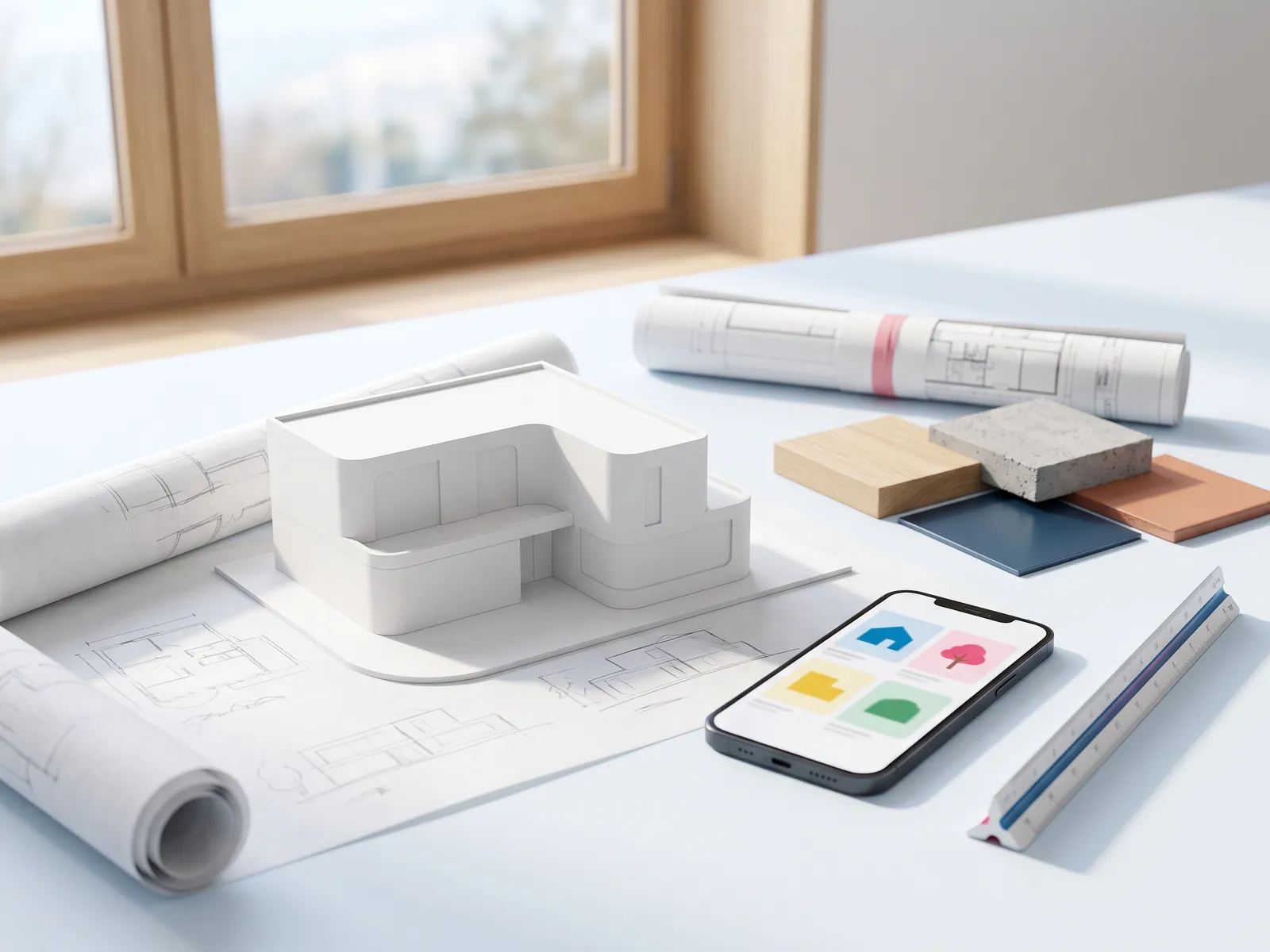
The extension photos came back on Friday. By Tuesday the story is ready to approve.
It's Monday at a small residential practice. The photographs of a finished kitchen extension arrived on Friday, two planning applications are due this month, and spring is when homeowners start thinking about building work. Your projects page hasn't changed since last year.
You paste your practice's website into cmo.so. Maggie reads it and writes your brand profile: your extensions, loft conversions and one-off houses, the conservation areas you know well, your interest in low-energy retrofit, the towns you work in and the calm, clear way you explain design to people building for the first time. You correct one thing: you no longer take on commercial fit-outs.
By Tuesday the drafts are waiting, each with a picture in your studio's look: a project story on the extension, from the narrow plot to the roof light over the table, a blog post explaining when a rear extension might need planning permission, a Google Business update for homeowners nearby with a button to your contact page and a LinkedIn post for local builders and developers about your retrofit work. You approve three and add a detail about the brick to the fourth.
The posts go out at the times you set for each channel and come back with their links. While you're on site, Maggie is planning next month's topics, and Search Console in cmo.so shows which planning questions bring people to your website.
A marketing assistant who understands briefs, sites and planning
Each of those problems has an answer, and you still decide what goes out under your practice's name.
Every project, written up
Send the photos and a few notes, and finished projects become project stories: the brief, the site, the design decisions and how it feels to live in. Published to your WordPress, Wix, Webflow or Shopify site, or any site through the cmo.so API.
Project storiesAnswers to homeowners' questions
Blog posts on planning, permitted development, working with an architect, fees in general terms and what each stage involves, written for Google and for AI answers, so people find you while they're still researching.
Blog on autopilotFound by people building nearby
Regular Google Business posts keep your practice visible to people searching for an architect near them, with events such as an open studio and buttons that take people straight to your enquiry page.
Google BusinessLinkedIn for referrals and developers
One idea becomes a post for each channel in its own style: LinkedIn for builders, developers, surveyors and commercial clients, Instagram for homeowners who save design ideas (in beta).
Every channelYour design language, in words
Enter your website and Maggie builds your brand profile: the work you do, the clients you do it for, your approach, competitors and voice. Every post and picture starts from it, never from a generic practice.
Brand profileApprove between site visits
By default nothing goes out until you approve it. Review drafts in the iPhone app or at app.cmo.so, correct a technical detail, skip a post, or pause a channel when the studio is flat out.
ApprovalsYour marketing team, in your pocket
Real screens from the cmo.so app on iPhone.
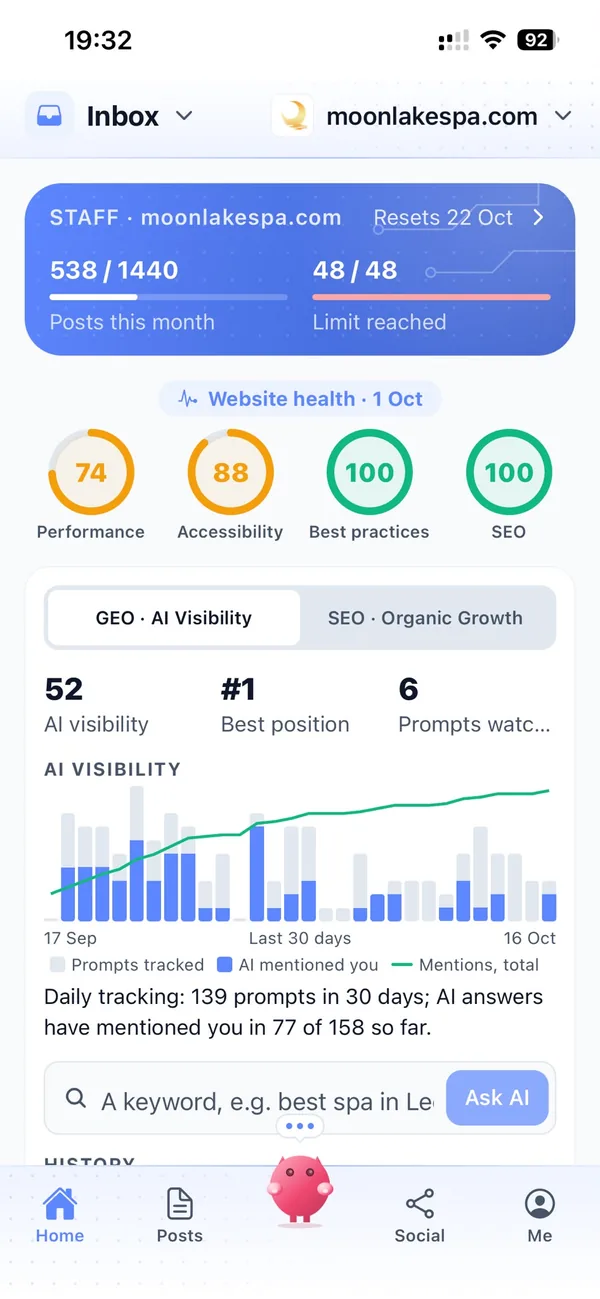
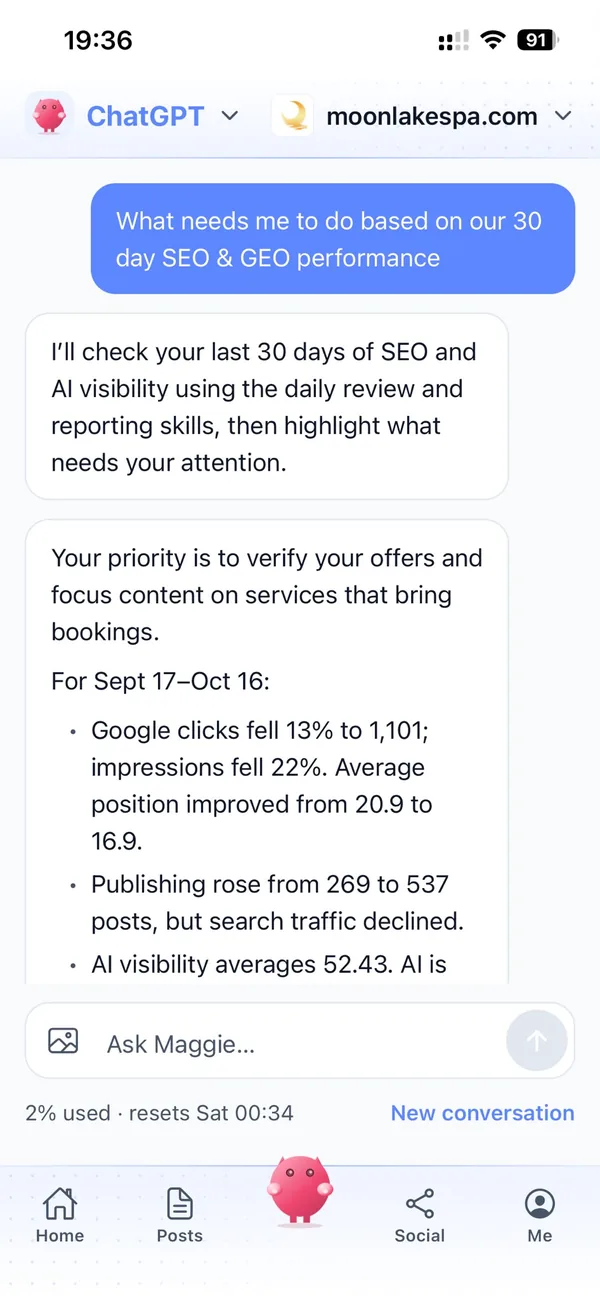
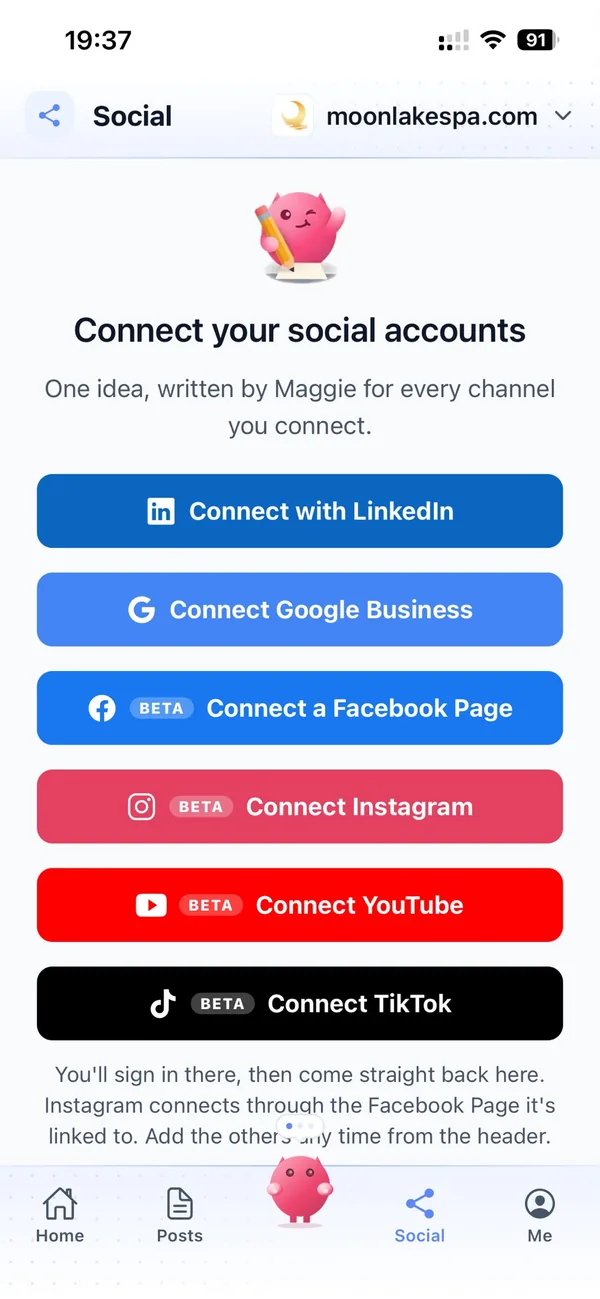
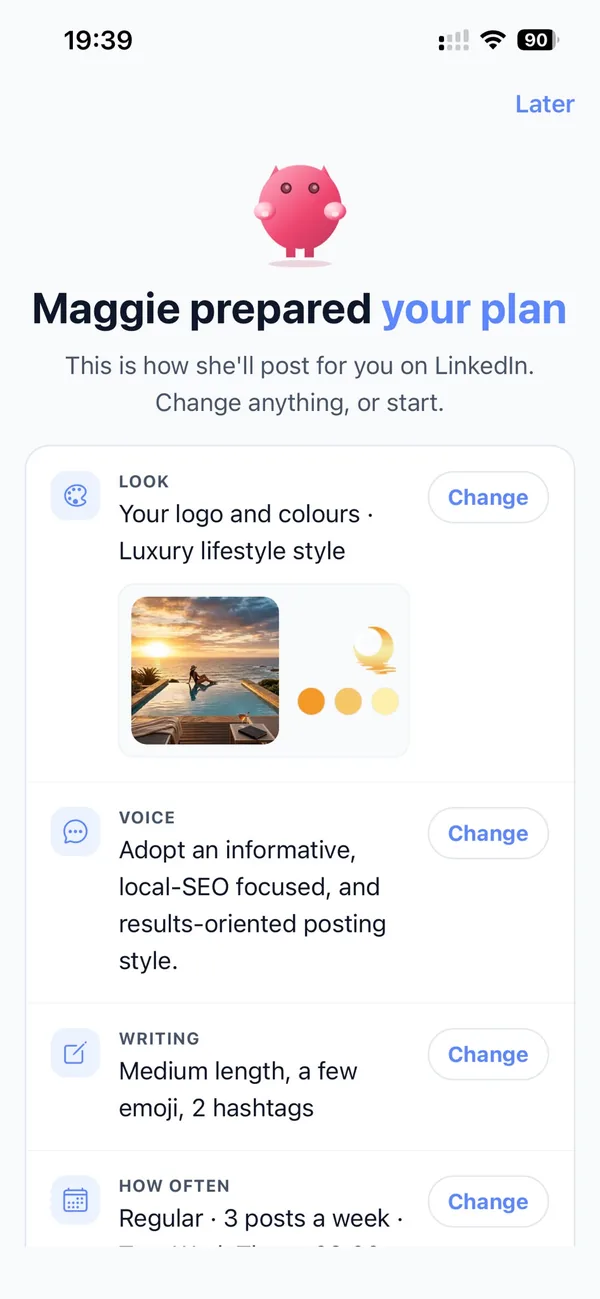
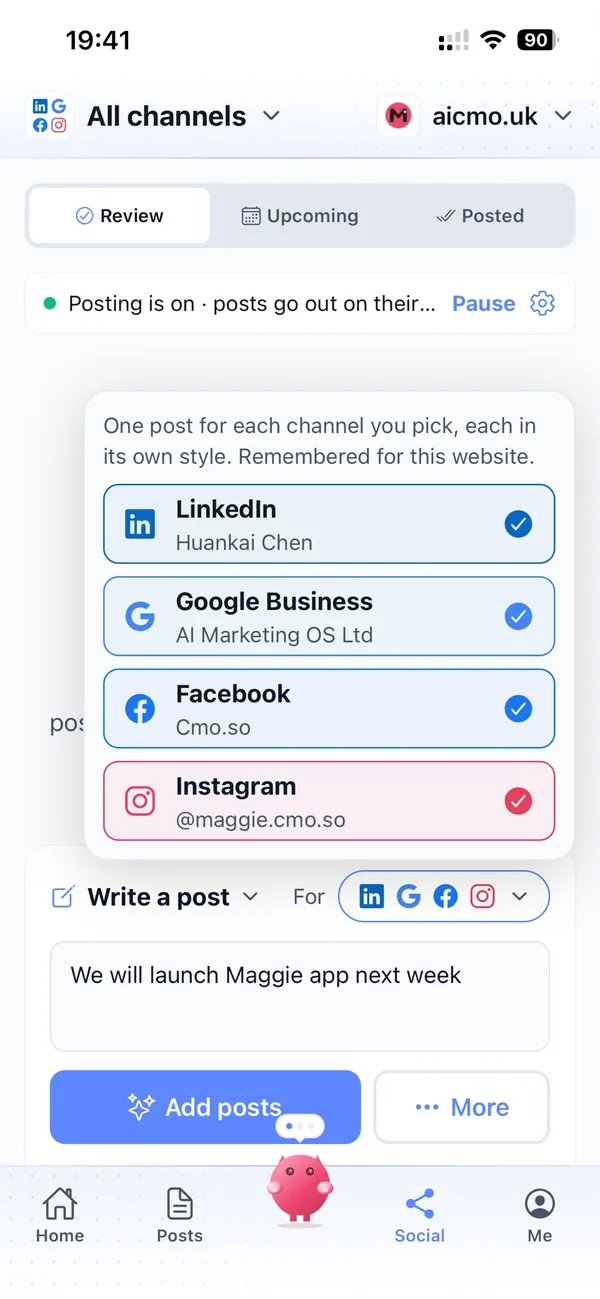
From your practice's website to a steady flow of posts in four steps
Enter your website
Maggie reads it and drafts your practice's brand profile in minutes.
Check your profile
Correct the kinds of project you take on and the areas you cover, then choose your channels.
Review the drafts
Your first week of posts arrives with pictures. Approve, edit or skip each one.
Let them go out
Approved posts go out at each channel's times and every one comes back with its link.
Why not just…
The usual ways architects try to win the next project, and where each one runs out.
…rely on word of mouth?
Recommendations bring good clients, but you can't control when they come. A website that answers homeowners' questions and shows recent work keeps enquiries coming between referrals.
…pay for a directory or home improvement platform?
They send leads, but alongside every other practice, and often to people comparing on price. Your own website and Google Business profile bring people who already like your kind of work.
…hire a marketing agency?
SEO and content agencies often cost around £1,000 a month, and they still need you to explain each project. Maggie writes from your notes and photos every week from £15 a month.
…write it with ChatGPT?
You still brief it, check it, make the picture and post it yourself, and it doesn't know your projects, your area or how you talk about design. Maggie remembers your practice and puts posts out on schedule.
Cut the £5,900/mo marketing bill to £15/mo
Everything a marketing team does, done by Maggie.
| What needs doing | Without cmo.so | With cmo.so |
|---|---|---|
| Full-time marketing hire | £3,000/mo | Included |
| SEO and AI search (GEO) agency | £1,000/mo | Included |
| Content writer, AI-assisted | £500/mo | Included |
| Social media manager, freelance | £800/mo | Included |
| Designed pictures for every post | £300/mo | Included |
| SEO and GEO softwareRank tracking, site audits, AI visibility | £250/mo | Included |
| AI writing and image tools | £50/mo | Included |
| Working hours | Office hours | 24/7 |
| Total per month | £5,900+ | From £15/mo |
Typical UK costs for a small business in 2026, with AI already cutting freelance rates. Estimates only; your own quotes will vary.
- 5 social posts, 30 once verified
- 15 Maggie messages a day
- Upgrade any time
- 12 posts a day
- 150 Maggie messages a day
- All channels
- 96 posts a day
- 1,000 Maggie messages a day
- All channels
Per website, billed monthly. Blog and social posts share one allowance; your best plan sets how much you can talk to Maggie across all your websites.
Marketing automation for architects: your questions
Still unsure?
What is marketing automation for architects?
It's software that does the repeating work of marketing an architecture practice: planning topics, writing project stories, blog and social posts, making pictures and publishing them on schedule.
With cmo.so, Maggie does all of it from your practice's website, and nothing goes out until you approve it.
How do architects get more clients online?
Architects get more clients online by showing finished work and answering the questions people ask before they hire anyone: planning, budgets in general terms, timescales and what an architect does. Those pages should sit on your own website and Google Business profile.
Maggie writes them every week from your brand profile and your project notes, and Search Console in cmo.so shows which ones bring people to your site.
How much does marketing automation cost for an architect?
There's a free plan with no card needed. Paid plans are per website and billed monthly: Air at £15 a month covers two posts a day, which suits most small practices, and Pro at £45 a month suits a growing studio posting on several channels.
Founding members get lower prices for good on every plan until 1 January 2027. You can cancel any time.
Which channels should architects start with?
Most practices start with their own website for project stories and planning explainers, Google Business for homeowners searching nearby, and LinkedIn for builders, developers and commercial clients.
Instagram is in beta and suits homeowners collecting ideas. Each channel has its own posting times and queue, and one project can become a post for every channel.
Is it safe to let AI write about our projects?
It is, because nothing goes out until you approve it. Approvals are on by default, so you can correct a technical detail, a material or a planning point before anything is published.
Social channels connect through each platform's official sign-in, so cmo.so never sees your passwords, and cmo.so never sells or rents your data.
What should an architect's project story include?
A good project story covers the brief, the site and its constraints, the key design decisions and how the finished building is used, with your best photographs.
If you give Maggie, your AI CMO, the photos and a few notes, she writes the story in your voice for your website, then shorter versions for LinkedIn and Instagram.
Can posts explain planning permission without giving wrong advice?
They can explain the general process clearly, and you check every post before it goes out. Planning rules vary by area and by project, so a good post explains the questions to ask and invites people to talk to you.
You can tell Maggie how cautious you want to be, and she learns from your edits.
We need client permission to show a home. How does that work?
You choose which projects appear and what is said about them. Only projects you write up or mention are used, and you can leave out addresses or any detail a client prefers to keep private.
Every post waits for your approval, so nothing about a client's home goes out without you reading it first.
Will cmo.so help us win commercial or public sector work?
It can help those clients see your experience. LinkedIn posts and project stories about schools, workplaces or housing schemes show the kind of work you do and how you think.
Tenders and frameworks still need your own bids; cmo.so keeps your public profile current while you write them.
Can my team approve posts too?
Yes. In Me → Team you can add people and choose what each can see or change, using presets such as editor or manager.
So the project architect can check the story of their building while a director keeps an eye on the whole schedule.
We have two studios. Can cmo.so handle both?
Yes. If each studio has its own website, add both to one account and each gets its own brand profile, channels, schedule and approvals.
If they share one website, Maggie can write posts for the clients and areas each studio serves from the same brand profile.
Which websites does it work with?
cmo.so publishes to WordPress, Shopify, Wix and Webflow, and to any other website through the cmo.so API.
Each post is reported back with its link once it is live.
Let your finished buildings bring in the next brief
Enter your website. Your brand profile and first week of posts are ready in minutes, and nothing goes out until you approve it.
- Free plan, no card needed
- You approve every post
- Cancel any time