


Marketing automation for mental health practices
People often search for a therapist for weeks before they feel ready to get in touch. Maggie, your AI CMO, writes gentle, accurate posts for your practice's website, Google Business and LinkedIn, so the right people find you when they're ready, and nothing goes out until you approve it.
Free to start · No credit card · 30 free posts
Used by 600+ users and trusted by teams at
aeglesriphal.com
moonlakespa.com
shop.theteagroup.com
clo100.com
logtrics.io
mymorez.com
nextidal.com
otisapp.com
storaitelling.com
theheatpumps.co.uk
web-translations.com
exposeai.tech
orielipo.com
whitelabelcrowd.fund
elliptic.co
med.moonlakespa.com
netdex.co.il
orawellness.uk
reenest.com
syngage.ai
thepenthouseliving.com
zengolf.studio
imaintain.uk
rebuildingsociety.com
aurasocial.world
goaimex.com
moneyparents.com
newgenrenewables.uk
osmosisai.co
saunders.ac
teeza.app
thursdayclub.com
Why mental health practices find marketing so hard to keep up
Your diary is full of sessions, notes and supervision. Writing about your work in public, carefully and regularly, is the part that keeps slipping.
Every hour is a client hour
Between back-to-back sessions, notes and supervision, the only time left to write is late evening. A blog about anxiety or what happens in a first session stays half-written for months.
The tone has to be exactly right
Too clinical and people feel judged; too upbeat and it sounds like a promise. One careless line about depression or trauma can put off the very person who needed to read it.
Directories own the first click
Therapist directories bring enquiries, but your profile sits in a list of dozens of similar faces with a monthly fee. People who find your own website first already know how you work.
Referrers forget you exist
GPs, employers, schools and other therapists could send people your way, but they only remember the practices they hear from. Without regular posts, your name fades between referrals.

Your waiting list is open again, and the right posts are already queued.
It's Sunday evening. Two of your clients have finished their work with you, so you have space for new people, and your website still says your list is closed.
You paste your practice's website into cmo.so. Maggie reads it and writes your brand profile: your counselling and CBT work, the adults and couples you see, online and in-person sessions, your fees page and the calm, plain-spoken way you write. You turn on Content Policy Guard with medical rules and add one of your own: never describe a client, even anonymously.
By Tuesday the drafts are waiting, each with a soft picture in your practice's look: a blog post on what actually happens in a first therapy session, a Google Business post saying you have spaces for new clients with a button to your contact page, and a LinkedIn post for local employers on supporting staff through stress. Content Policy Guard has held one line that read like a promise to cure anxiety, with a gentler rewrite. You approve two and adjust the third between sessions.
The posts go out on the days and times you chose, each reported back with its link. Search Console in cmo.so shows which questions people are reading, and Maggie plans the next ones from them, ready for World Mental Health Day in October.
Steady, careful marketing for a practice built on trust
Each of those problems has an answer, and you stay in charge of every word published under your practice's name.
Answers to the questions people search
Posts on what counselling is like, how CBT differs from talking therapy, online versus in-person sessions and how to choose a therapist, written for Google and for AI answers. Published to your WordPress, Wix, Webflow or Shopify site, or any site through the cmo.so API.
Blog on autopilotA voice that feels safe to read
Enter your website and Maggie builds your brand profile: your approaches, who you see, how you work and the warm, non-judgemental voice you use. Every post starts from it, and she learns from each edit you make.
Brand profileA second check on sensitive wording
Turn on Content Policy Guard and posts are checked against medical rules or your practice's own, such as no promises of recovery. A risky post is held as a draft with a suggested rewrite. These are AI suggestions, not legal or compliance advice.
Content Policy GuardFound by people nearby
Regular Google Business posts keep your practice visible to someone searching for a counsellor or therapist near them, with buttons such as Book that take them to your own contact or booking page.
Google BusinessKept in mind by referrers
LinkedIn posts reach GPs, HR teams, schools and fellow practitioners who might refer people to you. Facebook and Instagram are in beta for gentle, everyday posts aimed at the public.
Every channelNothing goes out without you
By default every post waits for your approval. Read drafts in the iPhone app or at app.cmo.so between sessions, edit a line, skip a post or pause a channel when you're full.
ApprovalsYour marketing team, in your pocket
Real screens from the cmo.so app on iPhone.
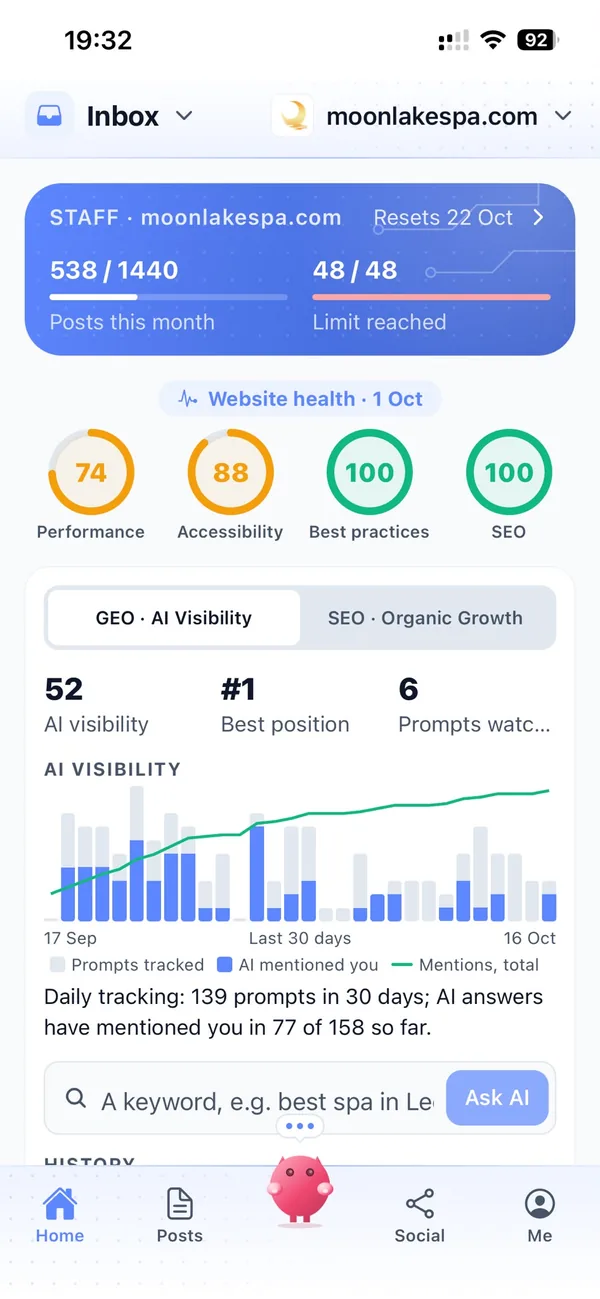
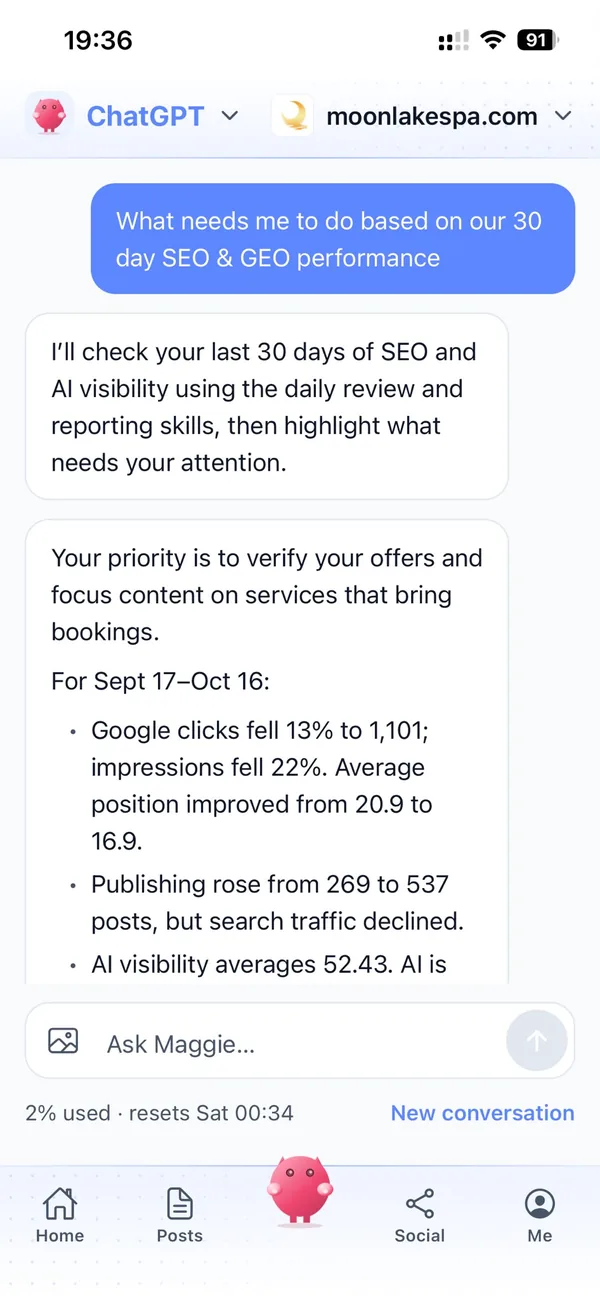
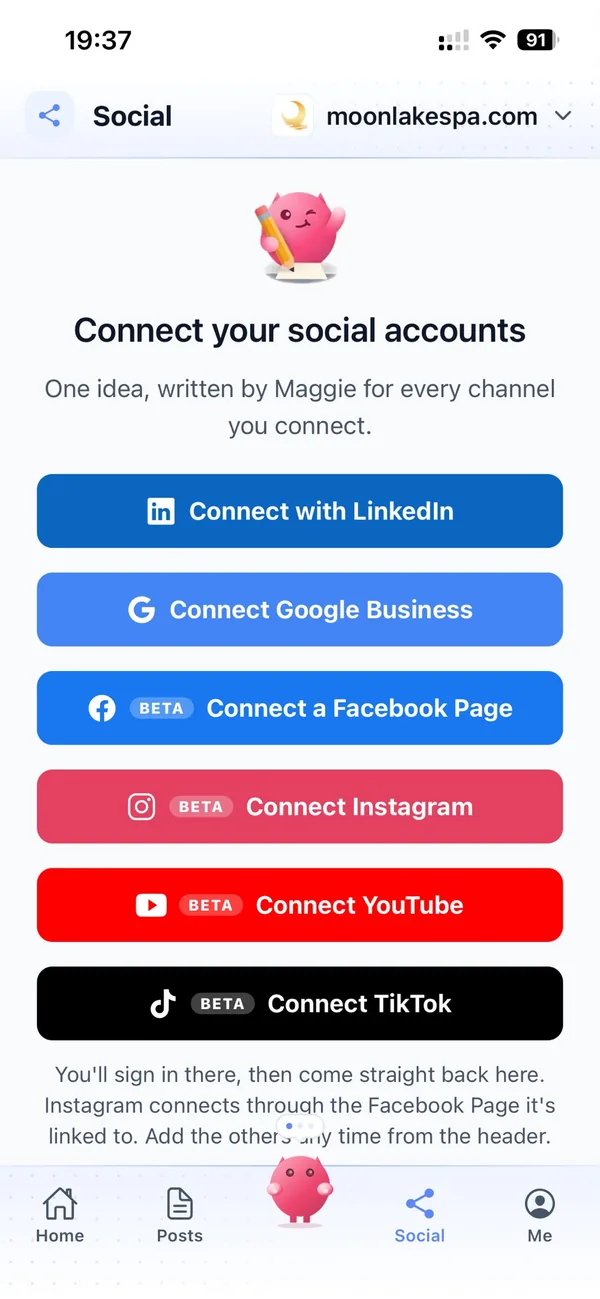
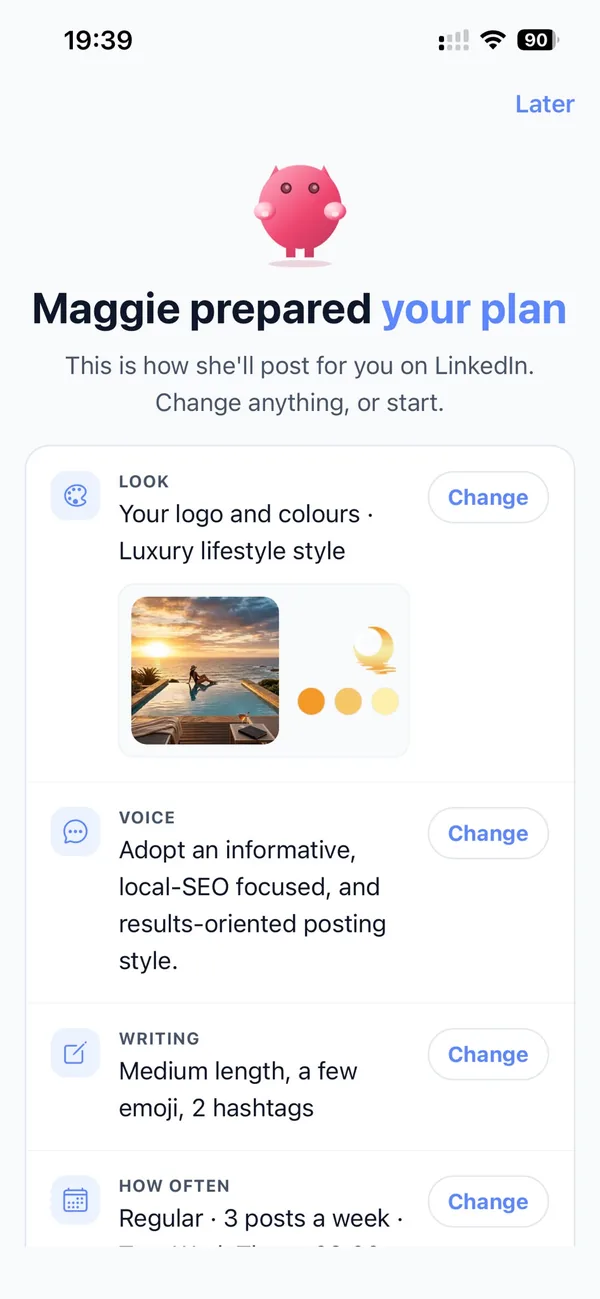
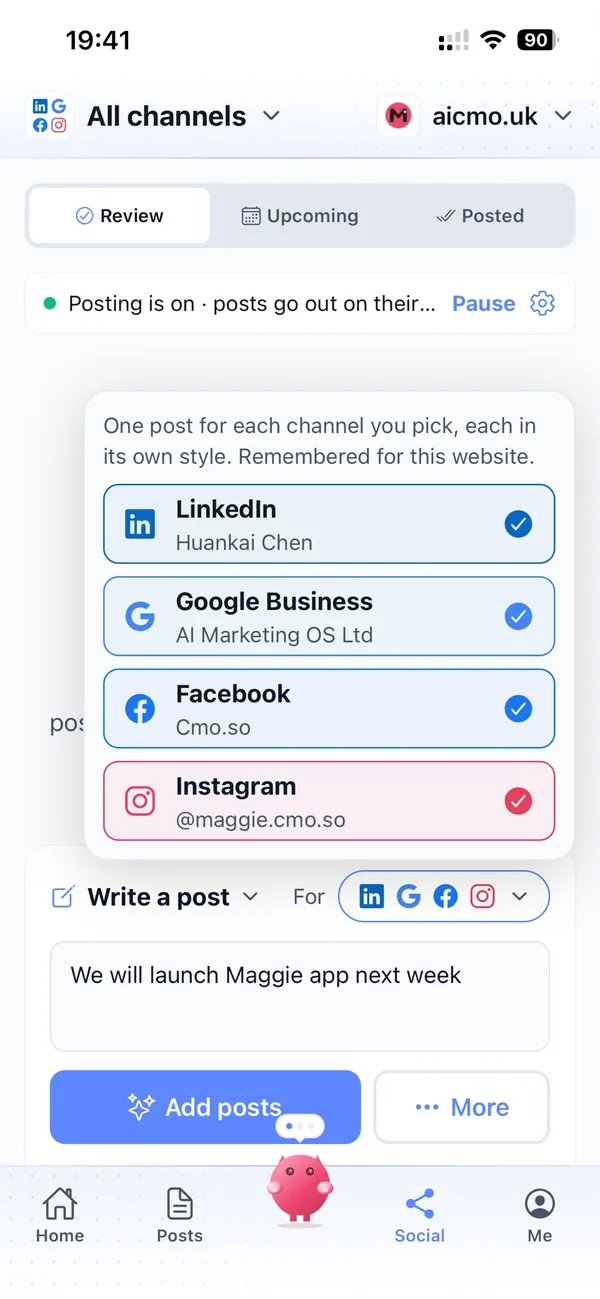
From your practice's website to a month of careful posts in four steps
Enter your website
Maggie reads it and drafts your practice's brand profile in minutes.
Set your boundaries
Correct your approaches and fees, turn on Content Policy Guard and add your own house rules.
Review the drafts
Your first week of posts arrives with pictures. Approve, edit or skip each one.
Let them go out
Approved posts go out at each channel's times and every one comes back with its link.
Why not just…
The usual ways therapy practices try to be found, and where each one runs out.
…rely on therapist directories?
They help, but you pay a monthly fee to sit in a long list beside practitioners who look much like you. Posts on your own website and Google Business let people get to know how you work before they ever compare profiles.
…write a blog when the diary is quieter?
The diary is rarely quieter, and a practice blog that stops after three posts can look abandoned. Maggie writes ahead every week, so the blog keeps going while you see clients.
…hire a healthcare marketing agency?
SEO and content agencies often cost around £1,000 a month, which is many sessions' worth of fees for a small practice. Maggie writes and publishes every week from £15 a month.
…write posts with ChatGPT?
You still brief it, check every sentence, find a picture and post it yourself, and it doesn't know your approach or your house rules. Maggie remembers your practice, checks wording with Content Policy Guard if you turn it on, and posts on schedule.
Cut the £5,900/mo marketing bill to £15/mo
Everything a marketing team does, done by Maggie.
| What needs doing | Without cmo.so | With cmo.so |
|---|---|---|
| Full-time marketing hire | £3,000/mo | Included |
| SEO and AI search (GEO) agency | £1,000/mo | Included |
| Content writer, AI-assisted | £500/mo | Included |
| Social media manager, freelance | £800/mo | Included |
| Designed pictures for every post | £300/mo | Included |
| SEO and GEO softwareRank tracking, site audits, AI visibility | £250/mo | Included |
| AI writing and image tools | £50/mo | Included |
| Working hours | Office hours | 24/7 |
| Total per month | £5,900+ | From £15/mo |
Typical UK costs for a small business in 2026, with AI already cutting freelance rates. Estimates only; your own quotes will vary.
- 5 social posts, 30 once verified
- 15 Maggie messages a day
- Upgrade any time
- 12 posts a day
- 150 Maggie messages a day
- All channels
- 96 posts a day
- 1,000 Maggie messages a day
- All channels
Per website, billed monthly. Blog and social posts share one allowance; your best plan sets how much you can talk to Maggie across all your websites.
Marketing automation for mental health practices: your questions
Still unsure?
What is marketing automation for mental health practices?
It's software that handles the repeating work of marketing a therapy or counselling practice: planning topics, writing blog and social posts, making pictures and publishing them on schedule.
With cmo.so, Maggie does this from your practice's website and brand profile, and nothing goes out until you approve it.
How do mental health practices get more clients online?
Mental health practices get more clients online by being easy to find and easy to trust: an active Google Business profile, clear pages that explain how therapy with them works, and regular posts that answer the questions people search before they get in touch.
Maggie writes those posts every week in your voice, and Search Console in cmo.so shows which ones bring people to your website, so the next topics follow what people are actually reading.
How much does it cost for a therapy practice?
There's a free plan with no card needed. Paid plans are per website and billed monthly: Air at £15 a month covers two posts a day, which suits most solo practitioners, and Pro at £45 a month suits a group practice posting on several channels.
Founding members get lower prices for good on every plan until 1 January 2027. You can cancel any time, and published posts stay up.
Which channels should mental health practices start with?
Most practices start with their own blog and Google Business, because that's where people searching for a therapist nearby or a specific kind of support decide whom to contact.
LinkedIn suits practices that work with employers, GPs or schools. Facebook and Instagram are in beta and suit gentle everyday posts for the public. Each channel has its own posting times and queue.
Is it safe to use AI to write about mental health?
It can be, as long as a qualified person reviews every post before it is published. cmo.so keeps approvals on by default, and Content Policy Guard can hold a post that may break medical rules or your own house rules as a draft with a suggested rewrite.
Content Policy Guard gives AI suggestions, not legal or compliance advice. It does not make a post meet your professional body's standards on its own, and your practice stays responsible for what it publishes.
Does cmo.so see client notes or records?
No, cmo.so never connects to client records, notes or practice management systems. Maggie works only from your public website and the brand profile you check.
cmo.so never sells or rents your data, and Search Console data is never used for advertising or to train AI models.
Will posts ever mention clients or case stories?
Only if you write them in yourself, and most practices choose never to. You can add a house rule such as “never describe a client, even anonymously”, and Content Policy Guard holds any post that may break it.
Instead of case stories, Maggie writes about common experiences in general terms, such as what panic attacks can feel like or how couples therapy usually starts.
Can it write about crisis or suicide responsibly?
You decide whether those topics are covered at all, and many practices leave them to specialist services. If you do want posts on them, tell Maggie in your brand profile and she will write carefully and point readers to urgent help where it belongs.
Every such post waits for your approval, and you can edit or skip it. A qualified person at your practice should always read it before it goes out.
What topics will cmo.so cover for a counselling practice?
Topics come from your services and the questions people search: what to expect in a first session, how to tell if therapy is working, online versus in-person counselling, therapy for stress at work, and how to choose a therapist.
She also plans around dates such as Mental Health Awareness Week and World Mental Health Day, so seasonal posts are written and approved well ahead.
Can cmo.so handle a group practice with several therapists?
It can. One website gets one brand profile covering every therapist and approach, and Maggie can write posts about each person's specialisms from it.
If each therapist has a separate website, add them all to one account, each with its own brand profile, channels, schedule and approvals.
Does it take bookings or answer enquiries?
It doesn't, and it never connects to booking systems. Maggie writes and publishes posts that send people to your contact or booking page.
Google Business posts can carry a button such as Book that links to the page you choose, so enquiries still come straight to you.
Can a practice manager approve posts instead of the clinicians?
A practice manager can review posts in Me → Team using presets such as editor or manager, but a qualified clinician should still read anything about symptoms or treatment.
You can set approvals per channel, so the manager handles Google Business updates while a clinician approves the blog.
Be easy to find for the people who are ready to reach out
Enter your practice's website. Your brand profile and first week of posts are ready in minutes, and nothing goes out until you approve it.
- Free plan, no card needed
- You approve every post
- Cancel any time