


Marketing automation for heritage organisations
Your collection has a thousand stories and your team has time to tell about three of them. Maggie, your AI CMO, turns objects, open days and conservation work into posts for your website, Google Business and social channels, and a person on your team approves every one.
Free to start · No credit card · 30 free posts
Used by 600+ users and trusted by teams at
aeglesriphal.com
moonlakespa.com
shop.theteagroup.com
clo100.com
logtrics.io
mymorez.com
nextidal.com
otisapp.com
storaitelling.com
theheatpumps.co.uk
web-translations.com
exposeai.tech
orielipo.com
whitelabelcrowd.fund
elliptic.co
med.moonlakespa.com
netdex.co.il
orawellness.uk
reenest.com
syngage.ai
thepenthouseliving.com
zengolf.studio
imaintain.uk
rebuildingsociety.com
aurasocial.world
goaimex.com
moneyparents.com
newgenrenewables.uk
osmosisai.co
saunders.ac
teeza.app
thursdayclub.com
Why heritage organisations find it hard to keep their marketing going
Small teams look after old buildings, fragile collections, volunteers and funders all at once. Telling people about it comes last.
Stories stay in the stores
A letter found in a donated box, a beam dated during a roof repair, a portrait back from the conservator. Your team knows these stories, but they rarely make it onto the website.
Events are announced too late
Late openings, half-term trails, talks and open days are planned months ahead, then promoted a week before, when families have already made their plans.
“Things to do near me” finds someone else
Visitors decide on the day, often from Google. A Google Business profile with no recent posts makes a historic house or local museum look closed, even when the doors are open.
Funders want to see you're active
Grant reports, sponsors and members all ask what you've been doing. A website news page last updated a year ago undersells the work your volunteers put in every week.
The summer trail starts in a month, and the posts are already queued.
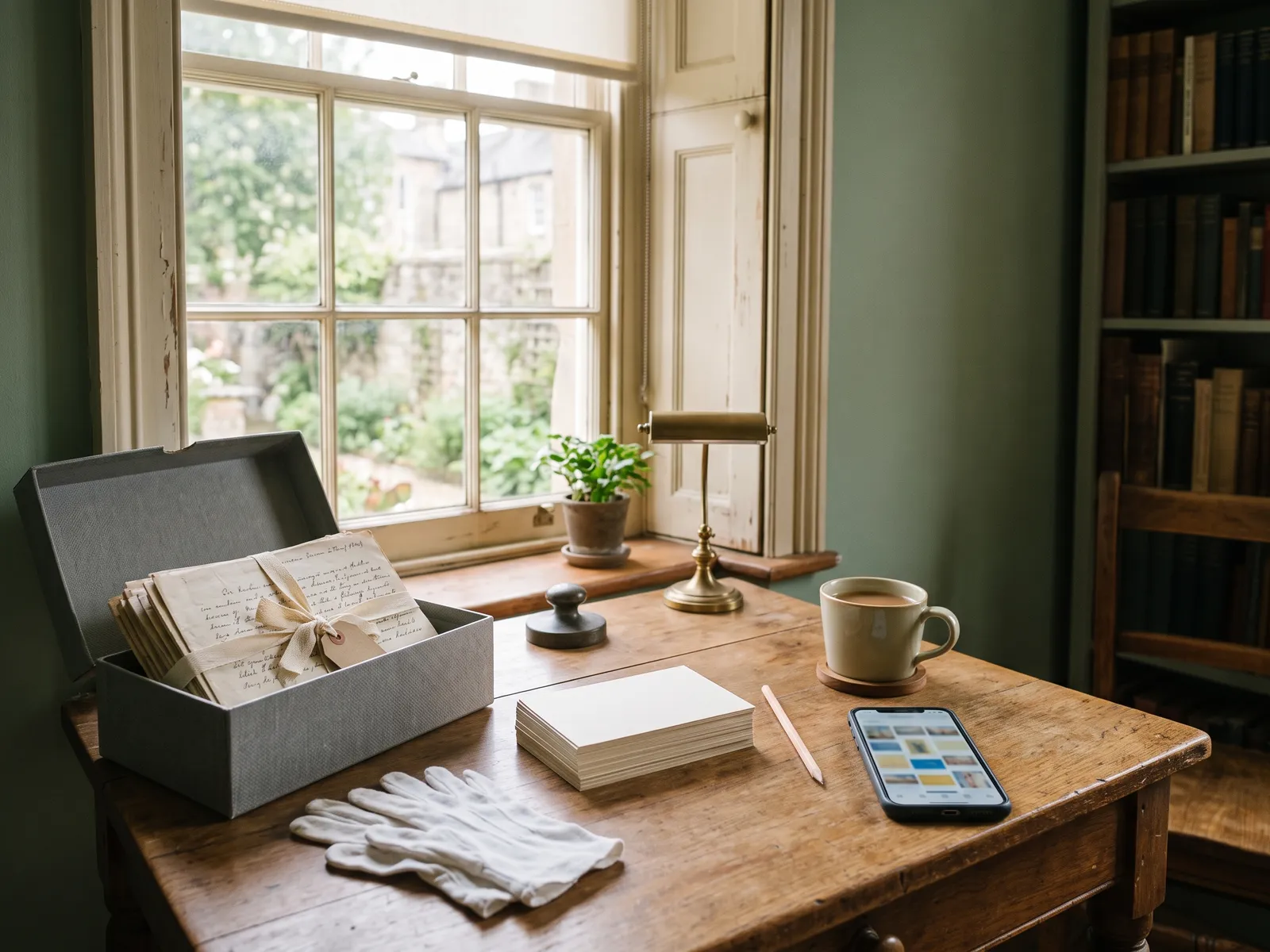
It's Monday at a small museum in a market town. The summer family trail opens in four weeks, a volunteer has just finished cataloguing a box of wartime letters, and the website's news page still leads with last year's Christmas fair.
You paste the museum's website into cmo.so. Maggie reads it and writes your brand profile: the building's history, the collections you're known for, the families, schools, walkers and local historians who visit, the volunteers who keep it running, and the friendly, curious way you write labels. You correct one thing: the café now closes at four.
By Tuesday the drafts are waiting, each with a picture in the museum's look: a blog post on what the wartime letters tell us about the town, a Google Business event for the family trail with a button to your opening times, a Facebook post asking for volunteers for the summer, and a LinkedIn post for local businesses thinking about sponsoring an exhibition. Your collections officer checks a date in the blog, and you approve the rest from your phone.
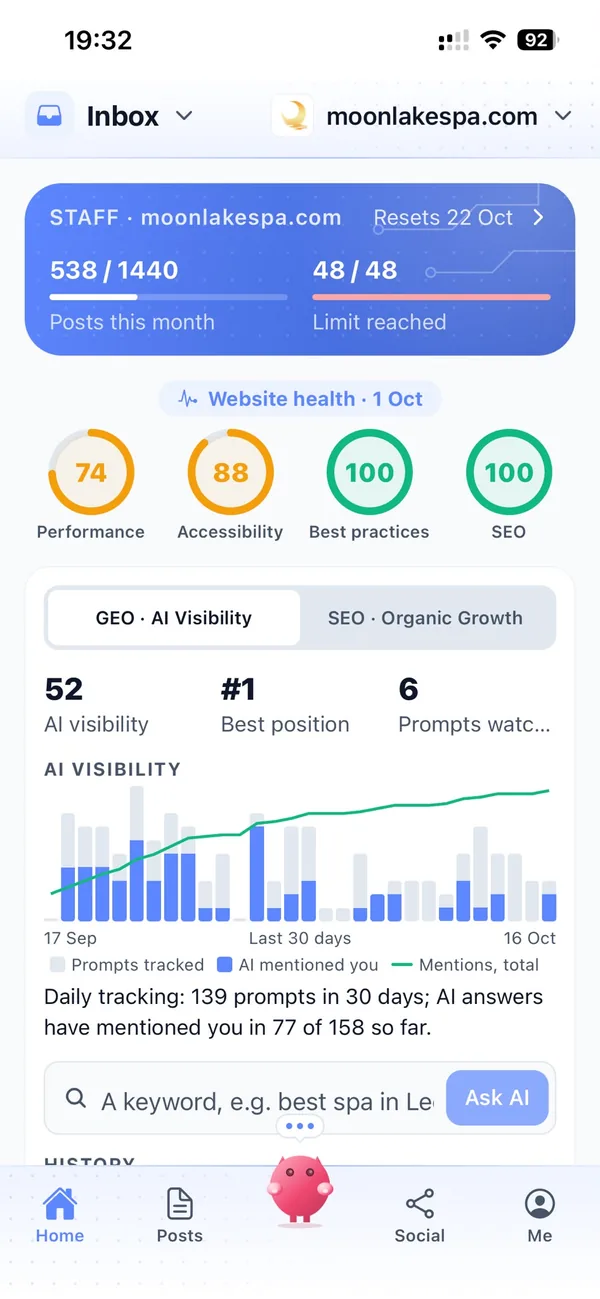
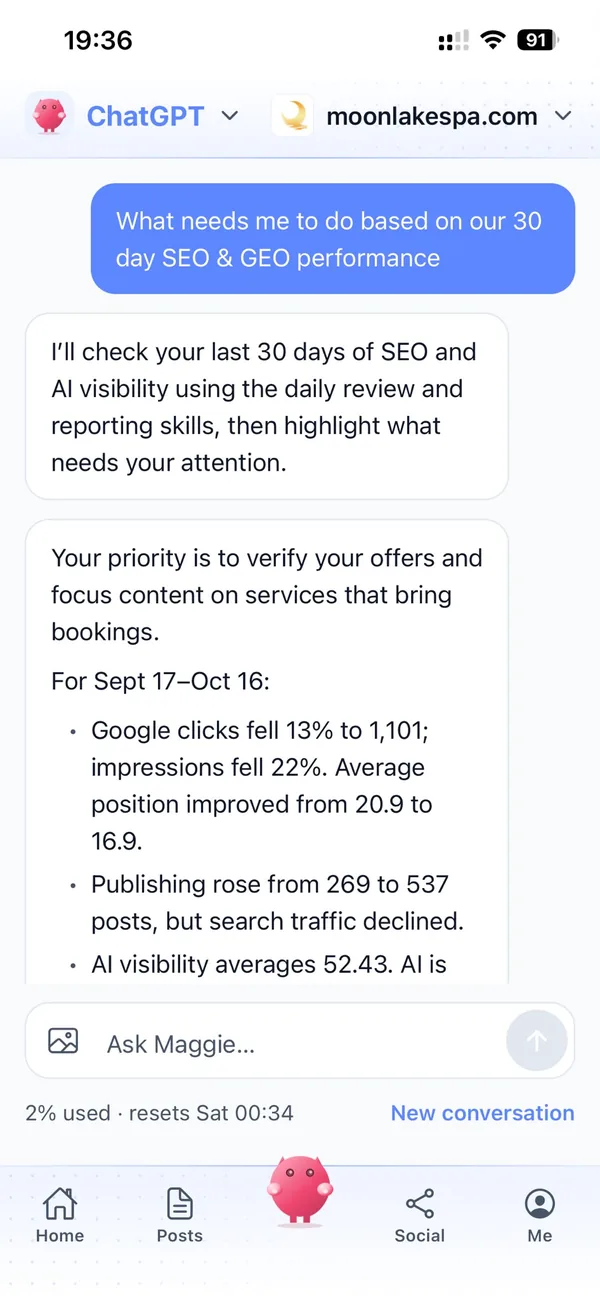
The posts go out at the times you set for each channel, spread across the month before the trail opens, and each comes back with its link. Search Console in cmo.so shows which collection stories people find, and AI visibility shows how Google's AI answers describe the museum when someone asks what to do in town.
A marketing assistant who loves your collection as much as you do
Each of those problems has an answer, and your team still decides what goes out in your organisation's name.
Collection stories on your blog
Posts about objects, people and places from your collection, conservation work and the history of your site, written for Google and for AI answers. Published to your WordPress, Wix, Webflow or Shopify site, or any site through the cmo.so API.
Blog on autopilotEvents promoted in good time
Open days, talks, school holiday trails, late openings and seasonal events are planned and queued weeks ahead, so families see them before they make plans.
Event scheduleFound by visitors deciding today
Regular Google Business posts keep your site visible in local search, with events, offers such as a family ticket, and buttons that take people to your opening times or booking page.
Google BusinessYour voice, not a tourist board's
Enter your website and Maggie builds your brand profile: your history, collections, visitors, what sets you apart from other attractions nearby, and your tone. Every post and picture starts from it.
Brand profileOne story, every audience
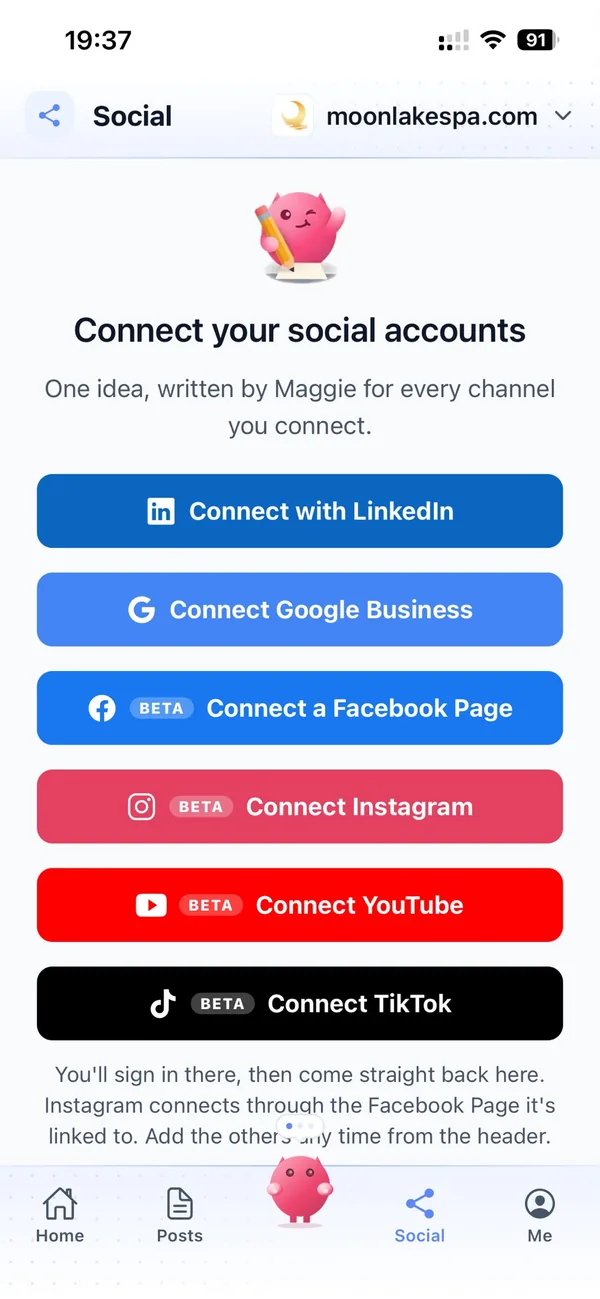
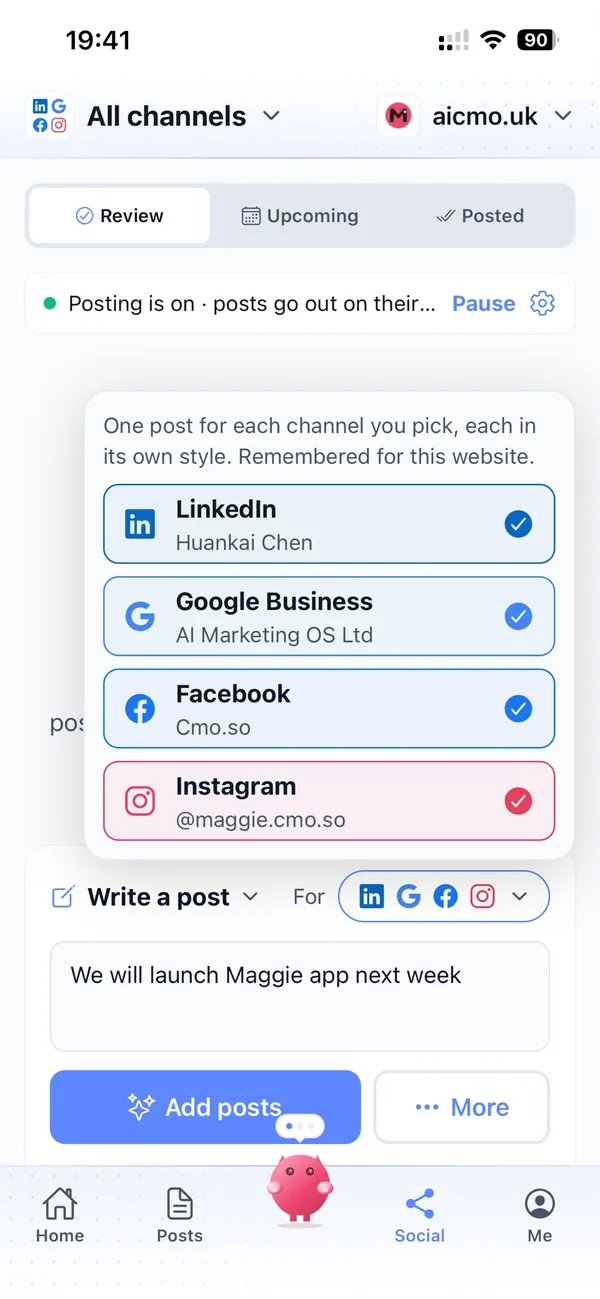
One idea becomes a post for each channel: Facebook and Instagram for visitors and volunteers (in beta), LinkedIn for funders, sponsors, venue hire and partner organisations.
Every channelApproved by your team
By default nothing goes out until someone approves it. Add your curator, learning officer or a trusted volunteer in Me → Team, so the right person checks facts and dates.
ApprovalsYour marketing team, in your pocket
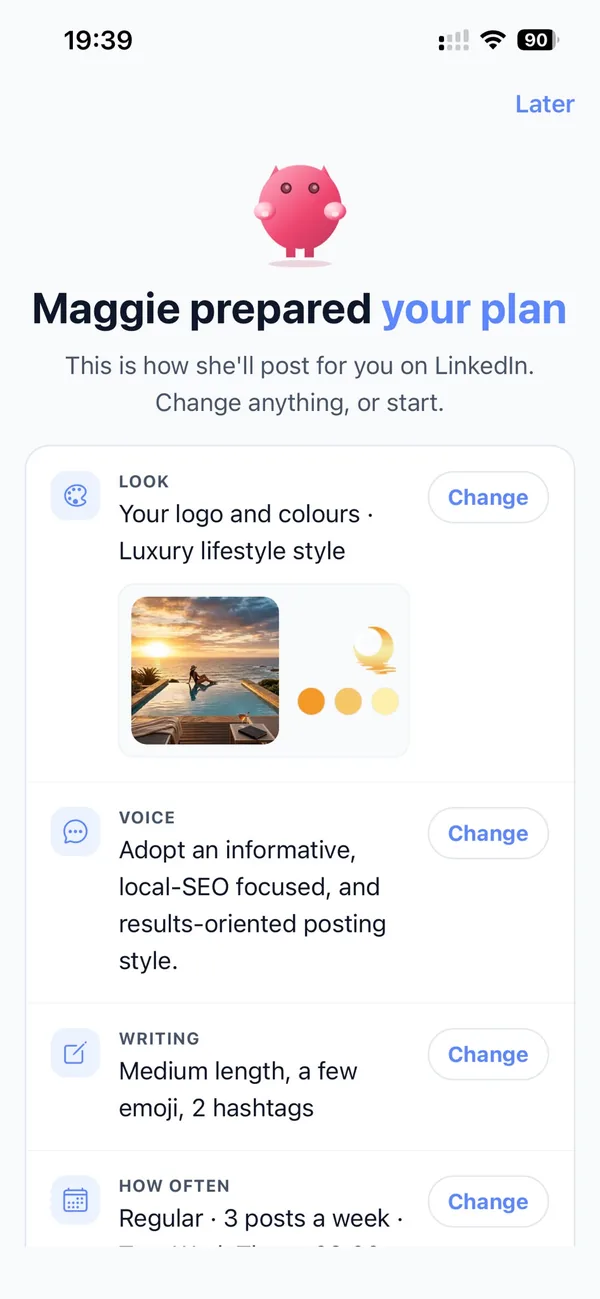
Real screens from the cmo.so app on iPhone.
From your website to a season of posts in four steps
Enter your website
Maggie reads it and drafts your organisation's brand profile in minutes.
Check your profile
Correct opening times and facts, add the collections and events you want to promote and choose your channels.
Review the drafts
Your first week of posts arrives with pictures. Approve, edit or skip each one.
Let them go out
Approved posts go out at each channel's times and every one comes back with its link.
Why not just…
The usual ways heritage organisations try to keep posting, and where each one runs out.
…ask a volunteer to run social media?
Volunteers bring real enthusiasm, but they come and go, and posting stops when they do. Maggie keeps a steady schedule, and volunteers can still approve and add their own touch.
…rely on the local tourist board and listings sites?
They help, but you're one entry among many and you can't tell your own stories there. Posts on your website and Google Business profile bring visitors straight to you.
…hire a marketing officer?
A full-time marketing hire in the UK costs around £3,000 a month before tools, which is out of reach for many small trusts and museums. Maggie writes and publishes every week from £15 a month.
…write it with ChatGPT?
You still brief it, check it, find a picture and post it yourself, and it doesn't know your collection or your opening times. Maggie remembers your organisation and puts posts out on schedule.
Cut the £5,900/mo marketing bill to £15/mo
Everything a marketing team does, done by Maggie.
| What needs doing | Without cmo.so | With cmo.so |
|---|---|---|
| Full-time marketing hire | £3,000/mo | Included |
| SEO and AI search (GEO) agency | £1,000/mo | Included |
| Content writer, AI-assisted | £500/mo | Included |
| Social media manager, freelance | £800/mo | Included |
| Designed pictures for every post | £300/mo | Included |
| SEO and GEO softwareRank tracking, site audits, AI visibility | £250/mo | Included |
| AI writing and image tools | £50/mo | Included |
| Working hours | Office hours | 24/7 |
| Total per month | £5,900+ | From £15/mo |
Typical UK costs for a small business in 2026, with AI already cutting freelance rates. Estimates only; your own quotes will vary.
- 5 social posts, 30 once verified
- 15 Maggie messages a day
- Upgrade any time
- 12 posts a day
- 150 Maggie messages a day
- All channels
- 96 posts a day
- 1,000 Maggie messages a day
- All channels
Per website, billed monthly. Blog and social posts share one allowance; your best plan sets how much you can talk to Maggie across all your websites.
Marketing automation for heritage organisations: your questions
Still unsure?
What is marketing automation for heritage organisations?
It's software that does the repeating work of marketing a museum, historic house, archive or heritage trust: planning topics, writing blog and social posts about your collection and events, making pictures and publishing them on schedule.
With cmo.so, Maggie does all of it from your website, and nothing goes out until a person on your team approves it.
How do heritage organisations get more visitors online?
Heritage organisations get more visitors online by being easy to find when people plan a day out: an active Google Business profile, events promoted weeks ahead and stories on their own website that people search for and share.
Maggie writes those posts every week, queues them ahead of school holidays and open days, and Search Console in cmo.so shows which ones bring people to your site.
How much does marketing automation cost for a heritage organisation?
There's a free plan with no card needed. Paid plans are per website and billed monthly: Air at £15 a month covers two posts a day, which suits most small museums and trusts, and Pro at £45 a month suits a larger site posting on several channels.
Founding members get lower prices for good on every plan until 1 January 2027. You can cancel any time.
Which channels should heritage organisations start with?
Most start with Google Business, because that's where people looking for things to do nearby decide, plus their own blog for collection stories and event pages.
Facebook and Instagram are in beta and suit families, local visitors and volunteers, and LinkedIn reaches funders, sponsors, venue hire clients and partner organisations. Each channel has its own posting times and queue.
Is it safe to let AI write about our history?
It is safe when someone who knows the collection checks each post, and cmo.so keeps approvals on by default. You can correct a date, a name or an attribution before anything is published.
Maggie works from your website and the brand profile you check, and learns from your edits, so posts get closer to your house style each time. Social channels connect through each platform's official sign-in, so cmo.so never sees your passwords.
What kind of posts does cmo.so write for a museum or historic house?
Expect collection stories, object of the month posts, behind-the-scenes conservation work, event announcements, school and group visit information, volunteer calls and seasonal posts such as half-term trails or winter openings.
You can tell her which collections, anniversaries and campaigns to focus on, and she plans topics around them.
Can it help us recruit volunteers?
It can help people see what volunteering with you is like. Maggie writes posts about volunteer roles, what volunteers do in a typical week and how to get involved, for your website, Facebook and LinkedIn.
She doesn't manage applications or rotas, so people still contact you through your website, email or phone.
Can cmo.so help us show funders and sponsors what we do?
It can keep a steady, public record of your work. Regular posts about projects, conservation, learning sessions and community events give funders and sponsors something current to read when they look you up.
LinkedIn posts in your organisation's voice can also thank sponsors and partners and reach local businesses that might support you.
Does it work for archives and conservation studios, not just visitor attractions?
It works for any heritage organisation with a website. For an archive, Maggie can write about collections, research enquiries and digitisation projects; for a conservation studio, about the work itself and the care behind it.
The channels you choose can lean towards LinkedIn and your blog, where researchers, owners and institutions look for specialists.
Can it promote venue hire and weddings at our site?
It can write about your spaces for weddings, filming, meetings and private events, for your blog, Google Business and LinkedIn, with buttons that take people to your enquiry page.
She doesn't take bookings or connect to a booking system, so enquiries still come to you through your usual route.
Which websites does it work with?
cmo.so publishes to WordPress (including WooCommerce), Shopify, Wix and Webflow, and to any other website through the cmo.so API.
Each post is reported back with its link once it is live.
We look after several sites. Can cmo.so handle them all?
Several websites can sit in one account, each with its own brand profile, channels, schedule and approvals.
If all your sites share one website, Maggie can write posts for each place's visitors from the same brand profile, and your team can approve them in Me → Team.
Let your collection tell its stories every week
Enter your website. Your brand profile and first week of posts are ready in minutes, and nothing goes out until your team approves it.
- Free plan, no card needed
- You approve every post
- Cancel any time