

Marketing automation for UX design agencies
You make other companies' products easy to understand, but your own marketing hasn't had a fresh post since the last pitch. Maggie, your AI CMO, turns your research, process and case studies into weekly LinkedIn posts and blog articles, and you approve every one.
Free to start · No credit card · 30 free posts
Used by 600+ users and trusted by teams at
aeglesriphal.com
moonlakespa.com
shop.theteagroup.com
clo100.com
logtrics.io
mymorez.com
nextidal.com
otisapp.com
storaitelling.com
theheatpumps.co.uk
web-translations.com
exposeai.tech
orielipo.com
whitelabelcrowd.fund
elliptic.co
med.moonlakespa.com
netdex.co.il
orawellness.uk
reenest.com
syngage.ai
thepenthouseliving.com
zengolf.studio
imaintain.uk
rebuildingsociety.com
aurasocial.world
goaimex.com
moneyparents.com
newgenrenewables.uk
osmosisai.co
saunders.ac
teeza.app
thursdayclub.com
Why UX design agencies struggle to keep their marketing going
Client work always comes first. Research sessions, workshops and design reviews fill the week, and your own website quietly falls behind your best work.
Your best work is under NDA
The redesign that lifted a client's sign-ups or the research that changed a roadmap often can't be shown. So your portfolio looks thinner than the work you actually do.
Feast or famine
When the studio is busy, nobody posts. When a big project ends, you scramble for leads with a LinkedIn page that has been quiet for months.
Buyers can't see the difference
To a founder or product manager, every agency says “user-centred” and shows nice screens. What sets you apart is how you research and decide, and that's rarely written down.
Directories and freelancers undercut you
Design marketplaces and directory listings put you next to cheaper options on price alone. Clients who understand the value of research usually find you through what you've written.

A big project wraps up on Friday, and next month's posts are already approved.
It's Monday. Your team is finishing usability testing for a banking app, a design system handover is due on Friday, and you know that once it ships the pipeline looks thin. Your last blog post is from January.
You enter your agency's website into cmo.so. Maggie reads it and writes your brand profile: user research, UX audits, prototyping and design systems for fintech and SaaS teams, the heads of product and founders who hire you, the larger digital agencies you compete with, and your clear, slightly opinionated voice. You correct one thing: you no longer do visual brand identity work.
By Tuesday the drafts are waiting, each with a picture in your studio's look: a blog post on what to fix first in a UX audit, a LinkedIn post on five questions to ask in a first usability test, a post about why design systems save engineering time and an anonymised write-up of how research changed an onboarding flow, with the client's name left out. You approve three and sharpen the opinion in the fourth.
The posts go out on weekday mornings and each comes back with its link. By the time the handover is done, a month of posts is queued, and Search Console in cmo.so shows which guides product teams are reading.
Marketing that shows how your studio thinks
Each of those problems has an answer, and you still decide what goes out under your agency's name.
LinkedIn every week, busy or not
Posts for heads of product, founders and CTOs on research methods, usability findings, accessibility and design systems. Your name stays in front of buyers between projects, not just when the pipeline is empty.
LinkedInArticles that explain your process
How a UX audit works, when to test with users, what a design system costs to keep up. Written for Google and for AI answers, published to your Webflow, WordPress or Wix site, or any site through the cmo.so API.
Blog on autopilotCase studies without breaking NDAs
Share the problem, method and lesson from a project, and Maggie writes an anonymised story with no client names or screens. You check every detail before it goes out.
Case studiesYour point of view, kept
Enter your website and Maggie builds your brand profile: services, clients, sectors, what sets you apart from bigger agencies, competitors and voice. Every post starts from your way of working.
Brand profilePictures in your studio's look
Each post gets a picture in a look chosen per channel, so your feed looks designed rather than templated, without anyone stopping client work to make graphics.
Picture looksApprovals that fit studio life
By default nothing goes out until it's approved. Add your design leads in Me → Team, review drafts in the iPhone app or at app.cmo.so, and pause a channel during a crunch week.
ApprovalsYour marketing team, in your pocket
Real screens from the cmo.so app on iPhone.
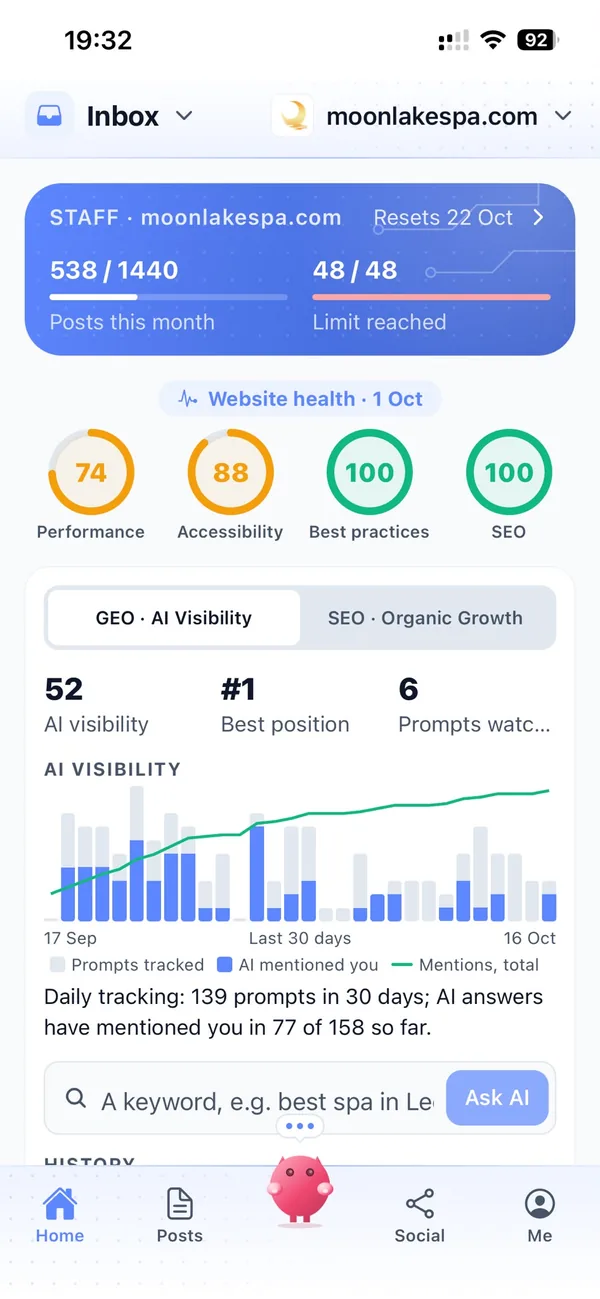
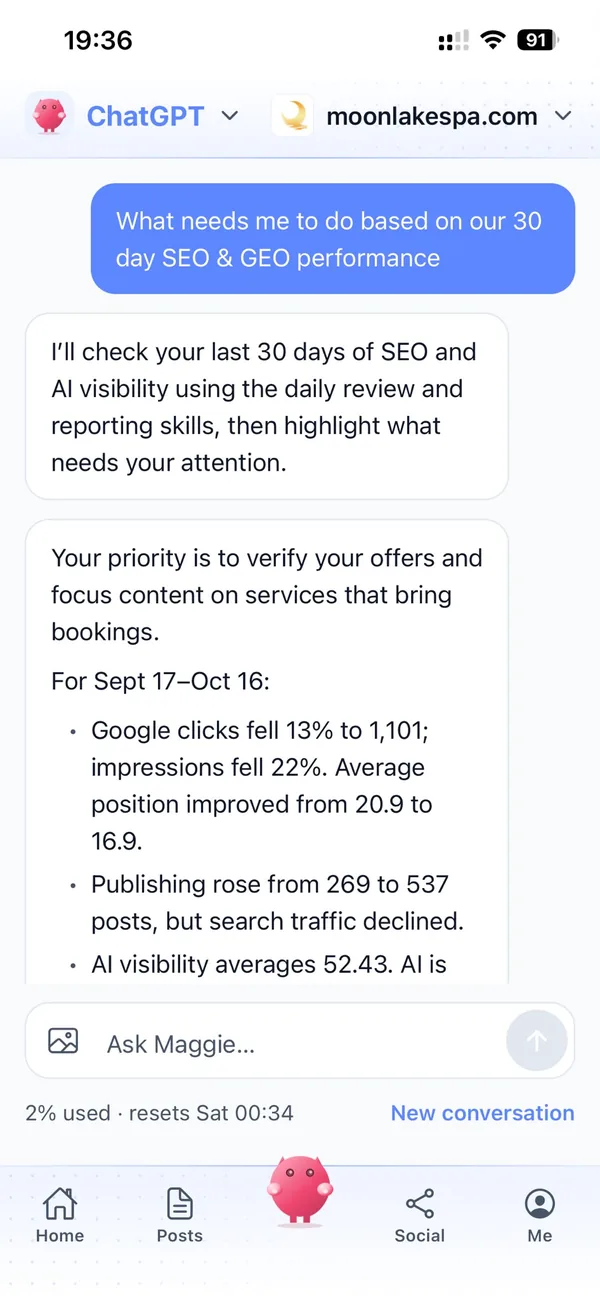
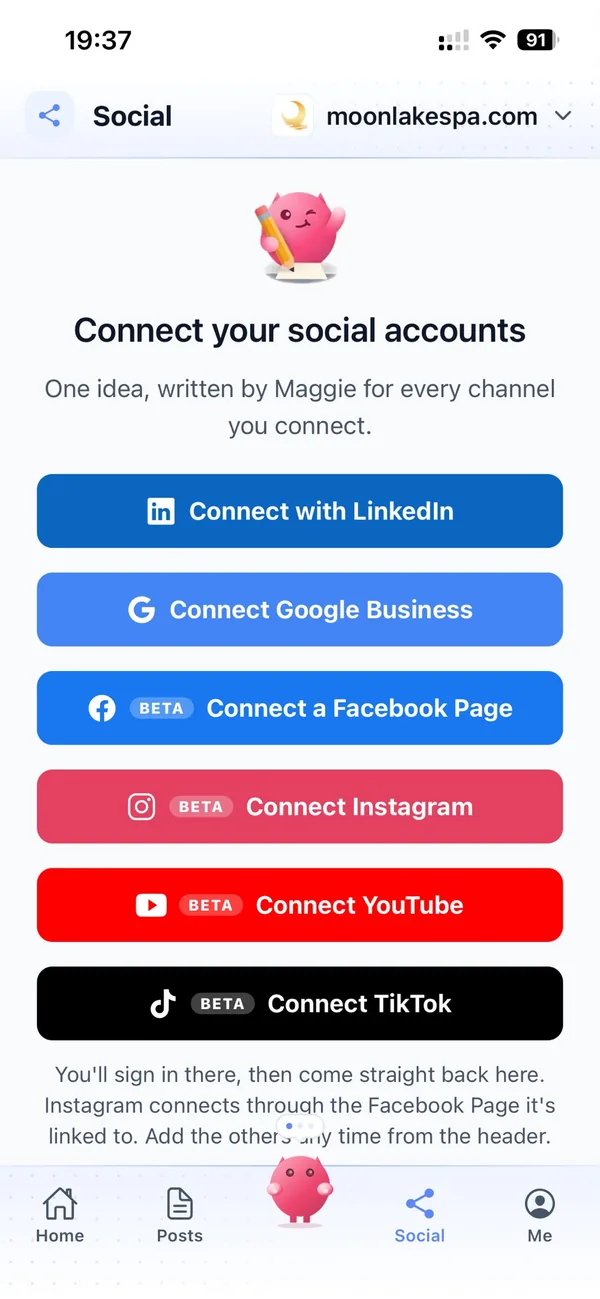
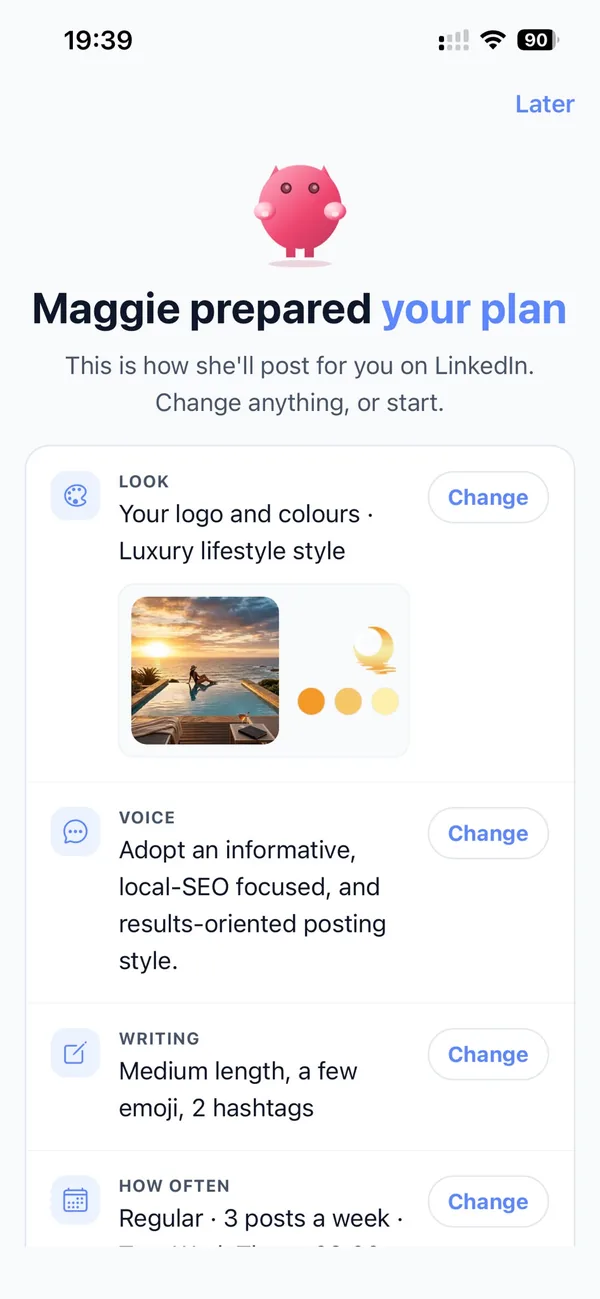
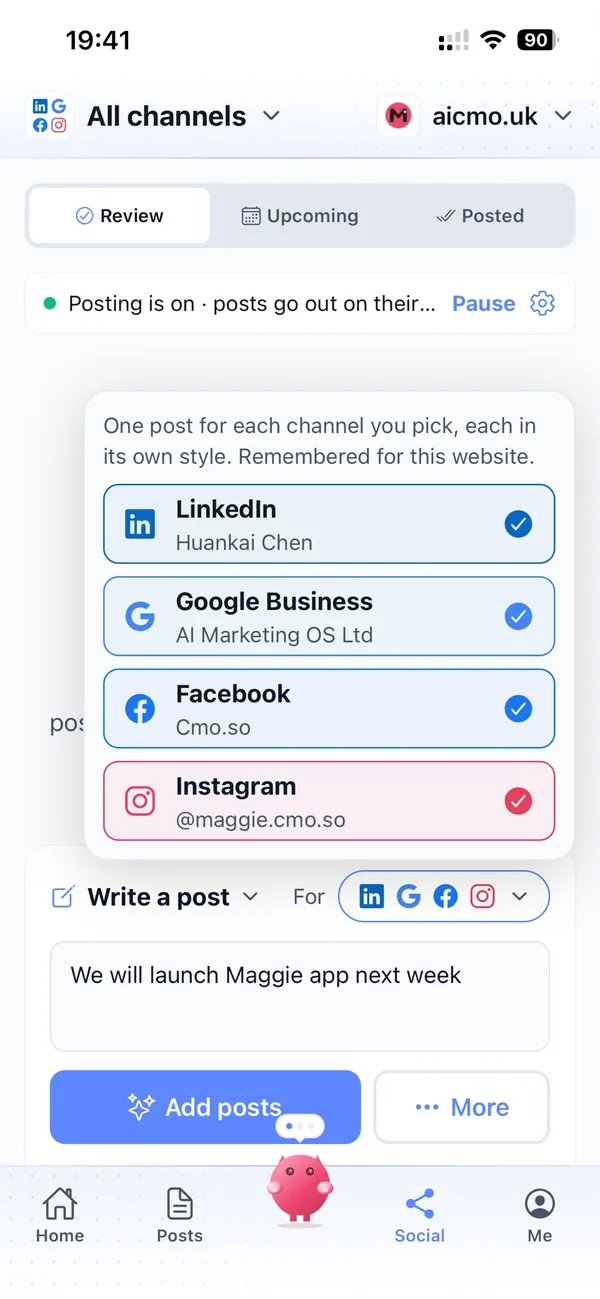
From your agency's website to a steady pipeline of posts in four steps
Enter your website
Maggie reads it and drafts your agency's brand profile in minutes.
Check your profile
Correct your services and sectors, add your point of view and choose your channels.
Review the drafts
Your first week of posts arrives with pictures. Approve, edit or skip each one.
Let them go out
Approved posts go out at each channel's times and every one comes back with its link.
Why not just…
The usual ways UX agencies try to win work, and where each one runs out.
…rely on portfolio sites and directories?
Showcase sites reward polished screens, and directories compare you on price. Neither shows how you research and decide, which is what serious product teams are buying.
…ask a designer to write between projects?
There's never a gap between projects long enough, and a half-written article ages in a shared doc. Maggie drafts, your designers add the insight, and approval takes minutes.
…hire a marketer?
A full-time marketing hire in the UK costs around £3,000 a month before tools, which is a junior designer's salary for many studios. Maggie writes and publishes every week from £15 a month.
…write it with ChatGPT?
It writes the same “user-centred design” post as everyone else, and you still have to brief it, design a graphic and post it. Maggie remembers your studio's opinions and publishes on schedule.
Cut the £5,900/mo marketing bill to £15/mo
Everything a marketing team does, done by Maggie.
| What needs doing | Without cmo.so | With cmo.so |
|---|---|---|
| Full-time marketing hire | £3,000/mo | Included |
| SEO and AI search (GEO) agency | £1,000/mo | Included |
| Content writer, AI-assisted | £500/mo | Included |
| Social media manager, freelance | £800/mo | Included |
| Designed pictures for every post | £300/mo | Included |
| SEO and GEO softwareRank tracking, site audits, AI visibility | £250/mo | Included |
| AI writing and image tools | £50/mo | Included |
| Working hours | Office hours | 24/7 |
| Total per month | £5,900+ | From £15/mo |
Typical UK costs for a small business in 2026, with AI already cutting freelance rates. Estimates only; your own quotes will vary.
- 5 social posts, 30 once verified
- 15 Maggie messages a day
- Upgrade any time
- 12 posts a day
- 150 Maggie messages a day
- All channels
- 96 posts a day
- 1,000 Maggie messages a day
- All channels
Per website, billed monthly. Blog and social posts share one allowance; your best plan sets how much you can talk to Maggie across all your websites.
Marketing automation for UX design agencies: your questions
Still unsure?
What is marketing automation for UX design agencies?
It's software that does the repeating work of marketing a design studio: planning topics, writing LinkedIn posts and blog articles about your research and process, making pictures and publishing them on schedule.
With cmo.so, Maggie does all of it from your agency's website, and nothing goes out until you approve it.
How do UX design agencies get more clients online?
UX design agencies get more clients online by showing how they think: regular posts on research, usability and design decisions, articles that answer product teams' questions, and case stories that show results without breaking confidentiality.
Maggie writes those every week, and Search Console in cmo.so shows which articles bring product teams to your site.
How much does marketing automation cost for a UX agency?
There's a free plan with no card needed. Paid plans are per website and billed monthly: Air at £15 a month covers two posts a day, and Pro at £45 a month suits a studio posting on LinkedIn, its blog and other channels.
If you also want to run marketing for clients' brands, Elite at £195 a month is made for agencies and many brands. Founding members get lower prices for good on every plan until 1 January 2027.
Which channels should UX design agencies start with?
Most start with LinkedIn, because heads of product, founders and CTOs read it, plus a blog for longer articles that people find through search and AI answers.
Instagram is in beta and suits studios that share process visuals. Each channel has its own posting times and queue.
Is it safe to let AI write for our studio?
It is, because nothing goes out until you approve it. Approvals are on by default, and you can keep them on for every channel or let a channel you trust run on autopilot.
Social channels connect through each platform's official sign-in, so cmo.so never sees your passwords, and cmo.so never sells or rents your data.
How do we share case studies when the work is confidential?
You share the problem, the method and the lesson without naming the client or showing their screens. Tell Maggie the facts you're allowed to share and she writes an anonymised story around them.
Your brand profile can say that client names are never used without permission, and you check every post before it goes out.
Will the posts sound like generic design advice?
They won't, because they start from your brand profile, which records your methods, your sectors and the opinions you hold, such as when you'd skip a prototype or why you test early.
Maggie learns from your edits, so posts get closer to your studio's voice each time.
Can it write about accessibility and design systems?
It can, and both are topics product teams search for. Maggie writes practical posts on accessible design, audits and keeping a design system healthy, based on the services you offer.
Posts on accessibility explain good practice in plain words. They aren't legal advice, so point clients to a proper audit when they need one.
Does it help us appear in AI answers?
Posts are written to be clear and quotable, which helps Google's AI answers and assistants such as ChatGPT mention your studio when people ask who can help with UX research or a redesign.
AI visibility in cmo.so shows how Google's AI answers describe your agency, so you can see what to write about next.
Can each designer approve their own posts?
They can. In Me → Team you add colleagues with presets such as editor or manager, so your research lead checks research posts and your design systems lead checks theirs.
Everyone can review drafts in the iPhone app or at app.cmo.so between sessions.
Can we use cmo.so for our clients' marketing too?
You can. Each client website gets its own brand profile, channels, schedule and approvals in your account, so voices never mix.
Elite at £195 a month allows 96 posts a day and is made for agencies running many brands.
Keep the pipeline full while the team does the work
Enter your website. Your brand profile and first week of posts are ready in minutes, and nothing goes out until you approve it.
- Free plan, no card needed
- You approve every post
- Cancel any time