


Marketing automation for document management companies
Nobody wakes up wanting a document management system. They want to stop losing contracts in shared drives and filing cabinets. Maggie, your AI CMO, writes the guides and LinkedIn posts that meet them at that moment, every week, and you approve every one.
Free to start · No credit card · 30 free posts
Used by 600+ users and trusted by teams at
aeglesriphal.com
moonlakespa.com
shop.theteagroup.com
clo100.com
logtrics.io
mymorez.com
nextidal.com
otisapp.com
storaitelling.com
theheatpumps.co.uk
web-translations.com
exposeai.tech
orielipo.com
whitelabelcrowd.fund
elliptic.co
med.moonlakespa.com
netdex.co.il
orawellness.uk
reenest.com
syngage.ai
thepenthouseliving.com
zengolf.studio
imaintain.uk
rebuildingsociety.com
aurasocial.world
goaimex.com
moneyparents.com
newgenrenewables.uk
osmosisai.co
saunders.ac
teeza.app
thursdayclub.com
Why document management companies struggle to keep their marketing going
You sell order, version control and peace of mind. It's a hard thing to make interesting, and harder still to post about every week.
Your buyers don't search for your category
An office manager searches “how to stop saving over each other's files” or “how long do we keep invoices”, not “document management software”. If your blog doesn't answer those questions, someone else's does.
Long decisions, lots of people
IT, finance, operations and whoever owns data protection all have a say, and the decision can take months. Your name has to keep turning up on LinkedIn the whole time, not just in the week of a demo.
Every competitor says “go paperless”
The category is full of the same promises about searchable files and secure storage. Without specific stories about migrations, workflows and sectors, your website reads like the next one.
Product updates stay in release notes
A new retention policy feature, an e-signature integration, faster OCR on scanned back-files. Your team ships it, the customers who read release notes notice, and prospects never hear about it.

A firm wants to clear its archive room, and your guide is the one they find.
It's Monday. Your team has just released automatic retention rules and finished a big scanning project for a firm of accountants moving out of an office with a room full of box files. Sales mentioned both on two calls last week. Your blog last posted in the spring.
You paste your website into cmo.so. Maggie reads it and writes your brand profile: cloud document management with scanning and migration services, the professional firms, schools and local councils you work with, the integrations with common office suites, your competitors and the practical, reassuring way you write. You correct one thing: you no longer offer off-site paper storage.
By Tuesday the drafts are waiting, each with a picture in your brand's look: a blog post on how to plan moving years of paper files into a searchable system, a LinkedIn post explaining retention rules in plain words for finance managers, a short write-up of the archive project that leaves the client unnamed, and a Google Business post about your scanning service with a button to book a call. You add a line about how long scanning takes and approve all four from your phone.
The posts go out at the times you set for each channel and each comes back with its link. While your team onboards the next customer, Maggie is already planning posts on version control for project teams, and Search Console in cmo.so shows which guides office managers are finding.
A marketing assistant who makes order interesting
Each of those problems has an answer, and you still decide what goes out under your company's name.
Answers to the questions buyers actually ask
Posts on finding the latest version of a file, how long to keep records, moving off shared drives and scanning paper archives, written for Google and for AI answers. Published to your WordPress, Webflow, Wix or Shopify site, or any site through the cmo.so API.
Blog on autopilotLinkedIn for every decision-maker
Regular posts written for IT managers, finance directors, operations leads and practice managers, each on the problem they care about, so your name is familiar long before the shortlist.
LinkedInSector stories, not generic promises
Posts on what document control looks like for a law firm, a school, a construction project or a council, using what you tell Maggie about your work and never naming clients without permission.
Sector postsEvery release gets explained
When you ship a feature or integration, Maggie turns it into a blog post and a LinkedIn post that say what it changes for the person doing the filing, not just what it is.
Launch postsNamed in AI answers
Clear, quotable answers help when buyers ask an AI assistant which system to use, and AI visibility in cmo.so shows how Google's AI answers describe and mention your company.
AI visibilityReviewed before it's published
By default nothing goes out until you approve it. Add colleagues in Me → Team so product can check feature posts, and edit or skip any draft in the iPhone app or at app.cmo.so.
ApprovalsYour marketing team, in your pocket
Real screens from the cmo.so app on iPhone.
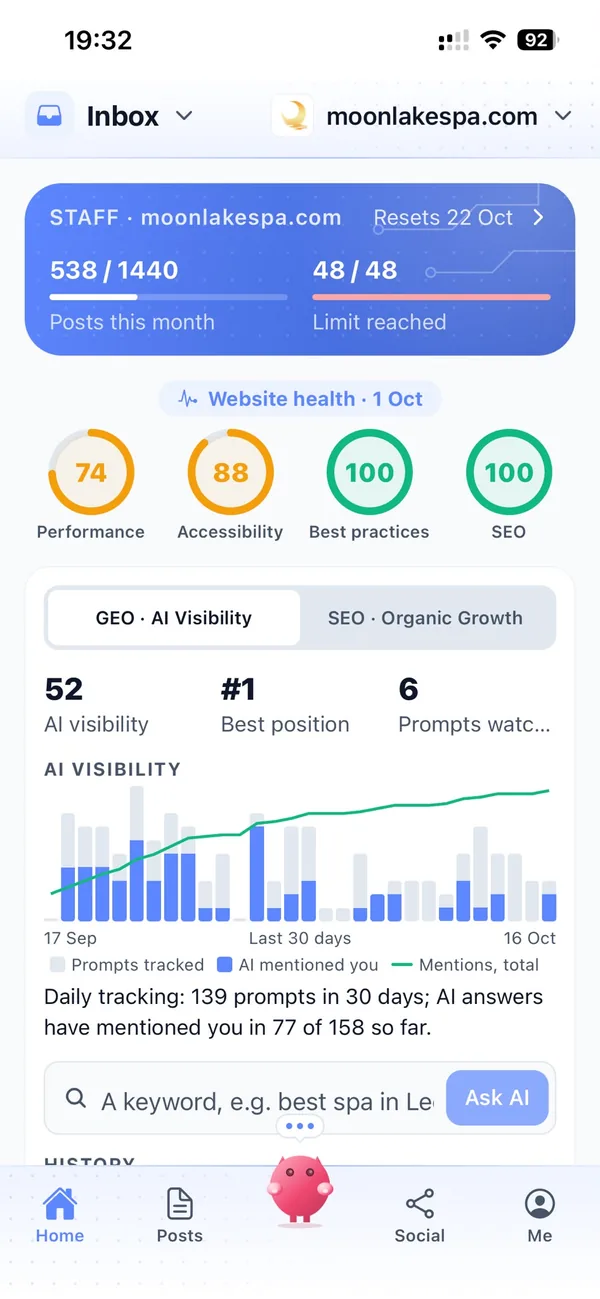
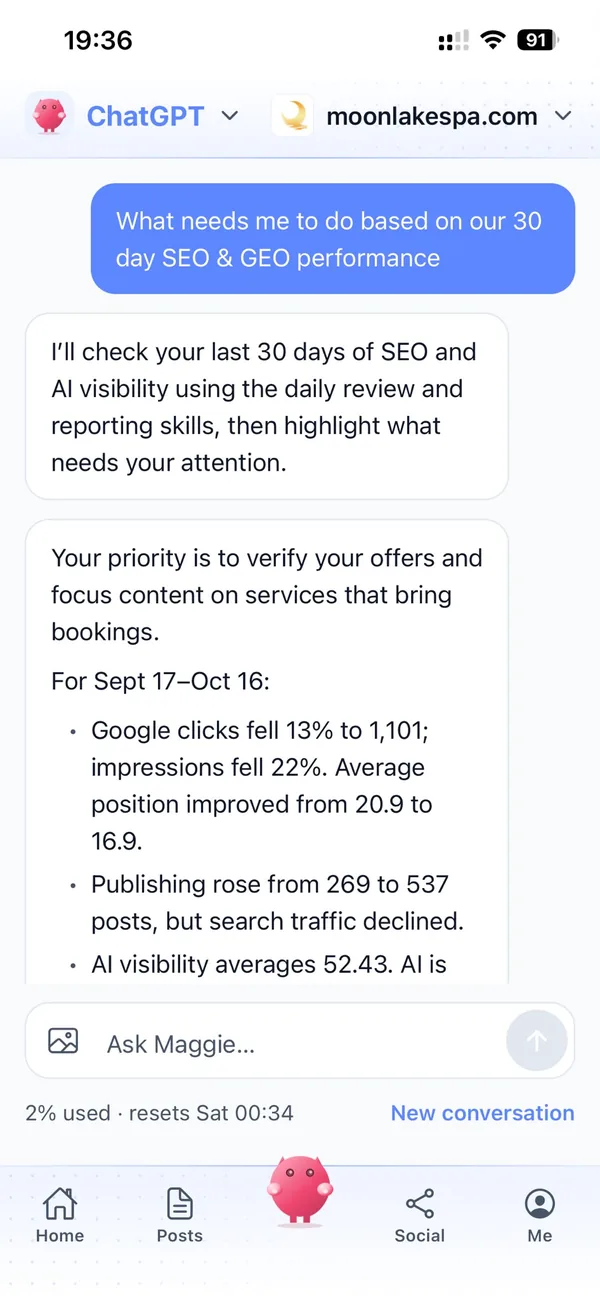
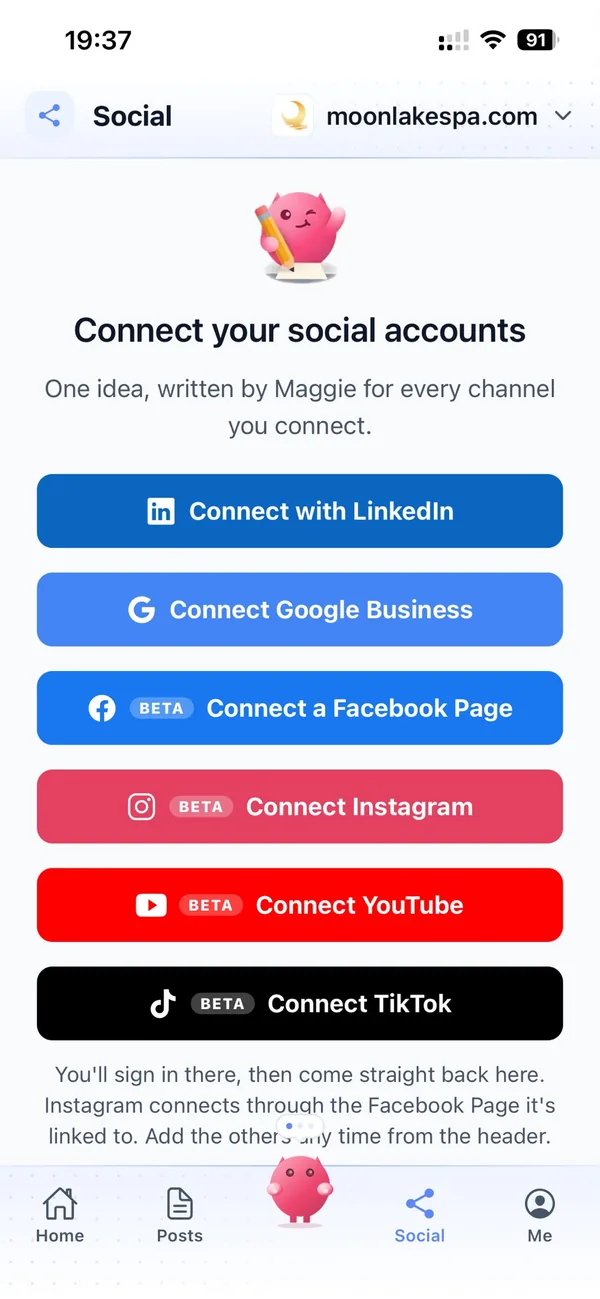
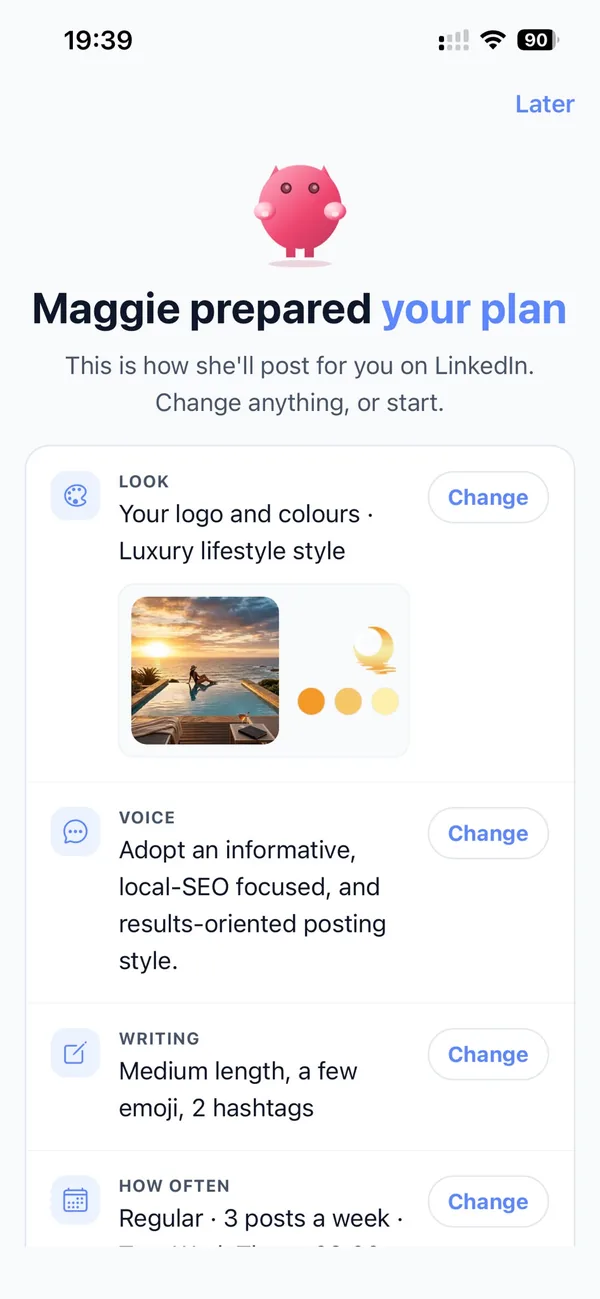
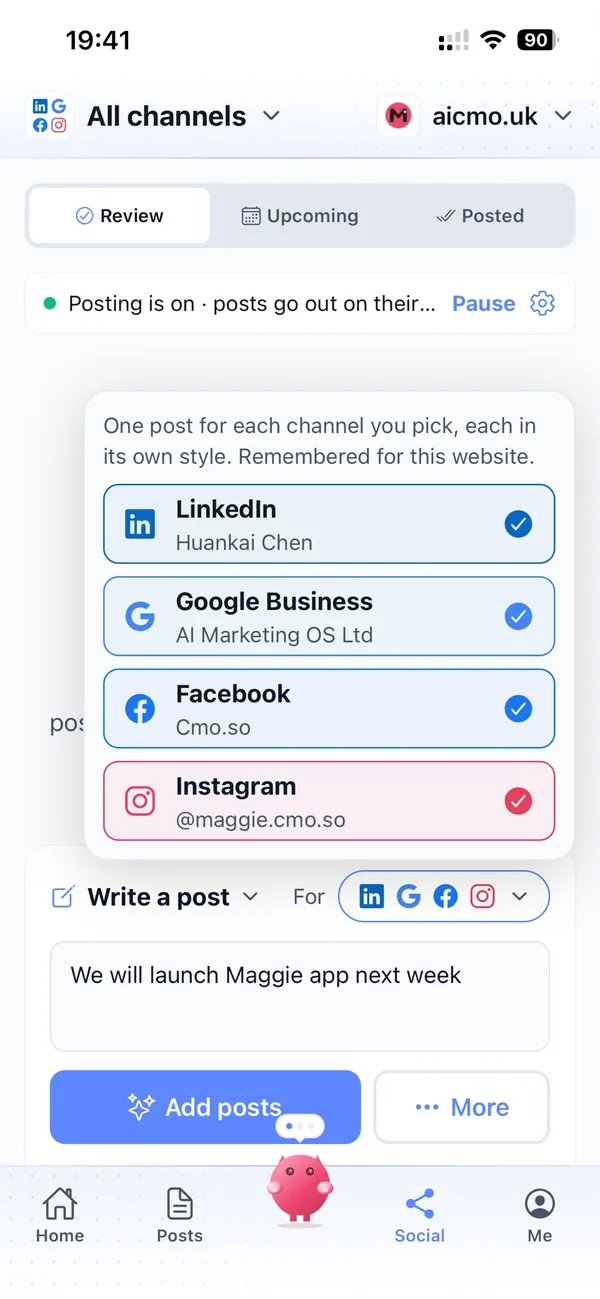
From your website to a steady flow of guides in four steps
Enter your website
Maggie reads it and drafts your company's brand profile in minutes.
Check your profile
Correct your products and services, add the sectors you serve and choose your channels.
Review the drafts
Your first week of posts arrives with pictures. Approve, edit or skip each one.
Let them go out
Approved posts go out at each channel's times and every one comes back with its link.
Why not just…
The usual ways document management companies try to reach buyers, and where each one runs out.
…rely on resellers and partners?
Partners bring deals, but they sell several products and talk about their own services first. Your own website and LinkedIn are where buyers see what makes yours different.
…hire a B2B content agency?
SEO and content agencies often cost around £1,000 a month, and your product team still has to explain retention, metadata and OCR to them. Maggie writes and publishes every week from £15 a month.
…hire a marketing manager?
A full-time marketing hire in the UK costs around £3,000 a month before tools, and one person rarely has time for weekly posts on every channel. Maggie keeps the schedule and they can focus on campaigns.
…write it with ChatGPT?
You still brief it, check it, make the picture and post it yourself, and it doesn't know your product or your sectors. Maggie remembers your company and puts posts out on schedule.
Cut the £5,900/mo marketing bill to £15/mo
Everything a marketing team does, done by Maggie.
| What needs doing | Without cmo.so | With cmo.so |
|---|---|---|
| Full-time marketing hire | £3,000/mo | Included |
| SEO and AI search (GEO) agency | £1,000/mo | Included |
| Content writer, AI-assisted | £500/mo | Included |
| Social media manager, freelance | £800/mo | Included |
| Designed pictures for every post | £300/mo | Included |
| SEO and GEO softwareRank tracking, site audits, AI visibility | £250/mo | Included |
| AI writing and image tools | £50/mo | Included |
| Working hours | Office hours | 24/7 |
| Total per month | £5,900+ | From £15/mo |
Typical UK costs for a small business in 2026, with AI already cutting freelance rates. Estimates only; your own quotes will vary.
- 5 social posts, 30 once verified
- 15 Maggie messages a day
- Upgrade any time
- 12 posts a day
- 150 Maggie messages a day
- All channels
- 96 posts a day
- 1,000 Maggie messages a day
- All channels
Per website, billed monthly. Blog and social posts share one allowance; your best plan sets how much you can talk to Maggie across all your websites.
Marketing automation for document management companies: your questions
Still unsure?
What is marketing automation for document management companies?
It's software that does the repeating work of marketing a document management product or service: planning topics, writing guides and LinkedIn posts, making pictures and publishing on schedule.
With cmo.so, Maggie does all of it from your website, and nothing goes out until someone on your team approves it.
How do document management companies get more customers online?
Document management companies get more customers online by answering the everyday filing problems buyers search for, such as lost versions, old paper archives and how long to keep records, and by staying visible on LinkedIn through a long buying decision.
Maggie writes those posts every week, and Search Console in cmo.so shows which ones bring office managers, IT and finance teams to your site.
How much does marketing automation cost for a document management company?
There's a free plan with no card needed. Paid plans are per website and billed monthly: Air at £15 a month covers two posts a day, and Pro at £45 a month suits a company posting on its blog, LinkedIn and Google Business every week.
Founding members get lower prices for good on every plan until 1 January 2027. You can cancel any time.
Which channels should document management companies start with?
Most document management companies start with their own blog for practical guides, plus LinkedIn, where IT, finance and operations leads follow suppliers while they weigh a decision.
If you run a scanning or records service, Google Business helps local organisations find you. Facebook, Instagram, YouTube and TikTok are in beta. Each channel has its own posting times and queue.
What kind of posts does cmo.so write for a document management company?
The posts cover the problems and the product: guides to going paperless, migrating from shared drives, version control, retention and naming rules, scanning back-files, sector stories, release explainers and team news.
Each idea can become a blog post, a LinkedIn post and a Google Business post, written in each one's style.
Can it write about data protection and record keeping?
It can write general, practical posts on topics such as access permissions, audit trails and planning how long to keep different records, based on your brand profile and what you tell it.
These posts are not legal advice, and you should check anything that mentions a specific law or rule before approving it. You review every draft before it is published.
We sell software and scanning services. Can cmo.so cover both?
It can. Your brand profile lists both, and Maggie plans topics for each, so software buyers see posts on workflows and integrations and organisations with paper archives see posts on scanning and migration.
Each channel has its own posting times and queue, and you approve every post before it goes out.
Can it write case studies without naming clients?
It can. Tell Maggie what the project involved and she writes it up by sector and size, such as “a firm of forty accountants”, unless you say a client is happy to be named.
You can add a house rule to your brand profile so client names are never used without your say-so.
Does it connect to our product or customer files?
No, cmo.so doesn't connect to your product, your CRM or any customer documents. Maggie works from your public website, your brand profile and what you tell her.
Your customers' files never go anywhere near your marketing tool.
Is it safe to let AI post for our company?
It is safe because nothing goes out until you approve it. Approvals are on by default, and you can keep them on for every channel or let a channel you trust run on autopilot.
Social channels connect through each platform's official sign-in, so cmo.so never sees your passwords, and cmo.so never sells or rents your data.
Which websites does it work with?
cmo.so publishes to WordPress, Shopify, Wix and Webflow, and to any other website through the cmo.so API.
Each post is reported back with its link once it is live.
Be the answer when the filing gets out of hand
Enter your website. Your brand profile and first week of posts are ready in minutes, and nothing goes out until you approve it.
- Free plan, no card needed
- You approve every post
- Cancel any time