


Marketing automation for DevOps and infrastructure companies
Engineers find tools by searching for the problem in front of them, and they buy from the vendors whose posts actually helped. Maggie, your AI CMO, writes tutorials, comparisons and release posts for your blog and LinkedIn every week, and your team approves every one.
Free to start · No credit card · 30 free posts
Used by 600+ users and trusted by teams at
aeglesriphal.com
moonlakespa.com
shop.theteagroup.com
clo100.com
logtrics.io
mymorez.com
nextidal.com
otisapp.com
storaitelling.com
theheatpumps.co.uk
web-translations.com
exposeai.tech
orielipo.com
whitelabelcrowd.fund
elliptic.co
med.moonlakespa.com
netdex.co.il
orawellness.uk
reenest.com
syngage.ai
thepenthouseliving.com
zengolf.studio
imaintain.uk
rebuildingsociety.com
aurasocial.world
goaimex.com
moneyparents.com
newgenrenewables.uk
osmosisai.co
saunders.ac
teeza.app
thursdayclub.com
Why DevOps and infrastructure companies struggle to keep their marketing going
The people who understand the product best are engineers, and engineers are on the roadmap, the on-call rota and the support queue.
Releases ship without a story
A new integration, a faster agent, support for another cloud. It lands in the changelog, and the platform teams who were waiting for it never hear about it.
Engineers don't trust marketing copy
SREs and platform engineers skip anything that reads like a brochure. They want working examples, honest trade-offs and clear answers to the error they're staring at.
Comparison searches go to someone else
When a team is choosing between you and a better-known tool, they search for the comparison. If you haven't written it, a competitor or a review site has.
Your one DevRel can't do it all
Talks, docs, community, demos and the blog all land on the same person. The blog is the first thing to slip when a conference comes round.

The release went out on Tuesday. By Friday, platform teams know what it fixes.
It's Tuesday, and the new release with autoscaling support for a second cloud has just shipped. The changelog is done, the engineers are already on the next sprint, and nobody has written a word for the blog.
You enter your company's website into cmo.so. Maggie reads your product and docs pages and writes your brand profile: what your platform does, the teams that buy it, the clouds and tools you integrate with, the competitors buyers compare you to, and the plain, technical voice your engineers would sign off. You correct one thing: you stopped supporting the old on-premises installer last quarter.
By Wednesday the drafts are waiting, each with a picture in your brand's look: a tutorial on setting up autoscaling step by step, a blog post comparing your approach with a well-known alternative and where each one fits, a LinkedIn post from your CTO on why the team built it, and a short post for engineering managers on what it means for cloud costs. An engineer corrects one config flag in the tutorial, and you approve the rest from the app.
The posts go out at the times you set for each channel, and each comes back with its link. While the team ships the next fix, Maggie is already drafting the next tutorial, and AI visibility shows how Google's AI answers describe your platform when engineers ask about the problem it solves.
A marketing assistant who writes for engineers
Each of those problems has an answer, and your engineers still decide what goes out under the company's name.
Tutorials and how-to guides
Step-by-step posts on the problems your platform solves, from first setup to tricky edge cases, written for Google and for AI answers and published to your WordPress, Webflow or any site through the cmo.so API.
Blog on autopilotHonest comparison posts
Maggie learns the competitors buyers compare you to and writes fair comparisons and alternatives posts, so the team weighing you up finds your version of the story.
ComparisonsEvery release gets a post
Turn changelog entries into release posts for the blog and LinkedIn that explain what changed, who it's for and how to try it.
Release postsLinkedIn for buyers and engineers
Posts for CTOs and engineering managers on cost, reliability and team time, alongside technical posts that platform engineers will share.
LinkedInRun it from your terminal
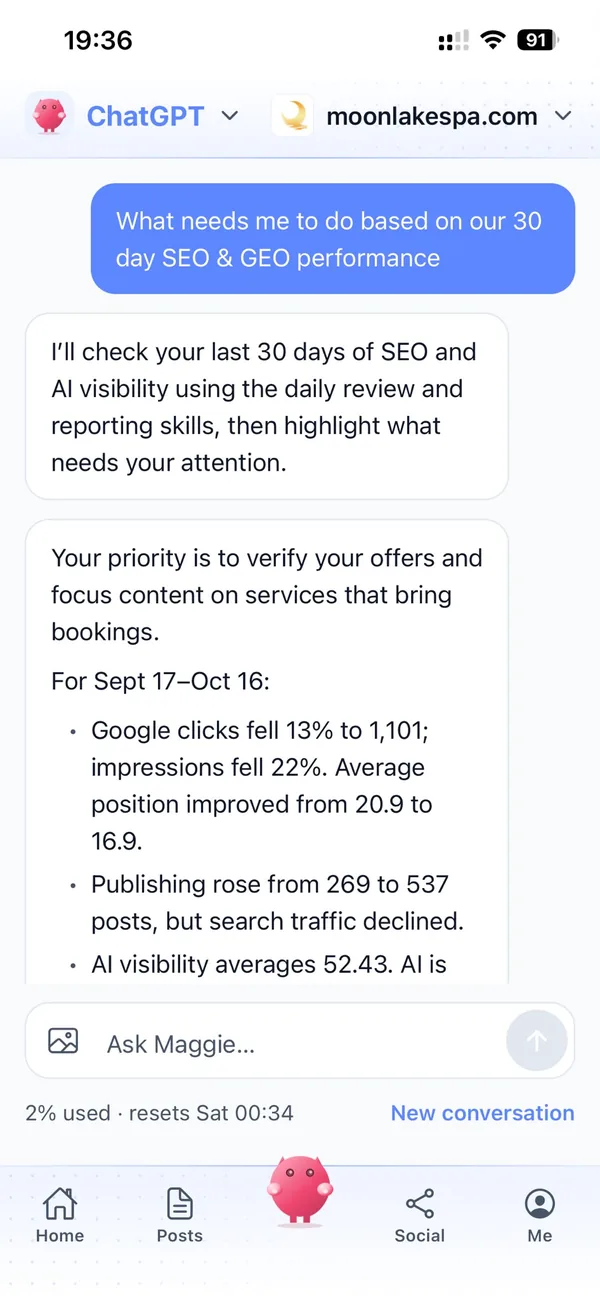
Your team can work with Maggie from ChatGPT or Claude through the cmo.so connector, or use the MCP server and CLI to review drafts and queue posts without leaving your tools.
MCP and CLISee how AI answers describe you
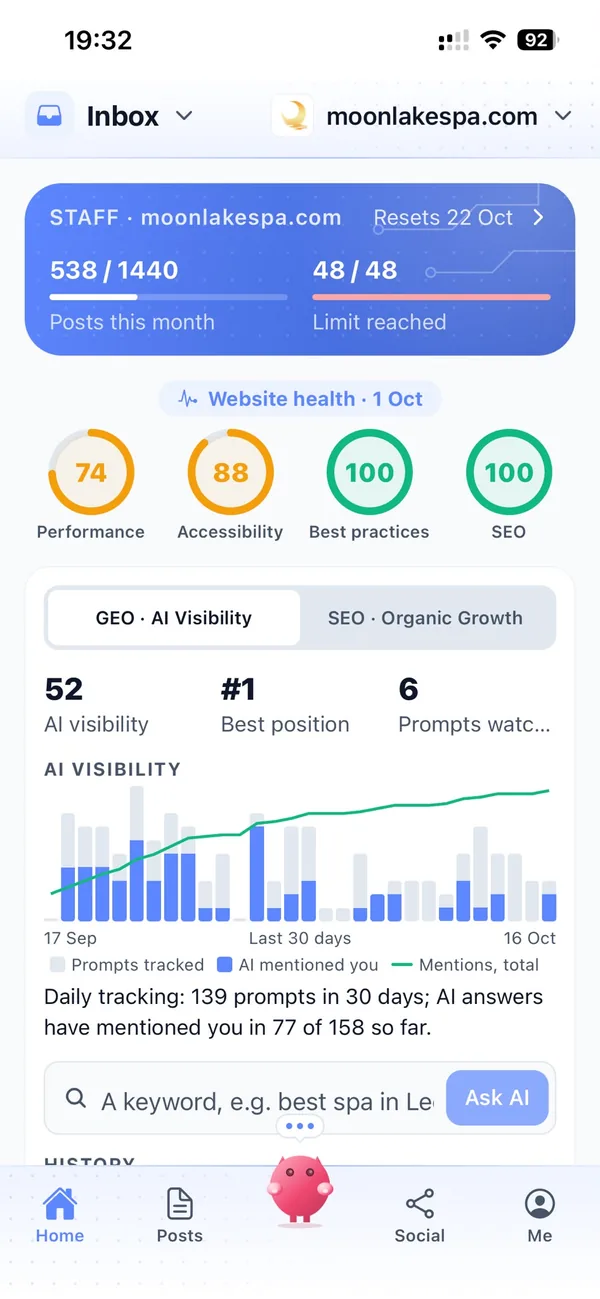
AI visibility shows how Google's AI answers describe your platform, and Search Console shows which tutorials bring engineers to your website.
AI visibilityYour marketing team, in your pocket
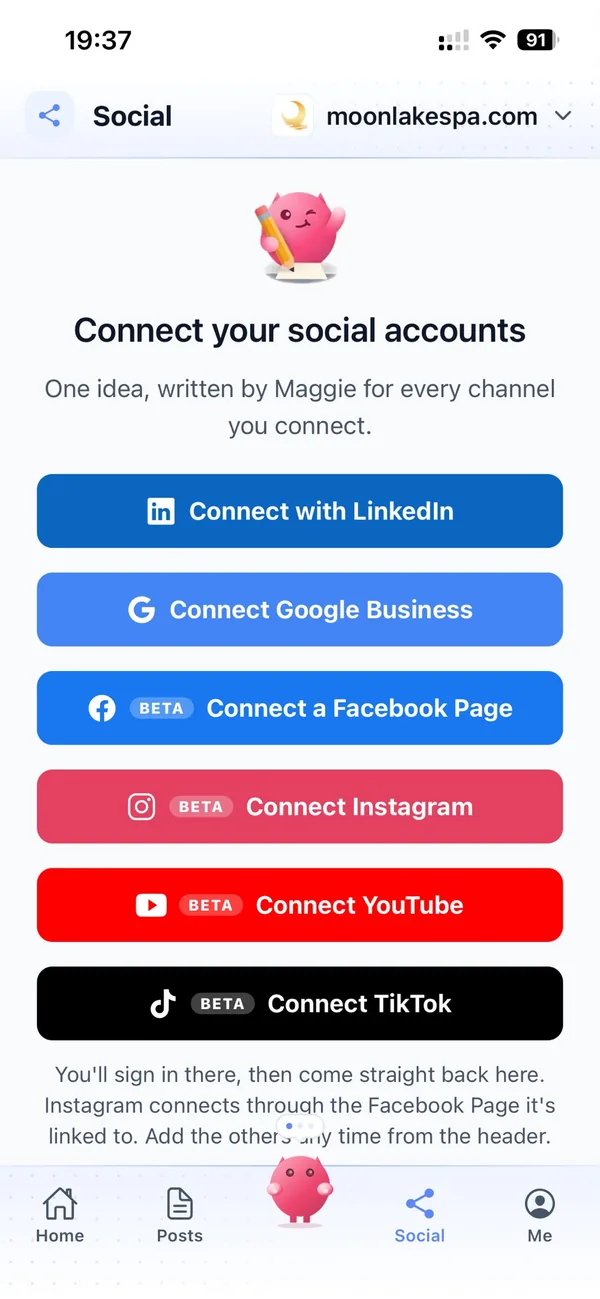
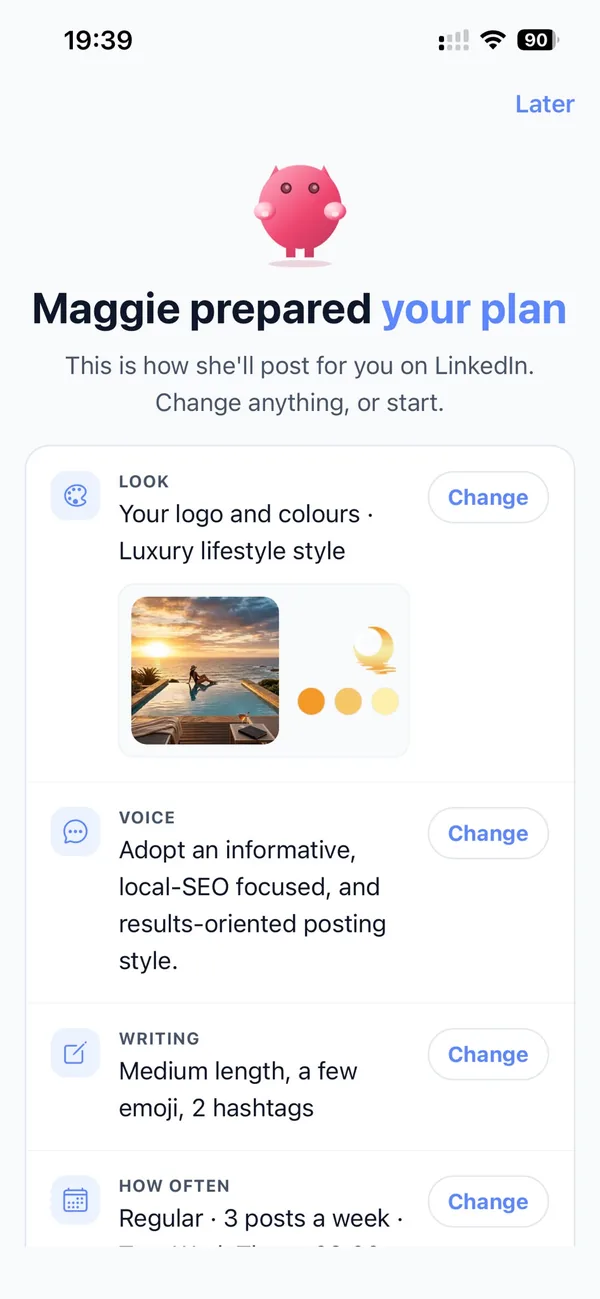
Real screens from the cmo.so app on iPhone.
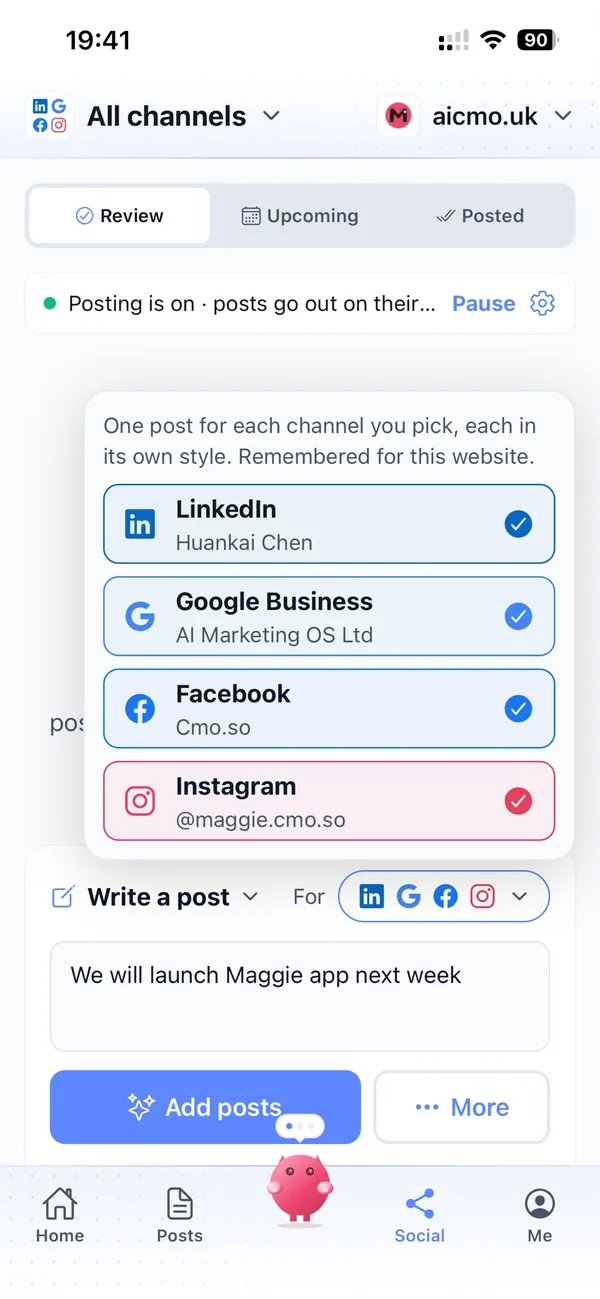
From your product site to a steady stream of technical posts in four steps
Enter your website
Maggie reads your product and docs pages and drafts your brand profile, competitors included.
Check your positioning
Correct the integrations, buyers and competitors, and set the technical voice your engineers expect.
Review the drafts
Tutorials, comparisons and release posts arrive with pictures. Approve, edit or skip each one, in the app, ChatGPT, Claude or your terminal.
Let them go out
Approved posts go out at each channel's times and every one comes back with its link.
Why not just…
The usual ways infrastructure companies try to reach engineers, and where each one runs out.
…hire another developer advocate?
A full-time marketing hire in the UK costs around £3,000 a month before tools, and a good developer advocate is hard to find. Maggie drafts the weekly posts so your advocate can focus on talks and community.
…ask engineers to write the blog?
They know the product best, but the post waits behind the next incident or sprint. With Maggie drafting, an engineer only needs to check the commands and config.
…pay a content agency?
SEO and content agencies often cost around £1,000 a month, and many struggle to write convincingly about infrastructure. Maggie starts from your own docs and product pages.
…prompt ChatGPT for each post?
You still brief it every time, paste in your positioning, make pictures and post by hand. Maggie remembers your platform and competitors and runs the whole loop, inside ChatGPT or Claude if you like.
Cut the £5,900/mo marketing bill to £15/mo
Everything a marketing team does, done by Maggie.
| What needs doing | Without cmo.so | With cmo.so |
|---|---|---|
| Full-time marketing hire | £3,000/mo | Included |
| SEO and AI search (GEO) agency | £1,000/mo | Included |
| Content writer, AI-assisted | £500/mo | Included |
| Social media manager, freelance | £800/mo | Included |
| Designed pictures for every post | £300/mo | Included |
| SEO and GEO softwareRank tracking, site audits, AI visibility | £250/mo | Included |
| AI writing and image tools | £50/mo | Included |
| Working hours | Office hours | 24/7 |
| Total per month | £5,900+ | From £15/mo |
Typical UK costs for a small business in 2026, with AI already cutting freelance rates. Estimates only; your own quotes will vary.
- 5 social posts, 30 once verified
- 15 Maggie messages a day
- Upgrade any time
- 12 posts a day
- 150 Maggie messages a day
- All channels
- 96 posts a day
- 1,000 Maggie messages a day
- All channels
Per website, billed monthly. Blog and social posts share one allowance; your best plan sets how much you can talk to Maggie across all your websites.
Marketing automation for DevOps and infrastructure companies: your questions
Still unsure?
What is marketing automation for DevOps and infrastructure companies?
It's software that does the repeating work of marketing a technical product: planning topics, writing tutorials, comparisons and release posts, making pictures and publishing on schedule.
With cmo.so, Maggie does all of it from your product site and docs, and nothing goes out until your team approves it.
How do DevOps and infrastructure companies get more customers online?
DevOps and infrastructure companies get more customers online by being the helpful answer when engineers search for a problem: clear tutorials, fair comparisons and release posts that show the product moving.
Maggie writes those posts every week for your blog and LinkedIn, and Search Console and AI visibility show which ones engineers and AI answers are picking up.
How much does marketing automation cost for an infrastructure company?
There's a free plan with no card needed. Paid plans are per website and billed monthly: Air at £15 a month covers two posts a day, and Pro at £45 a month suits a company posting tutorials and LinkedIn posts on several channels.
Founding members get lower prices for good on every plan until 1 January 2027. You can cancel any time.
Which channels should DevOps and infrastructure companies start with?
Most start with their own blog, because that's where engineers land from search and AI answers, plus LinkedIn for CTOs, engineering managers and platform leads.
YouTube is in beta and suits product demos and walkthroughs. Each channel has its own posting times and queue.
Can AI write tutorials engineers will trust?
It can draft them well from your docs and product pages, and an engineer should check every command and config before approval. That's why approvals are on by default.
Maggie learns from those edits, so drafts get closer to how your team writes each time.
Will cmo.so write comparison posts about our competitors?
Yes. Your brand profile lists the competitors buyers compare you to, and Maggie writes comparison and alternatives posts that explain where each tool fits.
You review each one, so you can keep the comparison fair and accurate before it goes out.
Can it turn our changelog into posts?
Yes, it can. Share a release note or changelog entry, and Maggie turns it into a blog post and a LinkedIn post that explain what changed and who it helps.
Each version is written in the style of its channel, and you approve them before they go out.
Can our engineers use it from the terminal?
Yes. cmo.so has an MCP server and a CLI for developers, and you can ask Maggie from ChatGPT or Claude through the cmo.so connector.
So an engineer can review a draft or check the queue without opening another dashboard.
Does it publish to our docs site?
cmo.so publishes blog posts to WordPress, Shopify, Wix and Webflow, and to any other website through the cmo.so API, so a custom docs or marketing site can receive posts too.
Each post is reported back with its link once it is live.
Is it safe to let AI post for an infrastructure company?
Yes, because nothing goes out until it's approved. Approvals are on by default, and you can keep them on for every channel or let a channel you trust run on autopilot.
Social channels connect through each platform's official sign-in, so cmo.so never sees your passwords, and cmo.so never sells or rents your data.
We have an open-source project and a commercial product. Can cmo.so handle both?
Yes. If each has its own website, add both to one account and each gets its own brand profile, channels, schedule and approvals.
So community posts for the open-source project and buyer-focused posts for the commercial product stay separate.
Give your next release the post it deserves
Enter your product's website. Your brand profile and first week of tutorials, comparisons and LinkedIn posts are ready in minutes, and nothing goes out until your team approves it.
- Free plan, no card needed
- You approve every post
- Cancel any time