

Marketing automation for consumer goods brands
Shoppers compare you with a dozen similar products in seconds, and retail buyers check whether anyone is talking about you. Maggie, your AI CMO, writes launch posts, how-to guides and stockist news for your shop, social channels and LinkedIn, and you approve every one.
Free to start · No credit card · 30 free posts
Used by 600+ users and trusted by teams at
aeglesriphal.com
moonlakespa.com
shop.theteagroup.com
clo100.com
logtrics.io
mymorez.com
nextidal.com
otisapp.com
storaitelling.com
theheatpumps.co.uk
web-translations.com
exposeai.tech
orielipo.com
whitelabelcrowd.fund
elliptic.co
med.moonlakespa.com
netdex.co.il
orawellness.uk
reenest.com
syngage.ai
thepenthouseliving.com
zengolf.studio
imaintain.uk
rebuildingsociety.com
aurasocial.world
goaimex.com
moneyparents.com
newgenrenewables.uk
osmosisai.co
saunders.ac
teeza.app
thursdayclub.com
Why consumer goods brands struggle to keep their marketing going
A small brand team spends its week on production runs, retailer emails, stock and listings. The steady flow of content that keeps a brand visible is the job that slips.
One shelf, a dozen lookalikes
Online and in store, your product sits next to similar ones at similar prices. Shoppers pick the brand they've heard of or the one that explains itself best, and a product page alone rarely does that.
Launches fizzle after a week
You plan a new flavour, scent or size for months, post about it twice and then get pulled back into operations. The launch stops just as people start searching for it.
Retail buyers want to see momentum
Getting into a new retailer or distributor often depends on looking active and well loved. A LinkedIn page and blog that stopped months ago don't help that conversation.
Marketplaces own the customer
Big marketplaces bring sales but keep the relationship and push you to compete on price. People who find you through your own website buy again and try the rest of your range.

Your new range lands in a fortnight, and the launch posts are already approved.
It's Monday. Your small household brand has a new range of refillable kitchen sprays arriving in a fortnight, a regional retailer has just agreed to stock you, and you haven't posted anything since the spring.
You enter your shop's website into cmo.so. Maggie reads it and writes your brand profile: cleaning sprays and kitchen basics for busy households, the shoppers who want things that work without harsh smells, the bigger household names you compete with, the stockists that carry you, and your cheerful, practical voice. You correct one thing: the range is sold in three scents now, not two.
By Tuesday the drafts are waiting, each with a picture in your brand's look: a blog guide to cleaning a kitchen in ten minutes, a three-post launch series for the new range, a LinkedIn post announcing the new stockist for buyers and distributors, and an Instagram post showing the refills in use. You approve the series and tweak a line in the LinkedIn post.
The posts go out at the times you set for each channel, spread over the launch weeks, and each comes back with its link. Search Console in cmo.so shows which guides bring shoppers to your product pages, and Maggie is already planning posts for the Christmas gifting season.
A marketing team for a brand that makes things
Each of those problems has an answer, and you still decide what goes out under your brand's name.
Guides that sell the product
How-tos, comparisons and “which one is right for you” posts that answer shoppers' questions and link to your products. Written for Google and for AI answers, published to your Shopify, WooCommerce, Wix or Webflow shop, or any site through the cmo.so API.
Blog on autopilotLaunches that keep going
A new product becomes a series: a teaser, the launch, how to use it, and a follow-up a few weeks later. Each is queued for its channel, so the launch carries on while you deal with stock.
Launch seriesLinkedIn for buyers and stockists
Posts about new listings, production, sourcing and what's selling, written for retail buyers, distributors and wholesale customers who check whether a brand is active.
LinkedInYour brand, understood
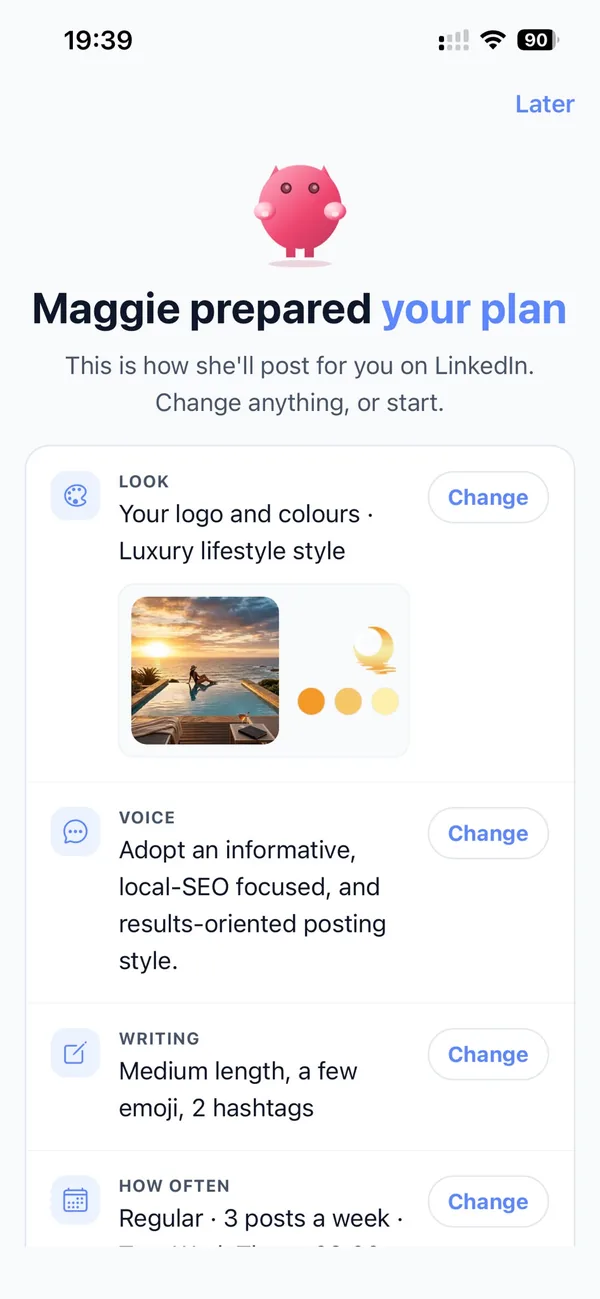
Enter your website and Maggie builds your brand profile: products, shoppers, what sets you apart from the big names, competitors and voice. Every post and picture starts from it.
Brand profileOne product, every channel
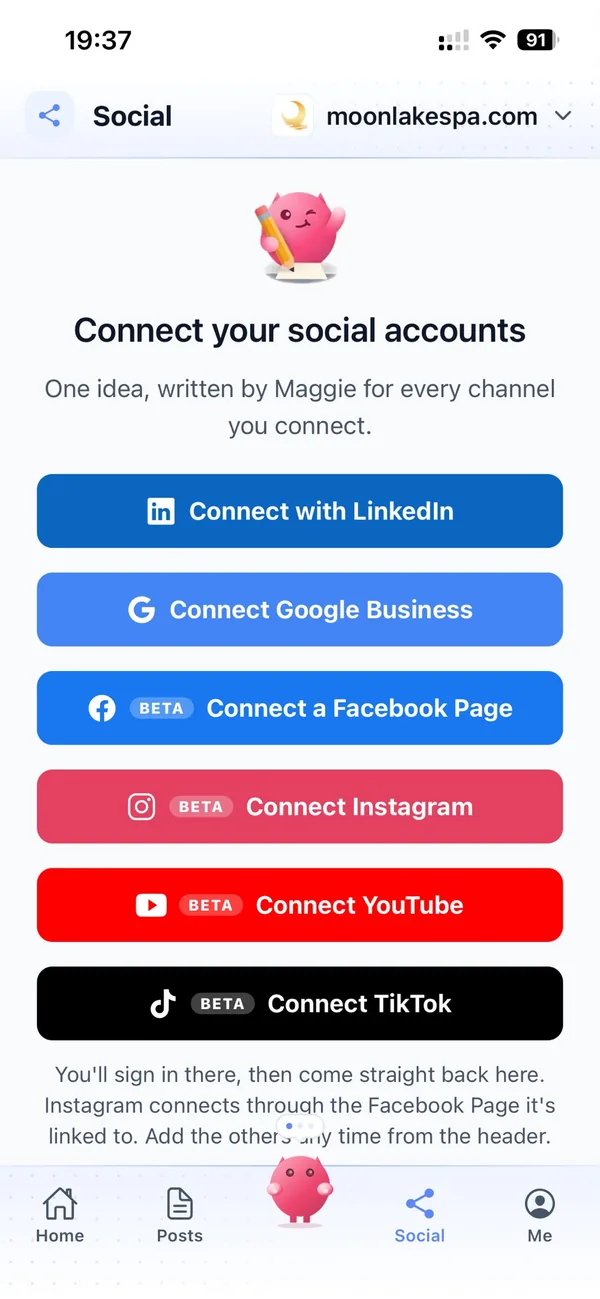
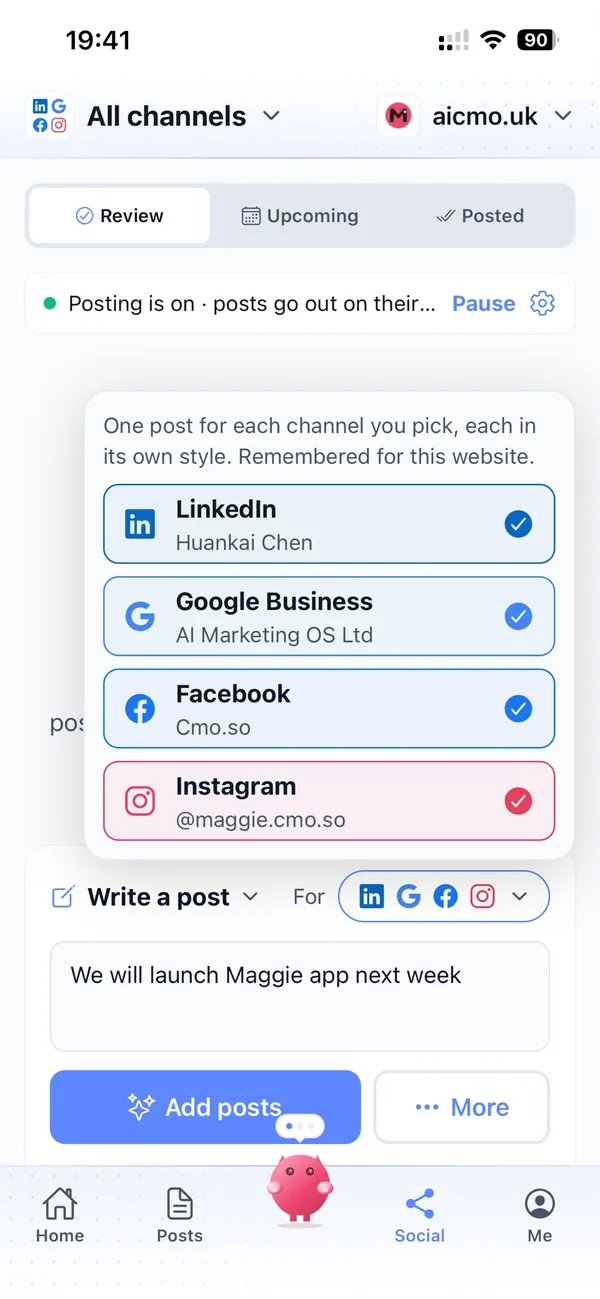
One idea becomes a post for each channel in its own style: Instagram, Facebook and TikTok for shoppers (in beta), LinkedIn for trade, your blog for search.
Every channelApprove between production runs
By default nothing goes out until you approve it. Read drafts in the iPhone app or at app.cmo.so, edit a line, skip a post, or pause a channel while a product is out of stock.
ApprovalsYour marketing team, in your pocket
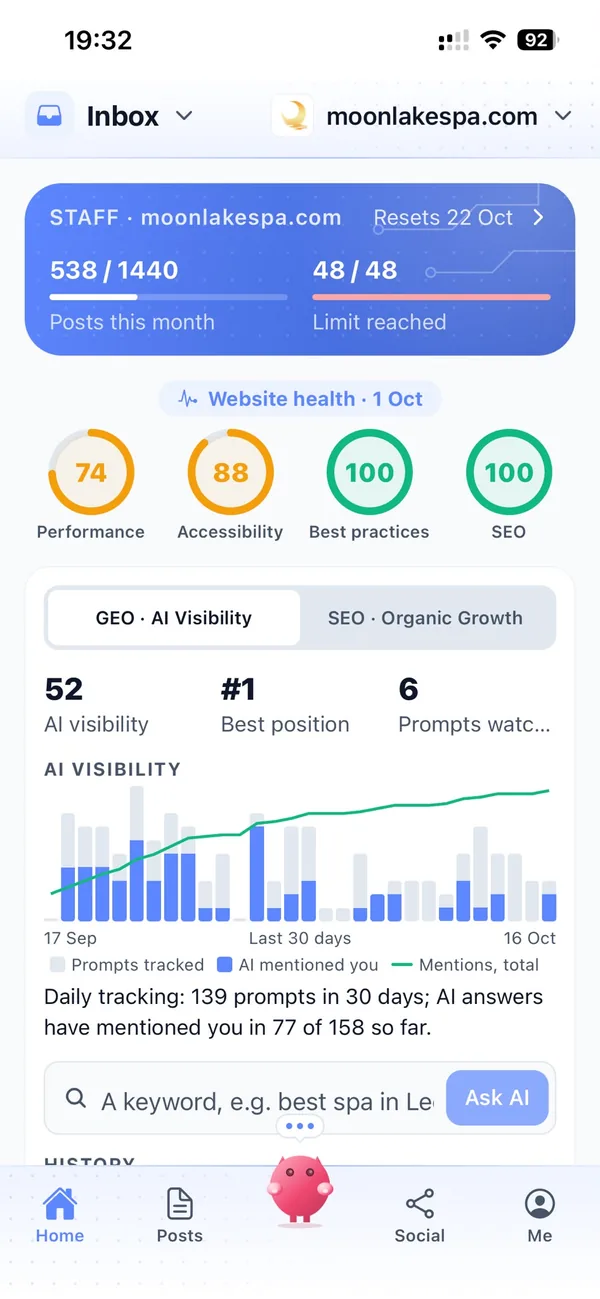
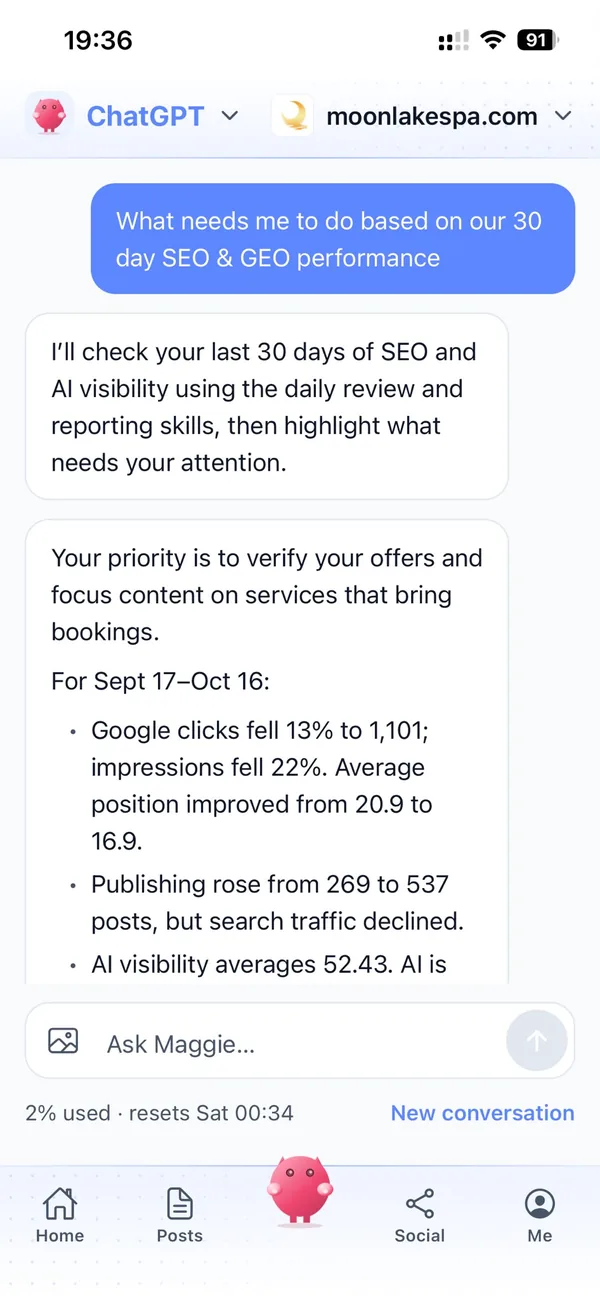
Real screens from the cmo.so app on iPhone.
From your shop to a steady stream of posts in four steps
Enter your website
Maggie reads it and drafts your brand profile in minutes.
Check your profile
Correct your range and stockists, add upcoming launches and choose your channels.
Review the drafts
Your first week of posts arrives with pictures. Approve, edit or skip each one.
Let them go out
Approved posts go out at each channel's times and every one comes back with its link.
Why not just…
The usual ways consumer brands try to grow, and where each one runs out.
…sell mainly through marketplaces?
They bring volume, but they take fees, keep the customer and push you to compete on price. Guides on your own website bring shoppers who buy direct and come back.
…pay for in-store promotions?
Promotions and shelf deals move stock for a few weeks and then stop. Content keeps answering shoppers' questions and gives retail buyers something to look at long after.
…hire a marketing agency?
Agencies often cost around £1,000 a month, and a full-time marketing hire costs around £3,000 a month before tools. Maggie writes and publishes every week from £15 a month.
…write it with ChatGPT?
You still brief it, check it, make the picture and post it on every channel yourself, and it forgets your range between chats. Maggie remembers your products and posts on schedule.
Cut the £5,900/mo marketing bill to £15/mo
Everything a marketing team does, done by Maggie.
| What needs doing | Without cmo.so | With cmo.so |
|---|---|---|
| Full-time marketing hire | £3,000/mo | Included |
| SEO and AI search (GEO) agency | £1,000/mo | Included |
| Content writer, AI-assisted | £500/mo | Included |
| Social media manager, freelance | £800/mo | Included |
| Designed pictures for every post | £300/mo | Included |
| SEO and GEO softwareRank tracking, site audits, AI visibility | £250/mo | Included |
| AI writing and image tools | £50/mo | Included |
| Working hours | Office hours | 24/7 |
| Total per month | £5,900+ | From £15/mo |
Typical UK costs for a small business in 2026, with AI already cutting freelance rates. Estimates only; your own quotes will vary.
- 5 social posts, 30 once verified
- 15 Maggie messages a day
- Upgrade any time
- 12 posts a day
- 150 Maggie messages a day
- All channels
- 96 posts a day
- 1,000 Maggie messages a day
- All channels
Per website, billed monthly. Blog and social posts share one allowance; your best plan sets how much you can talk to Maggie across all your websites.
Marketing automation for consumer goods brands: your questions
Still unsure?
What is marketing automation for consumer goods brands?
It's software that does the repeating work of marketing a product brand: planning topics and launches, writing blog and social posts, making pictures and publishing them on schedule.
With cmo.so, Maggie does all of it from your shop's website, and nothing goes out until you approve it.
How do consumer goods brands get more customers online?
Consumer goods brands get more customers online by answering the questions shoppers ask before they buy, keeping launches visible for weeks rather than days, and giving people a reason to buy direct.
Maggie writes those guides and launch series every week, links them to your products, and Search Console in cmo.so shows which ones bring shoppers to your shop.
How much does marketing automation cost for a consumer goods brand?
There's a free plan with no card needed. Paid plans are per website and billed monthly: Air at £15 a month covers two posts a day, and Pro at £45 a month suits a brand posting to shoppers and trade on several channels.
Founding members get lower prices for good on every plan until 1 January 2027. You can cancel any time.
Which channels should consumer goods brands start with?
Most start with their own blog, because how-tos and buying guides keep bringing shoppers to the shop, plus Instagram or TikTok (in beta) to show products in use.
LinkedIn suits brands that sell through retailers, distributors or wholesale. Each channel has its own posting times and queue.
Is it safe to let AI post for our brand?
It is, because nothing goes out until you approve it. Approvals are on by default, and you can keep them on for every channel or let a channel you trust run on autopilot.
Social channels connect through each platform's official sign-in, so cmo.so never sees your passwords, and cmo.so never sells or rents your data.
Can it plan a whole product launch?
It can plan and write the posts for one. Tell Maggie what's launching and when, and she drafts a series for each channel: teaser, launch day, how to use it and a follow-up.
You approve the series, and the posts go out on the dates you set. You can pause a channel if stock arrives late.
Will cmo.so change our prices or stock?
No, cmo.so never changes your products, prices or stock. Maggie writes and publishes posts, and links them to the products you sell.
It doesn't run ads or send email newsletters either, so those stay with the tools you already use.
Can it help us get into more shops?
It can help retail buyers see an active, well-explained brand. Maggie writes LinkedIn posts about your range, new listings and production for buyers and distributors.
It doesn't pitch to retailers or handle orders, so those conversations stay with you, but your page has something to show when buyers look you up.
Our products make claims about health or safety. Can it help?
It can, with care. If your products touch on health, food or safety, you can turn on Content Policy Guard with relevant rules or your own house rules, and a post that may break them is held as a draft with a suggested rewrite.
These are AI suggestions, not legal or compliance advice. A qualified person should still review those posts, and your brand stays responsible for what it publishes.
Which shops does it work with?
cmo.so publishes to Shopify, WordPress (including WooCommerce), Wix and Webflow, and to any other website through the cmo.so API.
Each post is reported back with its link once it's live.
We have several brands. Can cmo.so handle them?
Yes. Add each brand's website to one account and each gets its own brand profile, channels, schedule and approvals.
Each brand keeps its own voice and picture look, so a kitchen brand and a kids' snack never sound the same.
Does it help us appear in AI answers?
Posts are written to be clear and quotable, which helps Google's AI answers and assistants such as ChatGPT recommend your products when shoppers ask what to buy.
AI visibility in cmo.so shows how Google's AI answers mention your brand, so you can see what to write about next.
Give your next launch more than a week
Enter your website. Your brand profile and first week of posts are ready in minutes, and nothing goes out until you approve it.
- Free plan, no card needed
- You approve every post
- Cancel any time