


Marketing automation for quality assurance companies
Engineering leaders look for a testing partner when a launch date is close or a bug has just reached customers, and they pick the firm whose thinking they already know. Maggie, your AI CMO, writes your test strategy guides and LinkedIn posts every week, and you approve each one.
Free to start · No credit card · 30 free posts
Used by 600+ users and trusted by teams at
aeglesriphal.com
moonlakespa.com
shop.theteagroup.com
clo100.com
logtrics.io
mymorez.com
nextidal.com
otisapp.com
storaitelling.com
theheatpumps.co.uk
web-translations.com
exposeai.tech
orielipo.com
whitelabelcrowd.fund
elliptic.co
med.moonlakespa.com
netdex.co.il
orawellness.uk
reenest.com
syngage.ai
thepenthouseliving.com
zengolf.studio
imaintain.uk
rebuildingsociety.com
aurasocial.world
goaimex.com
moneyparents.com
newgenrenewables.uk
osmosisai.co
saunders.ac
teeza.app
thursdayclub.com
Why QA companies find marketing hard to keep up
Your testers are billable, your leads are on client projects, and the marketing slot on the weekly call keeps getting pushed to next week.
Buyers arrive in a panic
Most enquiries come after a failed release, a bad app store review or an audit finding. If a CTO has never read anything of yours before that moment, you're one name on a long list of testing vendors.
Your expertise stays in the test plans
Your team knows how to cut a regression suite from three days to three hours or test a payments flow across forty devices. That knowledge sits in client reports under NDA, not on your website.
Everyone sounds the same
Manual testing, test automation, performance, security, accessibility: every QA site lists the same services. Without articles that show how you think, buyers compare you on day rate alone.
LinkedIn goes quiet on busy months
When a big project lands, the founder who used to post about flaky tests and shift-left testing stops posting. The pipeline dries up three months later, right when the project ends.

A fintech client's release is going well, and your next client is already reading your posts.
It's Monday and half your team is embedded in a fintech client's release. Your own blog last had a post in spring, and the founder's LinkedIn has been quiet for six weeks.
You enter your company's website into cmo.so. Maggie reads it and writes your brand profile: managed testing for SaaS and fintech teams, your test automation practice with Playwright and Cypress, accessibility audits, mobile device coverage, the nearshore team that overlaps with UK hours, and the calm, practical tone you use with engineering managers. You add one correction: you no longer offer penetration testing yourselves and refer it to a partner.
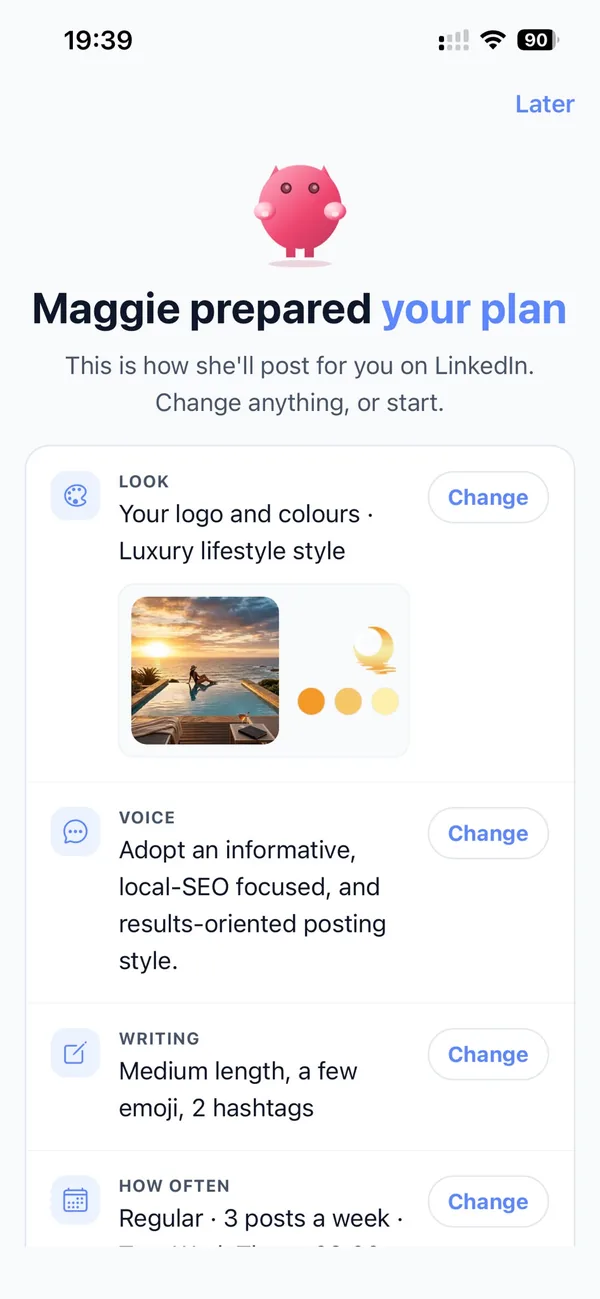
By Tuesday the drafts are waiting, each with a picture in your company's look: a blog post on how to decide which tests to automate first, a LinkedIn post on why flaky tests cost more than slow ones, a short checklist for testing before a major app release, and a post for product owners on what good bug reports look like. You approve three from your phone in a stand-up break and sharpen one example in the fourth.
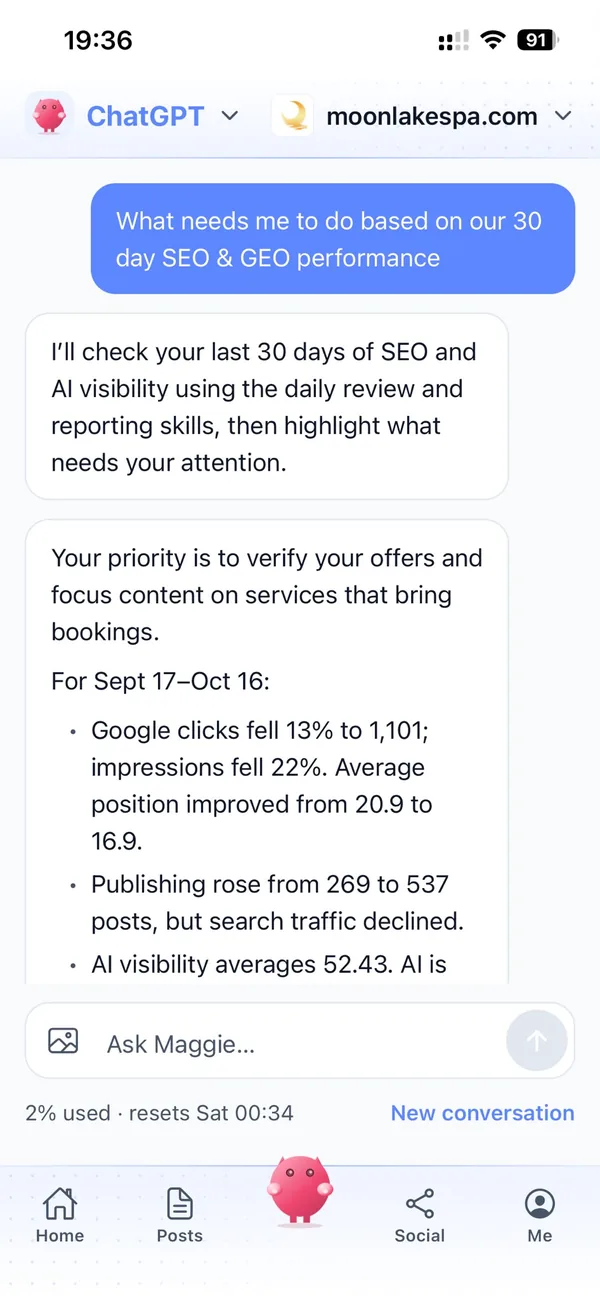
The posts go out at the times you set for each channel and come back with their links. While your testers are signing off the client's release, Maggie is planning next month's posts on accessibility testing, and Search Console in cmo.so shows which guides engineering leaders are finding.
Marketing that shows how your testers think
Each problem has an answer, and nothing goes out under your company's name until you have approved it.
Test strategy guides on your blog
Articles on regression strategy, test automation frameworks, release readiness, accessibility testing and device coverage, written for Google and for AI answers. Published to WordPress, Shopify, Wix, Webflow or any site through the cmo.so API.
Blog on autopilotLinkedIn that keeps going on busy months
Posts on real testing problems such as flaky tests, missed edge cases and late bug fixes, written for CTOs, heads of engineering and product owners. They're queued weeks ahead so the feed stays active while your team is on projects.
LinkedInExpertise without breaking NDAs
Posts teach the method, not the client. You tell Maggie which clients and details are off limits in your brand profile, and you approve every draft before it is published.
Your rulesA brand profile built from your site
Maggie reads your website and writes your services, the industries you test for, what sets you apart from offshore testing farms and freelancers, your competitors and your voice. Every post starts from it.
Brand profileFound in AI answers too
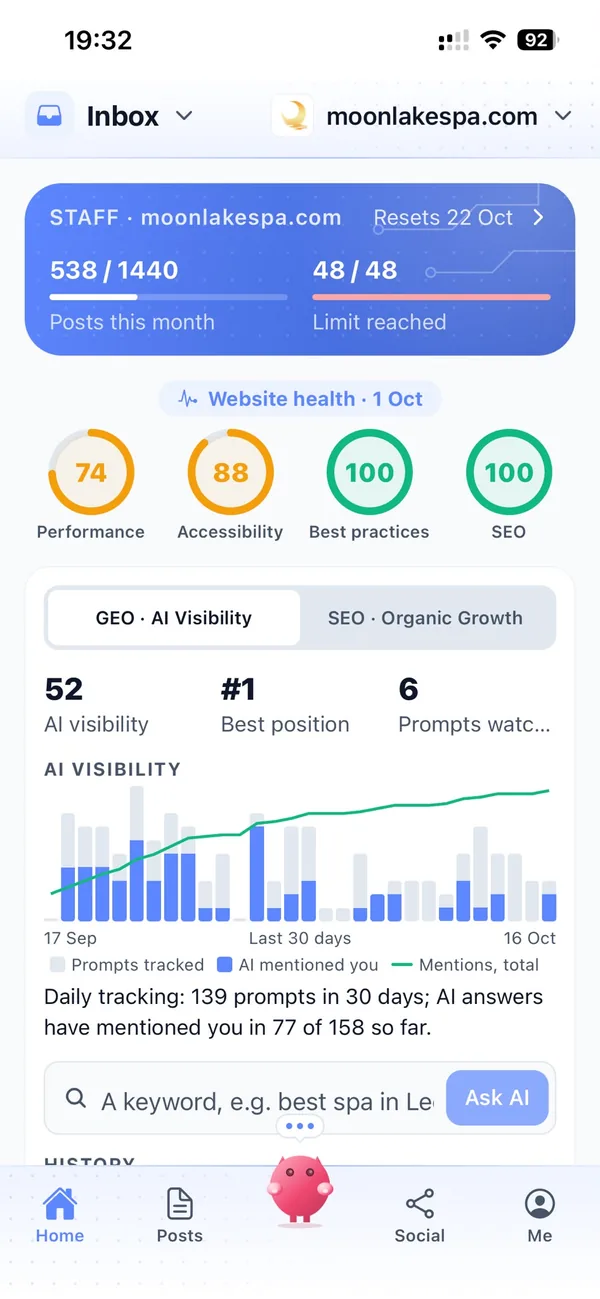
Engineering leaders ask ChatGPT and Google's AI how to test a release or choose a QA partner. Clear, quotable articles help, and AI visibility in cmo.so shows how Google's AI answers describe your company.
AI visibilityOne idea, every channel
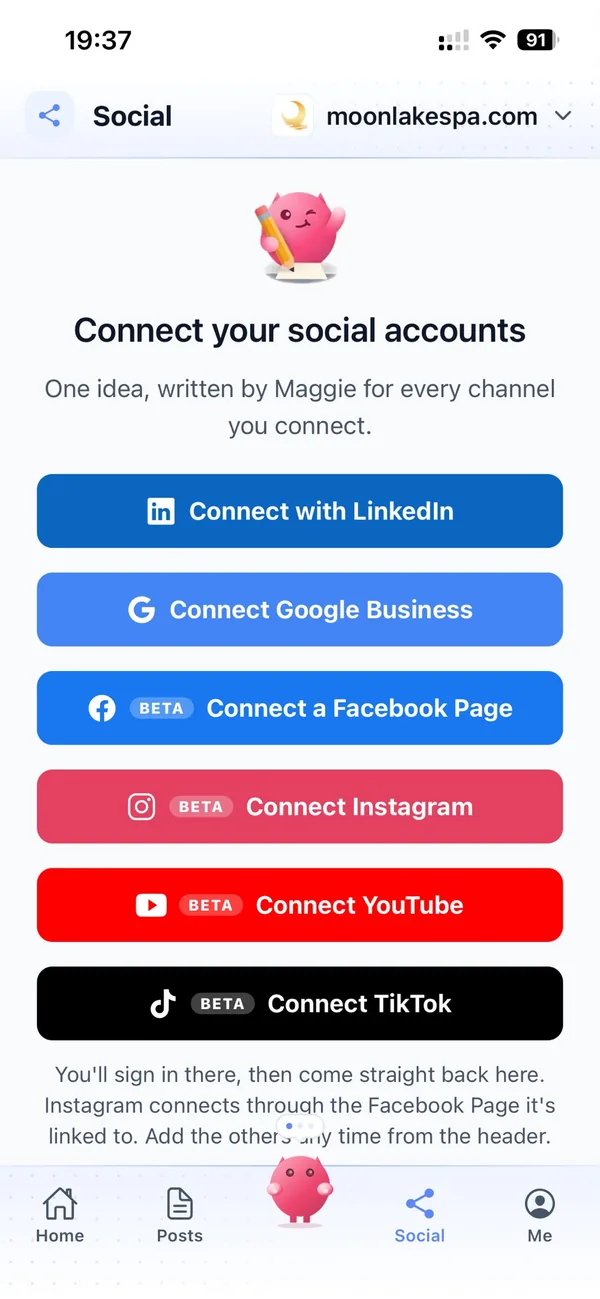
A guide on release testing becomes a blog post, a LinkedIn post and a Google Business update, each written in the style of its channel, with YouTube and Facebook available in beta.
Every channelYour marketing team, in your pocket
Real screens from the cmo.so app on iPhone.
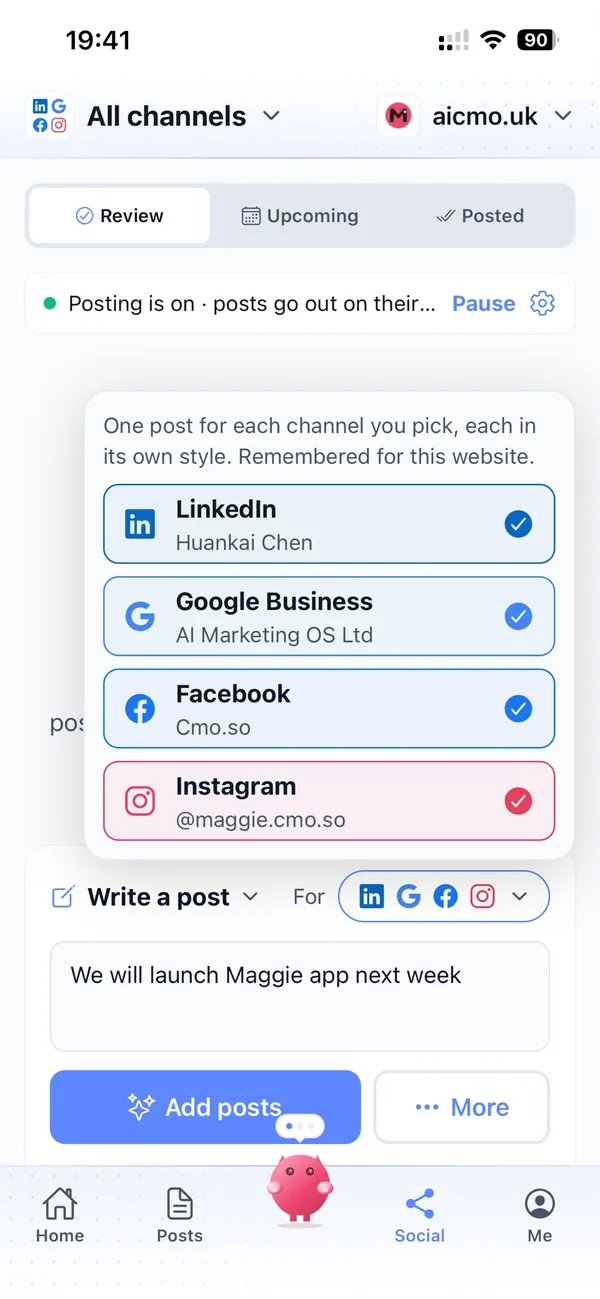
From your QA website to a steady flow of posts in four steps
Enter your website
Maggie reads it and drafts your company's brand profile in minutes.
Check your profile
Correct your services, add the industries and tools you specialise in, and mark what stays confidential.
Review the drafts
Your first week of posts arrives with pictures. Approve, edit or skip each one.
Let them go out
Approved posts go out at each channel's times and every one comes back with its link.
Why not just…
The usual ways testing firms try to win work, and where each one runs out.
…rely on directory listings and reviews?
Vendor directories put you in a grid next to dozens of testing firms with similar badges. Articles on your own website give a CTO a reason to choose you before they open the shortlist.
…hire an SDR to send cold emails?
Outbound can book calls, but engineering leaders ignore most of it, and a salesperson costs far more than a content plan. Useful posts make your outreach land with people who already know your name.
…ask the testers to write blog posts?
They know the subject best, but they're billable and writing is the first thing to slip. Maggie drafts the post and a tester checks it in five minutes.
…pay a content agency?
SEO and content agencies often cost around £1,000 a month and still need your team to explain test automation to them. Maggie learns from your website and edits, from £15 a month.
Cut the £5,900/mo marketing bill to £15/mo
Everything a marketing team does, done by Maggie.
| What needs doing | Without cmo.so | With cmo.so |
|---|---|---|
| Full-time marketing hire | £3,000/mo | Included |
| SEO and AI search (GEO) agency | £1,000/mo | Included |
| Content writer, AI-assisted | £500/mo | Included |
| Social media manager, freelance | £800/mo | Included |
| Designed pictures for every post | £300/mo | Included |
| SEO and GEO softwareRank tracking, site audits, AI visibility | £250/mo | Included |
| AI writing and image tools | £50/mo | Included |
| Working hours | Office hours | 24/7 |
| Total per month | £5,900+ | From £15/mo |
Typical UK costs for a small business in 2026, with AI already cutting freelance rates. Estimates only; your own quotes will vary.
- 5 social posts, 30 once verified
- 15 Maggie messages a day
- Upgrade any time
- 12 posts a day
- 150 Maggie messages a day
- All channels
- 96 posts a day
- 1,000 Maggie messages a day
- All channels
Per website, billed monthly. Blog and social posts share one allowance; your best plan sets how much you can talk to Maggie across all your websites.
Marketing automation for quality assurance companies: your questions
Still unsure?
What is marketing automation for quality assurance companies?
It's software that handles the repeating work of marketing a testing firm: planning topics, writing blog and LinkedIn posts, making pictures and publishing them on schedule.
With cmo.so, Maggie does this from your company's website and brand profile, and nothing goes out until you approve it.
How do quality assurance companies get more clients online?
QA companies get more clients online by being known before the urgent moment: useful articles on test strategy, an active LinkedIn presence and pages that answer the questions engineering leaders search for.
Maggie writes those posts every week and keeps them going during busy project months, and Search Console in cmo.so shows which topics bring visitors to your site.
How much does marketing automation cost for a QA company?
There's a free plan with no card needed. Paid plans are per website and billed monthly: Air at £15 a month covers two posts a day, and Pro at £45 a month suits a growing firm posting on several channels.
Founding members get lower prices for good on every plan until 1 January 2027, and you can cancel any time.
Which channels should QA companies start with?
Most testing firms start with their own blog and LinkedIn, because that's where CTOs, heads of engineering and product owners research partners and read about testing.
Google Business helps if clients look for a testing company in your city, and YouTube is in beta for short walkthroughs. Each channel has its own posting times and queue.
Is it safe to let AI write about our testing work?
Yes, because nothing goes out until you approve it. Approvals are on by default for every channel, and you can edit any line or skip a post.
Social channels connect through each platform's official sign-in, so cmo.so never sees your passwords, and cmo.so never sells or rents your data.
How do we stop posts mentioning our clients?
You set that in your brand profile. Write which clients, projects and details are confidential, and Maggie writes about methods and common problems instead of naming anyone.
Every draft still comes to you for approval, so a tester or account lead can check it before it goes out.
Can posts get technical enough for engineers?
Yes, they can go into real detail on topics such as test pyramids, contract testing, mocking third-party services or running tests in a CI pipeline.
When your team corrects a draft or adds an example, Maggie learns from the edit, so later posts sound more like your own testers.
What kind of topics will Maggie write about for a QA firm?
Topics that match the questions your buyers have: when to automate, how to test before a launch, how to reduce flaky tests, how to plan accessibility testing and how to choose between in-house and outsourced QA.
She plans them from your brand profile and the services you sell most, and you can add or remove topics at any time.
We sell both managed testing and a testing tool. Can cmo.so cover both?
Yes. If each has its own website, add both to one account and each gets its own brand profile, channels, schedule and approvals.
If they share one website, the brand profile can describe both, and posts can link readers to the right service or product page.
Does it help with accessibility testing work?
It can help people find you for it. Maggie writes posts explaining accessibility testing, common issues teams miss and how audits fit into a release plan.
Posts are AI suggestions written from your brand profile, so your accessibility lead should check any statement about standards before you approve it.
Which websites does it publish to?
cmo.so publishes to WordPress, Shopify, Wix and Webflow, and to any other website through the cmo.so API.
Each post is reported back with its link once it is live.
Can our engineering leads approve posts too?
Yes. In Me → Team you can add people and choose what each can see or change, using presets such as editor or manager.
So your head of test automation can check technical posts while the founder looks after LinkedIn.
Be the testing partner CTOs already know
Enter your website. Your brand profile and first week of posts are ready in minutes, and nothing goes out until you approve it.
- Free plan, no card needed
- You approve every post
- Cancel any time