


Marketing automation for holistic and alternative health practitioners
New clients want to understand a therapy and trust the person offering it before they book. Maggie, your AI CMO, writes calm, careful posts for your website, Google Business and social channels, and you approve every one.
Free to start · No credit card · 30 free posts
Used by 600+ users and trusted by teams at
aeglesriphal.com
moonlakespa.com
shop.theteagroup.com
clo100.com
logtrics.io
mymorez.com
nextidal.com
otisapp.com
storaitelling.com
theheatpumps.co.uk
web-translations.com
exposeai.tech
orielipo.com
whitelabelcrowd.fund
elliptic.co
med.moonlakespa.com
netdex.co.il
orawellness.uk
reenest.com
syngage.ai
thepenthouseliving.com
zengolf.studio
imaintain.uk
rebuildingsociety.com
aurasocial.world
goaimex.com
moneyparents.com
newgenrenewables.uk
osmosisai.co
saunders.ac
teeza.app
thursdayclub.com
Why holistic and alternative health practitioners struggle to keep their marketing going
You spend your day with clients, one at a time. Marketing happens in the gaps, and the gaps are short.
People don't know what to expect
Someone curious about acupuncture, reflexology or herbal medicine wonders what happens in a first session, whether it hurts and what to wear. If your website doesn't say, they book with someone whose website does, or don't book at all.
Health claims are a minefield
Saying a therapy treats or cures a condition can break advertising rules and damage trust. Working out how to describe your work honestly takes care, so many practitioners post nothing.
Quiet weeks between busy ones
January and the run-up to Christmas fill your diary; late summer leaves gaps. Without regular posts, regulars drift and new people don't hear about you until the next busy season.
Directories and booking apps get the click
People search for a therapist near them and find marketplace listings first, where you look the same as everyone else. Your own website and Google Business profile can tell your story properly.

January is coming, and your new-client posts are already written.
It's Monday at a small practice where you offer acupuncture and reflexology from a room above a health food shop. You want to fill your Tuesday evenings, launch Christmas gift vouchers and run a relaxation workshop in the new year. Your last post was in the spring.
You paste your website into cmo.so. Maggie reads it and writes your brand profile: your therapies and training, the town you work in, the people who usually come to you, your gift vouchers and the warm, unhurried way you explain things. You turn on Content Policy Guard for medical rules and add a rule of your own: never say a therapy treats or cures a condition.
By Tuesday the drafts are waiting, each with a picture in your practice's look: a blog post on what happens at a first acupuncture appointment, a Google Business offer for gift vouchers with a Book button, an Instagram post about winding down in the evenings and a Facebook event post for the workshop (both in beta). Content Policy Guard has held one sentence that read like a promise about sleep, with a suggested rewrite. You approve three and edit the fourth.
The posts go out at the times you set for each channel and come back with their links. While you're with clients, Maggie is planning January's posts, and Search Console in cmo.so shows which questions bring new people to your website.
Honest, careful marketing for your practice
Each of those problems has an answer, and you still decide what goes out under your name.
Answers for first-time clients
Blog posts on what each therapy involves, what a first session is like, how to prepare and how to choose a practitioner, written for Google and for AI answers. Published to your WordPress, Wix, Webflow or Shopify site, or any site through the cmo.so API.
Blog on autopilotHealth rules, checked before you read
Turn on Content Policy Guard and posts are checked against medical rules or your own, such as never claiming to cure a condition. A risky post is held as a draft with a suggested rewrite. These are AI suggestions, not legal or compliance advice.
Content Policy GuardFound by people nearby
Regular Google Business posts keep your practice visible in local search, with offers such as gift vouchers, events such as a workshop, and a Book button that takes people straight to your booking page.
Google BusinessYour voice, calm and clear
Enter your website and Maggie builds your brand profile: your therapies, qualifications, the people you see, what makes your practice different, competitors and voice. Every post and picture starts from it.
Brand profileOne idea, every channel
One idea becomes a post for each channel in its own style: Instagram and Facebook for local clients and workshop guests (in beta), Google Business for people searching nearby.
Every channelApprove between clients
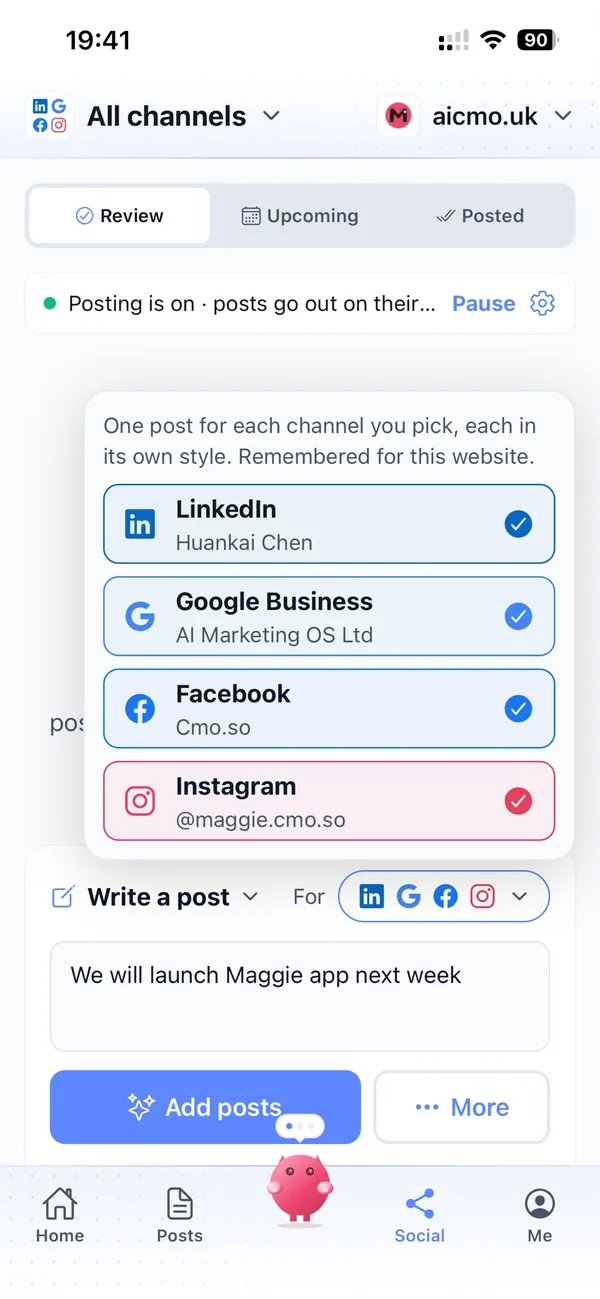
By default nothing goes out until you approve it. Review drafts in the iPhone app or at app.cmo.so, edit a line, skip a post, or pause a channel when you're away on a course.
ApprovalsYour marketing team, in your pocket
Real screens from the cmo.so app on iPhone.
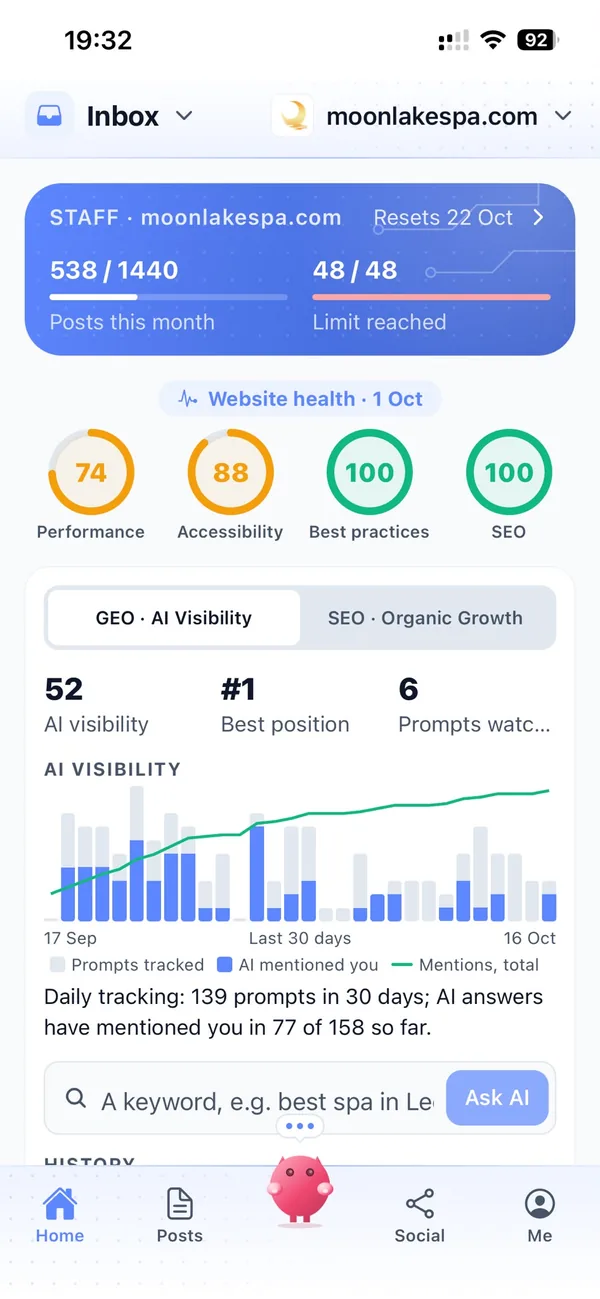
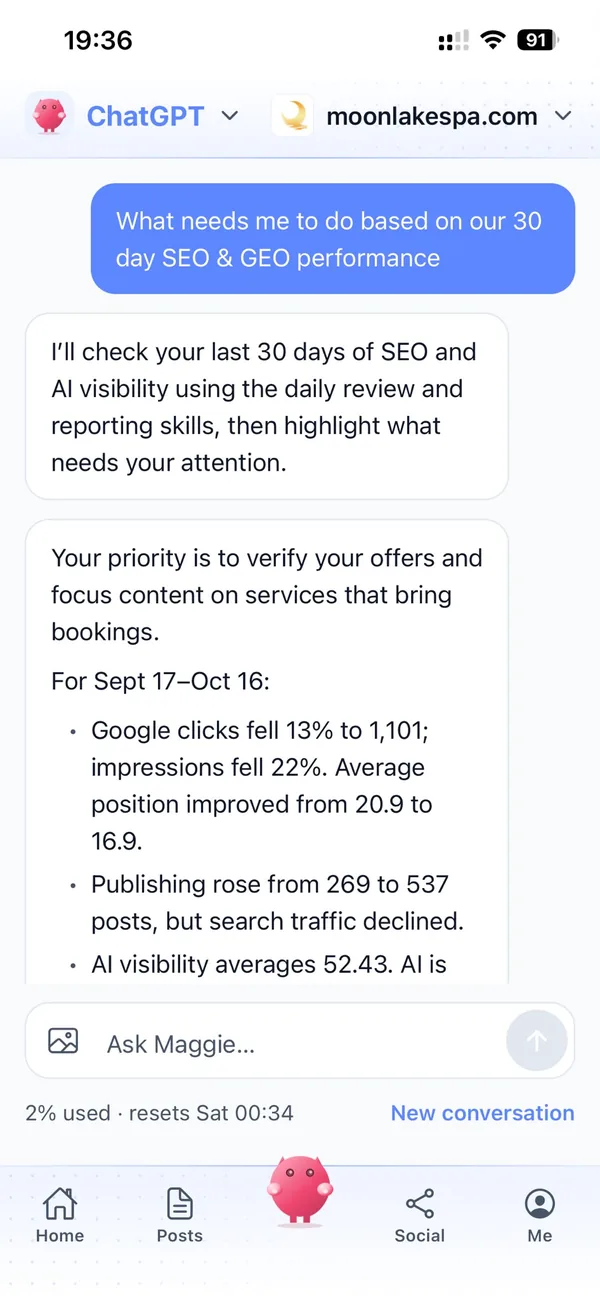
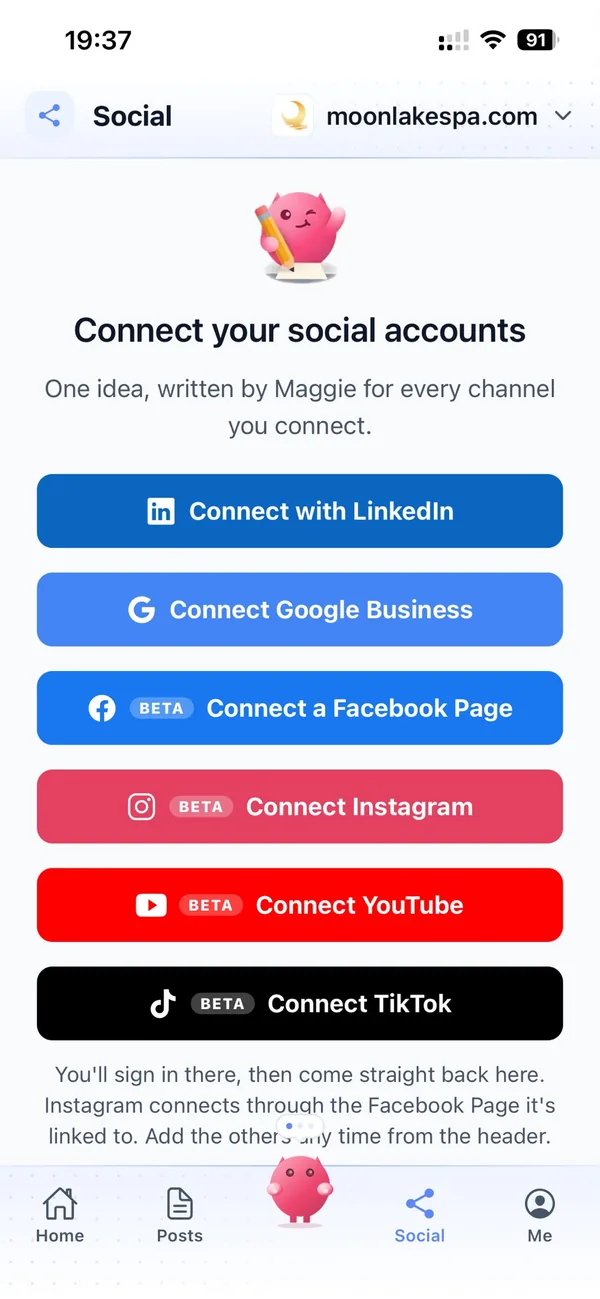
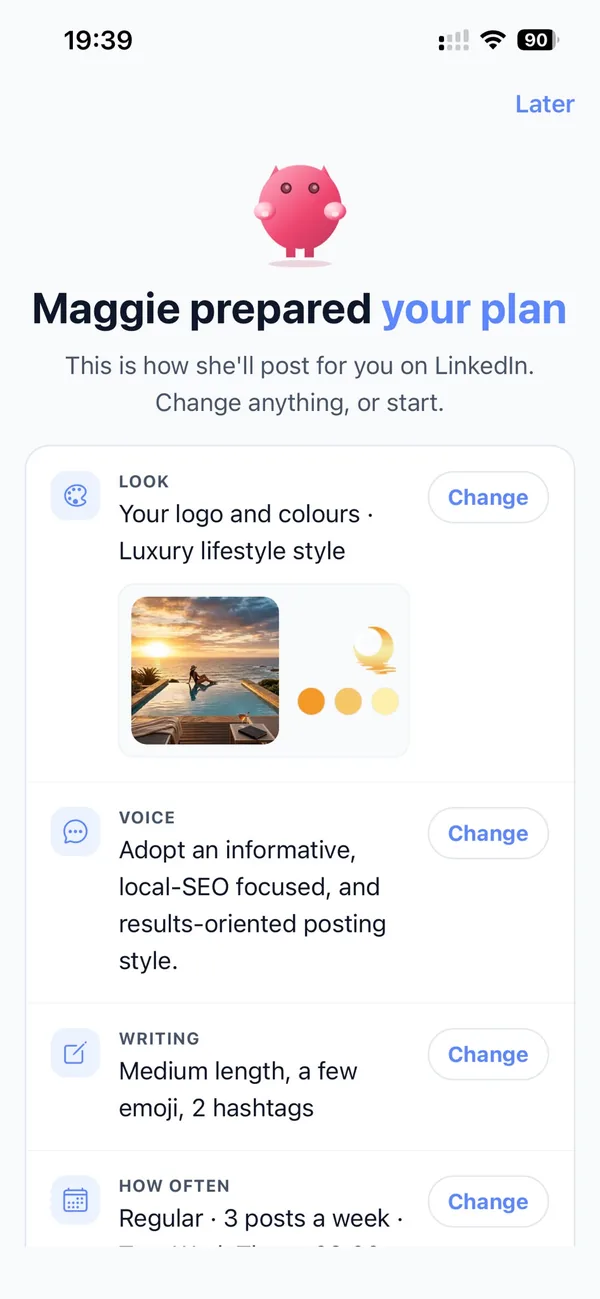
From your website to a calm, steady stream of posts in four steps
Enter your website
Maggie reads it and drafts your practice's brand profile in minutes.
Check your profile
Correct your therapies and opening times, turn on Content Policy Guard and choose your channels.
Review the drafts
Your first week of posts arrives with pictures. Approve, edit or skip each one.
Let them go out
Approved posts go out at each channel's times and every one comes back with its link.
Why not just…
The usual ways practitioners try to find new clients, and where each one runs out.
…rely on word of mouth?
Recommendations bring loyal clients, but they come slowly and unevenly. Clear pages on your website and regular Google Business posts help people who've never met a client of yours find and trust you.
…list on booking apps and therapist directories?
They help people book, but often take a fee and show you next to everyone else nearby. Posts on your own website and Google Business profile let people get to know you first.
…leave flyers in local shops and cafés?
Flyers reach a few people who happen to pass, and they can't answer questions. Posts that explain your therapies are there whenever someone searches.
…write it with ChatGPT?
You still brief it, check every health claim, make the picture and post it yourself, and it doesn't know your therapies or your rules. Maggie remembers your practice, checks posts against your rules and puts them out on schedule.
Cut the £5,900/mo marketing bill to £15/mo
Everything a marketing team does, done by Maggie.
| What needs doing | Without cmo.so | With cmo.so |
|---|---|---|
| Full-time marketing hire | £3,000/mo | Included |
| SEO and AI search (GEO) agency | £1,000/mo | Included |
| Content writer, AI-assisted | £500/mo | Included |
| Social media manager, freelance | £800/mo | Included |
| Designed pictures for every post | £300/mo | Included |
| SEO and GEO softwareRank tracking, site audits, AI visibility | £250/mo | Included |
| AI writing and image tools | £50/mo | Included |
| Working hours | Office hours | 24/7 |
| Total per month | £5,900+ | From £15/mo |
Typical UK costs for a small business in 2026, with AI already cutting freelance rates. Estimates only; your own quotes will vary.
- 5 social posts, 30 once verified
- 15 Maggie messages a day
- Upgrade any time
- 12 posts a day
- 150 Maggie messages a day
- All channels
- 96 posts a day
- 1,000 Maggie messages a day
- All channels
Per website, billed monthly. Blog and social posts share one allowance; your best plan sets how much you can talk to Maggie across all your websites.
Marketing automation for holistic and alternative health practitioners: your questions
Still unsure?
What is marketing automation for holistic and alternative health practitioners?
It's software that does the repeating work of marketing a therapy practice: planning topics, writing blog and social posts that explain your work, making pictures and publishing them on schedule.
With cmo.so, Maggie does all of it from your website, and nothing goes out until you approve it.
How do holistic and alternative health practitioners get more clients online?
Practitioners get more clients online by helping people understand a therapy and feel comfortable before they book: clear pages on what to expect, an active Google Business profile with a Book button, and regular posts in a calm, honest voice.
Maggie writes those posts every week from your brand profile, and Search Console in cmo.so shows which ones bring new people to your website.
How much does marketing automation cost for a practitioner?
There's a free plan with no card needed. Paid plans are per website and billed monthly: Air at £15 a month covers two posts a day, which suits most single practitioners, and Pro at £45 a month suits a practice or centre posting on several channels.
Founding members get lower prices for good on every plan until 1 January 2027. You can cancel any time.
Which channels should holistic practitioners start with?
Most start with Google Business, because that's where people searching for a therapist nearby decide, plus their own website for posts that explain each therapy.
Instagram and Facebook are in beta and suit local clients, workshops and events. Each channel has its own posting times and queue.
Is it safe to use AI to write about complementary therapies?
It is safe when you, or another qualified person, review every post before it is published. cmo.so keeps approvals on by default, and Content Policy Guard can hold a post that may break medical rules as a draft with a suggested rewrite.
Content Policy Guard gives AI suggestions, not legal or compliance advice. It does not make a post compliant on its own, and you stay responsible for what you publish.
How can posts describe a therapy without making health claims?
Posts can describe what a therapy involves, how a session feels, why people choose it and what your training is, without promising to treat or cure anything.
Add your own rule to Content Policy Guard, such as never naming a condition as something you treat, and a post that may break it is held with a suggested rewrite.
Can cmo.so take bookings or connect to my booking system?
It doesn't take bookings or connect to booking or client record systems. Google Business posts can carry a Book button, and other posts can link to your booking page.
So people still book through the system you already use.
Do I need to share anything about my clients?
You never need to share anything about clients. Maggie works from your public website and the brand profile you check.
cmo.so never sells or rents your data, and Search Console data is never used for advertising or to train AI models.
Can posts promote gift vouchers, workshops and retreats?
They can, because Maggie plans posts for the times people buy vouchers, such as Christmas and Mothering Sunday, and for workshops, retreats or new class times you add to your profile.
On Google Business, a voucher can go out as an offer and a workshop as an event, each with a button.
I offer several therapies. Can posts cover them all?
They can. Your brand profile lists every therapy you offer, and topics are planned across them, so one week might cover reflexology and the next acupuncture.
You can tell Maggie which therapy you most want to grow and she gives it more of the schedule.
We're a centre with several practitioners. Can each one have posts?
Yes. Your brand profile can cover each practitioner and their therapies, and posts can introduce them in turn.
In Me → Team you can add people and choose what each can see or change, using presets such as editor or manager, so each practitioner can check posts about their own work.
Let new clients get to know you before they book
Enter your website. Your brand profile and first week of posts are ready in minutes, and nothing goes out until you approve it.
- Free plan, no card needed
- You approve every post
- Cancel any time