


Marketing automation for crowdfunding platforms
Your platform has two audiences: people with an idea to fund and people deciding whether to back it. Maggie, your AI CMO, writes for both every week, on your blog, LinkedIn and social channels, and you approve every post.
Free to start · No credit card · 30 free posts
Used by 600+ users and trusted by teams at
aeglesriphal.com
moonlakespa.com
shop.theteagroup.com
clo100.com
logtrics.io
mymorez.com
nextidal.com
otisapp.com
storaitelling.com
theheatpumps.co.uk
web-translations.com
exposeai.tech
orielipo.com
whitelabelcrowd.fund
elliptic.co
med.moonlakespa.com
netdex.co.il
orawellness.uk
reenest.com
syngage.ai
thepenthouseliving.com
zengolf.studio
imaintain.uk
rebuildingsociety.com
aurasocial.world
goaimex.com
moneyparents.com
newgenrenewables.uk
osmosisai.co
saunders.ac
teeza.app
thursdayclub.com
Why crowdfunding platforms struggle to keep their marketing going
Every week brings new campaigns to support, creators to reassure and backers to win. Your own content always seems to come after the next launch.
Two markets to feed at once
Creators want to know how to plan a campaign and what it costs. Backers and investors want to know how it works and what the risks are. Each needs its own content, every week.
Campaigns move faster than your blog
A campaign can open and close within weeks. By the time someone writes about it, it's over, and the next ten have launched without a word on your own channels.
Every word is a financial promotion risk
Equity and lending campaigns sit under strict rules on how risks and returns are described. One careless phrase about returns can cause a real problem, so posts sit waiting for review.
Creators arrive unprepared
Founders often come to you with an idea but no plan for rewards, pricing or building an audience before launch. Without guides to send them, your team answers the same questions on every call.

Twelve campaigns go live this month, and your posts are already queued.
It's the first Monday of the month. Twelve new campaigns are about to go live, your partnerships team is talking to three founders preparing to raise, and the newest post on your blog is a launch announcement from the spring.
You paste your platform's website into cmo.so. Maggie reads it and writes your brand profile: the reward and equity campaigns you host, the founders and makers who raise with you, the backers and investors who fund them, your fees, the support you give creators, what sets you apart from larger platforms, and the clear, encouraging way you talk. You turn on Content Policy Guard for financial rules and add one of your own: every post about an equity campaign must say capital is at risk.
By Wednesday the drafts are waiting, each with a picture in your platform's look: a blog guide on preparing a reward campaign, an explainer for first-time backers on how equity crowdfunding works and what the risks are, a LinkedIn post from your founder on what creators should do in the month before launch, and an Instagram post about a campaign that has just opened (Instagram is in beta). Content Policy Guard has held one line that read like a promised return, with a suggested rewrite. You approve three and send the explainer to your compliance lead.
The posts go out across the month at the times you set for each channel, and each comes back with its link. While your team is onboarding the next creators, Maggie is already planning next month's guides, and Search Console in cmo.so shows which ones founders are reading.
A marketing assistant for both sides of your platform
Each of those problems has an answer, and your team still decides what goes out under your platform's name.
Guides that bring in better campaigns
Posts on planning a campaign, choosing rewards, building an audience before launch and keeping backers updated, written for Google and for AI answers. Published to your WordPress, Shopify, Wix or Webflow site, or any site through the cmo.so API.
Blog on autopilotExplainers for backers and investors
Plain-English posts on how reward, donation and equity crowdfunding work, what happens if a campaign doesn't reach its target, and the risks to understand before backing.
Backer guidesContent Policy Guard for financial rules
Turn on Content Policy Guard and posts are checked against financial rules, or your own house rules. A risky post is held as a draft with a suggested rewrite. These are AI suggestions, not legal or compliance advice; a qualified person should still review.
Content Policy GuardYour platform, in your voice
Enter your website and Maggie builds your brand profile: the campaigns you host, who raises and who backs, what sets you apart, competitors and voice. Every post and picture starts from it.
Brand profileOne campaign, every channel
One idea becomes a post for each channel in its own style: LinkedIn for founders and investors, Instagram, TikTok, YouTube and Facebook for backers (in beta), and your blog for the full story.
Every channelApprovals your compliance team can trust
By default nothing goes out until it is approved. Keep approvals on for every channel, add your compliance lead in Me → Team, and check drafts in the web app or the iPhone app.
ApprovalsYour marketing team, in your pocket
Real screens from the cmo.so app on iPhone.
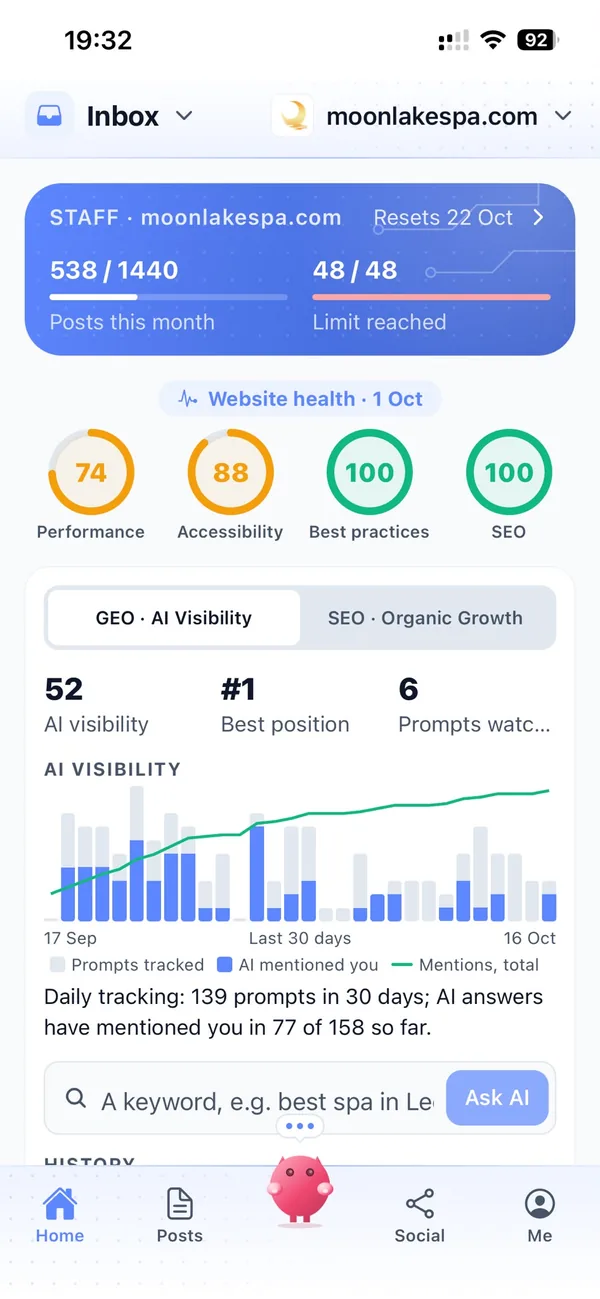
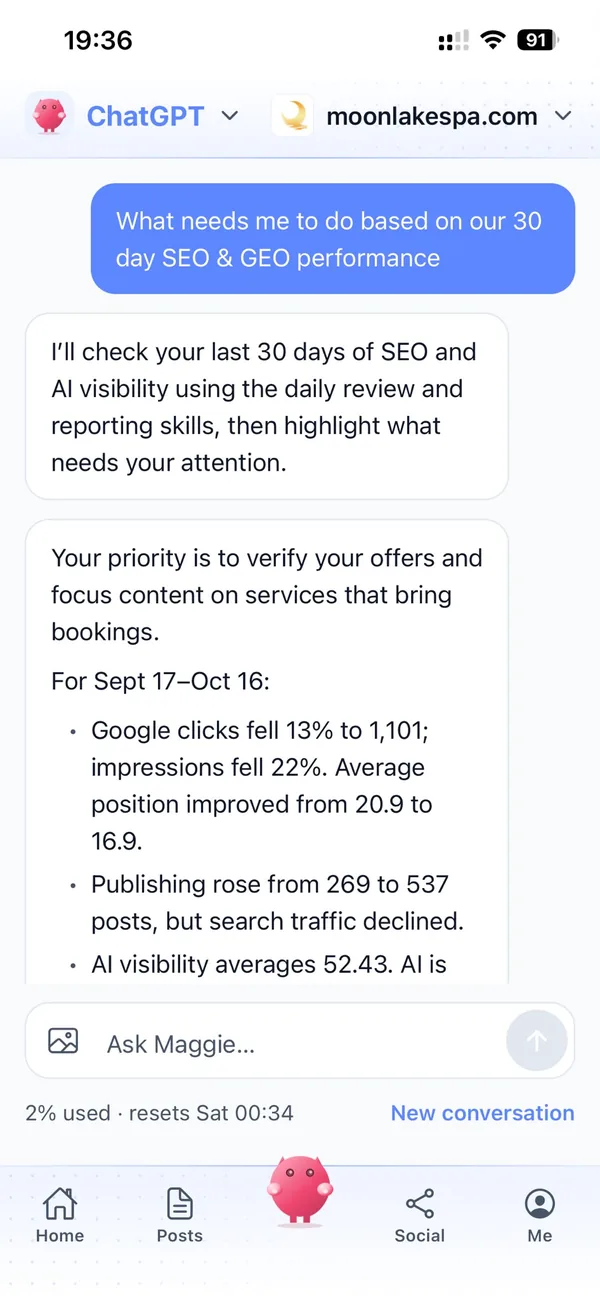
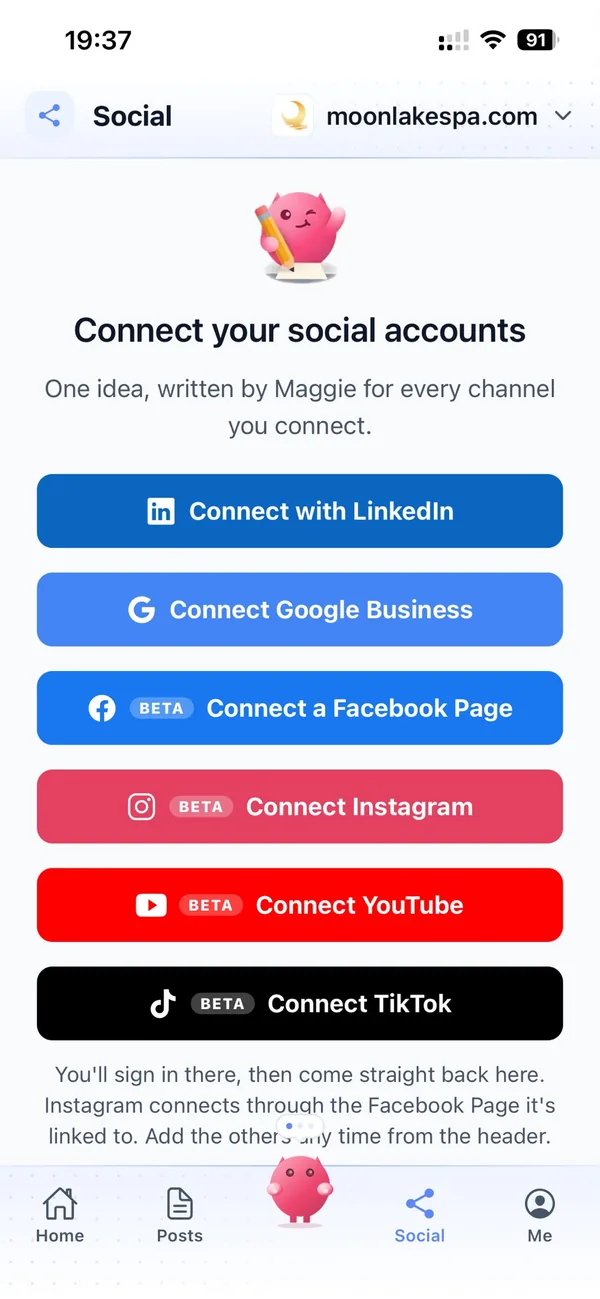
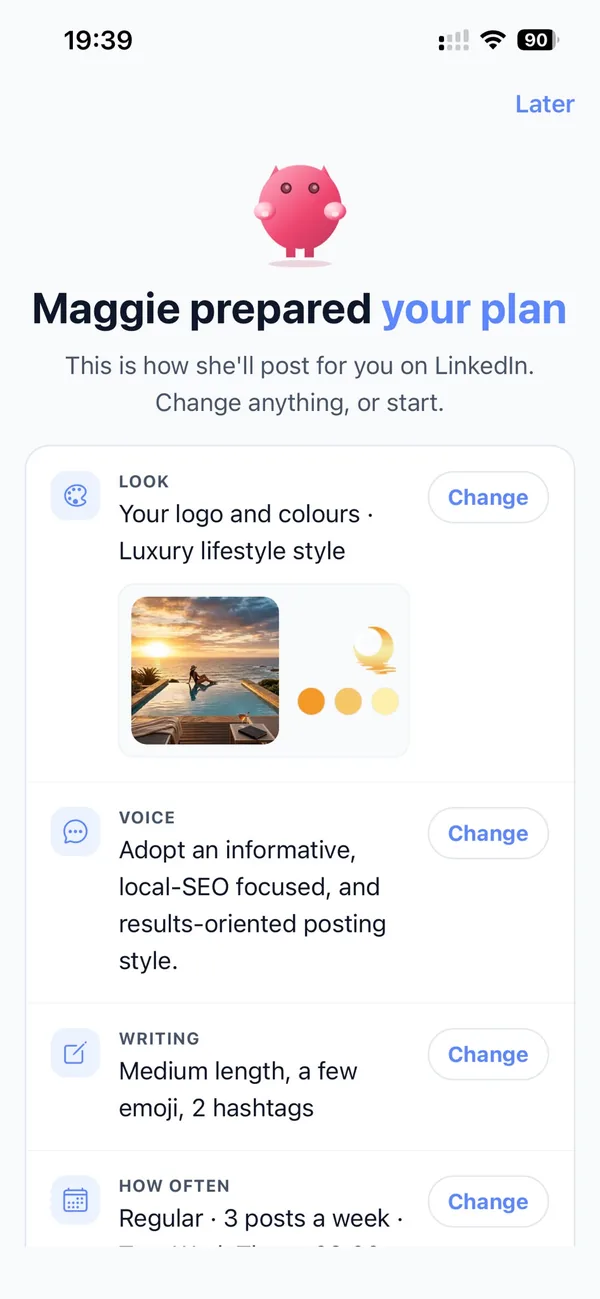
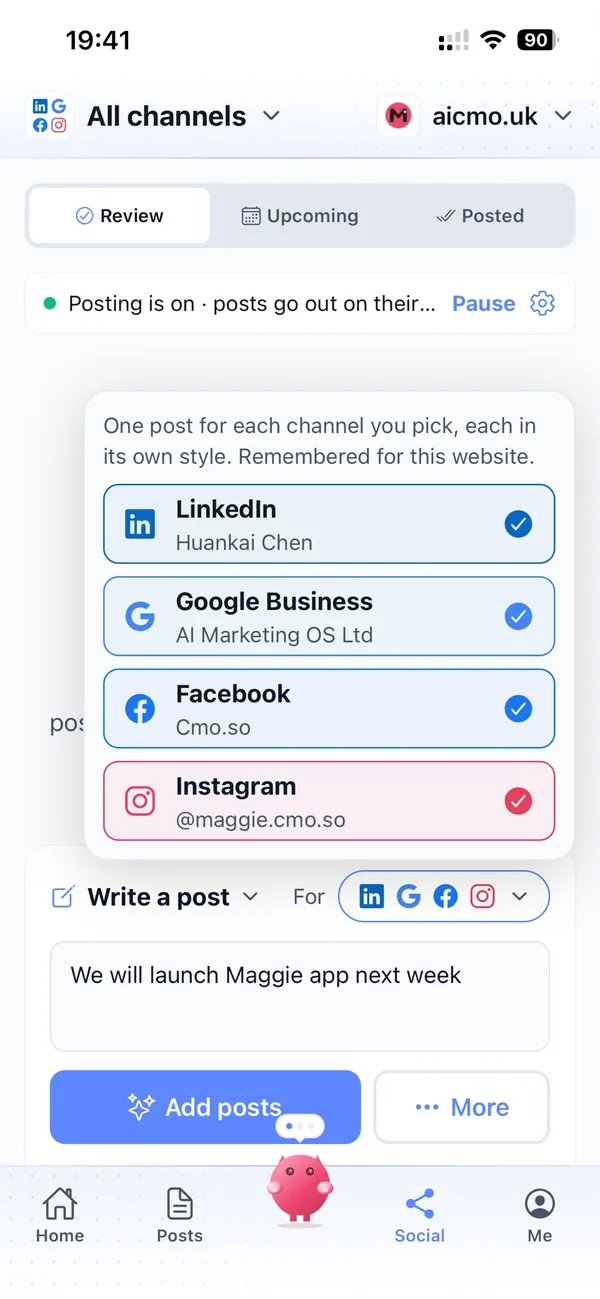
From your platform's website to a steady flow of guides in four steps
Enter your website
Maggie reads it and drafts your platform's brand profile in minutes.
Check your profile
Correct your campaign types and fees, turn on Content Policy Guard and choose your channels.
Review the drafts
Your first week of posts arrives with pictures. Approve, edit or skip each one.
Let them go out
Approved posts go out at each channel's times and every one comes back with its link.
Why not just…
The usual ways crowdfunding platforms try to grow, and where each one runs out.
…rely on creators to bring their own crowd?
Creators do bring backers, but those backers come for one campaign and leave. Guides and posts on your own channels give them a reason to come back for the next one.
…spend more on paid ads?
Ads stop the moment you stop paying, and financial promotion rules make every ad slow to approve. Content on your own website keeps working for both creators and backers.
…hire a content team?
A full-time marketing hire in the UK costs around £3,000 a month before tools, and writing for two audiences needs more than one person. Maggie writes for both every week from £15 a month.
…pay a content agency?
SEO and content agencies often cost around £1,000 a month, and you still brief them on every campaign. Maggie writes from your brand profile and keeps the schedule full.
Cut the £5,900/mo marketing bill to £15/mo
Everything a marketing team does, done by Maggie.
| What needs doing | Without cmo.so | With cmo.so |
|---|---|---|
| Full-time marketing hire | £3,000/mo | Included |
| SEO and AI search (GEO) agency | £1,000/mo | Included |
| Content writer, AI-assisted | £500/mo | Included |
| Social media manager, freelance | £800/mo | Included |
| Designed pictures for every post | £300/mo | Included |
| SEO and GEO softwareRank tracking, site audits, AI visibility | £250/mo | Included |
| AI writing and image tools | £50/mo | Included |
| Working hours | Office hours | 24/7 |
| Total per month | £5,900+ | From £15/mo |
Typical UK costs for a small business in 2026, with AI already cutting freelance rates. Estimates only; your own quotes will vary.
- 5 social posts, 30 once verified
- 15 Maggie messages a day
- Upgrade any time
- 12 posts a day
- 150 Maggie messages a day
- All channels
- 96 posts a day
- 1,000 Maggie messages a day
- All channels
Per website, billed monthly. Blog and social posts share one allowance; your best plan sets how much you can talk to Maggie across all your websites.
Marketing automation for crowdfunding platforms: your questions
Still unsure?
What is marketing automation for crowdfunding platforms?
It's software that does the repeating work of marketing a crowdfunding platform: planning topics for creators and backers, writing blog and social posts, making pictures and publishing them on schedule.
With cmo.so, Maggie does all of it from your platform's website, and nothing goes out until your team approves it.
How do crowdfunding platforms get more creators and backers online?
Crowdfunding platforms grow online by being useful to both sides: guides that help founders plan a campaign, clear explainers that help backers understand how it works and what the risks are, and regular posts about campaigns that are live.
Maggie writes those posts every week, and Search Console in cmo.so shows which ones bring creators and backers to your site.
How much does marketing automation cost for a crowdfunding platform?
There's a free plan with no card needed. Paid plans are per website and billed monthly: Air at £15 a month covers two posts a day, and Pro at £45 a month suits a platform posting on several channels.
Founding members get lower prices for good on every plan until 1 January 2027. You can cancel any time.
Which channels should crowdfunding platforms start with?
Most crowdfunding platforms start with their own blog and LinkedIn: the blog answers creators' and backers' searches, and LinkedIn reaches founders, investors and partners.
Instagram, TikTok, YouTube and Facebook are in beta and suit reward campaigns with products people can see. Each channel has its own posting times and queue.
Is it safe to use AI for posts about investment campaigns?
It can be, as long as a qualified person reviews every post before it is published. cmo.so keeps approvals on by default, and Content Policy Guard can hold a post that may break financial rules as a draft with a suggested rewrite.
Content Policy Guard gives AI suggestions, not legal or compliance advice. It does not make a post compliant on its own, and your platform stays responsible for what it publishes.
Can we add our own rules, such as risk warnings?
You can add your own house rules to Content Policy Guard, such as every equity post mentioning that capital is at risk, or never naming an expected return.
A post that may break one of them is held as a draft with a suggested rewrite, and you can edit any post before approving it.
Can cmo.so write about individual live campaigns?
It can write about campaigns described on your website, such as a featured campaign page. Maggie writes a short post about what the project is and links to the campaign page.
You decide which campaigns to feature, and the creator's details stay as they appear on your site.
Will posts promise backers a return or a reward date?
They shouldn't, and you stay in control of that. Maggie writes from your brand profile, Content Policy Guard can flag wording that sounds like a promise, and every post waits for approval by default.
Your team checks each post before it goes out, and the platform stays responsible for what it publishes.
Does cmo.so run ads or email our backers?
No, it doesn't run ads or send email newsletters. Maggie writes and publishes blog posts, social posts and Google Business updates.
Many platforms link those posts from their own emails to creators and backers, so one guide works in several places.
How is our data handled?
cmo.so never sells or rents your data. Search Console data is only used to show your own site's results and plan its content, never for advertising or to train AI models.
Social channels connect through each platform's official sign-in, so cmo.so never sees your passwords, and it doesn't connect to your backer or investor records.
Which websites does it work with?
cmo.so publishes to WordPress, Shopify, Wix and Webflow, and to any other website through the cmo.so API, including a custom-built platform.
Each post is reported back with its link once it is live.
Can our compliance team approve posts?
Your compliance team can approve posts. In Me → Team you can add people and choose what each can see or change, using presets such as editor or manager.
So your compliance lead can sign off investment posts while marketing looks after creator guides.
Give every campaign and every backer something to read
Enter your website. Your brand profile and first week of posts are ready in minutes, and nothing goes out until you approve it.
- Free plan, no card needed
- You approve every post
- Cancel any time