Introduction: Unlock Organic Wins with Data-Driven SEO
Imagine you could see into Google’s mind. You’d know exactly which pages hit the sweet spot and which ones flop. You’d tweak content in real time, banish ranking drops, and ride a wave of traffic. That’s the power of data-driven SEO. It’s not magic, it’s analytics made simple. And it works for any site: e-commerce, blogs or local shops.
In this article, I’ll walk you through a three-step process to set up, track and optimise your organic performance without drowning in spreadsheets. You’ll learn how to pick metrics that matter, build a dashboard that updates itself, and turn insights into action. Ready to up your game? CMO.so: Automated AI Marketing for data-driven SEO
Why SEO Analytics Matters
A lot of people think SEO is guesswork. Keywords here, backlinks there, cross your fingers. The truth is, search engines reward evidence. They want proof your pages satisfy users. With data-driven SEO, you replace guesswork with facts. You answer big questions fast: Which content drives traffic? Where do visitors drop off? What bugs in your site are killing rankings?
Gathering these insights stops surprises before they wreck your traffic. It also highlights opportunities others miss. Your competitors might chase broad keywords. You can focus on long-tails that convert. That’s how small sites punch above their weight.
What Is SEO Analytics?
SEO analytics tracks how your site performs in search engines. It covers metrics like:
– Organic traffic: Visitors from unpaid search.
– Search rankings: Positions for your target phrases.
– Backlinks: External links pointing to you.
– Site health: Technical issues that block crawlers.
By collecting these data points, you can spot trends and fix issues before they cost you clicks.
The Benefits of Data-Driven Insights
Here’s why you want to invest in data-driven SEO:
– Prevent ranking drops: Catch sudden dips early.
– Improve content: Learn which topics resonate.
– Fix tech errors: Make sure bots can crawl and index.
– Allocate resources: Spend time where it counts.
Whether you run a small blog or an agency, these insights give you an edge. And with a no-code, fully automated AI-driven blogging platform like CMO.so, you can generate content at scale and measure its impact without writing a line of code.
Step 1: Choose the Right SEO Metrics
You could track a hundred stats. Or you could focus on the handful that move the needle. That’s what data-driven SEO is about: focus and clarity.
- Revisit your goals. What matters most? More traffic, leads, sales?
- Pick key performance indicators (KPIs) tied to those goals.
- Track them consistently.
Here are the essential KPIs for most sites:
Organic Rankings
Your average position for target keywords in search results. High rankings often lead to more clicks. Use Google Search Console or a rank-tracking tool to monitor shifts. Track local rankings too if you serve a specific region.
Organic Traffic
The number of visitors arriving via unpaid search listings. You can view this in Google Analytics 4 under Reports > Engagement > Pages and screens. Compare month over month to spot growth or declines.
Organic Conversions
Visitors from search who take desired actions: purchases, sign-ups or downloads. Set up conversion events in GA4 and review Reports > Acquisition > Traffic acquisition. Keep an eye on conversion rates to ensure you’re attracting the right audience.
Backlinks
Quality links signal authority to search engines. Check external links in Search Console or use a backlink audit tool to spot new or lost links. Aim for links from credible domains in your niche.
Site Health
Technical SEO issues can block crawlers and hurt rankings. Track crawlability, HTTPS implementation and page speed. Tools like Semrush Site Audit or similar show you what needs fixing.
By zeroing in on these metrics, you remove noise. You focus on what actually influences your bottom line.
Step 2: Create an SEO Dashboard
Manually logging into multiple tools is tedious. A unified dashboard gives you a snapshot of all KPIs in one place. Here’s how to build one:
- Choose a reporting tool. Looker Studio is free and flexible. Or use built-in dashboards in platforms you already pay for.
- Connect your data sources. Link Google Search Console, Google Analytics and any rank-tracking or backlink tools.
- Add widgets for each KPI. Organise them so the most critical metrics sit front and centre.
- Schedule automatic updates. Your dashboard should refresh daily or weekly without manual effort.
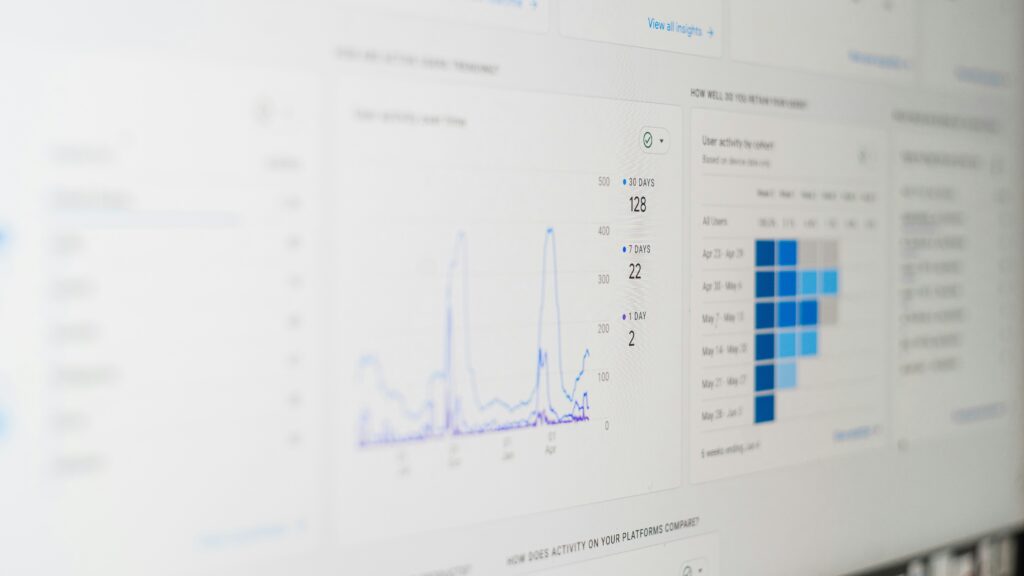
A dashboard lets you spot anomalies at a glance. You might see a sudden drop in organic traffic. Then dive into the chart to find the exact date. Was there a site update? A competitor surge? You’ll know in seconds.
Remember, data-driven SEO isn’t about having data, it’s about acting on it. A dashboard keeps you honest. You can’t ignore a red alert or a big win.
Explore CMO.so’s AI blogging for smarter data-driven SEO
Step 3: Review and Act on Your Findings
Data without action is just noise. Once your dashboard is live, follow this four-step cycle:
- Analyse trends. Look for spikes, dips or plateaus in your KPIs.
- Ask why. What changed? Content updates, algorithm tweaks, new backlinks?
- Dig deeper. Use logs, user testing or technical tools to find root causes.
- Take action. Update content, fix technical issues or adjust your outreach strategy.
Example: You see a drop in page speed score.
• First thought: page weight?
• Check your performance tool. It shows unminified JavaScript slowing you down.
• Action: minify scripts with a build tool or ask your developer.
Next month, you’ll see if speed improves and rankings recover.
Another example: One blog post gets lots of traffic but few conversions.
• Look at on-page layout. Is the CTA buried?
• Maybe add a clearer sign-up form or action button.
• Monitor conversion rate over the next few weeks.
This cycle—that sweet spot between analysis and action—is the heart of data-driven SEO. It keeps you agile so you can optimise continuously.
Integrating Automation in Your Workflow
Manual reporting is time-consuming. Automation lets you focus on strategy, not spreadsheets. Platforms like CMO.so’s no-code, fully automated AI-driven blogging platform do more than generate content. They can integrate performance tracking, index hidden posts and curate your top performers automatically.
Imagine generating over 4,000 microblogs per month and having your dashboard update itself. Then, you concentrate on refining content and outreach, not data entry. That’s how you scale without hiring a full analytics team.
Here’s what you gain:
– Faster experimentation: Test new topics and see results in days not weeks.
– Smarter curation: Automatically keep your best performing posts visible.
– Hidden indexing: Ensure all posts, even drafts, are seen by Google.
– Budget efficiency: Get enterprise-level reporting without agency fees.
Tools that merge automation with analytics give you a real leg up in organic search.
Wrapping Up: Your Path to Organic Growth
Data-driven SEO is not a one-off project. It’s a continuous rhythm of measurement, interpretation and optimisation. By focusing on the right metrics, building an automated dashboard and taking decisive action, you’ll:
- Prevent nasty ranking surprises.
- Discover untapped keyword opportunities.
- Fix technical roadblocks quickly.
- Allocate resources where they matter most.
Start small. Set up one report. Track one metric. Then build from there. Over time, these incremental gains add up to significant organic growth.
Now it’s your turn. Put these three steps into practice and transform your SEO into a precise, data-backed engine.
Start your free trial and master data-driven SEO with CMO.so
Share
Related posts